

Why eCommerce Stores Accidentally Sell Products They Don’t Have
One of the most frustrating problems in eCommerce happens when a store sells a product that is no longer available.
The order is placed.
Payment is processed.
But the product cannot be shipped.
This situation is usually caused by inventory synchronization failures, a common operational issue for stores running on platforms such as Shopify or selling through marketplaces like eBay.
When inventory systems fall out of sync, stores can unintentionally oversell products. The result is a chain reaction of cancellations, refunds, and disappointed customers.
Understanding why inventory synchronization fails is essential for maintaining reliable eCommerce operations.
Inventory issues become more frequent around 10–30 orders per day, especially across multiple systems.
This is where synchronization gaps start creating real impact.
Download the Free Shopify Fulfillment Risk Audit
If orders are getting delayed or stuck in processing, this checklist helps you pinpoint exactly where your workflow is slowing down.
👉 Download it here: Free Shopify Fulfillment Risk Audit
What Is Inventory Synchronization in eCommerce?
Inventory synchronization refers to the process of keeping stock levels accurate across all systems involved in selling products.
These systems often include:
- the store platform
- supplier inventory feeds
- warehouse management systems
- fulfillment applications
- sales channels such as marketplaces
When synchronization works correctly, stock levels update automatically whenever a sale occurs or inventory changes.
When synchronization fails, inventory numbers become inaccurate.
This leads to overselling products that are no longer available.
Proper inventory handling practices are also emphasized in the Shopify Help Center.
Why Inventory Synchronization Failures Are Common
Many online stores grow quickly and add new tools to support operations.
However, every new integration increases system complexity.
A typical store may use:
- a store platform
- multiple supplier integrations
- inventory management apps
- shipping automation tools
If any part of this system stops updating correctly, inventory numbers drift away from reality.
This problem is known as inventory drift.
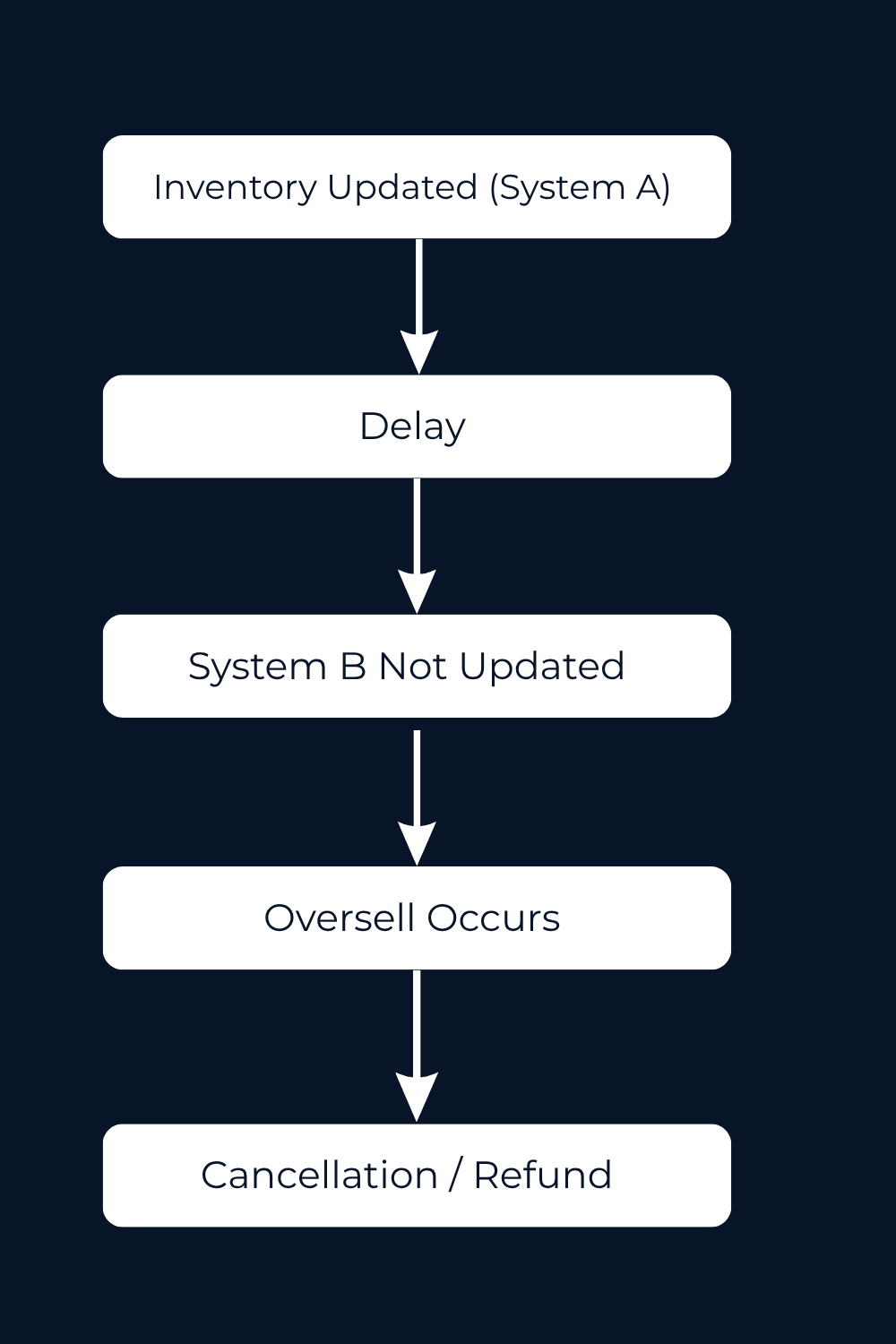
Inventory problems are rarely about stock - they’re about timing.
Common Causes of Inventory Synchronization Failures
Understanding these causes helps store owners prevent overselling and cancellations.
1. Multi-Channel Selling Without Unified Inventory
Many stores sell products on multiple platforms.
Examples include:
- their main store
- marketplaces
- social commerce channels
If inventory is not centralized, stock changes on one platform may not update on another.
This creates situations where a product appears available even though it has already been sold elsewhere.
2. Supplier Inventory Feed Delays
Stores that rely on external suppliers often depend on inventory feeds.
These feeds update product availability automatically.
However, delays in supplier updates can create temporary discrepancies.
During this delay window, stores may continue accepting orders for items that are already out of stock.
Inventory issues frequently originate from order processing delays (see → Order Processing Bottlenecks in eCommerce ).
3. Manual Inventory Adjustments
Manual stock changes are sometimes necessary.
For example:
- correcting damaged inventory
- adjusting supplier shipments
- fixing data errors
However, manual adjustments increase the risk of mistakes, especially if updates are not applied across every connected system.
These mismatches often lead to refund spikes (explained here → Refund Pattern Analysis for eCommerce Stores ).
4. App Integration Failures
Many stores use third-party applications to manage inventory and fulfillment.
If an app integration fails or disconnects, synchronization may stop without immediate notification.
Orders continue to process while inventory numbers remain frozen.
This creates significant overselling risk.
Inconsistent systems behind this are usually part of a larger operational structure issue (see → Why Shopify Sellers Need a Fulfillment Risk Audit ).
Download the Free Shopify Fulfillment Risk Audit
Inventory issues often come from hidden system gaps. This audit helps you identify synchronization risks before they lead to cancellations and refunds.
👉 Get the checklist here: Free Shopify Fulfillment Risk Audit
The Operational Impact of Inventory Errors
Inventory synchronization failures affect more than just product availability.
They create multiple operational consequences.
Examples include:
- order cancellations after payment
- refund processing workload
- negative customer experiences
- increased support inquiries
Over time, repeated inventory problems can also damage customer trust.
Customers who experience cancellations may hesitate to order again.
Early Signs Your Store Has Inventory Synchronization Issues
Inventory drift often begins with small warning signals.
Common indicators include:
- occasional cancellations due to stock shortages
- unexpected negative inventory counts
- customer complaints about canceled orders
- support messages asking why items were unavailable after purchase
These signs suggest the inventory system should be reviewed before the problem escalates.
How to Prevent Inventory Synchronization Failures
Preventing overselling requires consistent operational monitoring.
Effective strategies include:
Use a Centralized Inventory System
Managing inventory from a single source of truth helps ensure all sales channels receive accurate stock updates.
This reduces synchronization conflicts.
Monitor Inventory Update Timing
Stores should verify how often inventory updates occur between suppliers and store systems.
Frequent updates reduce the window where overselling can occur.
Audit Inventory Apps and Integrations
Third-party applications should be reviewed periodically to confirm that synchronization processes remain active.
Integration failures can occur after software updates or configuration changes.
Track Cancellation Patterns
If cancellations frequently involve specific products or suppliers, the issue may originate from inventory synchronization delays.
Identifying patterns helps locate the root cause.
Why Inventory Accuracy Protects eCommerce Growth
Inventory accuracy directly affects customer trust and operational stability.
Stores with reliable inventory systems experience:
- fewer order cancellations
- reduced refund workloads
- better customer satisfaction
- smoother fulfillment operations
Maintaining synchronization across systems allows eCommerce businesses to scale without increasing operational chaos.
Strengthening Inventory Management in Your Store
Inventory synchronization failures often result from small operational gaps rather than major system failures.
Regular operational audits can help identify issues such as:
- delayed supplier updates
- integration errors
- inconsistent inventory adjustments
- multi-channel synchronization conflicts
Addressing these problems early prevents cancellations, protects customer relationships, and improves overall operational reliability.
Download the Free Shopify Fulfillment Risk Audit
If your store has experienced overselling, cancellations, or inventory errors, this audit will help you identify the root cause and stabilize your operations.
👉 Download the free audit here: Free Shopify Fulfillment Risk Audit
 About the Author
I work with eCommerce sellers to identify and fix fulfillment system gaps—especially for stores handling 10–30 orders per day where operations start to break under pressure.
My focus is on building structured systems that not only prevent issues, but also recover quickly when disruptions happen.
If your store is experiencing operational issues:
👉 Download the free fulfillment audit: Free Shopify Fulfillment Risk Audit
📢 Share This
Found this useful? Share it with other store owners:
Comments ()