
Why Rapid Growth Often Creates Fulfillment Chaos
Growth is the goal of every eCommerce store.
More orders.
More customers.
Higher revenue.
But growth introduces a new problem:
Operations start breaking.
Orders get delayed.
Inventory becomes inconsistent.
Customer complaints increase.
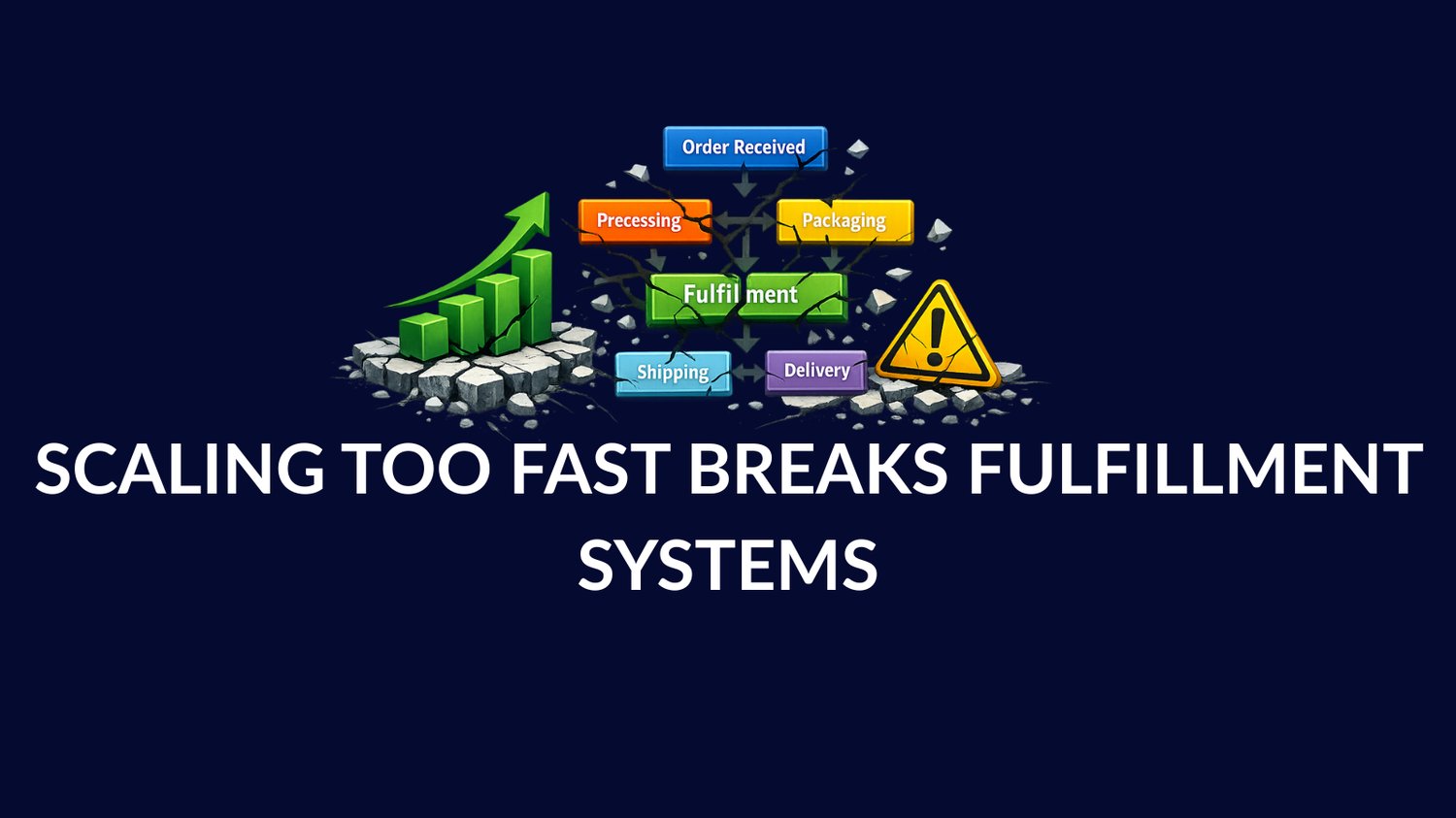
This happens because most stores scale revenue before they scale systems, especially on platforms like Shopify or marketplaces such as eBay.
Without structured operations, rapid growth creates fulfillment chaos.
Many stores start feeling operational pressure around 10–30 orders per day. This is where growth begins to expose system weaknesses.
Download the Free Shopify Fulfillment Risk Audit
If your store is growing but operations feel harder to manage, this audit helps you identify where your fulfillment system is starting to break.
👉 Download the free checklist here: Free Shopify Fulfillment Risk Audit
Why Scaling Creates Operational Problems
At low volume, most systems work.
- orders are manageable
- workflows are flexible
- errors are easy to fix
As volume increases, small inconsistencies multiply.
What worked at 10 orders per day often fails at 100.
This is where scaling problems begin.
The Most Common Scaling Issues in eCommerce
1. Process Fragmentation
As stores grow, processes evolve informally.
Different workflows emerge for:
- order handling
- inventory updates
- customer support
Instead of one system, multiple variations exist.
This fragmentation leads to:
- confusion
- delays
- inconsistent execution
2. Team Workflow Inconsistency
When teams expand, tasks are handled differently by each person.
Examples include:
- different ways of processing orders
- inconsistent response times to customers
- varying handling of refunds or issues
Without standardization, the same task produces different outcomes.
3. App Overload
To support growth, many stores add more tools.
These may include:
- inventory apps
- automation tools
- shipping integrations
- analytics platforms
Over time, this creates:
- overlapping functionality
- integration conflicts
- data inconsistencies
More tools do not always mean better systems.
Get the Free Shopify Fulfillment Risk Audit
Scaling issues often come from hidden gaps between systems, apps, and workflows. This audit helps you identify where those gaps are affecting your operations.
👉 Get the free audit here: Free Shopify Fulfillment Risk Audit
How Fulfillment Chaos Shows Up
Operational breakdowns often appear as:
- delayed order processing
- incorrect or inconsistent inventory
- increased refunds and complaints
- slower customer support response
These issues are symptoms- not root causes.
The root problem is usually lack of system structure.
Scaling Reality
A store moving from 15 to 35 orders per day experienced:
- slower processing
- more errors
- increasing customer complaints
Nothing changed except volume.
The system stayed the same.
After restructuring:
- workflows standardized
- tool usage simplified
- roles clarified
Result:
- operations stabilized
- growth became manageable
👉 Growth didn’t break the store—the system did.
Why Scaling Without Systems Increases Risk
As volume grows:
- mistakes happen more frequently
- errors affect more orders
- recovery becomes more difficult
This creates a compounding effect:
More orders → more errors → more customer issues → more workload
Without control, growth becomes harder to sustain.
Rapid growth often exposes system weaknesses.
But even strong systems can fail under pressure—this is where operational resilience becomes critical.
→ From Control to Resilience in eCommerce Operations
How to Scale eCommerce Operations Effectively
Standardize Core Workflows
Define clear processes for:
- order processing
- inventory updates
- fulfillment execution
- customer communication
Consistency reduces errors as volume increases.
Limit Tool Overlap
Evaluate apps regularly and remove redundant tools.
Simplified systems reduce integration conflicts.
Monitor Operational Metrics
Track key indicators such as:
- processing time
- fulfillment accuracy
- refund rates
- support response time
These metrics reveal early signs of scaling stress.
Build System Resilience
Prepare for:
- demand spikes
- supplier delays
- fulfillment disruptions
Most stores focus on efficiency and control when scaling.
But as order volume increases, systems are exposed to stress- delays, disruptions, and unexpected failures.
This is where operational resilience becomes critical.
Not just preventing issues, but ensuring your system can recover quickly when they happen.
In the next guide, we’ll break down how resilient eCommerce systems are designed- and why recovery speed is becoming just as important as efficiency.
Why Structured Operations Enable Sustainable Growth
Scaling is not just about increasing sales.
It’s about maintaining consistency under higher demand.
Stores with strong operational systems experience:
- smoother fulfillment
- fewer customer issues
- more predictable performance
This allows growth without increasing chaos.
Strengthening Your Scaling System
Scaling problems rarely come from one failure.
They result from:
- fragmented processes
- inconsistent workflows
- overloaded systems
A structured operational audit helps identify:
- where workflows break
- where systems overlap
- where inconsistencies affect performance
Fixing these early allows stores to scale without operational instability.
If your store is scaling but operations are becoming harder to manage, this audit helps you identify where your system is breaking—and where resilience needs to be built.
👉 Access the free checklist here: Shopify Fulfillment Risk Audit
Rapid growth often exposes system weaknesses.
But even strong systems can fail under pressure - this is where operational resilience becomes critical.
 About the Author
I work with eCommerce sellers to identify and fix fulfillment system gaps—especially for stores handling 10–30 orders per day where operations start to break under pressure.
My focus is on building structured systems that not only prevent issues, but also recover quickly when disruptions happen.
If your store is experiencing operational issues:
👉 Download the free fulfillment audit: Shopify Fulfillment Risk Audit
📢 Share This
Found this useful? Share it with other store owners:
Comments ()