

Inner peace can feel difficult to access in a world that constantly asks for more of us.
There is always another decision to make, another responsibility to manage, another expectation to meet. And beneath all of that, self-doubt can quietly begin to shape the way we see ourselves.
It can show up as hesitation before we take a chance. It can sound like overthinking something we already know. It can make us question our abilities, compare ourselves to other people, or hold back from opportunities because we are afraid of getting something wrong.
Over time, that internal tension can make peace feel as though it exists somewhere outside of us — something we will finally experience once life settles down, once we feel more confident, or once everything looks the way we hoped it would.
But inner peace is not necessarily something we have to wait for.
It is something we can begin creating within ourselves.
When Self-Doubt Starts Shaping Your Decisions
Self-doubt is not always loud.
Sometimes it appears as a quiet question:
What if I’m not good enough?
What if I fail?
What if I make the wrong decision?
Those thoughts may feel protective, but when they become persistent, they can influence how we move through our lives.
We hesitate.
We second-guess ourselves.
We avoid things we genuinely want.
We look outside of ourselves for reassurance before trusting what we already know.
Self-doubt can develop from many places — past experiences, fear of failure, criticism, comparison, or moments when our confidence was challenged. Experiencing it occasionally is human. The problem begins when we allow those thoughts to become the authority over our choices.
The goal is not to eliminate every uncertain thought.
It is to learn how to recognize self-doubt without automatically allowing it to make the decision for you.
Start By Becoming Aware of the Thought
One of the most useful things you can do is begin noticing how you speak to yourself.
When self-doubt appears, resist the urge to immediately believe what the thought is telling you.
Instead, become curious about it.
Is this thought based on what is actually happening, or is it based on what I am
afraid might happen?
There is an important difference between the two.
Writing these thoughts down can also help create distance between you and the story your mind is creating.
If the thought is, I’ll never be good enough at this, you might replace it with something more grounded:
I am still learning.
I am becoming more capable through experience.
I do not need to know everything before I begin.
This is not about pretending every fear is irrational or replacing difficult emotions with forced positivity.
It is about learning to speak to yourself in a way that leaves room for growth.
Build Confidence Through Small Evidence
Confidence does not always arrive before we act.
Often, we build it because we acted.
Small, achievable steps give us evidence that we are capable of moving forward even when we do not feel completely certain.
If there is something you have been wanting to pursue, consider making the first step intentionally small.
Instead of believing you have to master something immediately, give yourself permission to begin.
Ten minutes spent learning a new skill is still movement.
Sending one email is movement.
Writing the first paragraph is movement.
Taking one uncomfortable but meaningful step is movement.
The point is not how impressive the action looks from the outside.
The point is that every time you follow through on something you said you would do, you begin strengthening trust in yourself.
Create Space for Your Mind to Become Quiet
Self-doubt often becomes louder when our minds never have an opportunity to settle.
Mindfulness does not have to mean creating an elaborate routine. It can simply mean creating small moments throughout your day when you return your attention to the present.
Take a few deeper breaths before responding to something stressful.
Sit quietly for several minutes in the morning before reaching for your phone.
Take a walk without filling every moment with stimulation.
Notice what is happening in your body when your thoughts begin racing.
These moments may appear small, but they create space between you and the constant stream of thoughts moving through your mind.
And sometimes that space is where clarity begins.
Inner Peace Is Something You Practice
Creating peace does not mean that you will never experience doubt, frustration, uncertainty, or difficult circumstances again.
It means learning how to remain connected to yourself while those experiences are happening.
Maybe instead of immediately reacting when something goes wrong, you pause.
Maybe instead of criticizing yourself for feeling uncertain, you acknowledge the uncertainty and ask yourself what you actually need.
Maybe you write down what you are feeling instead of allowing the emotion to quietly shape the rest of your day.
Over time, those seemingly small practices begin creating a different internal environment.
You become less reactive.
You become more aware of your thoughts.
You begin trusting yourself more.
And gradually, peace becomes less dependent on everything around you being perfect.
Replacing the Inner Critic With Something More Supportive
Consider what your life might feel like if self-doubt were no longer making so many of your decisions.
What might you try?
What might you stop postponing?
How differently might you speak to yourself?
Perhaps the goal is not to become someone who never doubts herself.
Perhaps the goal is to become someone who knows how to move forward without abandoning herself whenever doubt appears.
Inner peace begins there — in the relationship you build with yourself, in the way you respond to your thoughts, and in the small choices that remind you that you are capable of creating steadiness from within.
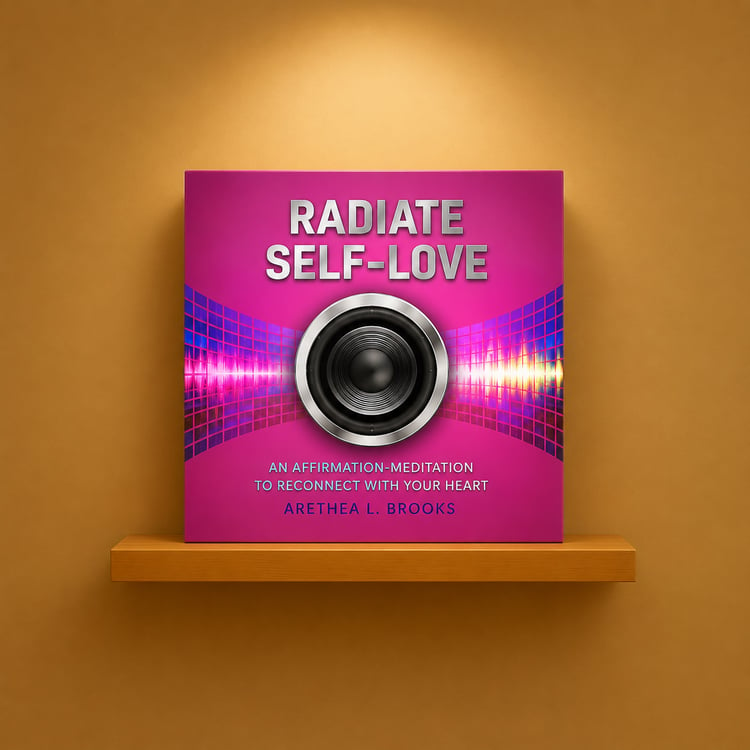
If you would like additional support with this practice, you can explore Radiate Self-Love, an affirmation meditation created to help quiet self-doubt, encourage greater self-compassion, and support a more grounded relationship with yourself.
You do not have to become a completely different person before you can experience greater peace.
You can begin with the way you speak to yourself today.
-Peace, light, and much love,
Arethea Brooks
Comments ()