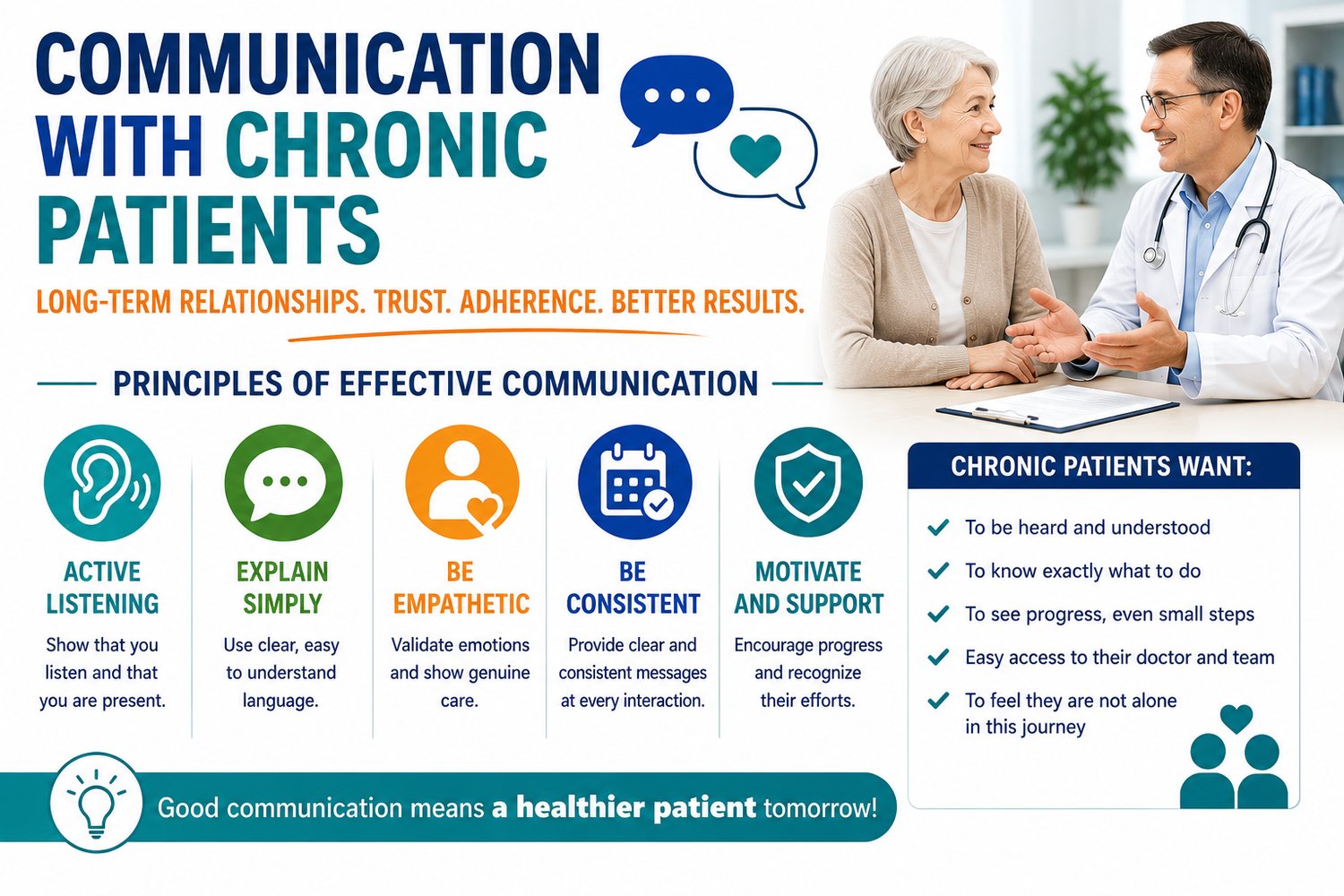
Effective Communication with Chronic Patients: A Practical Guide for Small Clinics
Chronic patients are not occasional visitors — they are part of your clinic’s daily rhythm. They return regularly, need clarity and predictability, and rely on a stable relationship with their doctor.
In small clinics, where time and resources are limited, communication becomes a therapeutic tool as powerful as medication itself.
This article shows how to turn communication into care — and how to make every chronic patient feel understood, supported, and safe.
🔍 Why Chronic Patients Need a Different Approach
A chronic patient carries both emotional and informational weight:
They ask many questions
They often research online
They forget details easily
They worry about disease progression
They need repetition and reassurance
They seek predictability and routine
They form strong bonds with their doctor
Golden rule:
👉 A chronic patient should never leave confused.
Confusion leads to poor adherence, frustration, and unnecessary visits.
🧩 The 5 Pillars of Effective Communication
1. Simplicity
Explain the condition and treatment in plain language.
Avoid medical jargon — clarity builds trust.
2. Repetition
Repeat key instructions.
Chronic patients retain only part of what they hear.
3. Written Guidance
Provide written plans or summaries.
A written plan equals better compliance.
4. Predictability
Let patients know what’s next:
When they return
What to monitor
What warning signs to watch for
5. Empathy
Tone matters as much as information.
Chronic illness brings fatigue, fear, and frustration — empathy heals.
💊 Explaining Chronic Treatment in 6 Steps
What they take
When they take it
How they take it
What the goal is
When they return
What warning signs to watch for
This structure keeps communication short, clear, and actionable.
❤️ Managing Emotions in Chronic Care
Chronic patients may be anxious, tired, or skeptical.
By using this website, you agree to our use of cookies. We use cookies to provide necessary site functionality and provide you with a great experience.
Post A Comment
Flag Comment
Are you sure you'd like to flag this comment as inappropriate?
This comment has been reported - thank you
Thank you for commenting
Your comment is awaiting moderation, and will be published as soon as it has been approved
Delete Comment
You're logged in as the blog owner. Would you like to delete this comment?
This comment has been deleted
Thank you!
Your message has been successfully sent
Thank you!
Your form has been submitted. Please check your email for a copy of your responses. If you're accepted, you'll receive an email with a link to checkout.
Could not add item to cart
Write a Review
After purchase you are sent an email receipt which includes your download page link. Please visit that download page to submit a review for this product.