

Talking to a teenager can feel like walking through a minefield — short answers, sudden irritation, closed doors, or endless time spent on the phone. But these reactions are not signs of disrespect. They are part of adolescence: a stage where identity, autonomy, and independence take center stage.
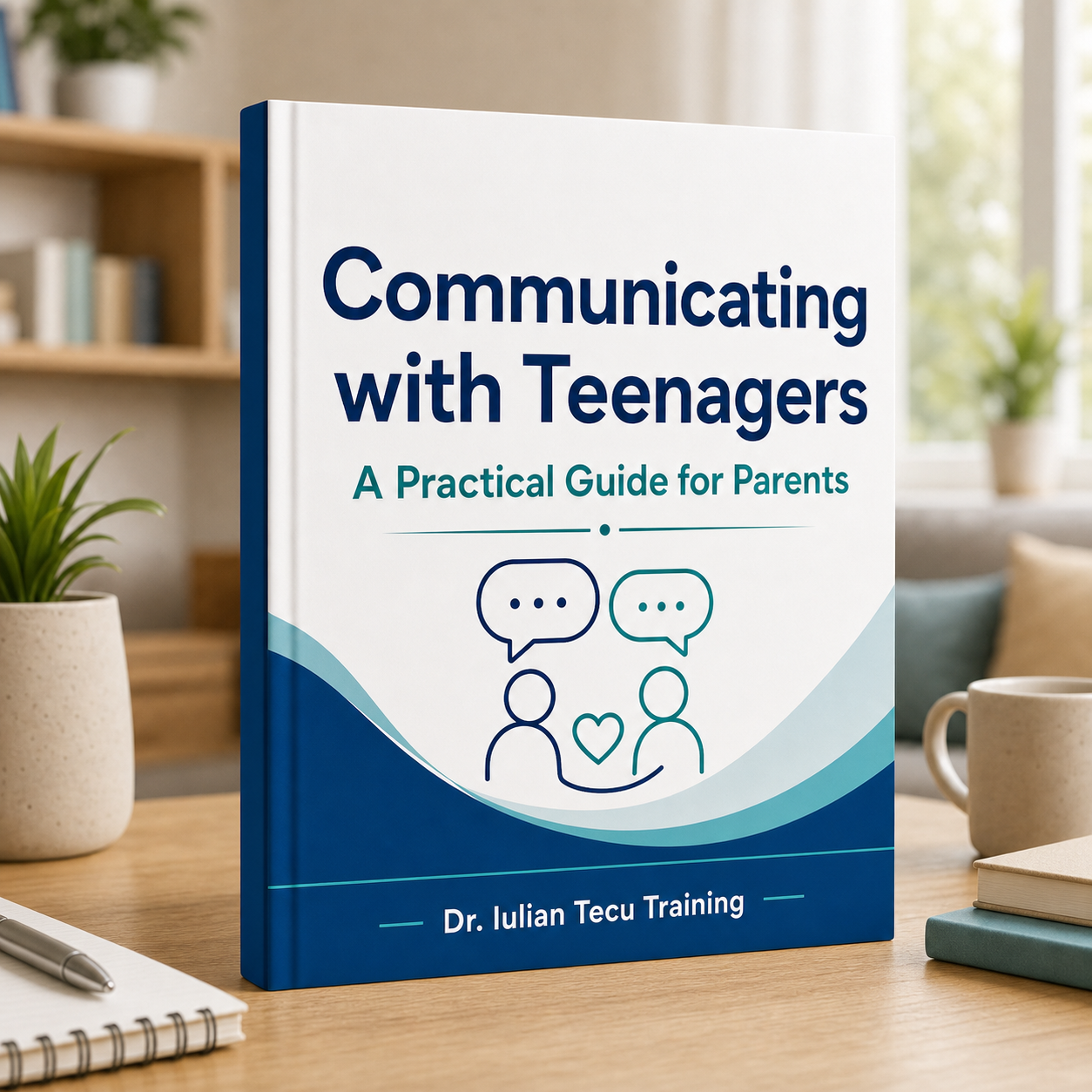
Here are the key ideas from the Communicating with Teenagers guide, in a short and practical format.
1. Connection before correction
A tense teenager cannot hear rules if they feel judged or controlled.
Start with presence, not pressure:
“I can see you’re upset. Help me understand what’s going on.”
2. Avoid the 5 communication blockers
- Interrogation
- Long lectures
- Labeling
- Comparisons
- Minimizing emotions
Replace them with calm, clear statements:
“I was worried when you didn’t answer. I want to understand what happened.”
3. Use simple scripts for difficult moments
A few examples inspired by the guide:
- When they don’t want to talk: “I’m here when you’re ready.”
- When they speak rudely: “We can talk about anything, but not in this tone.”
- When they lie: “I prefer a hard truth over finding out something was hidden.”
These reduce tension and open the door to cooperation.
4. Ask questions that open dialogue
Instead of “Why did you do that?”, try:
“What happened before you made that decision?”
Open questions invite reflection, not defensiveness.
5. Build trust through calm boundaries
Boundaries are not control — they are safety.
“We can talk about more freedom, but we need trust and clear rules.”
Conclusion
Communication with teenagers becomes easier when we shift from control to connection.
With small adjustments — observing without judging, validating emotions, asking better questions, and setting calm limits — conflicts decrease and real dialogue becomes possible.
⚠ Important Note:
This guide is educational and does not replace therapy or crisis intervention.