


Discover how creativity supports mental health recovery through neuroscience, psychology, and lived experience. 🌿🎙️🎧
Learn why making things — from pottery to writing — reduces anxiety, regulates the nervous system, rebuilds identity, and strengthens emotional resilience.
A powerful guide for anyone healing from depression, anxiety, or trauma.
Introduction: Creativity Is Not a Luxury — It’s a Lifeline
For most of us, creativity is something we associate with talent. Artists. Musicians. Writers. Dancers. Designers.
We imagine creativity as performance — something judged, evaluated, displayed, or perfected.
But what if creativity is something far more fundamental?
What if creativity is a biological capacity, woven into the architecture of the human brain?
What if it is one of the most underused tools in mental health recovery?
And what if many of us lost access to it without ever realizing what we lost?
Episode 42 of Labels Don’t Define Us explores this exact idea: creativity is not optional. It is deeply human — and deeply healing.
Listen to Episode 42 🎙️
🎧 Spotify Player Embedded Here
This article expands on that conversation, weaving together neuroscience, psychology, and lived experience to show why creativity matters, how it heals, and how you can begin reclaiming it today.
The Science Is Clear—Creativity and Mental Health Are Bidirectional
One of the most surprising findings in modern mental health research is this:
Creativity doesn’t just reflect mental health. It actively improves it.
This relationship is bidirectional:
- Mental health affects creative capacity
- Creative engagement improves mental health
These aren’t vague correlations. They are measurable, repeatable, scientifically documented mechanisms.
Let’s break them down.
Labels Don’t Define Us — The Official Podcast Guide 💛🌿🎙️🎧
Read the guide here:  https://tinyurl.com/official-podcast-guide-blog
How Creativity Heals the Brain
Creativity engages the whole brain—not just the cognitive parts we use for thinking, planning, or analyzing. It activates networks involved in:
- emotional processing
- self‑reflection
- meaning‑making
- nervous system regulation
- reward circuitry
- identity formation
Below are the core mechanisms researchers have identified.
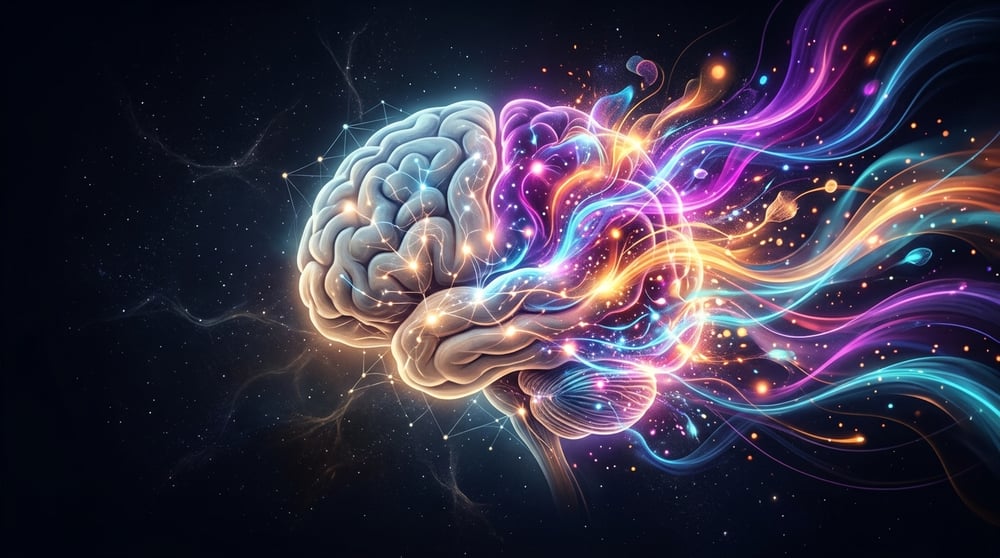
1. Externalization — Turning Inner Experience Into Something You Can See
When you create something — a drawing, a poem, a piece of pottery — you are externalizing your inner world.
Psychologist James Pennebaker’s decades of research on expressive writing shows that putting internal experience into external form helps the brain:
- process emotions
- integrate trauma
- reduce intrusive thoughts
- decrease anxiety and depression
- improve immune function
Why?
Because the brain can work with something outside of you more effectively than something swirling inside of you.
Creativity gives shape to what feels shapeless. It gives language to what feels unspeakable. It gives form to what feels chaotic.
And once it exists outside of you, the brain can finally begin to understand it.
2. Flow States — Quieting the Inner Critic
Flow is the state of complete absorption in an activity — the moment when time disappears and your mind becomes fully present.
Psychologist Mihaly Csikszentmihalyi found that flow states
- reduce rumination
- quiet the default-mode network
- interrupt self‑criticism
- regulate the nervous system
- increase calm and focus
Creative activities are one of the most reliable generators of flow.
When you’re shaping clay, painting, writing, or knitting, your brain shifts from the following:
“I’m not good enough.” “I’m failing.” “I’m overwhelmed.”
to:
“I’m here.” “I’m focused.” “I’m safe.”
For people healing from depression or anxiety, this temporary quieting of the inner critic is profoundly therapeutic.
Identity Reconstruction — Rebuilding a Sense of Self
Trauma, depression, and chronic anxiety often fracture identity. People describe feeling the following:
- disconnected
- empty
- lost
- numb
- invisible
Creative engagement helps rebuild identity by providing tangible evidence of inner life.
You make something. It exists. You can hold it. You can see it. You can point to it and say the following:
“I made this. I was here. I exist.”
This is not metaphorical. It is neurological.
Creating something strengthens the brain networks involved in:
- self‑concept
- agency
- meaning
- coherence
It helps you remember who you are—and who you are becoming.
4. Reward Activation — Dopamine, Mastery, and Motivation
Creative engagement activates the brain’s reward circuitry, releasing dopamine—the neurotransmitter associated with:
- motivation
- pleasure
- learning
- resilience
Research shows that creativity:
- reduces cortisol
- increases positive affect
- builds a sense of mastery
- strengthens emotional resilience
And here’s the most important part:
The quality of the output does not matter.
You do not need to be good at it. You do not need to show anyone. You do not need to create something beautiful.
The benefit comes from the process, not the product.
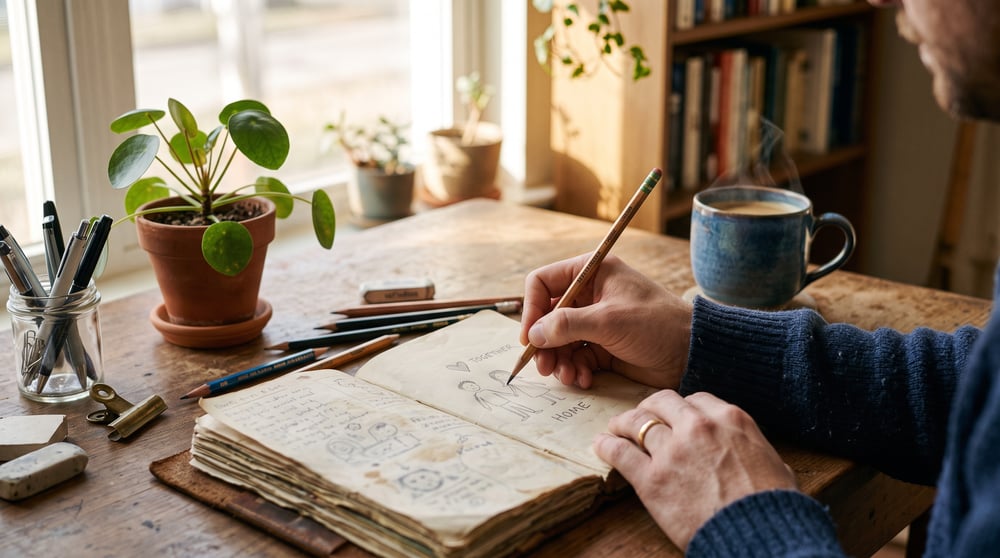
Creativity Is Not About Talent—It's About Being Human
One of the most damaging beliefs people carry is the following:
“I’m not creative.”
This belief is not only false—it is harmful.
Creativity is not a personality trait. It is not a special gift. It is not reserved for artists.
Creativity is a neurological capacity every human brain possesses.
What varies is not whether you are creative but whether you have been given permission to practice.
Many people lose access to creativity because of the following:
- standardized education
- perfectionism
- trauma
- fear of judgment
- lack of time
- lack of encouragement
- cultural pressure to perform
But the capacity remains.
It is waiting.
And it can be reclaimed.
Everyday Creativity Counts — More Than You Think
You do not need to paint a masterpiece. You do not need to write a novel. You do not need to perform on a stage.
Everyday creativity is just as healing.
Examples:
- cooking
- gardening
- pottery
- knitting
- singing
- dancing
- doodling
- journaling
- photography
- woodworking
- embroidery
- crafting
- scrapbooking
Research shows that everyday creative engagement increases:
- happiness
- emotional resilience
- self‑esteem
- nervous system regulation
- meaning
- connection
And the effects are cumulative — the more days you engage, the stronger the benefit.

Creativity as a Companion in Recovery — Louise’s Story (Reimagined)
In Episode 42, Louise shares how creativity became a lifeline during her darkest period.
Her story reflects what thousands of people experience:
Creativity doesn’t fix everything. It doesn’t erase pain. It doesn’t replace therapy or medication.
But it does something uniquely powerful:
It brings you back to yourself.
Louise describes sitting in a pottery class, hands in clay, mind quieting for the first time in months.
Not happy. Not healed. Just present.
That presence — that moment of “I’m here” — is the beginning of recovery.
Over time, her creative practice became
- a conversation
- a mirror
- a record of her inner life
- evidence of her existence
- proof of her resilience
This is what creativity does. It gives you back pieces of yourself you thought were gone.
Creativity Belongs to You — No Permission Required
If you have ever said:
“I’m not creative.”
Here is the truth:
You are. You always were. You always will be.
Creativity is not about talent. It is about expression.
It is not about performance. It is about presence.
It is not about perfection. It is about connection—to yourself, your body, your emotions, and your story.
You do not need permission. You do not need skill. You do not need an audience.
You only need to begin.
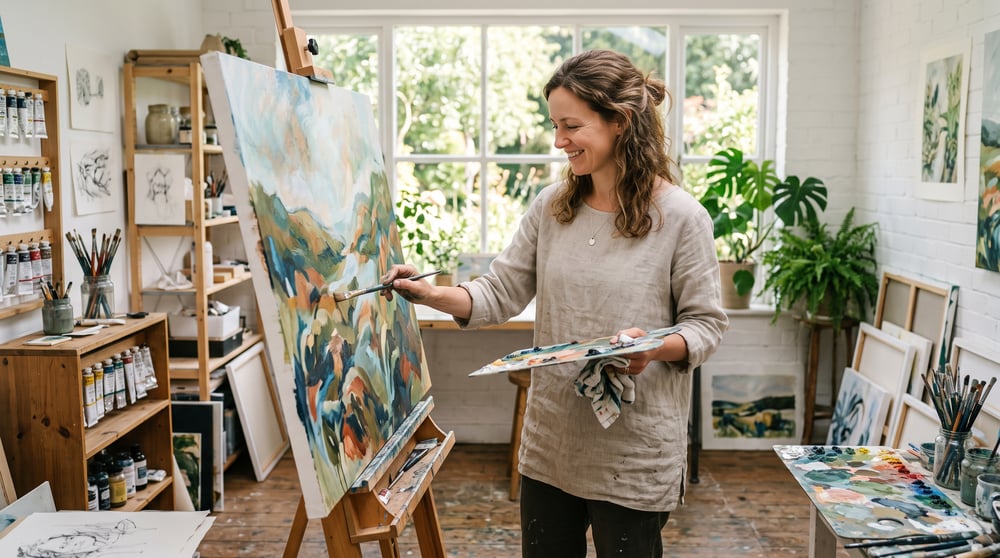
Three Ways to Reclaim Creativity This Week
1. Choose One Creative Act With No Outcome Attached
Make something small:
- cook a meal
- draw a messy sketch
- write a paragraph
- plant a seed
- shape clay
- knit a row
- hum a melody
Stay long enough to feel your mind settle.
That settling is the beginning.
2. Consider Creative Arts Therapy
Creative arts therapies are
- evidence‑based
- professionally regulated
- clinically effective
- widely used in hospitals and mental health centers
They include:
- art therapy
- music therapy
- dance/movement therapy
- drama therapy
- expressive writing therapy
These modalities reach dimensions of healing that talking alone sometimes cannot.
3. Retire the “I’m Not Creative” Label
It is not true. It never was.
Creativity is your birthright.
Reclaim it.
Listen to Episode 42 🎙️
🎧 Spotify Player Embedded Here
Final Thoughts — Make Something This Week
Creativity is not a luxury. It is not frivolous. It is not self‑indulgent.
It is a scientifically validated mental health intervention.
It is a way back to yourself.
If you are in a dark place right now, make something — anything. It does not have to be good. It does not have to be seen. It just has to be yours.
One day, you will look at what you made and realize the following:
“I was here. I survived. There was something in me worth expressing.”
Creativity is not about talent. It is about truth.
And your truth matters.
If this episode encouraged you, please consider following the Labels Don't Define Us podcast on Spotify, Apple Podcasts, or Acast.
Leaving a review only takes a minute, but it helps these conversations reach more people who may be silently struggling with anxiety while striving to achieve their dreams.
And if someone came to mind while reading this, share this episode with them.
creativity and mental health, creative recovery, art therapy benefits, mental health healing, creativity for anxiety, creativity for depression, flow state healing, identity reconstruction, everyday creativity, neuroscience of creativity, emotional resilience, trauma recovery tools
#MentalHealthRecovery #CreativityHeals #ArtTherapy #EmotionalResilience #TraumaRecovery #DepressionSupport #AnxietyTools #CreativeExpression #HealingJourney #LabelsDontDefineUs #MentalHealthAwareness #CreativeWellbeing
Comments ()