

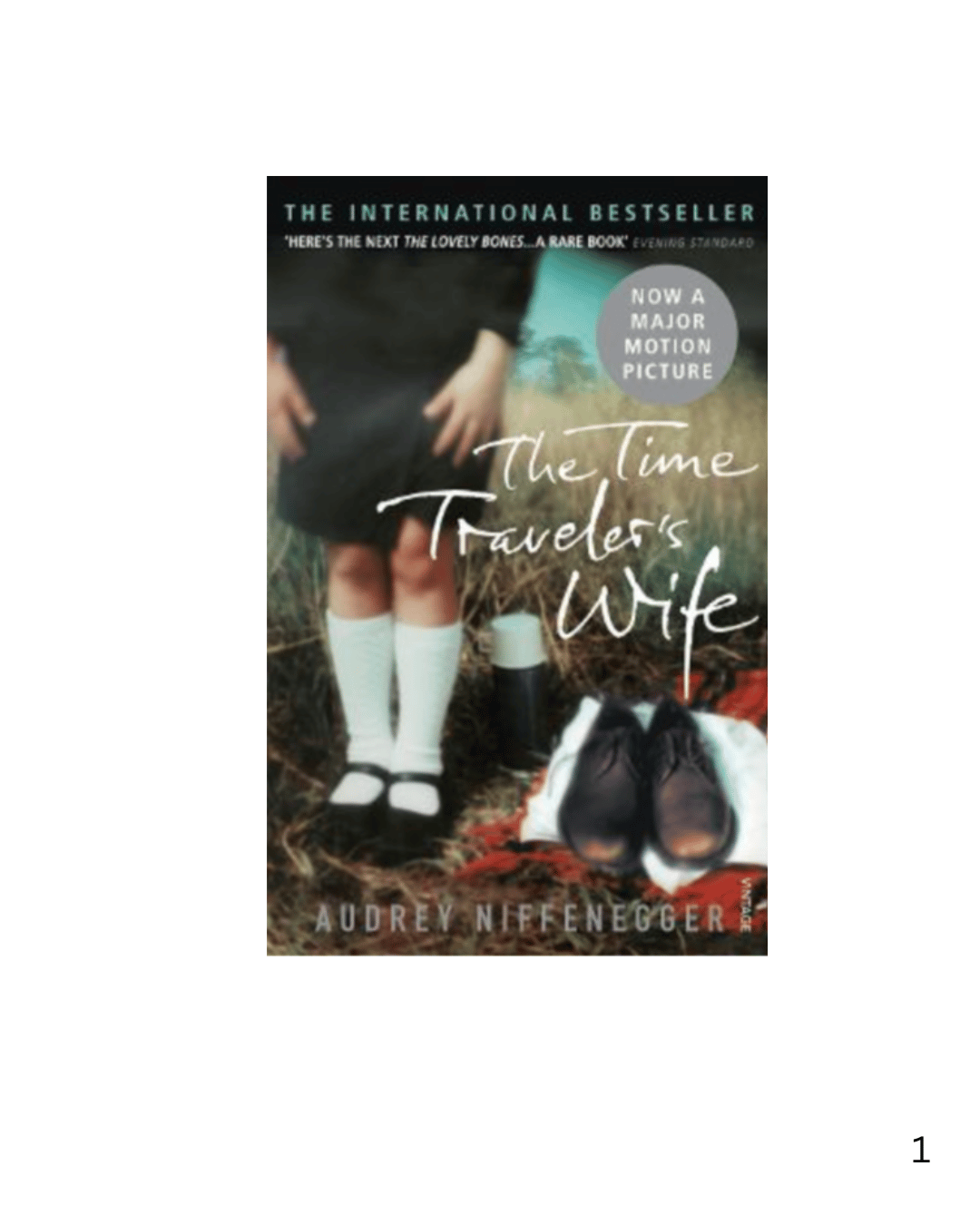
In advance of the publication of the sequel to The Time Traveler's Wife (Life Out of Order: due in October 2026), I am publishing my review of the OG, posted in 2008 on the Vulpes Libris blog.
The Time Traveler’s Wife is the debut novel of Audrey Niffenegger published in 2004 which went on to become a phenomenal bestseller, exceeding all expectations of the publisher and the writer. Not only has the book succeeded in terms of sales (with many millions of copies sold, although I’m not sure exactly how many) but also in terms of critical acclaim and, possibly most importantly of all, readers’ appreciation. On the US and UK Amazon websites over 2000 readers took the time to write their opinion of the book. About 1800 of these are 4 or 5 star reviews and most of them abound with effusive, unreserved enthusiasm. Not me.
In a nutshell (if anyone doesn’t know the story already) this is the love story of Henry, a man with a genetic deficiency which causes him to snap out of the time he is in and be projected unwillingly into another point of his life either in the future or the past and Clare, the woman he loves. And that basically is it.
So why did I hate it? (Is hate too strong a word? ‘Thorougly disliked’ might suffice but then that wouldn’t be in the spirit of our critical week.)
I had my suspicions about Henry from the start; the traveling back in time by a couple of months when he was a teenager to have sex with himself; his sexual thoughts about a little girl who would later be his wife; but it was about quarter of the way into the book when I realized just how obnoxious he really was. In this scene he beats a guy, who is very drunk and unable to fight back, into a pulp just because he ‘had the effrontery to call me a faggot’. And this is supposedly the year 2000. Later in the novel, he unscrupulously uses his knowledge that his doctor’s wife is expecting a Down’s Syndrome child in order to coerce his doctor into helping him.
Clare is almost as unbearable. On her first meeting with her father-in-law he asks why she wants to marry Henry and she replies ‘Because he’s really, really good in bed.’ (She’s 21.) Of course everyone in the scene ‘howls with laughter’ at this piece of witty repartee. Except me. Later, knowing that any child they might have would be likely to inherit Henry’s inconvenient tendency to time-travel, she dismisses the possibility of adoption as ‘just pretending’ to be parents.
Henry and Clare try their best to be ‘hip’: they are into punk music (as well as a wide range of classical, opera etc), have lots (and lots!) of energetic sex and pepper their speech with bad language but in reality they are old-fashioned, condescending bourgeois with superiority complexes. They like to drop smatterings of French and German in their conversations with each other, quote their favourite poet, Rilke, eat in trendy restaurants, name-drop, have pat opinions on art and discuss philosophical concepts in very superficial terms. Clare comes from an incredibly wealthy family and, although Henry is from more modest beginnings, his father is the principal violinist with the Chicago Symphony Orchestra and his mother was a brilliant opera singer whose career was cut short by a dramatic and horrific car accident. Both Henry’s and Clare’s voices are so alike that I often found it hard to keep track of whose narrative I was in.
The condescension they show to a young couple of punks they meet at a party is typical of their attitude to those around them but of course all their friends (the usual politically correct medley including the gay friend dying of AIDS) are in thrall to Henry and Clare, torn between admiration and adoration of them and desire and profound envy of their sexual chemistry and intense love.
Despite Henry’s assertion that he cannot go back to the past and change events, he does manage to pick up the winning numbers to the lottery on one trip. He also manages to pass on stock market tips to his friends but seems unable to use his talents for any non-materialistic purpose.
To be fair, (I am trying) there are some scenes which capture well the sadness of knowing what lies ahead but it’s a high price to pay for the effort. As I skimmed over this novel for the second time in order to write this review (what I’m prepared to do for Vulpes is above and beyond the call of duty!) I realized that the main thing I learned from this novel is just how boring, self-centered and thoroughly irritating people who are madly in love are to all those around them. What a good thing that in real life most people tend to regain a modicum of proportion, not to mention decorum, over time.
Comments ()