

FAQs
-
Yes — and honestly, this is exactly the right time to read it.
Most of the changes women notice in their 40s — the belly weight, the 3am wake-ups, the energy drop, the mood shifts — happen during perimenopause, which can begin anywhere from your late 30s to mid-40s, often years before your last period.
Your cycles may still be regular. Your GP may say your bloods are normal. And you can still be experiencing every symptom in this guide.
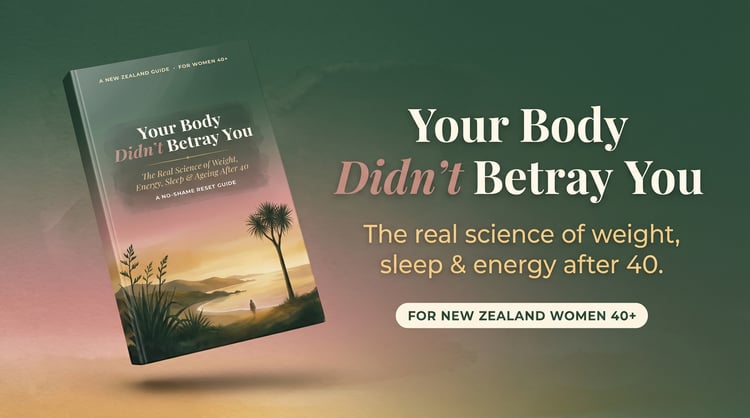
This book explains what is happening in that in-between phase — when your body has clearly changed but nothing on paper proves it yet. That gap is exactly what this guide was written to fill.
-
That's a fair question, and it deserves a straight answer.
Most health books are written for a general audience, based on research done mostly on men or younger women, and designed around the American or British health system. They tell you to eat less, move more, and manage stress — advice that is not wrong, but is completely insufficient for a 40+ body going through a hormonal transition.
This guide is different for three reasons. First, it is written specifically for New Zealand women over 40 — the food references, the health system context, and the cultural framing are all local. Second, it does not give you a programme to follow. It explains why your body is behaving differently so you can make your own informed decisions rather than following rules that were never designed for you. Third, it is not trying to sell you a supplement stack, a coaching programme, or a follow-up product. It is just the information — clearly explained, no agenda.
You do not have to take our word for it. The first chapter is written so you know within a few pages whether this resonates with your experience. If it does not, you have lost very little. If it does — and most women tell us it does — it will be the clearest explanation you have ever read of what your body is actually doing.
-
This guide is educational, not medical advice — and it is written with that boundary clearly in mind throughout.
You will not find specific supplement doses to follow, hormone protocols to start, or exercise programmes to push through regardless of how you feel. Every section that touches on supplements, blood work, hormones or medications includes a clear recommendation to discuss anything relevant with your GP or pharmacist before acting on it.
The guide is designed to help you have better conversations with your healthcare provider — not to replace them. Many women tell us they bring it to their next GP appointment because it helps them articulate exactly what they have been experiencing and what questions to ask.
If you have a specific health condition, are on regular medication, or have been advised by a doctor to follow a particular eating or exercise plan, none of that changes with this guide. It sits alongside your existing healthcare, not in place of it. As always, your GP is your first point of contact for any personal health decisions.