


Author
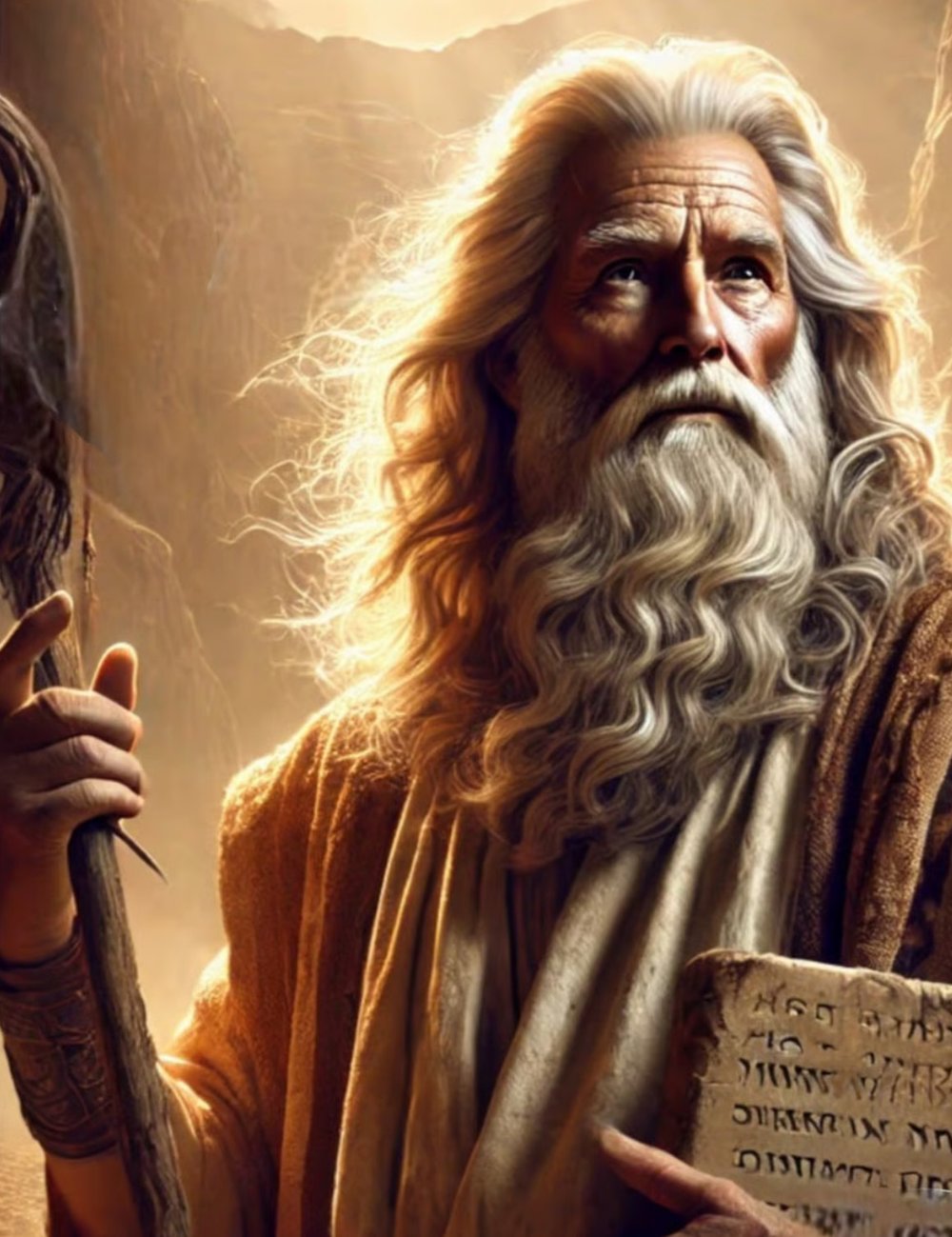
Moses
(Moʹses) [Meaning "Drawn Out," referring to being saved from water] (Watchtower Bible and Tract Society of New York, Inc., n.d.-a).
Moses, the man who probably could have won an award for "Most Likely to Lead a Nation," was a devoted "man of the true God" and a central figure in the Bible. Born in 1593 B.C.E. in Egypt, he was the son of Amram and Jochebed, and the brother of Aaron and Miriam (Exodus 6:16-20). As the leader of Israel, he served as a mediator of the Law covenant, prophet, judge, commander, and historian (Watchtower Bible and Tract Society of New York, Inc., n.d.-a). Talk about a multitasker. Moses, the guy who got things done, was pretty much the ancient world’s project manager. He didn’t just get people out of Egypt—he helped write the book... literally!
God appointed Moses to write the Pentateuch—the first five books of the Bible: Genesis, Exodus, Leviticus, Numbers, and Deuteronomy. These books are foundational, kind of like the original "how to" guide for living, except it didn’t come with a “Warning: May include fire and brimstone.”
*For further details, please click here.

Key Characters
Jehovah, God
(Je·hoʹvah) [from the Hebrew Tetragrammaton YHWH, related to the verb ha·wahʹ, “to become,” meaning “He Causes to Become”] (Watch Tower Bible and Tract Society of Pennsylvania, n.d.-c).
Jehovah is the true God, the Creator of all things, worshiped by figures such as Abraham (Genesis 24:27), Moses (Exodus 15:1, 2), and Jesus (John 20:17). His name, revealed as Jehovah (Exodus 3:15), is derived from the Hebrew Tetragrammaton (YHWH, commonly pronounced “Yahweh”) and means “He Causes to Become,” highlighting His role as the Creator (Revelation 4:11) and the Fulfiller of His purpose (Isaiah 42:8; Psalm 83:18; Isaiah 54:5). Jehovah is a God of love (Exodus 34:5-7), justice, and righteousness, who desires all to recognize His name and sovereignty (Isaiah 55:10, 11). Despite human imperfections, He extends mercy (Luke 6:35) and invites all to worship Him wholeheartedly (1 John 4:8) (Watch Tower Bible and Tract Society of Pennsylvania, n.d.-c; Watch Tower Bible and Tract Society of Pennsylvania, n.d.-d). Fun fact: Jehovah is basically the ultimate cosmic CEO, and He’s been running this show for a while.
The name Jehovah appears over 7,000 times in the Bible. However, due to superstition, its exact ancient pronunciation is unknown. It is often translated as "Jehovah" or "Yahweh," (Yahweh being the scholarly Hebrew reconstruction, and Jehovah the best-known English form) with its significance transcending pronunciation.
*For further details, please click here.

Adam
(Adʹam) [Earthling Man; Mankind; Humankind; derived from a root meaning “red”] (Watchtower Bible and Tract Society of New York, Inc., n.d.-e).
Adam, the first human and "son of God," was created by Jehovah in 4026 B.C.E. as the pinnacle of His earthly creation. Formed from the dust of the ground and given the breath of life, Adam was made in God’s image, possessing qualities such as love, wisdom, justice, and power. He was tasked with caring for the Garden of Eden, naming animals, and expanding Paradise across the earth with his wife, Eve, whom God created from his rib (Genesis 1:26-28; 2:7, 18-23) (Watchtower Bible and Tract Society of New York, Inc., n.d.-e). Adam was God’s ultimate masterpiece—created from dust, given life, and then put in charge of naming all the animals. Imagine being the first human and getting to name everything! “I’ll call that… an elephant. And you, you’re a giraffe.” That’s some serious power! Talk about a “rags to riches” story—Adam literally went from dust to glory in one divine breath!
*For further details, please click here.

Eve
[Living One; likely derived from the Hebrew verb cha·yahʹ, meaning “to live”] (Watchtower Bible and Tract Society of New York, Inc., n.d.-f).
Eve was the first woman and the final creation of God’s earthly works (Eve was the first woman and the last piece of the puzzle). Created to complement Adam, she was formed from his rib while he slept (Created to be Adam’s perfect helper, she was made from one of his ribs while he was taking a little nap). Adam joyfully accepted her as his wife, naming her ʼish·shahʹ (woman) and recognizing her as "bone of my bones and flesh of my flesh." You could say Eve was the first-ever surprise guest at the dinner table! Together, they were blessed by God to fill the earth and care for creation (Genesis 2:18-23; 1:28) (Watchtower Bible and Tract Society of New York, Inc., n.d.-f). Eve got the most original “rib” dinner ever. Forget salad; she was made out of the finest Adam-cut ribs, seasoned with love!
*For further details, please click here.
Cain
[Something Produced] (Watchtower Bible and Tract Society of Pennsylvania, n.d.-b)
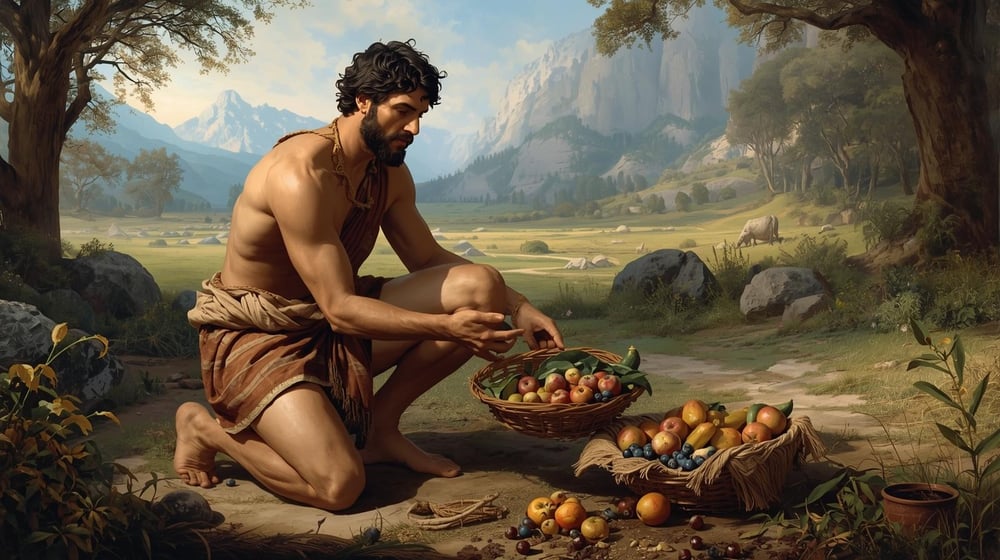
Cain was the first human born on earth, the first child of the original human pair, Adam and Eve (Watchtower Bible and Tract Society of Pennsylvania, n.d.-b). After Cain’s birth, Eve stated: “I have produced a man with the aid of Jehovah” (Genesis 4:1; Watchtower Bible and Tract Society of Pennsylvania, n.d.-b) (and yes, she probably did not mean he came with a full instruction manual). Some have suggested that Eve may have wondered whether she was the foretold woman through whom the promised “seed” would come (Genesis 3:15; Watchtower Bible and Tract Society of Pennsylvania, n.d.-b) (spoiler: she wasn’t, so no pressure, Eve). If so, that expectation was mistaken. Nevertheless, her statement was accurate, since God had not removed the reproductive powers of Adam and Eve and had assured Eve that she would bear children, though with pain (Genesis 3:16; Watchtower Bible and Tract Society of Pennsylvania, n.d.-b) (because apparently, childbirth was going to be part motivation, part cardio).
Cain became a cultivator of the ground, and in time both he and his younger brother Abel brought offerings to Jehovah, indicating their desire to gain God’s favor (Genesis 4:2–5; Watchtower Bible and Tract Society of Pennsylvania, n.d.-b) (kind of like showing up to a party with a gift, hoping God notices). Cain’s offering of fruits from the ground was not looked upon with approval. This was not because the offering was bloodless, as later Mosaic Law allowed for grain offerings, nor necessarily because of inferior quality. Rather, the decisive issue was Cain’s lack of faith and improper motivation, which rendered his offering unacceptable in Jehovah’s sight (Hebrews 11:4; Watchtower Bible and Tract Society of Pennsylvania, n.d.-b) (basically, he brought leftovers to a five-star buffet).
Although the Bible does not specify how Jehovah revealed His approval of Abel’s offering and rejection of Cain’s, the distinction was clearly evident to both men. Jehovah, who examines the heart, recognized Cain’s flawed attitude (1 Samuel 16:7; Psalm 139:1–6; Watchtower Bible and Tract Society of Pennsylvania, n.d.-b). God’s rejection of the offering exposed Cain’s growing resentment, jealousy, and anger—traits later identified as “works of the flesh” (Galatians 5:19–20; Watchtower Bible and Tract Society of Pennsylvania, n.d.-b) (aka the original recipe for sibling rivalry). Jehovah warned Cain that he could gain approval if he chose to do what was right and urged him to master the sinful desire that was “crouching at the door” (Genesis 4:6–7; James 1:14–15; Watchtower Bible and Tract Society of Pennsylvania, n.d.-b) (think of it like a spiritual cat lying in wait, just itching to jump). Cain rejected this counsel, choosing a course later described as “the path of Cain” (Jude 11; Watchtower Bible and Tract Society of Pennsylvania, n.d.-b) (not exactly a path you’d want to add to your Google Maps).
Cain later said to Abel, “Let us go over into the field” (Genesis 4:8; Watchtower Bible and Tract Society of Pennsylvania, n.d.-b). Although these words do not appear in the Masoretic Text, they are included in several ancient manuscripts and translations. Once in the field, Cain attacked and killed his brother, becoming the first human murderer (Genesis 4:8; Watchtower Bible and Tract Society of Pennsylvania, n.d.-b) (and yes, this was really the first bad sibling fight). In this sense, Cain could be said to have originated with “the wicked one,” who is described as both a liar and a manslayer (1 John 3:12; John 8:44; Watchtower Bible and Tract Society of Pennsylvania, n.d.-b). Cain’s response to Jehovah’s inquiry about Abel’s whereabouts—“I do not know. Am I my brother’s guardian?”—showed no repentance or remorse (Genesis 4:9; Watchtower Bible and Tract Society of Pennsylvania, n.d.-b) (classic “not my circus, not my monkeys” moment).
Jehovah sentenced Cain to banishment from the ground, cutting him off from productive agriculture and removing him from the vicinity of Eden. Cain expressed distress over the severity of his punishment and feared retaliation, but still showed no genuine repentance. Jehovah then established a “sign for Cain” to prevent others from killing him. The Bible does not indicate that this sign was a physical mark; rather, it was likely a formal divine decree known and respected by others (Genesis 4:10–15; Watchtower Bible and Tract Society of Pennsylvania, n.d.-b) (like a divine “Do Not Disturb” sign, but enforceable).
Cain went to live in “the land of Fugitiveness, east of Eden,” taking with him his wife, likely a daughter or granddaughter of Adam and Eve (Genesis 4:16–17; Genesis 5:4; Watchtower Bible and Tract Society of Pennsylvania, n.d.-b). After the birth of his son Enoch, Cain built a city and named it after him (Genesis 4:17; Watchtower Bible and Tract Society of Pennsylvania, n.d.-b) (because apparently, first kids = first cities). His descendants included individuals known for advancements in livestock raising, music, and metalworking, as well as for polygamy and violence (Genesis 4:17–24; Watchtower Bible and Tract Society of Pennsylvania, n.d.-b). Cain’s family line ultimately came to an end with the global Flood of Noah’s day (Watchtower Bible and Tract Society of Pennsylvania, n.d.-b) (spoiler alert: that’s one way to clear out a bad neighborhood).
Abel
[Possibly “Exhalation” or “Vanity”] (Watchtower Bible and Tract Society of Pennsylvania, n.d.-j)
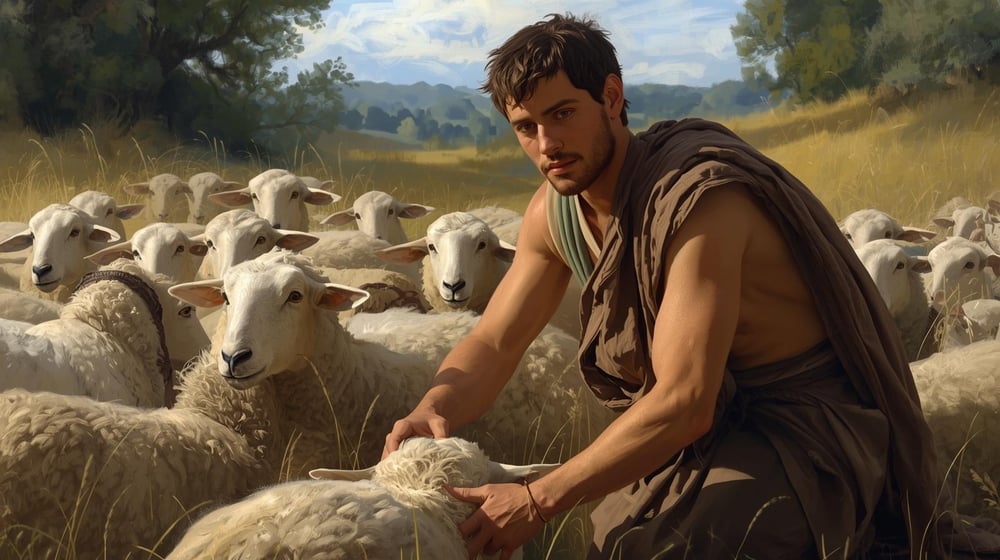
Abel was the second son of Adam and Eve and the younger brother of Cain (Genesis 4:2; Watchtower Bible and Tract Society of Pennsylvania, n.d.-j) (basically, the first younger sibling to deal with all the firstborn pressure). It is likely that Abel had sisters while he was alive, as the biblical record mentions daughters born to Adam and Eve, though their names are not recorded (Genesis 5:1–4; Watchtower Bible and Tract Society of Pennsylvania, n.d.-j) (so imagine the original family group chat without emojis). As an adult, Abel became a herder of sheep, in contrast to his brother Cain, who worked the soil (Genesis 4:2; Watchtower Bible and Tract Society of Pennsylvania, n.d.-j) (one brother raising sheep, the other raising eyebrows).
After an unspecified period of time, both Abel and Cain brought offerings to Jehovah from what they possessed: Abel offered the firstlings of his flock, including their fat portions, while Cain offered produce from the ground (Genesis 4:3–4; Watchtower Bible and Tract Society of Pennsylvania, n.d.-j) (think “bringing your best” vs. “grabbing whatever’s in the fridge”). Both brothers demonstrated faith in God, likely having learned of Him from their parents, and they would have understood why they and their family were excluded from the garden of Eden. Their offerings signified recognition of their alienation from God and a desire to gain His favor. While it is possible they used altars for their sacrifices, the record does not explicitly mention this (Watchtower Bible and Tract Society of Pennsylvania, n.d.-j) (probably somewhere between “campfire cooking” and “divine BBQ”).
Jehovah looked with favor on Abel’s offering but not on Cain’s. Although the manner in which God approved or rejected these offerings is not detailed, the distinction must have been clear to both men (Watchtower Bible and Tract Society of Pennsylvania, n.d.-j) (like God sending a thumbs-up to one and a facepalm to the other). Some note that Abel’s offering was specified as the best of his flock, whereas Cain’s offering is not described as the choicest of his produce. Abel may have reflected on the divine promise in Genesis 3:15, considering that blood would ultimately need to be shed for deliverance, though the full significance of this likely exceeded his understanding. Centuries later, the sacrifice of an unblemished lamb would foreshadow the ultimate sacrifice of God’s perfect Son (John 1:29; Watchtower Bible and Tract Society of Pennsylvania, n.d.-j) (talk about foreshadowing like a spiritual Netflix teaser).
The reason God favored Abel’s offering is clarified in later scripture. The apostle Paul identifies Abel as the first man of faith and explains that this made his sacrifice of greater value than Cain’s (Hebrews 11:4; Watchtower Bible and Tract Society of Pennsylvania, n.d.-j) (so, Abel: 1, Cain: 0). In contrast, Cain’s heart attitude was flawed (1 John 3:11–12; Watchtower Bible and Tract Society of Pennsylvania, n.d.-j), and his later rejection of God’s counsel, culminating in the premeditated murder of Abel, confirmed his wrongdoing (and just like that, sibling rivalry turned deadly serious).
Jesus described Abel as the first martyr and the first target of religious persecution, highlighting the seriousness of Cain’s actions (Luke 11:48–51; Watchtower Bible and Tract Society of Pennsylvania, n.d.-j) (spoiler alert: this is not a good example of family bonding). The phrase “the founding of the world” (Greek: kosmos, with katabole meaning “throwing down [of seed]”) refers to the birth of children to Adam and Eve, thereby establishing the human race (Hebrews 11:11, Int.; Watchtower Bible and Tract Society of Pennsylvania, n.d.-j) (aka humanity’s official launch day). Paul further includes Abel among the “cloud of witnesses” of pre-Christian times, demonstrating the enduring example of faith he set (Hebrews 11:4; 12:1; Watchtower Bible and Tract Society of Pennsylvania, n.d.-j) (think of it like the original “hall of fame” of faith).

Seth
[Appointed; Put; Set] (Watchtower Bible and Tract Society of Pennsylvania, n.d.-k)
Seth was a son of Adam and Eve, born when Adam was 130 years old (Genesis 4:25; Watchtower Bible and Tract Society of Pennsylvania, n.d.-k) (basically, God hitting the reset button after a family tragedy—talk about sibling replacement policies). Eve named him Seth, saying, “God has appointed another seed in place of Abel, because Cain killed him” (Genesis 4:25; Watchtower Bible and Tract Society of Pennsylvania, n.d.-k) (I mean, you’ve got to name the kid something after the first one went down in history for murder).
Seth may not have been the third child of Adam and Eve, as Genesis 5:4 notes that Adam had other sons and daughters, some of whom could have been born before Seth (Watchtower Bible and Tract Society of Pennsylvania, n.d.-k) (so Seth might have had siblings older than him—family math was tricky back then).
Seth is particularly significant because Noah, and through him the present-day human race, descended from him rather than from the murderous line of Cain (Genesis 5:3–8; 1 Chronicles 1:1–4; Luke 3:38; Watchtower Bible and Tract Society of Pennsylvania, n.d.-k) (basically, Seth: the ultimate MVP for humanity’s survival). At 105 years old, Seth became the father of Enosh, and he lived 912 years (here.

Eden
(Eʹden) [Pleasure] (Watchtower Bible and Tract Society of New York, Inc., n.d.-g)
Eden was a region where Jehovah created a garden as the original home for Adam and Eve. Known as the "garden of Eden" or "paradise," it was filled with beautiful trees, abundant food, and diverse animal life (a whole zoo’s worth of animal life—no ticket required) (Genesis 2:8-15). Adam was placed there to care for it and was given authority over its creatures —basically the first job ever, and no commute! (Watchtower Bible and Tract Society of New York, Inc., n.d.-g)
*For further details, please click here.

Timeline of Events in the Book of Genesis
Documenting events from creation to the early history of Israel, covering the period from the beginning (a.k.a. "in the beginning" beginning) to 1657 B.C.E. (Watch Tower Bible and Tract Society of Pennsylvania, 2013). Let’s just say Genesis doesn’t pull any punches—it starts with "Let there be light" and ends with a family reunion in Egypt. From paradise lost to sibling rivalry, a worldwide flood, and a 100-year-old dad changing diapers (looking at you, Abraham), this timeline packs more drama than a full season of reality TV—ancient edition.
Main Events
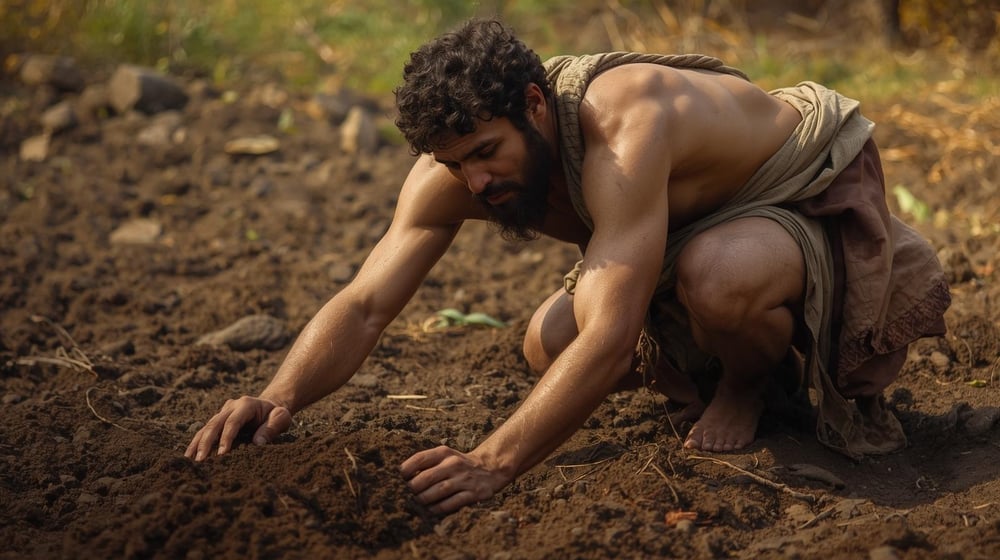
- Cain and Abel’s drama and its consequences (Verses 1–16)
(The first family feud… and no, nobody won a toaster.)
- The wild family tree of Cain’s descendants (Verses 17–24)
(Proof that drama can apparently be inherited.)
- Seth arrives on the scene, followed by his son Enosh (Verses 25–26)
(Finally, someone in this family who isn’t starting problems.)
(Watch Tower Bible and Tract Society of Pennsylvania, 2013)

Key Themes & Lessons
1. True Worship Requires the Right Heart (Genesis 4:4–5)
Abel strolls in with his offering like, “Here you go, Jehovah — the best of the best,” and Cain shows up like someone who grabbed the first thing in the pantry five minutes before company arrived. Jehovah doesn’t play that. He looks at Abel with favor because the offering came from genuine devotion, not leftover energy or a halfhearted attitude. Cain’s offering, on the other hand, was accepted with the same enthusiasm you’d give a spoiled casserole at a covered-dish dinner. The point? Jehovah wants sincerity, not spiritual shortcuts. You can’t slap a bow on a lazy effort and hope God won’t notice — He absolutely notices.
2. Sin Wants Control, but We Must Rule It (Genesis 4:7)
Jehovah basically sits Cain down and gives him the ancient version of “Listen, buddy, get a grip.” He warns Cain that sin is “crouching at the door,” which sounds like a cat waiting to pounce — except this cat has claws, bad intentions, and zero interest in cuddles. Jehovah tells Cain he needs to rule over it, not let it drag him out by the ankle. The lesson? Bad attitudes don’t politely knock; they crouch, lurk, and wait for you to slip up. If you don’t deal with them early, they’ll deal with you — and not gently. You’ve got to get ahead of your own mess before your mess gets ahead of you.
This warning shows that temptation itself isn’t the sin—what you do with it is. Cain wasn’t condemned for feeling disappointed or hurt; he was warned about letting those emotions take the wheel. Jehovah’s counsel proves that humans are not helpless victims of their impulses. Responsibility is placed squarely on Cain: you can master this. The verse highlights Jehovah’s fairness—He doesn’t punish Cain without first giving him insight, choice, and opportunity to course-correct. Sin is portrayed as aggressive, but not invincible, and Jehovah makes it clear that self-control is possible when we listen early instead of reacting late.
3. Jealousy & Anger Lead to Disaster (Genesis 4:8)
Instead of fixing his own mindset, Cain takes the “scenic route to terrible decisions.” Jealousy sprouts, anger blooms, and next thing you know, he’s dragging Abel into a field like he’s about to show him a new garden project — except the only thing getting planted is trouble. It escalates fast. One minute Cain is sulking, the next minute he’s committing the first murder in history. All because he couldn’t handle someone else doing better than him. This chapter is a billboard-sized reminder: jealousy doesn’t make you better; it just makes everyone else unsafe.
This progression shows how unchecked emotions snowball into irreversible actions. Cain’s problem wasn’t Abel—it was comparison. Instead of improving his own worship, Cain resented Abel’s approval. Scripture quietly exposes a truth humans still wrestle with: jealousy thrives when pride refuses correction. Cain’s violence wasn’t spontaneous; it was the final stop on a road paved with ignored warnings. The Bible doesn’t glamorize his anger—it exposes it as destructive, isolating, and ultimately self-defeating. Cain loses his brother, his peace, and his place, all because he couldn’t stand not being the favorite in that moment.
4. Jehovah Is Just but Also Merciful (Genesis 4:15)
After Cain’s meltdown, Jehovah steps in with justice — consequences are delivered, because this isn’t a free-for-all. But what’s surprising is the mercy woven into the judgment. Jehovah doesn’t throw Cain to the wolves; He marks him for protection so nobody goes vigilante on him. Cain fears for his life, and Jehovah still cares enough to guard him. It’s like disciplining a child and then packing their lunch for school anyway. Jehovah’s justice never lacks compassion, even when humans make choices that deserve consequences.
This balance reveals Jehovah’s measured justice. Cain doesn’t escape accountability—his punishment fits the crime—but Jehovah refuses to let vengeance spiral out of control. The protective mark shows that human life still has value, even when that life has caused harm. This moment dismantles the idea that Jehovah is reactionary or cruel. His judgments are purposeful, restrained, and infused with mercy. Even when someone crosses a line they can’t uncross, Jehovah still considers their survival, their dignity, and the broader impact of unrestrained retaliation.
5. Hope Continues Through Seth (Genesis 4:25–26)
Genesis 4 ends on a surprisingly hopeful note. After tragedy, heartbreak, and Cain’s resume of poor life decisions, Adam and Eve have another son — Seth. From Seth comes a line of people who actually “call on the name of Jehovah,” like spiritually mature adults. This isn’t just a family update; it’s the continuation of Jehovah’s purpose despite human chaos. Think of it like the divine version of, “Life went sideways, but we’re still moving forward.” No matter how dramatic the world gets — and it gets plenty dramatic — Jehovah’s plan doesn’t slow down. It just shifts to the next faithful person who’s willing to step up.
This closing shows that human failure never derails divine purpose. Jehovah doesn’t rebuild through Cain’s line, but He also doesn’t abandon humanity. Seth represents restoration, continuity, and intentional worship. The phrase “calling on the name of Jehovah” signals organized, sincere devotion—not impulsive religion. Even after violence enters the world, hope isn’t canceled. Jehovah advances His purpose quietly, steadily, and through willing hearts. The message is clear: God’s plan doesn’t depend on perfect people—it depends on faithful ones.

Reflection Questions
1.) What does this tell me about Jehovah God?
- Genesis 4 shows Jehovah as the ultimate Parent Who Actually Pays Attention. You can’t slide a half-baked offering past Him and hope He won’t notice. Abel brings his best, and Jehovah’s like, “Now that’s what I’m talking about.” Cain brings whatever he scraped off the bottom of the fridge and expects applause. Jehovah basically looks at him the way you look at someone who tries to pass instant mashed potatoes off as homemade. But here’s the thing: Jehovah isn’t petty. He warns Cain gently, tries to help him out, basically gives him a spiritual pep talk before things get ugly. And after Cain messes up spectacularly, Jehovah still protects him. Bottom line: Jehovah is fair, loving, honest, and sees right through any attempt at spiritual laziness. He’s not fooled — and He’s not heartless either.
- At a deeper level, this shows Jehovah’s emotional intelligence. He responds to sincerity, addresses problems before they explode, and maintains moral boundaries without withdrawing compassion. His actions reveal consistency—He doesn’t change standards based on favoritism, nor does He abandon people once they fail. Jehovah’s attention to heart condition, personal accountability, and long-term well-being reflects a God who is deeply invested, not distant or indifferent.
2.) How Does This Section of the Scriptures Contribute to the Bible’s Message?
- Genesis 4 is the Bible’s early proof that humans can go from “mildly annoyed” to “full soap opera” in about four verses. You’ve got jealousy, drama, bad decisions, consequences — truly the first family saga. This chapter sets up the whole theme the Bible keeps coming back to: humans desperately trying to operate life without reading the manual, and Jehovah stepping in like, “I said don’t do that. Why are you doing that?” Cain and Abel represent two spiritual directions — one faithful, one rebellious — and spoiler alert, the rebellious one doesn’t age well. This chapter also shows that even when humans turn their lives into a flaming disaster, Jehovah still keeps His promise moving forward. The Messiah’s line continues through Seth, proving that God’s purpose has more stability than a grandma who refuses to throw away Tupperware lids “just in case.”
- Theologically, this chapter introduces foundational Bible themes: free will, accountability, mercy, and redemption. It explains why human society needs divine guidance and why unchecked sin escalates. Genesis 4 also reassures readers that God’s promises are not fragile. Even when humans fail spectacularly, Jehovah’s purpose advances methodically, laying the groundwork for redemption long before it’s fully revealed.

3.) How Can I Apply This in My Life?
- Genesis 4 basically tells us to get our spiritual act together before our emotions clown us in front of God and everybody. Cain is the poster child for what happens when you stew in your feelings instead of working on them. Jealousy? Check. Anger? Check. Terrible decision-making? Mega check. So the lesson is: if my heart’s not right, I need to fix that — don’t be giving Jehovah “leftover energy” while expecting a gold star. Also, when jealousy or anger creep up, that’s not the moment to lean in and say, “Tell me more.” That’s the moment to say, “Nope, not today,” and shut the emotional door like sin is a salesman trying to sell me extended car warranties. And when Jehovah corrects me? Yeah, the goal is to accept it, not pull a Cain-level meltdown. In short: give Jehovah your best, not the scraps; rule your emotions before they file for power of attorney; and resist the urge to compare your life to someone else’s highlight reel.
- Practically, this means self-examination becomes a regular habit, not a crisis response. It encourages humility, emotional regulation, and responsiveness to correction. Genesis 4 pushes readers to deal with issues early, worship intentionally, and recognize that unchecked emotions are not harmless. Applying this chapter is less about avoiding dramatic sins and more about addressing subtle attitudes before they grow teeth.
4.) How Can I Use These Verses to Help Others?
- Genesis 4 gives you premium-grade material for helping people who are one bad day away from flipping a table. You can use Jehovah’s words in Genesis 4:7 like a spiritual intervention: “Look, sin is crouching at your door — don’t let it in unless you want chaos delivering pizza to your living room.” If someone feels unworthy or insecure, show them Abel’s sincere offering. Jehovah isn’t asking for perfection — He’s asking for something that isn’t spiritually microwaved. And if someone thinks Jehovah is out to zap them, remind them He protected Cain — the guy who literally invented murder. If Jehovah could show mercy to that, imagine how He feels about someone who’s just stressed or sad or trying their best. These verses let you be the friend who shows up with the perfect Bible example, the spiritual version of, “Relax, you’re not beyond help — even Cain got a safety plan.”
- On a deeper level, this chapter equips you to address anger, insecurity, comparison, and fear with both truth and compassion. It helps others see consequences without despair and mercy without minimizing accountability. Genesis 4 allows you to speak honestly about dangerous emotions while still pointing people toward hope, responsibility, and Jehovah’s patience.
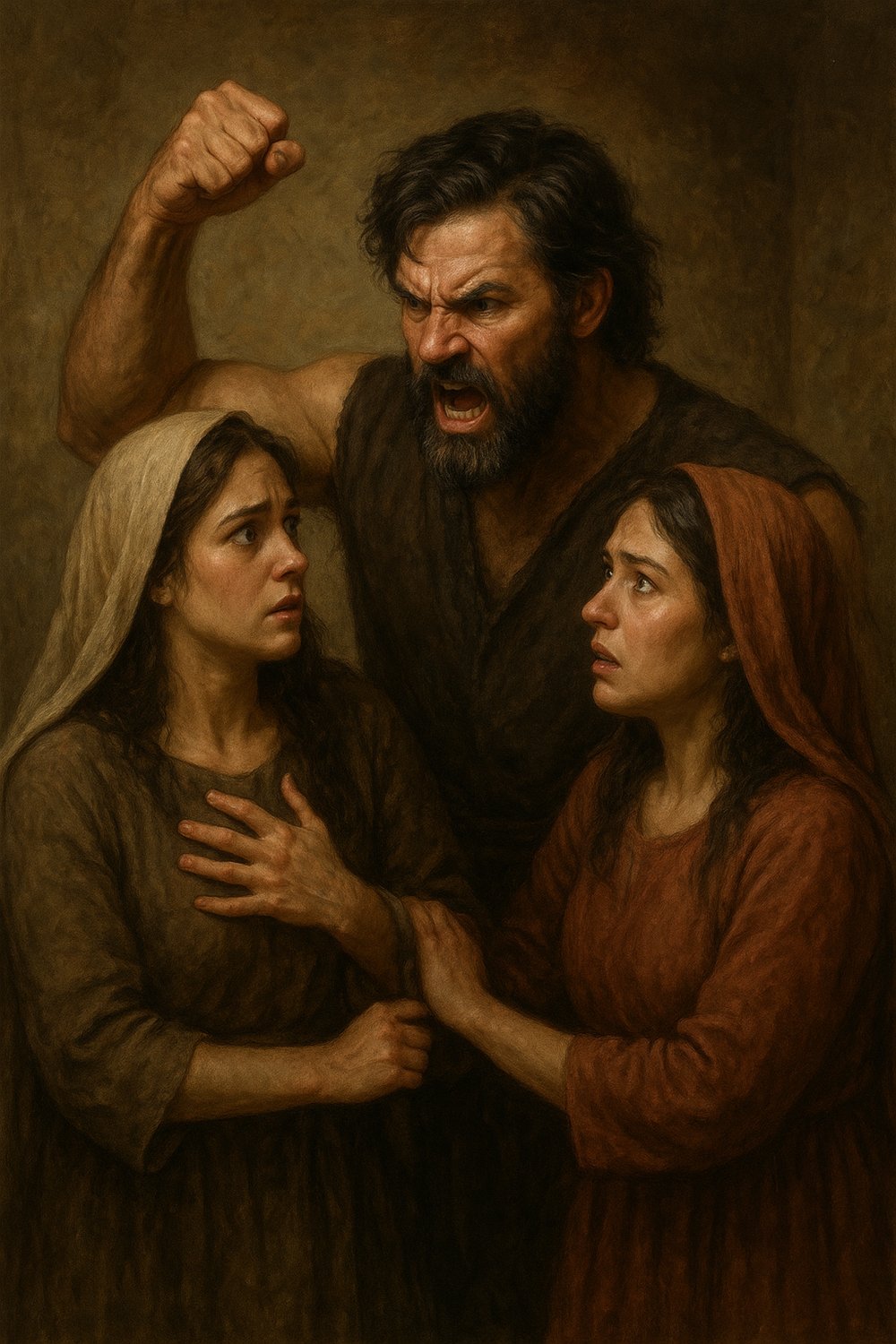
Did You Know? | Interesting Facts
- Cain’s Family Line - A Pattern That Didn’t Improve With Time: Did you know that the Bible briefly traces Cain’s family tree to show how attitudes and behaviors developed after his rebellion? After being banished, Cain had a son named Enoch, and Cain built a city named after him (Genesis 4:17) (because apparently naming cities after your kids was the original flex). Enoch became the father of Irad, who fathered Mehujael, who fathered Methushael, who in turn fathered Lamech (Genesis 4:18) (and that’s how you know genealogy was basically a human version of “keep passing the awkward family traits down”). This short genealogy isn’t filler—it highlights a line moving further away from Jehovah’s guidance. By the time you reach Lamech, Cain’s violent mindset hasn’t softened; it’s intensified. What began with Cain’s jealousy and murder evolves into Lamech’s open boast about killing a man and demanding exaggerated vengeance (because some people just escalate their drama levels). The family line shows how unchecked sin doesn’t stagnate—it escalates when left uncorrected (Galatians 6:7 principle) (like weeds in a garden, but way more homicidal). It seems that none of Cain’s descendants, including the children of Lamech, survived the Flood—turns out family trees don’t float (Watchtower Bible and Tract Society of Pennsylvania, n.d.-m).
- Lamech - A Poem That Reveals the Spirit of the Age: Lamech, a descendant of Cain and the first recorded polygamist, openly defied Jehovah’s original marital standard (Genesis 4:19; Genesis 2:24) (because monogamy was apparently too mainstream). The poem he recited to his wives, Adah and Zillah, was not an expression of remorse but a calculated defense (Genesis 4:23–24) (basically, the ancient version of “hear me out before you cancel me”). Lamech claimed he killed a man in self-defense, saying the man struck and wounded him first. He carefully positioned his act as different from Cain’s deliberate murder (Genesis 4:8), framing himself as justified rather than guilty (talk about creative PR). His poem functioned as a plea for immunity, warning that if Cain was avenged sevenfold, then Lamech should be avenged seventy-sevenfold (because why stop at seven when you can go big?). Instead of seeking Jehovah’s protection, Lamech relied on intimidation and exaggeration, reflecting a society where violence was escalating and vengeance had become normalized (Genesis 6:11–13) (basically, “let’s make revenge competitive”) (Watchtower Bible and Tract Society of Pennsylvania, n.d.-m).
- Polygamy - Why It Started and Why Jehovah Tolerated It: Polygamy did not originate with Jehovah. The original marriage arrangement was established in Eden as one man and one woman (Genesis 2:24) (because humans were originally not trying to start reality TV scandals). Lamech’s decision to take two wives marked the first recorded departure from that standard (Genesis 4:19). Throughout the Bible, polygamy consistently produces conflict, jealousy, and rivalry rather than harmony (Genesis 30:1–2; 1 Samuel 1:6–7) (basically, ancient soap operas, starring your in-laws). Solomon’s experience serves as the clearest warning: despite his wisdom, his many wives and concubines eventually turned his heart away from Jehovah, leading him into idolatry (1 Kings 11:1–4) (because too many cooks in the kitchen can burn even divine recipes) (Watchtower Bible and Tract Society of Pennsylvania, n.d.-l).
- Jehovah tolerated polygamy for a limited time, not because He approved of it, but because humanity struggled to obey even basic commands, especially regarding idolatry (Exodus 20:3–5) (Satan was working overtime to mess things up). Satan was determined to corrupt Israel and sabotage the lineage leading to the Messiah (Genesis 3:15). By regulating polygamy instead of immediately abolishing it, Jehovah limited abuse while protecting His purpose (Deuteronomy 21:15–17) (basically, divine traffic control for human chaos) (Watchtower Bible and Tract Society of Pennsylvania, n.d.-l).
- Additionally, polygamy contributed to Israel’s rapid growth as a nation, helping ensure survival during periods of war, famine, and instability (Genesis 46:3; Exodus 1:7) (because someone had to keep the population numbers high when life got messy). In a dangerous ancient world, it also provided a measure of protection and provision for some women, offering shelter and inclusion in a household when survival alone was uncertain (like ancient Airbnb, but without the ratings). Still, Jehovah made it clear through regulation that this practice was temporary and imperfect—not His design (Matthew 19:8) (Watchtower Bible and Tract Society of Pennsylvania, n.d.-l).
- Polygamy came to an end under the Law of Christ. Jesus reaffirmed Jehovah’s original Edenic standard, restoring marriage to its intended form: one man and one woman united for life (Matthew 19:4–6) (basically, the OG monogamy reboot). From that point forward, Christian congregations were required to uphold monogamy (1 Timothy 3:2; Titus 1:6) (Watchtower Bible and Tract Society of Pennsylvania, n.d.-l).
- Jehovah did not create polygamy. He tolerated it temporarily, regulated it carefully, and ultimately ended it at the right time—proving that His standards don’t change, but His patience allows humanity time to catch up (because even divine speed limits have grace periods) (Watchtower Bible and Tract Society of Pennsylvania, n.d.-l).
🔍 Read the Bible Online – Free Access to All Translations, Old & New (Yes, Even That One You Forgot Existed & No Camel Needed) 🐫
Helpful Resource: For a free and easy way to look up all the scriptures mentioned in this article, simply click here. You’ll have access to multiple Bible translations, helping you read and compare scriptures from past to present—at no cost. Plus, you can read the Bible in your preferred language—because God speaks fluent you.

📖 Clear, Practical Bible Answers for Life’s Big Questions — Minus the Fire and Smoke 🌱
For more free, Bible-based answers to everyday topics, please visit jw.org—because even the big questions deserve clear, down-to-earth answers (no burning bushes required).
Quiz: How Well Do You Know Genesis Chapter 4?
1. Who was the first human born on earth according to Genesis?
a. Abel
b. Seth
c. Cain
d. Lamech
2. Why was Cain’s offering not approved by Jehovah?
a. It was bloodless
b. It lacked faith and proper motivation
c. It was stolen from someone else
d. It was too small
3. What warning did Jehovah give Cain before he killed Abel?
a. To leave the land of Eden
b. To offer more fruits from the ground
c. That sin was “crouching at the door” and he must rule over it
d. To take a wife immediately
4. How did Cain respond when Jehovah asked him about Abel’s whereabouts?
a. He confessed immediately
b. He said, “I do not know. Am I my brother’s guardian?”
c. He blamed a stranger
d. He ran away without answering
5. What action did Jehovah take to protect Cain after his punishment?
a. Gave him a powerful army
b. Placed a “sign for Cain” to prevent others from killing him
c. Sent him to a different planet
d. Turned him into a wandering ghost
6. Who was born to replace Abel after his death?
a. Enoch
b. Seth
c. Lamech
d. Enosh
7. What was the main reason Jehovah favored Abel’s offering?
a. Abel offered gold and silver
b. Abel offered the best of his flock with faith
c. Abel offered fruits and grains
d. Abel offered to build a city
8. Which of the following describes Cain’s descendants?
a. Known for righteousness and faithfulness
b. Known for advancements in livestock, music, metalworking, polygamy, and violence
c. Never had children
d. Returned to Eden
9. How did Lamech’s actions reflect the spirit of the age?
a. He continued Abel’s line faithfully
b. He boasted about killing and took two wives
c. He lived in solitude
d. He became a prophet
10. What is the Edenic marriage standard that Jesus reaffirmed under the Law of Christ?
a. One man and one woman united for life
b. Polygamy regulated temporarily
c. Multiple wives for protection
d. Marriage only allowed for priests
Answer Key
- c. Cain
- b. It lacked faith and proper motivation
- c. That sin was “crouching at the door” and he must rule over it
- b. He said, “I do not know. Am I my brother’s guardian?”
- b. Placed a “sign for Cain” to prevent others from killing him
- b. Seth
- b. Abel offered the best of his flock with faith
- b. Known for advancements in livestock, music, metalworking, polygamy, and violence
- b. He boasted about killing and took two wives
- a. One man and one woman united for life
Nourish & Reflect
1. What part of this article stirred your spirit the most—and why?
(AKA: What had you pausing mid-scroll like, “That was for me”?)
2. Where in your life do you see this spiritual truth applying right now? (Is it calling you in your relationships, your prayer life, your patience… or maybe that area you really didn’t want to talk about?)
3. What would shift in your life if you actually committed to walking this out for a week?
(Just seven days—No need to part the Red Sea. Just part with some excuses.)
4. After applying this truth, what did you notice? Did anything in your heart or habits start to shift?
(Or did life try to test you the second you hit “amen”? Be honest—we’re not judging.)
5. If you faced spiritual resistance or setbacks, what’s one way you can press through it?
(Tap into your inner prayer warrior. What would your spiritually mature, fruit-bearing self say right now?)
6. Do you have questions, insights, or lingering thoughts from this reading? (You know, that one part where your spirit perked up and said, “Let’s go deeper.” Share it—we love those Holy Spirit “aha” moments.)
Your reflections don’t just matter—they might be ministry to someone else. Drop your thoughts in the comments below: What pierced? What prompted prayer? What planted a new seed of faith? Someone else may need the very insight God gave you today.
Share Your Thoughts—We’re Listening!
We want to hear from you! Whether you’re a devoted blog reader or just popped in while hiding from laundry duty, your thoughts help shape what we create next. Tell us what you loved, what made you think, or even what made you chuckle awkwardly at 2 a.m. It only takes a minute—quicker than brewing your morning herbal tea (and with fewer dishes). Click here to share your thoughts—because we’re all ears, hearts, and maybe a little chamomile. Your voice matters to us!
Disclaimer
This article exclusively features scriptures from the New World Translation of the Holy Scriptures, a specific translation of the Bible. The purpose of this article is to provide readers with access to these scriptures for study, reference, and personal enlightenment.
Disclaimer of Affiliation
This article is not officially affiliated with the New World Translation of the Holy Scriptures, the Watch Tower Bible and Tract Society, or any specific religious denomination or organization. It is an independent work created for educational and informational purposes.
Accuracy and Interpretation
Every effort has been made to accurately reproduce the scriptures from the New World Translation of the Holy Scriptures. However, readers are encouraged to consult the official publications and representatives of the relevant religious organization for precise and authoritative interpretations of these scriptures.
Use of the Content
Readers are invited to use the scriptures presented in this newsletter for personal study, research, and spiritual reflection. It is important to approach these scriptures with respect for their religious and cultural significance.
Limitation of Liability
The author and publisher of this newsletter have taken utmost care to ensure the accuracy and authenticity of the scriptures from the New World Translation of the Holy Scriptures. Nevertheless, they do not assume any responsibility for errors, omissions, or inaccuracies in the content. The author and publisher shall not be liable for any direct, indirect, incidental, consequential, or punitive damages arising out of the use or misuse of the information contained in this article.
Copyright and Reproduction
The scriptures from the New World Translation of the Holy Scriptures included in this article are used under fair use principles and are the copyrighted property of the Watch Tower Bible and Tract Society. Readers are advised to respect copyright laws and intellectual property rights when reproducing or distributing any part of this article.
Free of Cost
This spiritual information is provided free of charge following the principle stated in Matthew 10:8, "You received free, give free." Embracing this teaching, the author believes in the importance of sharing spiritual wisdom without financial barriers.
The article's complimentary distribution is a gesture of goodwill, intended to make spiritual knowledge accessible to all, fostering a sense of community and equality. Readers are encouraged to approach this resource with an open heart, appreciating the spirit of generosity that underlines its availability. May the teachings within inspire and uplift, in the true spirit of giving and receiving.
Health, Wellness & Spiritual Content Disclaimer
This article and other content on this site are for educational and informational purposes only and are not intended to diagnose, treat, cure, or prevent any condition. Statements made on this site have not been evaluated by the Food and Drug Administration. Always consult with a qualified healthcare provider before making any wellness decisions. Please read our Disclaimer for full details.
Some materials on this site may include optional scriptural content and biblical insights, presented for educational and reflective purposes, and grounded in evidence-based research and scripture. Use of this content is voluntary and should be engaged with at your own discretion.
By accessing, reading, or using this content, you acknowledge and accept the terms set forth in our Blog Disclaimer, Health & Wellness Disclaimer, Terms & Conditions, and Shop Policies.
Bibliography
Watch Tower Bible and Tract Society of Pennsylvania. (2013). New World Translation of the Holy Scriptures. Watchtower Bible and Tract Society of New York, Inc.
Watch Tower Bible and Tract Society of Pennsylvania. (n.d.-a). Did Moses write the first five books of the Bible? https://www.jw.org/en/bible-teachings/questions/moses-writings/
Watch Tower Bible and Tract Society of Pennsylvania. (n.d.-c). Jehovah. Watchtower Bible and Tract Society of New York, Inc. https://wol.jw.org/en/wol/d/r1/lp-e/1200002391
Watch Tower Bible and Tract Society of Pennsylvania. (n.d.-d). Who is Jehovah? https://www.jw.org/en/bible-teachings/questions/who-is-jehovah/
Watch Tower Bible and Tract Society of Pennsylvania. (n.d.-e). Adam. Watchtower Bible and Tract Society of New York, Inc. https://wol.jw.org/en/wol/d/r1/lp-e/1200000089
Watch Tower Bible and Tract Society of Pennsylvania. (n.d.-f). Eve. Watchtower Bible and Tract Society of New York, Inc. https://wol.jw.org/en/wol/d/r1/lp-e/1200001450
Watch Tower Bible and Tract Society of Pennsylvania. (n.d.-g). Earth. Watchtower Bible and Tract Society of New York, Inc. https://wol.jw.org/en/wol/d/r1/lp-e/1200001239
Watch Tower Bible and Tract Society of Pennsylvania. (n.d.-h). Eden. Watchtower Bible and Tract Society of New York, Inc. https://wol.jw.org/en/wol/d/r1/lp-e/1200001256
Watchtower Bible and Tract Society of Pennsylvania. (n.d. -b). Cain. In Insight on the Scriptures (Vol. 1). Watchtower Bible and Tract Society of New York, Inc. https://wol.jw.org/en/wol/d/r1/lp-e/1200000857
Watchtower Bible and Tract Society of Pennsylvania. (n.d.-j). Abel. In Insight on the Scriptures (Vol. 1). Watchtower Bible and Tract Society of New York, Inc. https://wol.jw.org/en/wol/d/r1/lp-e/1200000018
Watchtower Bible and Tract Society of Pennsylvania. (n.d.-k). Seth. In Insight on the Scriptures (Vol. 2). Watchtower Bible and Tract Society of New York, Inc. https://wol.jw.org/en/wol/d/r1/lp-e/1200003911
Watchtower Bible and Tract Society of Pennsylvania. (n.d.-l). Does God approve of polygamy? The Watchtower Announcing Jehovah’s Kingdom—2009. https://wol.jw.org/en/wol/d/r1/lp-e/2009490
Watchtower Bible and Tract Society of Pennsylvania. (n.d.-m). Lamech. Insight on the Scriptures (Vol. 2). https://wol.jw.org/en/wol/d/r1/lp-e/1200002673

Comments ()