

The Beans
Arabica
The most common type of coffee bean you'll find at quality cafés. Grown at higher elevations, it tends to be smoother and more flavorful. You might taste hints of chocolate, fruit, or even floral depending on where it came from.
If you're at a specialty café, this is almost certainly what's in your cup.
Blend
Beans from two or more places mixed together on purpose. Roasters blend to create something balanced and consistent that tastes good year-round. Especially useful for espresso-based drinks.
Not a lesser choice at all. A lot of the coffee you already love is a blend.
Roast date
The date the coffee was roasted, printed right on the bag. Coffee is at its best within a few weeks of roasting — after that, the flavors start to fade and go flat. It's like a 'freshness window' for your beans.
No roast date on the bag? That's worth noticing. Most quality roasters are proud to share it.
Robusta
A different species of coffee bean. Bolder, more bitter, and higher in caffeine than Arabica. It's been used in a lot of traditional Italian espresso blends and instant coffees. Less nuanced in flavor, but it packs a punch.
Typically low quality and used as a filler in blend to add more caffeine.
Single origin
Coffee from one specific place — one country, one region, or even one farm. Just like wine tastes different depending on where the grapes grew, coffee takes on the flavors of its environment. An Ethiopian coffee will taste completely different from one grown in Colombia.
A fun way to start exploring: try the same drink made with beans from two different countries side by side.
Specialty coffee
The easiest way to think about it: specialty coffee is the 'good stuff.' Beans that have been carefully grown, thoughtfully roasted, and scored 80 or above (out of 100) by a professional taster. You'll usually see the origin — where the coffee came from — on the bag, sometimes right down to the farm.
If a café or bag mentions a specific country, region, or farm and has a roast date printed on it, you're probably holding specialty coffee.
Espresso
Crema KREH-mah
The thin golden-brown layer that floats on top of a fresh espresso shot. It forms from the coffee's natural oils and dissolves into the drink within a minute or two. Fresh beans and a well-made shot tend to produce a richer crema.
A sign of freshness, though a beautiful crema doesn't automatically mean a delicious shot. Taste is still the real test.
Demitasse DEM-ee-tass
The small 2–3 oz cup that espresso is traditionally served in. The name comes from French and literally means 'half cup.'
It's also where the name behind Demitasse Endeavors is from as a reminder that the best things don't need to be big to be meaningful.
Doppio DOH-pee-oh
Two espresso shots pulled together at once — not two separate singles combined. Slightly different in flavor from two singles. This is actually the standard starting point at most specialty bars.
When you order espresso at a specialty café, a doppio is usually what you're getting by default.
Espresso eh-SPRESS-oh (NOT expresso)
Espresso is a way of brewing coffee. Not a type of bean. Hot water is pushed through finely ground coffee under pressure in about 30 seconds, making a small, concentrated, almost syrupy shot (about 1–1.5 oz). It's the foundation for most café drinks.
If you've ever had a latte, cappuccino, or mocha, you've had espresso.
Extraction
Fancy word for what happens when hot water pulls flavor out of coffee grounds. Too little extraction and the coffee tastes sour and weak. Too much and it turns bitter. A well-extracted cup hits a lovely balance of sweetness, depth, and brightness.
When your coffee tastes 'off' but you can't explain why, extraction is usually the reason.
Shot
One serving of espresso. Most cafés use a double shot (about 2 oz) as the base for their drinks unless you ask otherwise. You'll sometimes hear baristas say they're 'pulling a shot' — that's just old-school language from when espresso machines had levers you pulled.
Ordering a double is completely normal. It's actually the standard at most places.
Drinks & what they mean
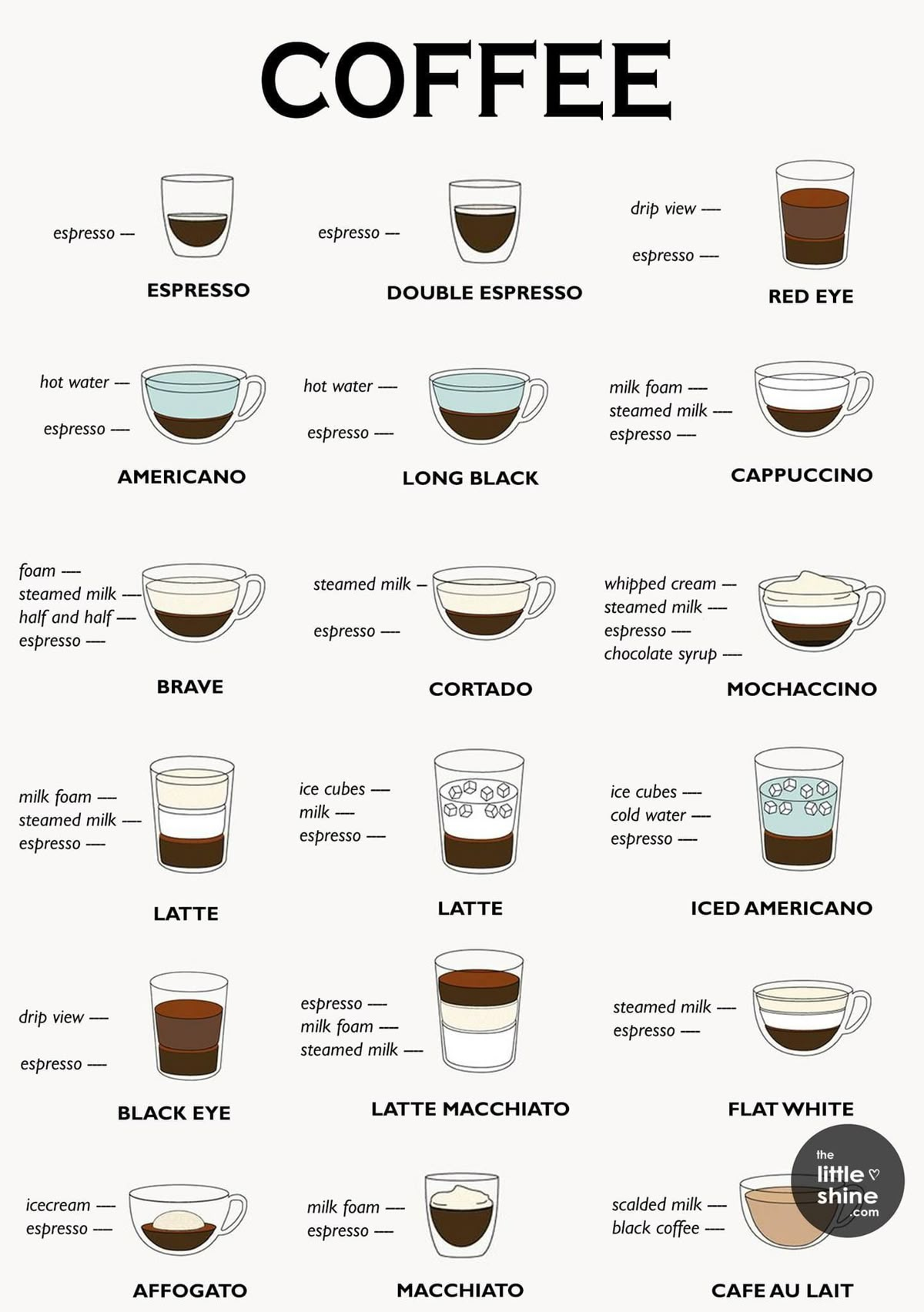
Espresso based drinks in general are culturally named depending on the espresso to milk ratio and the size cup it goes in.
Americano uh-mare-ih-KAH-noh
Espresso with hot water added — which dilutes it to a size and strength more like a regular cup of coffee. Same espresso flavor, just more approachable volume. The story goes it was named after American soldiers in Italy who found straight espresso too small and strong.
A great option if you usually drink regular black coffee but want to try something from an espresso bar.
Breve BREH-vay
Any espresso drink made with half-and-half instead of regular milk. Richer and creamier. The foam is thicker and the whole drink feels more decadent. If you're going to treat yourself, make it a breve.
Café au lait caf-ay oh-LAY
Half brewed drip coffee, half steamed milk. Served in a larger mug. It's gentle, comforting, and very French. Great if you like a lot of milk in your coffee.
Cappuccino cap-oo-CHEE-noh
Roughly equal parts espresso, steamed milk, and thick foam. It's traditionally served in a 5-6oz mug. Also known as a "drink of thirds"— one-third espresso, one-third steamed milk, and one-third foam.You taste more of the coffee because there's less milk.
In Italy, cappuccinos are strictly a morning drink. If your latte feels a little too milky and you want more coffee flavor, try a cappuccino.
Con panna con PAN-ah
A small shot of espresso with a dollop of whipped cream on top. Simple, sweet, and a little luxurious, like a tiny dessert in a cup.
Cortado kor-TAH-doh
Equal parts espresso and warm milk, usually about 2 oz of each. Small, balanced, and not foamy. 'Cortado' means 'cut' in Spanish. The milk gently softens the espresso's edge without taking over.
Flat white
Originally from Australia and New Zealand. Similar to a small latte but made with a stronger espresso base and very silky, velvety milk. It's less foam, more coffee flavor. Usually served in a 5–6 oz cup.
The sweet spot between a latte and a cappuccino. A great everyday drink if you want something satisfying but not huge.
Latte LAH-tay
The most popular espresso drink in the US — and for good reason. It's mostly steamed milk (about 3–4 parts) with a shot or two of espresso and a thin layer of foam on top. Creamy, mild, and very easy to love.
If you're new to espresso drinks, start here. It's approachable and endlessly customizable.
Macchiato mock-ee-AH-toh
In its traditional form, a macchiato is only a shot of espresso with a small spoonful of milk or foam on top. 'Macchiato' means 'marked' or 'stained' and the espresso is barely touched by the milk.
What you'll find at chain cafés under this name is something very different, much bigger and sweeter. These are not the same things. At a specialty café, expect something small, strong, and beautiful. At a chain, expect something much sweeter.
Mocha MOH-kuh
Espresso, chocolate, and steamed milk often topped with whipped cream. It's named after the port city of Mocha in Yemen, historically a major hub for the coffee trade. Think of it as hot chocolate with espresso or a latte with chocolate.
Great when you want something a little indulgent.
Red eye
Regular drip coffee with a shot of espresso added in. It goes by different names depending on where you are — 'shot in the dark,' 'hammerhead,' or 'black eye' if there are two shots.
For the mornings (or nights) when regular coffee just isn't doing it.
Brewing at home
AeroPress
A small plastic brewer that looks a bit like a large syringe. It brews quickly (about 1–2 minutes), is nearly impossible to break, and makes a very smooth, clean cup. Coffee people love it because it's flexible and great for travel.
If you want to upgrade your home coffee without spending much or taking up counter space, this is an excellent starting point.
Drip coffee / batch brew
The everyday coffee brewer — the kind most of us grew up with. A machine heats water and drips it over grounds sitting in a paper filter. At specialty cafés, you'll sometimes see this called 'batch brew' — and when it's made with quality beans and a well-calibrated machine, it's genuinely excellent.
Don't sleep on a good cup of drip coffee. At the right café, it can be just as interesting as anything else on the menu — and it's usually the best value.
French press
A simple, no-fuss brewer you've probably seen — a glass or metal cylinder with a plunger and a metal mesh screen. You add coarse ground coffee and hot water, let it steep for about 4 minutes, then slowly press the plunger down. The result is rich, full, and a little hearty.
One of the easiest ways to brew really good coffee at home. Forgiving, low-tech, and produces a cup with real body and warmth.
Moka pot
A stovetop brewer — the classic octagonal silver pot you might recognize from Italian kitchens. Water in the bottom heats up and pushes through the coffee grounds into the top chamber. The result is strong, bold, and espresso-adjacent (though not technically espresso).
Romantic, old-world, and makes your kitchen smell incredible. A great way to experience strong coffee without an espresso machine.
Siphon
A dramatic-looking two-chamber glass brewer that uses heat and vacuum pressure to brew coffee. The water travels up through the coffee, brews, then gets pulled back down through a filter when the heat is removed. It looks like a science experiment, because it kind of is.
You're most likely to see this at a thoughtful specialty café. If they're offering it, order it. The experience is unforgettable.
Milk & foam
Cold foam
Milk frothed cold — no steam involved — into a thick, stable foam that floats on top of cold drinks. It holds its shape well without melting immediately and is often lightly sweetened or flavored.
A satisfying finishing touch on an iced drink, especially with a touch of vanilla.
Latte art
The patterns — hearts, leaves, swirls — that baristas create by pouring steamed milk into espresso. It's done by manipulating how the milk flows into the cup. It's beautiful, and it's also a signal that the milk was textured properly.
Lovely to look at, but the real question is always: how does it taste?
Microfoam
The gold standard of steamed milk — heated to just the right temperature with bubbles so tiny they're nearly invisible. It looks almost glossy and pours like silk. This is what makes latte art possible, and it's also what makes your latte taste smooth instead of foamy.
When a barista taps the milk pitcher on the counter and swirls it before pouring. That's the microfoam finishing step. It matters.
Milk temperature
Most baristas steam milk to around 140–155°F. It's warm and comfortable to drink right away. Above 165°F, milk starts to taste a little 'cooked' and loses its natural sweetness. If you like your drinks really hot or prefer them cooler, it's always okay to ask.
Asking for 'not too hot' is a completely normal, reasonable request. Good baristas appreciate it.
Steamed milk
Milk that's been heated and gently aerated using a steam wand on an espresso machine. When done right, it's silky and smooth — not bubbly or scorched. The texture and temperature of the milk makes a bigger difference in your drink than most people realize.
A great latte lives or dies on the steamed milk. It's one of those things you notice immediately once you've tasted it done well.
Cold coffee
Cold brew
Coffee made by steeping coarsely ground beans in cold or room-temperature water for a long time - usually 12 to 24 hours - then straining out the grounds. No heat involved at any point. The result is naturally smooth, low in acidity, and slightly sweeter than regular iced coffee.
Make a big jar on Sunday night and you'll have coffee for the whole week.
Cold foam
Milk frothed cold — no steam — into a thick, stable foam that sits on top of cold drinks without melting right away. Often lightly sweetened or flavored. Very popular as a topping for iced lattes and cold brew.
A nice finishing touch on an iced drink when you want something a little more special.
Flash brew
Coffee brewed hot directly onto ice, so it chills instantly. You get the full, complex flavor that comes from hot brewing, but it's cold the moment it hits the glass. Very different from cold brew in taste: brighter and more vibrant.
If you've ever wondered why iced coffee at a really good café tastes especially alive — this might be why.
Iced coffee
Hot-brewed coffee poured directly over ice — usually brewed extra strong so the ice doesn't water it down too much. It's brighter and more acidic than cold brew, and much faster to make. Different experience, both worth having.
On a hot day, hard to beat. Best enjoyed fresh.
Nitro cold brew
Cold brew infused with nitrogen and served from a tap — just like a draft beer. The nitrogen creates a creamy, velvety texture and a beautiful cascading pour in the glass, without adding any milk at all.
Order one at a café and just watch it pour for a moment.
Comments ()