
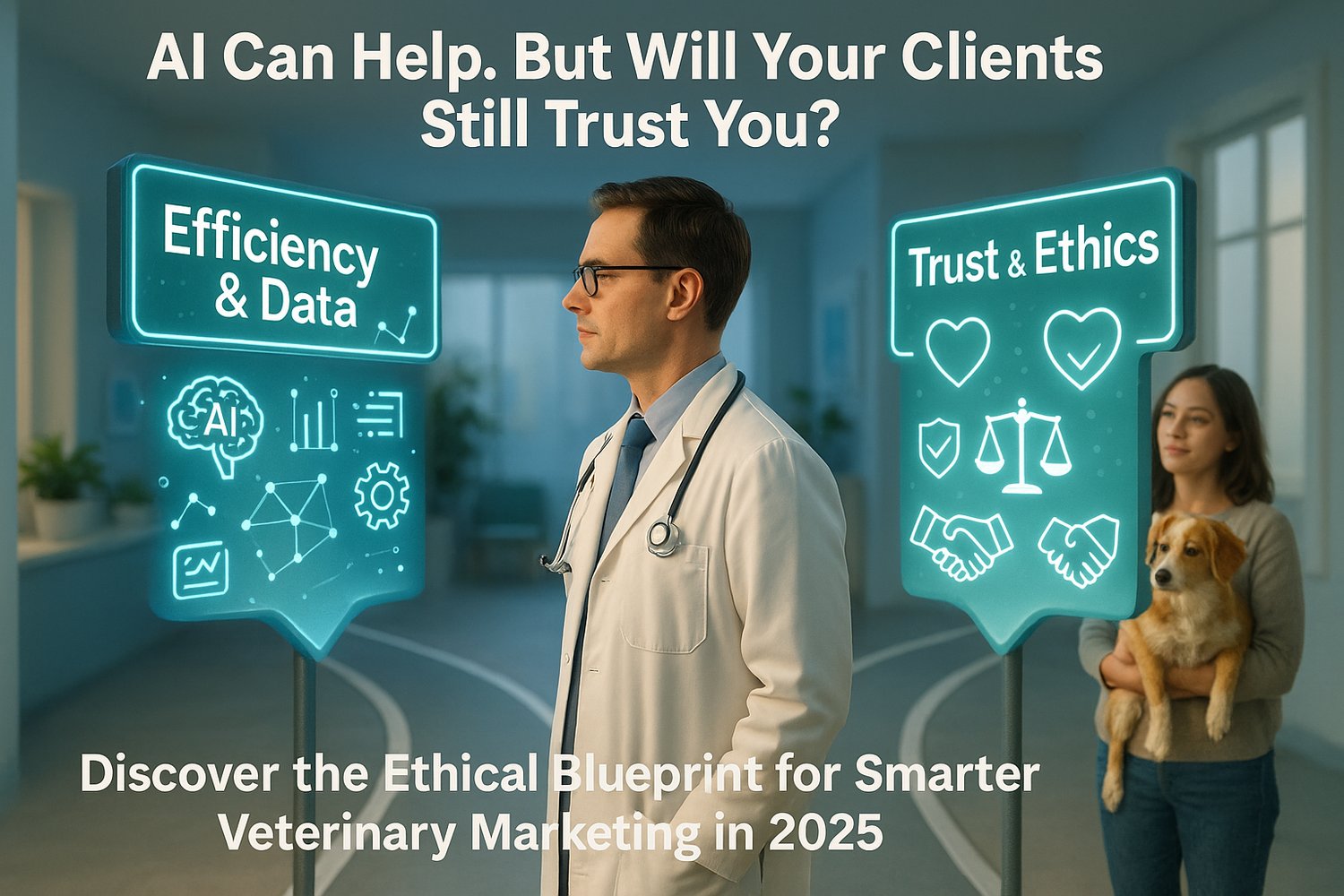

Before we dive deep, here’s the brass tacks – your essential takeaways for navigating AI in your vet clinic's marketing:
- AI isn't on the horizon; it's already in the toolkit, reshaping how vet practices attract and keep clients.
- That trust you've built with pet owners? It's gold. Mishandle AI ethics, and it can vanish.
- Data privacy is paramount. How you manage pet owner data with AI, especially around consent, is critical. Think GDPR and the principles behind HIPAA for owner data.
- Automation is a double-edged sword; efficiency is great, but lose that human empathy, and clients will feel it.
- AI isn't infallible; it can develop biases in ad targeting if you're not vigilant, potentially excluding clients who need you.
- Be open about your AI use. Transparency in your communications builds loyalty, not fear.
- The rulebook for AI in healthcare marketing is still being written, so staying informed and compliant is key for 2025.
"With great power comes great responsibility." Still True, Especially in Vet Marketing.
Right, let’s get straight into it. You’ve heard the buzz about Artificial Intelligence, but maybe you’ve mentally filed it under "stuff for tech giants, not my local vet practice." Well, I’m here to tell you that AI is no longer some distant future trend—it's here, and it’s actively transforming how animal hospitals attract, nurture, and retain clients. We're talking about everything from automated follow-ups that ensure no potential patient slips through the cracks, to predictive analytics that can give you a heads-up on what services a client might need next. AI is genuinely helping clinics run smarter.
But here’s the crucial bit, the part we often skip in our rush for the next shiny object: with every one of these innovations comes a hefty ethical question mark. What happens when that whizz-bang automation gets a bit too personal, or even a bit creepy? How do you, as a busy practice owner or manager, strike that vital balance between efficiency and genuine empathy? Can you actually use AI effectively without accidentally trampling all over client privacy? These are the big questions. In this article, we're going to break down the ethical essentials every single clinic owner and marketer absolutely must get their head around when rolling out AI in their marketing. The goal? Let's build smarter marketing strategies—strategies that not only work but also respect your clients and protect the heart and soul of your practice.
Why Bother with Ethics in AI-Powered Veterinary Marketing? It’s Just Ads, Isn’t It?
If only it were that simple! The truth is, the bond you have with a pet owner is sacred, built on an enormous amount of trust. They’re handing over a beloved family member to your care. If your marketing – even the super-smart AI-driven stuff – starts to feel invasive, weird, or just plain wrong, that trust doesn’t just wobble, it can completely shatter.
And the fallout from unethical AI use? It’s not just a ticking off or a minor fine we’re talking about. It’s the kind of damage to your brand, your reputation, that can take an age to fix – if you can fix it at all. That long-term impact on your brand from getting the ethics wrong is genuinely massive. This is way beyond just dodging a penalty; it’s about safeguarding the very reputation your clinic stands on.
Data Privacy and Consent: The Not-So-Glamorous Must-Haves
Let's talk about data – the fuel for your AI. These tools, by their very design, collect and munch through a lot of it. Are you absolutely, positively sure what data your AI marketing gizmos are collecting? And, more importantly, are your clients in the loop?
This is where consent struts onto the stage. And I mean explicit consent for marketing use, not the type that’s hidden in paragraph 72 of your terms and conditions. "Implicit consent," where you just sort of assume it’s okay because they signed up for something once? That’s a risky game, especially with big-deal regulations like GDPR (which, by the way, can affect you depending on your clientele, even if you're outside the EU). Plus, the spirit of healthcare data protection, like HIPAA, sets a really strong example for how sensitive data – and yes, pet owner data counts – should be handled. We’re talking names, pet health histories, appointment schedules… this is personal, sensitive stuff.
Algorithmic Bias: Is Your AI Playing Favourites?
Here’s a thought that might make you a bit queasy: what if your shiny new AI tool is, without you even realising, systematically ignoring a whole chunk of potential clients? It's called algorithmic bias, and it’s a very real gremlin in the AI machine. Bias can sneak into AI ad targeting if the data it’s learning from is skewed to begin with, or if the algorithms themselves have some unnoticed built-in prejudices.
Picture this: your AI, in its attempt to be clever, decides that only pet owners living in a specific, affluent postcode, or perhaps those of a particular age group, are your "ideal clients" for, say, a new puppy package or a senior pet wellness plan. You could be missing out on countless pets who desperately need your services, all because the AI made a dodgy assumption based on incomplete or skewed data. I’ve seen it in other industries – marketing campaigns that unintentionally alienate massive sections of their target audience because the AI was, frankly, a bit narrow-minded. What’s the fix? You need robust strategies for keeping an eye on this and, crucially, for correcting that bias the moment you spot it.
Transparency and Client Communication: Don't Be a Digital Sneak
This one’s simple but so often overlooked: if you’re using AI to chat with clients via a bot, or to tailor their email content, you must tell them that AI is part of the process. It’s not about alarming them; it’s about basic honesty and respect.
Weaving AI use disclosures into your consent forms and your terms of service is a solid, non-negotiable starting point. But it goes deeper than that. Being transparent is a cornerstone of client loyalty and trust. Nobody enjoys feeling like they’re being subtly steered or, worse, tricked by some invisible algorithm.
Responsible Automation: Keeping the "Care" in Animal Care
Automated appointment reminders? Fantastic. AI-driven follow-ups for routine check-ins? Super efficient. But where’s the line? When do those AI interactions start to feel less "helpful assistant" and more "annoying robot" or, even worse, intrusive?
It's a delicate balancing act. You need to seamlessly blend the brilliant human touch your team is known for with the undeniable efficiency of automation. For example, AI can be a star player in reactivating clients you haven’t seen for a while, or for gathering that initial feedback after a visit. But if a client expresses a serious concern, asks a complex medical question, or is clearly distressed? That’s an immediate red flag – humans on deck, please! I've witnessed businesses in other sectors go all-in on chatbots for customer service, and believe me, the client frustration was palpable. Your clinic deserves better.
Keeping Up With The Rules: Regulatory Compliance and What’s Next
The legal eagles are still playing catch-up with AI in marketing, especially when it tiptoes into the healthcare arena, but they are catching up. You can bet your bottom dollar there will be veterinary-specific rules and guidelines emerging that you'll need to be aware of as we head into 2025 and beyond.
So, how do you make sure your practice is ready and not caught on the back foot? Start putting best practices into place now. Don’t wait until you’re scrambling to comply with new legislation. Being proactive about compliance isn’t just less stressful; it’s almost always less costly than trying to fix things after a problem arises.
Your Game Plan: Crafting an Ethical AI Marketing Policy for Your Clinic
Right, that’s a lot to take in. So, what’s your first practical step? I strongly recommend creating an ethical AI marketing policy for your clinic. It sounds a bit grand and corporate, but it doesn’t need to be a tome.
It should cover:
- How do you handle client data and ensure proper consent?
- Your protocols for transparency – specifically, when and how you’ll inform clients about AI being used.
- The checks and balances you have in place to spot and mitigate algorithmic bias.
- Clear boundaries for automation – defining exactly where AI’s role ends and a human team member must take over.
And this is absolutely vital: train your team on this policy, on AI use, and these ethical boundaries. They are your ambassadors. Finally, make it a habit to regularly audit your AI-driven campaigns to ensure they’re ethically aligned. This isn't a "set it and forget it" kind of deal.
AI is undeniably revolutionising the veterinary world – but how you decide to use it will be the difference between clients seeing you as cutting-edge and helpful, or intrusive and out of sync with their needs.
When ethics are the engine driving your AI strategy, you’re not just ticking compliance boxes. You’re actively building deeper trust, cultivating greater loyalty, and setting your practice up for genuine, sustainable success. So, before you jump on board with the next shiny AI tool or automate another marketing campaign, just pause for a moment. Take that step back. Ask the hard questions. Put those ethical guidelines firmly in place. Lead with integrity. Your clients, your team, and indeed your practice’s reputation will thank you for it.
Got Questions? Let's Tackle Them.
1. This AI ethics stuff sounds pretty full-on. Where do I even start?
It can feel a bit overwhelming, I get that! But start simple: take a really honest look at how you’re currently collecting and using client data for any marketing you do. Are you being totally transparent? Is your consent process clear and explicit? Nail that, and you’re already halfway there.
2. Are there specific AI tools that are inherently 'safer' or more ethical for vet clinics?
It’s less about a specific tool being "good" or "bad" and much more about how your practice uses it. Look for tools from reputable providers that are transparent about how their algorithms function and that give you clear control over data usage. But remember, the ultimate ethical oversight always rests with you and your team.
3. What's the single biggest ethical blunder clinics make with AI in their marketing?
That’s a good one. Probably diving in headfirst without a clear, ethically grounded strategy or a real understanding of the potential pitfalls. They get dazzled by the tech ("Ooh, AI!") without fully considering the 'responsible use' part. Also, letting automation become so robotic that it loses all sense of warmth or makes clients feel like just another number – that’s a classic misstep.
4. Can I genuinely get a grip on this AI ethics stuff myself, or am I going to need to hire an expensive consultant?
You can absolutely make a fantastic start on your own. Begin by having these crucial conversations with your team. Use the main headings from this article – Data Privacy, Algorithmic Bias, Transparency, and so on – as a kind of checklist to review your current practices. If, after that, you feel you need more specialised help, you’ll go into that search far more informed and with a much clearer idea of what specific support you need.
5. How often should we be sitting down and reviewing our clinic's AI marketing ethics?
Excellent question! AI technology and the rules around it are evolving at lightning speed. I’d recommend a thorough audit of your AI ethics policies and practices at least once a year. But beyond that, try to make it a recurring point of discussion in your team meetings, perhaps quarterly. Keeping it on the agenda helps keep it top of mind for everyone.
Look, AI in veterinary marketing is packed with incredible potential. But at the end of the day, it’s a tool. And like any powerful tool, it can be used with skill and care to build something amazing, or… well, not so much. By keeping these ethical considerations at the forefront, you’re not putting the brakes on innovation; you’re building a more resilient, trustworthy, and ultimately more successful practice for the future.
Comments ()