

Key Takeaways:
- Stop Panicking, Start Planning: AI isn't here to replace you; it's here to give you back your ridiculously busy schedule. Think of it as the ultimate assistant.
- Clients Expect More (Like, Yesterday): Pet owners are already using AI in their own lives. They're ready for you to catch up with tech that offers convenience and speed.
- Efficiency is the New Black: Imagine slashing admin time and getting to the bottom of common concerns faster. That’s what AI can do for your workflow.
- Rural Reach, Real Impact: For clients miles away, AI-driven advice can be a lifeline, getting them initial help when a trip to the clinic isn't immediately possible.
- Not a Magic Wand (Yet): AI is powerful, but it’s not for every case. Your expertise for complex, hands-on situations is still gold.
- Data Privacy is Non-Negotiable: This new tech comes with big responsibilities. Protecting client and patient data has to be top of your list.
- The Future is Friendly (and Smart): We're talking predictive analytics and personalised pet care – it’s closer than you think.
Introduction
"The future is already here - it's just not evenly distributed." William Gibson nailed it. Imagine a pet owner sitting on their couch, getting expert care for their anxious cat—without stepping foot in a clinic. That's not some far-off dream. In 2025, AI-powered virtual consultations are reshaping how veterinary clinics deliver care, streamline workflows, and delight clients.
This isn't just about sticking a fancy new tool onto your old processes. This article dives deep into how artificial intelligence, combined with telehealth technology, is not just enhancing convenience—it's transforming outcomes. From automated triage to real-time symptom analysis, we'll explore what's possible, what's practical, and how clinics can prepare. Let's zoom in on the intersection of AI, telemedicine, and next-level veterinary client experience.
So, What Exactly ARE AI-Powered Virtual Consultations in Vet Med?
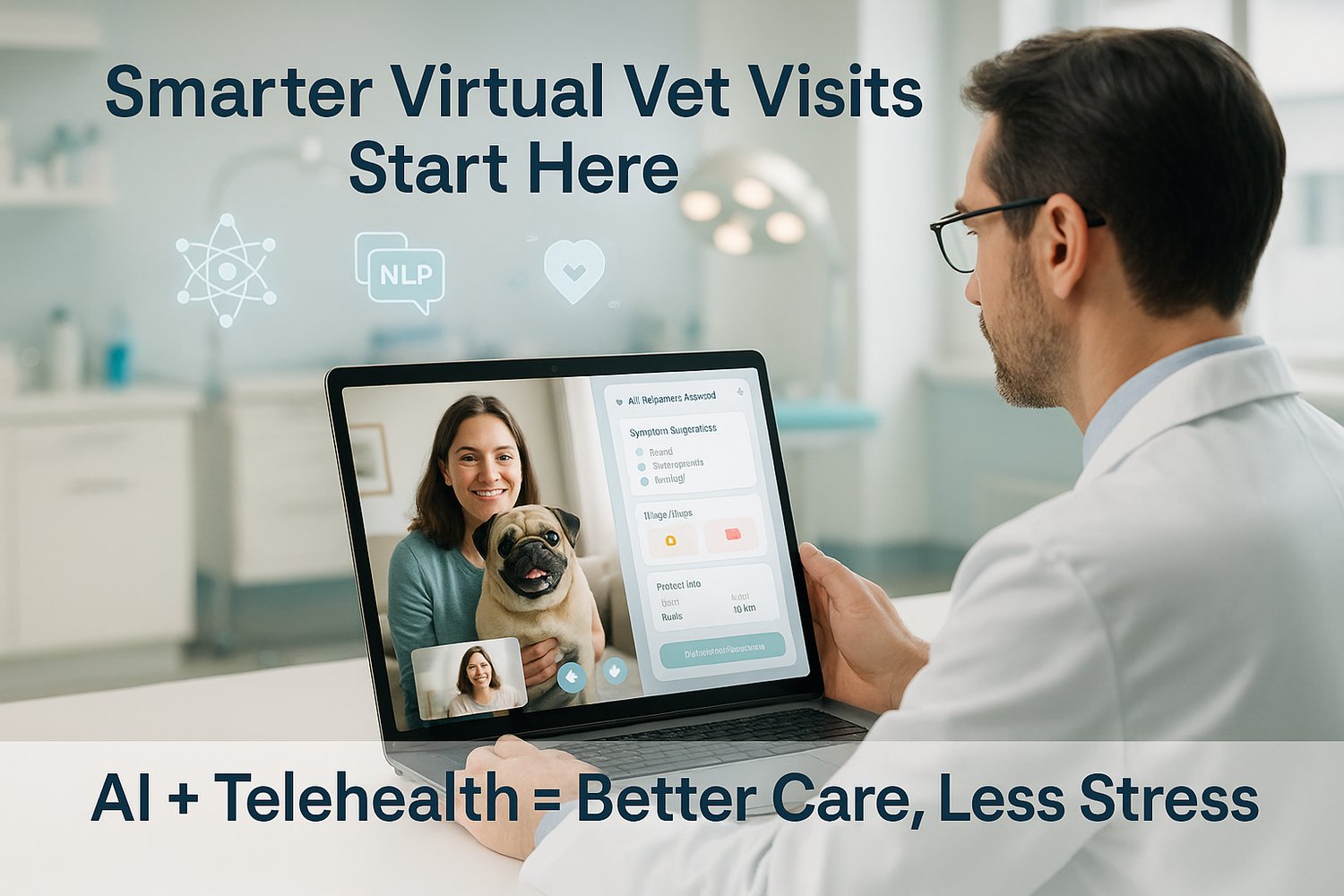
Good question. We’re not just talking about a Zoom call with a pet owner, though that’s part of it. AI-powered virtual consultations are a smarter breed of telehealth.
Think of them as your traditional telemedicine tools but with a brain upgrade. We’re talking about:
- Defining them: These are consultations where artificial intelligence actively assists in the process in the context of veterinary care. This could be from understanding what a client is saying (that’s Natural Language Processing) to even analysing images or videos (hello, Computer Vision). And of course, Machine Learning means these systems get smarter over time.
- How they're different: Your basic video call is passive; you do all the work. AI tools actively participate, maybe by suggesting questions, flagging potential issues based on symptoms described, or pulling up relevant information from the pet’s history or even wider medical databases, in real time. They differ from traditional telemedicine tools in this active assistance.
- The tech involved: It's a mixed bag of clever stuff. Natural Language Processing helps AI understand your client's typed or spoken concerns. Computer vision might (in the future) help analyse a photo of a rash or a video of a limp. Machine learning allows the AI to learn from every interaction, constantly improving its suggestions and accuracy.
- Who's already on it? There are platforms out there already dipping their toes in, using these technologies. Think AI for things like chatbots that handle initial client queries or systems that help you prioritise cases.
The Upsides: Why Bother With AI in Virtual Consults?
Honestly? Because the benefits are pretty compelling.
- Give Me Back My Time! Imagine AI handling initial information gathering or sifting through common, easily solved queries. This means improved efficiency and reduced admin workload for vets. Your highly trained vets and nurses can then focus on the cases that genuinely need their hands-on expertise.
- A Second (Smarter) Opinion: AI can offer enhanced diagnostic support and help with decision-making. It’s like having an incredibly well-read colleague on hand, offering data-driven insights to complement your own experience.
- Round-the-Clock First Aid (Sort Of): For those late-night "is this an emergency?" questions, AI can provide 24/7 availability for initial triage and common concerns, guiding pet owners on whether they need to rush in or if it can wait until morning. Peace of mind for them, and potentially fewer unnecessary out-of-hours calls for you.
- Care Without the Commute: This is huge for clients in rural or remote areas, or for pets who get super stressed by clinic visits. More accessible care means happier clients and healthier pets.
- Speedy Gonzales Responses: Clients love quick answers. AI can help provide those faster response times, increasing client satisfaction before they’ve even stepped through the door.
Hold On, What Are the Catches? Challenges and Limitations of AI-Powered Vet Consultations
It’s not all sunshine and automated tail wags. We need to be realistic about the hurdles.
- Can We Trust the Machines? Accuracy concerns are valid, and the role of human oversight is absolutely crucial, especially for diagnosis and treatment plans. We're talking support, not replacement.
- Big Brother is Watching (Or Is He?): Data privacy and ethical considerations are paramount. We're dealing with sensitive client and patient information. How this data is stored, used, and protected needs to be crystal clear and super secure.
- When AI Can’t Cut It: Let's be honest, you can't diagnose a heart murmur or palpate an abdomen through a screen. AI has its limitations in complex or hands-on cases. Knowing when to say "you need to come in" is key.
- "I Want to Talk to a Human!" Some clients will always prefer talking to a person, and that’s okay. Client trust and addressing potential resistance to non-human interaction are important. Building confidence in AI-assisted care takes time and clear communication.
- The Law Lags Behind: The legal and regulatory landscape around AI and remote diagnostics is still catching up. Staying compliant is a must, and it’s an evolving picture.
Making AI Fit: Integrating AI Virtual Consults Into Clinic Workflows
Right, so how do you actually make this stuff work without causing chaos?
- Plays Well With Others: Look for tools that integrate with existing PMS and EMR systems. Nobody needs another standalone piece of kit that doesn’t talk to anything else.
- Escalation Essentials: You need clear Standard Operating Procedures (SOPs) for when to escalate AI consults to in-person care. This needs to be mapped out.
- Train Your Team, Teach Your Clients: Your staff need to be comfortable and confident using these new tools and virtual processes. And clients need to understand how it works, what to expect, and its limitations. Education is key.
- Automate the Annoying Bits: Use automation for managing appointments and follow-ups. Less diary juggling, more caring.
AI in Action: Real-World Applications and Case Studies
This isn't just theory. Clinics are already using these tools and seeing results.
- Chatbots and Video Smarts: We’re seeing vet clinics successfully using AI chatbots and video consults.
- The Proof is in the Pudding (or Pet Food): Think measurable outcomes like appointment reductions, client retention, and actual time saved for your team.
- No-Show No More? One case story example highlights a clinic that reduced no-shows by 30% using AI reminders. Imagine that for your practice.
- The Trailblazers: It's often the startups and tech-forward clinics that are leading the way, experimenting and showing what’s possible. Keep an eye on them.
Peering into the Crystal Ball: The Future of Veterinary Telemedicine with AI
If you think what we have now is clever, just wait.
- Nose-to-Tail Personalisation: Predictive analytics could mean truly personalised pet care, flagging potential health risks before they even become obvious. Imagine AI identifying subtle patterns in a pet's data that suggest early-stage kidney disease, prompting proactive intervention.
- Smarter Triage Bots: AI triage bots that evolve through deep learning will only get better, becoming more nuanced and accurate in their assessments.
- Wearables on the Woofers (and Meowers): Integration with wearable tech for real-time monitoring could provide a constant stream of health data, allowing for alerts. Think Fitbits, but for Fido and Felix.
- Virtually There? The potential for virtual reality exams or AI-assisted imaging could take remote diagnostics to a whole new level. This is further out, but it's on the horizon.
- Get Ready for a Rate of Change: The next five years will see a lot of development. Preparing your clinic isn’t just about adopting one tool, it’s about fostering a mindset of adaptability and preparing for this change.
Conclusion: So, Is Your Clinic Ready for the AI Revolution?
Look, the fusion of AI and virtual consultations isn't just a tech trend—it's a strategic shift in how we deliver veterinary care. From increasing operational efficiency to deepening client relationships, AI unlocks powerful new opportunities.
But – and it’s a big but – implementation requires foresight, the right partners, and a willingness to evolve. You don’t have to overhaul everything overnight. Start small, educate your team, and pilot a virtual consultation workflow with a trusted tool. The question isn't if AI will change veterinary medicine further, but how you'll use it to your advantage.
FAQs: Your Burning Questions Answered (Hopefully!)
Hang on, isn't AI for virtual vet consults super expensive?
- Not necessarily. Like any tech, there are different levels. Some AI-driven tools, especially for things like initial triage or client communication, are designed to be affordable and show a quick return on investment through efficiency gains. Plus, think of the cost of not adapting if your clients start looking for more modern options.
What's the one AI tool you'd suggest looking into first if we're just starting?
- If you’re easing in, I’d say explore AI-powered triage chatbots or tools that help streamline your appointment scheduling and client communication. They can offer immediate benefits by freeing up your front desk and providing quick answers to common client questions.
Can I even attempt to integrate this AI stuff myself, or do I need a tech wizard?
- Many modern platforms are designed to be user-friendly. For basic integrations, you and your existing team can likely manage with good support from the vendor. For deeper, more complex integrations with your PMS, you might want some specialist help, but don’t let that put you off exploring.
My clients trust me, not a robot. How do I get them on board?
- Transparency is key. Explain how AI is being used to help you provide better, faster initial advice, not replace your personal care. Frame it as a new way to access support from the practice they already trust. Highlight the convenience and speed.
With all this data flying around, how do we ensure client privacy is locked down?
- Great question – and a critical one. Choose reputable AI vendors who are explicit about their data security and compliance measures (like GDPR). Understand where your data is stored and who has access. Make data privacy a core part of your selection process and your clinic’s own protocols.
Comments ()