
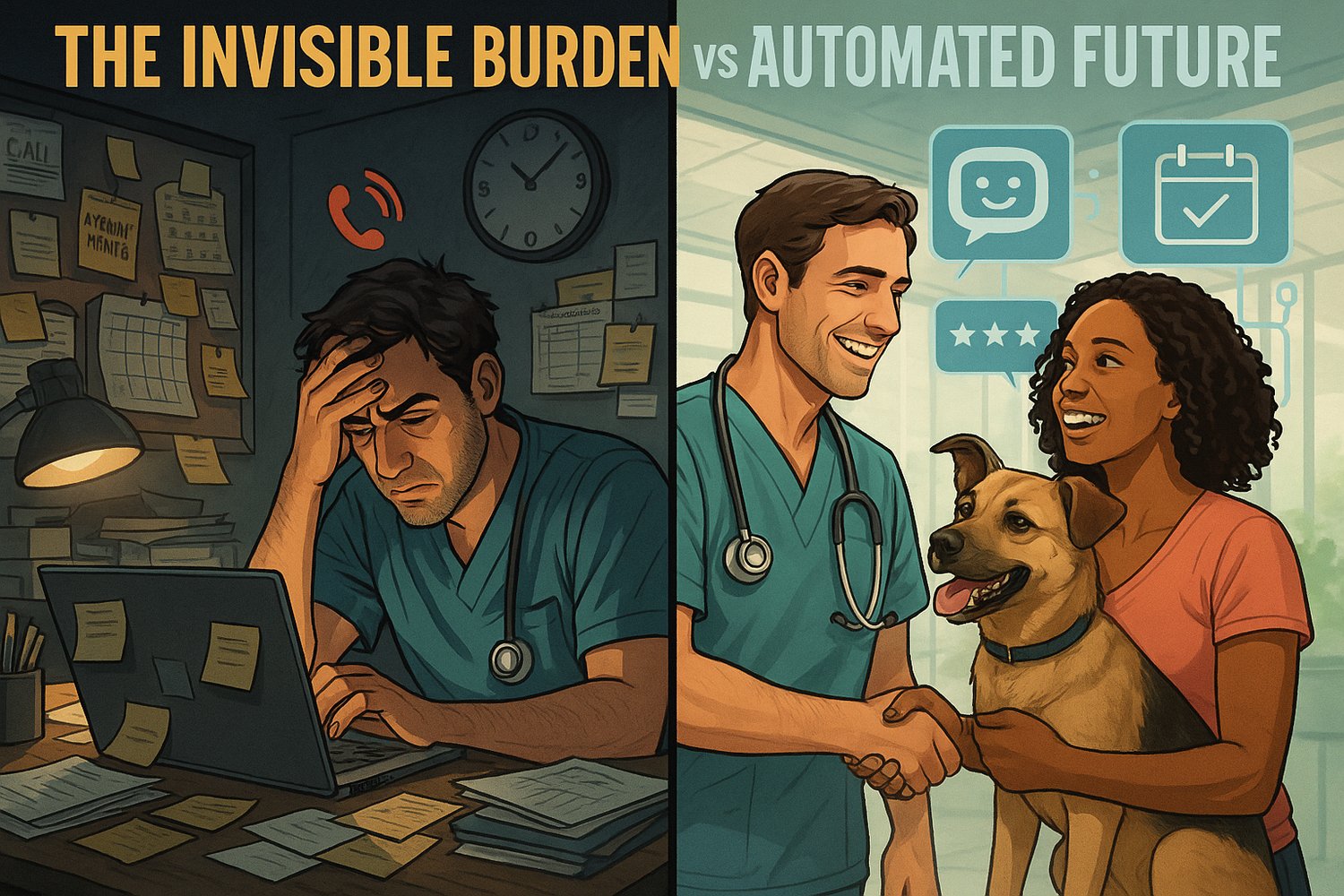

I spent three hours last Tuesday manually scheduling social media posts for a veterinary clinic. Three. Bloody. Hours. And you know what happened? Half the posts went live at 3 AM when pet owners were fast asleep, and the engagement was absolutely rubbish.
Here's the kicker—whilst I was faffing about with content calendars, that same clinic was turning away emergency appointments because they couldn't keep up with demand. Sound backwards? It is.
Look, you didn't go to vet school to become a social media manager. You're not running a clinic to spend your evenings crafting Instagram captions about flea prevention. But here's what I've learnt after working with dozens of veterinary practices: the clinics thriving in 2025 aren't the ones with the fanciest equipment—they're the ones that've cracked the automation code.
The Problem Every Vet Faces (But Nobody Talks About)
You're brilliant at what you do. Seriously. You can diagnose a heart murmur in a nervous rescue dog whilst simultaneously calming a frantic owner and explaining treatment options in plain English. But when it comes to marketing your clinic? That's a different beast entirely.
The traditional advice is mental: “Post three times a day on social media! Send personalised follow-up emails! Create targeted ad campaigns!” Right, because you've got spare time between surgeries to become a digital marketing guru.
Here's the reality check: your dream clients—those pet owners who value quality care and don't haggle over treatment costs—they're searching for “emergency vet near me” and “best veterinarian for senior dogs” right now. The question is: will they find you, or will they find your competitor, who figured out automation months ago?
Key Takeaways: What You Need to Know Right Now
- Most pet owners Google “vet near me” before choosing a practice—yet many clinics still think their Yellow Pages listing is doing the heavy lifting
- Smart reminder systems can slash no-shows by over a third—imagine filling those empty slots with paying clients instead
- AI chatbots can handle 70% of basic enquiries—freeing you up for actual veterinary work instead of answering “What are your opening hours?” for the hundredth time
- Clinics using marketing automation see 25% more repeat clients—because consistent follow-up happens instead of getting forgotten in the chaos
- Social media automation can maintain engagement whilst you're in surgery—your Instagram doesn't sleep, even when you do
- AI-powered email campaigns get 3x higher open rates—when they're personalised and timed correctly
- Automated review requests generate 5x more Google reviews—because timing matters, and humans forget to ask
Why Veterinary Marketing Automation Changes Everything
Time for some brutal honesty: traditional veterinary marketing is broken.
You post sporadically on Facebook when you remember. You sometimes send out appointment reminders… sometimes. Follow-up care instructions? Good luck remembering to email those whilst dealing with a packed waiting room. And don't get me started on trying to nurture leads who inquired about your services three weeks ago but never booked.
I've seen brilliant vets—absolute masters of their craft—struggle to fill appointment slots because their marketing runs on hope and good intentions. Meanwhile, their competitors are using AI to automatically book appointments, send personalised follow-ups, and stay top-of-mind with pet owners.
Here's what automation does for veterinary clinics:
It handles the repetitive stuff whilst you handle the important stuff. Automated systems don't forget to send appointment confirmations. They don't get distracted during emergencies. They work nights, weekends, and holidays—consistently nurturing relationships with pet owners when you're focused on patient care.
It creates better client experiences. Pet owners get immediate responses to basic questions. They receive timely reminders and helpful care instructions. They feel valued because the system remembers their dog's name and vaccination history. All without adding to your workload.
It scales your expertise. A properly set up automated email sequence can educate hundreds of pet owners about preventive care, answer common questions, and position you as the trusted expert—without you writing individual emails.
The AI Tools That Work for Veterinary Clinics
Right, let's get practical. I'm not talking about some fancy enterprise software that costs more than your yearly continuing education budget. These are real tools that real veterinary practices are using to save time and attract more clients.
Automated Scheduling That Works
Your phone rings constantly with appointment requests. Half the time, you're in the middle of an examination and can't answer. The other half, you're explaining the same booking information over and over.
Smart scheduling systems like PetDesk or Veterinary Scheduling AI handle this automatically. Pet owners book online, get instant confirmations, receive automated reminders, and can even reschedule without calling your clinic. I've seen practices reduce phone interruptions by 60% whilst increasing booking rates.
But here's the clever bit: these systems can automatically prioritise urgent appointments, block out surgery time, and even send pre-visit instructions based on the type of appointment booked. Your reception staff can focus on greeting clients instead of playing phone tag.
Social Media That Runs Itself
“But I don't have time for social media!” I hear you. That's exactly why automation works so brilliantly for busy vets.
Tools like Hootsuite or Later let you batch-create content when you've got a spare hour (maybe on a quiet Sunday), then automatically post throughout the week. But here's where it gets really smart: AI tools can suggest post ideas based on seasonal pet health topics, local events, and even trending veterinary discussions.
One practice I worked with spends 30 minutes every fortnight planning content, then their automated system handles the rest. Result? Consistent engagement, more appointment bookings from social media, and zero stress about “forgetting to post.”
Email Marketing That Feels Personal
“Dear valued client”, emails are dead. Modern pet owners can spot generic marketing from miles away.
AI-powered email platforms like Mailchimp or HighLevel can automatically personalise messages based on pet type, age, medical history, and previous visits. They send vaccination reminders for “Fluffy's annual jabs,” not “your pet's routine care.”
Even better, these systems can automatically segment your clients. Senior dog owners get different content than new puppy parents. Exotic pet owners receive specialised care tips. It's like having a personal assistant who remembers every detail about every client's pet.
24/7 Client Support (Without Hiring Night Staff)
Pet emergencies don't follow business hours. Neither do pet owners ask questions about basic care, appointment policies, or service costs.
Chatbots can handle the simple stuff: opening hours, service prices, appointment availability, basic care advice, and emergency protocols. They can even book appointments and collect initial information for new clients.
Here's the beauty: when someone searches “emergency vet open now” at 2 AM, your automated system can immediately provide relevant information, reassurance, and clear next steps. Your competitors' silent websites can't compete with that level of responsiveness.
Automating Social Media Without Losing Your Soul
Social media automation gets a bad rap because people do it wrong. They schedule generic posts, ignore engagement, and wonder why nobody cares about their content.
Here's how smart veterinary practices automate social media the right way:
Content batching with personality. Instead of scrambling for post ideas daily, successful vets block out time monthly to create content that reflects their clinic's personality. They share behind-the-scenes moments, educational tips, and genuine client stories (with permission, obviously). Then they schedule strategic posting times when pet owners are most active online.
Automated engagement tracking. Smart automation tools monitor comments, mentions, and messages, then alert you to important interactions that need personal responses. You can ignore the automated “great post!” comments and focus on genuine questions or concerns.
Performance optimisation. AI analytics show which content resonates with your audience, optimal posting times, and trending topics in your area. One clinic discovered their “senior dog health tips” posts generated 3x more engagement than general pet care content—so they automated more senior dog content and saw appointment bookings from older pet owners increase significantly.
AI-Powered Follow-Ups That Work
Remember that golden retriever who came in for limping issues three months ago? Probably not—you've seen hundreds of patients since then. But your automated system remembers everything.
Smart follow-up automation sends personalised check-in messages based on treatment timelines. Post-surgery patients get recovery tips. Chronic condition patients receive medication reminders. Senior pets get age-appropriate wellness suggestions.
But here's where it gets powerful: automated re-engagement campaigns. That system identifies clients who haven't visited in 12 months and automatically sends personalised “we miss you” messages with health checkup reminders. I've seen clinics recover 20% of inactive clients using this approach.
The key is timing and relevance. Automated doesn't mean impersonal—it means consistently personal at scale.
Smart Advertising That Doesn't Waste Money
Traditional veterinary advertising is expensive guesswork. You place ads, hoping the right pet owners see them at the right time. Most of the budget gets wasted on people who don't need your services.
AI advertising platforms change everything. They automatically identify pet owners in your area who are likely to need veterinary services based on online behaviour, search patterns, and demographic data. They can even target people whose pets are approaching vaccination ages or who've recently searched for specific pet health information.
Retargeting automation is particularly powerful for veterinary practices. Someone visits your website looking at your dental cleaning services, but doesn't book. Automated ads can follow up with educational content about pet dental health and special offers for dental procedures.
The result? One practice reduced their advertising costs by 45% whilst increasing appointment bookings by 60% using smart automation instead of blanket advertising.
Making It Work in Your Clinic
Here's the thing about implementing marketing automation: start small, test thoroughly, and scale gradually.
Don't try to automate everything at once. Pick one area that's causing the most stress—maybe appointment reminders or social media posting—and get that working smoothly before adding more complexity.
Train your team properly. Automation should make everyone's job easier, not more complicated. Make sure staff understand how systems work and when to intervene personally.
Most importantly, maintain the personal touch where it matters. Automation handles routine tasks so you can focus on building genuine relationships with clients who need extra care or have complex concerns.
Measuring What Matters
Automation generates loads of data, but most vets focus on vanity metrics that don't matter. Forget about social media follower counts or email open rates unless they're driving actual appointments.
Track metrics that impact your bottom line: appointment booking rates, client retention percentages, average client lifetime value, and cost per new client acquisition. These numbers tell you whether automation is actually growing your practice or just keeping you busy.
Set realistic benchmarks. Don't expect overnight transformations. Good automation builds momentum over months, not days. But when it works, the results compound beautifully.
Look, automating your veterinary marketing isn't about replacing human connection—it's about creating more opportunities for meaningful connections with the clients who matter most.
Every hour you save on routine marketing tasks is another hour you can spend providing exceptional care, building relationships with clients, or simply having a life outside the clinic.
Your dream clients are searching for “trusted veterinarian near me” right now. The question is: will they find a competitor with slick automation, or will they discover your practice because you've finally given yourself the marketing tools that match your clinical expertise?
Frequently Asked Questions
Wait, isn't marketing automation expensive for small veterinary practices?
Honestly? It's cheaper than you think. Basic automation tools start around $20-50 per month—less than you probably spend on coffee. And when one automated system prevents three no-show appointments, it's paid for itself. The expensive part isn't the software; it's the opportunity cost of not using it.
How do I maintain a personal touch with automated systems?
This is where most people get it wrong. Automation shouldn't replace personal interaction—it should create more opportunities for it. Use automation for routine tasks (appointment reminders, basic follow-ups, scheduling) so you can spend quality time on complex cases, difficult conversations, and building relationships with worried pet owners.
What if my team isn't tech-savvy enough for AI tools?
Modern automation tools are designed for busy professionals, not tech wizards. If your team can use smartphones and email, they can handle veterinary marketing automation. Most platforms offer training, and the time investment upfront pays dividends in reduced daily workload.
Can automation help with emergency appointments?
Absolutely. Smart scheduling systems can automatically identify urgent requests, prioritise emergency slots, and even send immediate guidance to pet owners whilst they're en route. I've seen practices reduce emergency response time by 30% using intelligent automation.
What's the one automation tool you'd recommend starting with?
Appointment reminders and confirmations. Dead simple to set up, immediate impact on no-shows, and your staff will love not having to make repetitive phone calls. Once that's running smoothly, add automated review requests—they're pure gold for building your online reputation.
How long before I see results from marketing automation?
Here's the thing: some benefits are immediate (like reduced no-shows), whilst others build over time. You'll notice workflow improvements within weeks, but significant client acquisition and retention improvements typically show up after 2–3 months of consistent automation. It's compound growth, not overnight magic.
What if automation makes my clinic feel impersonal?
Done correctly, automation makes your clinic feel more attentive, not less personal. When systems remember that Mrs Johnson's cat needs special handling or automatically send post-surgery recovery tips, clients feel cared for. The trick is using automation to enhance personal touches, not replace them.
Disclaimer: This post contains affiliate links; I may earn a commission if you make a purchase, at no extra cost to you.
Comments ()