
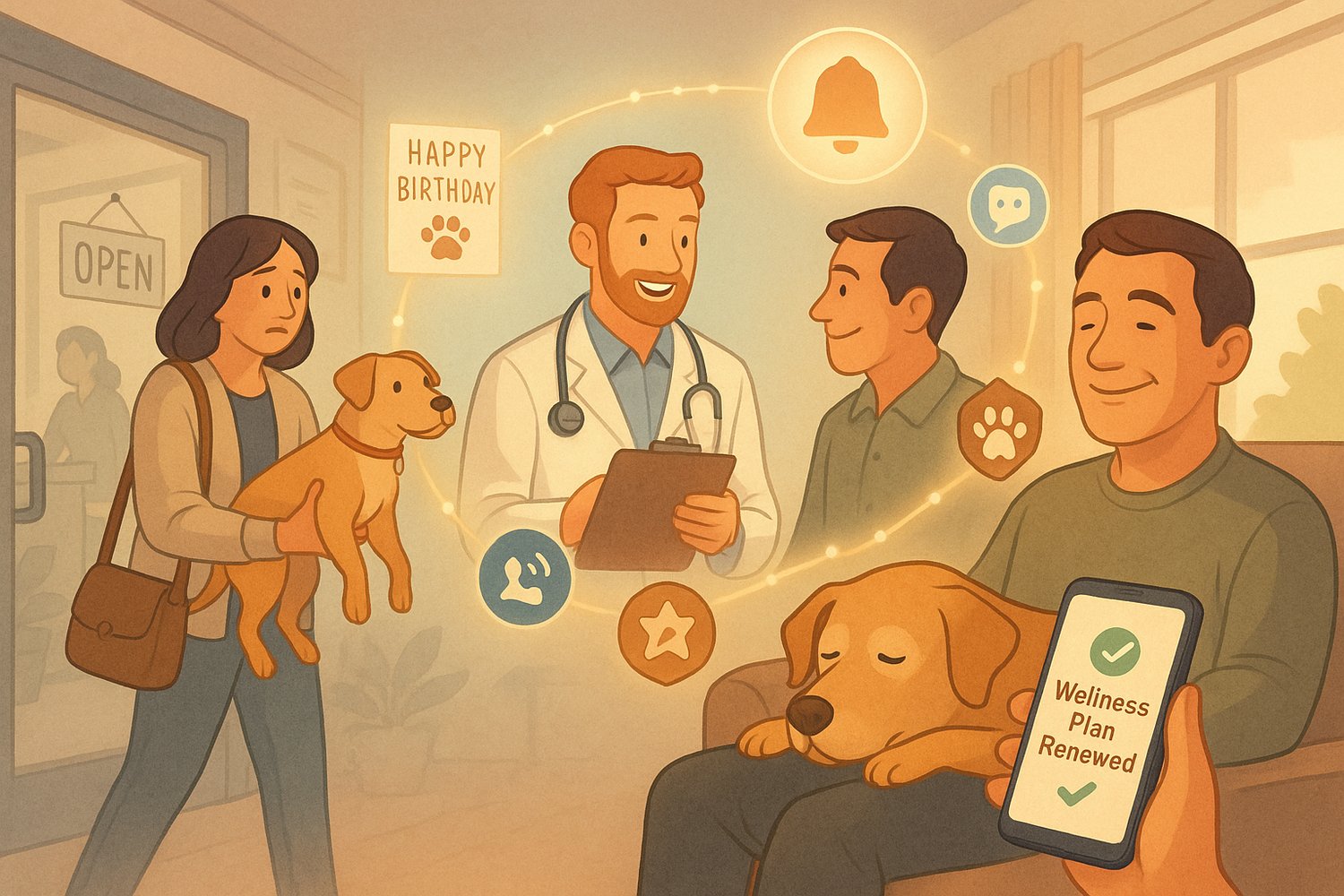

Here's something that'll make your head spin: most veterinary clinics spend five times more money hunting for new clients than keeping the ones they already have.
You see brilliant vets everywhere—people who can diagnose a heart murmur in seconds—flushing thousands down the drain on Facebook ads whilst their existing clients quietly slip away to the competition. It's madness.
Look, this pattern plays out across the veterinary industry over and over again. The clinics that are constantly scrambling for new pet owners? They're haemorrhaging money. But the ones with rock-solid client retention. They're not just surviving—they're scaling without breaking a sweat.
You didn't go to veterinary school to become a marketing wizard. You went there to help animals. But here's the brutal truth: if you can't keep clients coming back, you'll spend more time worrying about your practice's survival than actually practising veterinary medicine.
That's where the 90% retention system comes in. And before you roll your eyes and think, “Another marketing guru promising the moon” this isn't about fancy tactics or expensive software. It's about systematically creating an experience so valuable that pet owners can't imagine going anywhere else.
Key Takeaways
Before we dive deep, here's what you're about to learn:
- The economics are brutal: Acquiring a new veterinary client costs 5x more than retaining an existing one—yet most practices have their priorities completely backwards
- First visits make or break everything: 73% of pet owners decide within the first appointment whether they're coming back—here's how to nail that crucial moment
- Preventive care plans are retention goldmines: Clinics using wellness memberships see 40% higher client lifetime value and book 3x more regular appointments
- Smart communication beats expensive ads: Monthly pet care newsletters and birthday messages generate more rebooking than most paid advertising campaigns
- Data reveals silent churn: Your practice management system already knows which clients are about to leave—you just need to know where to look
- Loyalty programmes work when done right: Points and perks aren't enough—successful vet loyalty programs reward the behaviours that actually matter
- Boutique service doesn't require boutique prices: Small touches like handwritten cards and follow-up calls create premium experiences that keep clients loyal for life
Sound like something you could use? Let's break it down…
Why Retention Is More Profitable Than Acquisition (And Why Most Vets Get This Wrong)
Here's where most veterinary practices completely lose the plot. They're obsessed with getting new clients through the door whilst completely ignoring the ones already there.
The maths is actually quite simple. Let's say Mrs Thompson brings Fluffy in for vaccinations. That first visit might net you $80. But over Fluffy's lifetime? We're talking $2,000-$3,000 in total veterinary care. Dental cleanings, annual checkups, emergency visits, medications… it adds up fast.
But here's what most vets miss: Mrs Thompson isn't just worth $2,000. She's worth whatever her referrals bring in, too. One happy client typically refers 2-3 other pet owners over their lifetime. So suddenly, that one relationship could be worth $6,000-$9,000 to your practice.
Now compare that to constantly chasing new clients. Every month, you're starting from scratch, competing on price, hoping your Google Business Profile ranking is decent enough to get noticed. It's exhausting and expensive.
The practices that get this right? They focus on making existing clients so happy that marketing becomes almost automatic. Word-of-mouth referrals. Repeat visits that fill your calendar months in advance. Predictable revenue that lets you actually plan for growth.
Building Trust from the First Visit (Because You Never Get a Second Chance)
Right, this is where most practices either win big or lose completely. That first appointment with a new pet owner isn't just about examining their animal—it's about laying the foundation for a relationship that could last 10–15 years.
Think about it from the pet owner's perspective. They're probably nervous, unsure if they've chosen the right vet, wondering if they're about to get hit with a massive bill they weren't expecting. How you handle these first few minutes determines everything.
Here's what I've seen work brilliantly: start the onboarding process before they even step through your door. Send a welcome email the day after they book their first appointment. Not some generic “thank you for choosing us” nonsense—something personal that acknowledges their specific pet and situation.
“Hi Sarah, we're looking forward to meeting Buster for his puppy vaccinations on Thursday. Since he's only 12 weeks old, we'll make sure to keep the appointment gentle and stress-free. Here's what to expect…”
See the difference? You're already positioning yourself as the vet who cares about Buster specifically, not just another appointment slot to fill.
During that first visit, set clear expectations about your approach to veterinary care. Explain your philosophy on preventive medicine. Walk them through what regular care looks like for their specific pet. Most importantly, give them multiple ways to stay in touch—phone, email, text messages for appointment reminders.
And here's a trick that works like magic: follow up within 24 hours. A quick call asking how Buster's doing after his vaccinations. It takes two minutes, costs you nothing, but creates an impression that lasts for years.
I've watched practices transform their retention rates just by systematising these first-visit protocols. Because once pet owners feel truly cared for from day one, they become incredibly loyal.
Create a Continuity of Care Plan (And Actually Promote It)
This is where the 90% retention system really starts to shine. Most vets think continuity of care just happens naturally—annual vaccinations, the odd dental cleaning, emergency visits when needed. But that's leaving money and relationships on the table.
Smart practices create actual care plans that map out their pets' health journey for the next several years. Not just “bring Fluffy back in 12 months for boosters”—a comprehensive wellness plan that shows pet owners exactly how you're going to keep their animal healthy throughout every life stage.
Here's what this looks like in practice: when that 8-week-old puppy comes in, you're not just handling today's vaccinations. You're showing the owners a clear timeline: puppy shots at 12 weeks and 16 weeks, spaying at 6 months, adult vaccinations starting at 1 year, dental care from age 2, senior health screening from age 7.
But—and this is crucial—you're not just mentioning these future appointments. You're explaining why each one matters and booking them in advance when possible. “Let's get Buster's spaying appointment scheduled now for when he turns 6 months. It's much easier to plan ahead, and you'll get our early booking discount”.
The really clever practices have turned this into membership programmes. Monthly payment plans that cover all routine care for the year. Pet owners love the predictability of costs, and you love the guaranteed recurring visits. Win-win.
I've seen clinics increase their annual revenue per client by 40% just by implementing wellness memberships. Because when pet owners have already paid for their annual dental cleaning, they actually show up for it. Amazing how that works.
And here's the retention magic: when someone's paying $30 monthly for their dog's wellness plan, they're not shopping around for cheaper vets. They're invested in your practice long-term.
Smart Communication That Keeps You Top of Mind (Without Being Annoying)
Right, let's talk about staying connected with your clients between visits. This is where most veterinary practices either do nothing at all or do everything wrong.
The “do nothing” practices wonder why clients disappear for two years, then suddenly show up asking why their pet's vaccinations have lapsed. The “do everything wrong” practices spam people with generic newsletters about random pet topics that nobody asked for.
Here's what works: relevant, timely communication that adds value to their pet ownership experience.
Monthly newsletters? Yes, but make them useful. Instead of “Five Fun Facts About Cats”, try “Senior Dog Care: What to Watch for in Your 8-Year-Old Labrador”. Target your content to what your specific clients really need.
Birthday messages for pets? Absolutely, brilliant. Costs you nothing, but creates this lovely moment of connection. “Happy 3rd birthday to Buster! Hope he enjoys some extra treats today. Don't forget, his annual checkup is due next month”.
SMS reminders for appointments? Essential. But go beyond basic booking confirmations. Text pet owners the day before: “Reminder: Buster's annual checkup tomorrow at 2 pm. Please bring any questions about his recent scratching behaviour”.
The key is segmentation. Your database probably contains information about pet ages, breeds, health conditions, and visit history. Use it. New puppy owners get different content than senior pet parents. Clients with diabetic cats get targeted information about managing their condition.
I've watched practices double their rebooking rates simply by sending relevant, personalised communication. Because when pet owners see that you remember their specific situation, they feel valued. And valued clients don't switch to competitors.
Customer Service That Feels Like a Boutique Experience
This is where the magic truly happens. You don't need expensive renovations or fancy equipment to create an experience that makes clients feel special. You need systems and training that make every interaction memorable.
Start with your front desk team. They're often the first and last people clients interact with. Train them to remember names—both human and pet names. “Hi Sarah, how's Buster been since his last visit?” immediately sets a different tone than “Next!”
Little touches make huge differences. Handwritten thank-you cards for new clients. A small bag of treats for pets after their appointment. Follow-up calls after surgical procedures to check how recovery is going. These cost practically nothing, but create disproportionate loyalty.
Address the pain points that every pet owner experiences. Long wait times? Implement a text-when-ready system, so people don't have to sit in your waiting room with anxious pets. Confusing bills? Provide detailed explanations of charges and payment plan options.
But here's what separates good practices from great ones: proactive problem-solving. When you notice patterns—maybe several clients mentioning their senior dogs are having mobility issues—address it before they have to ask. Send targeted information about joint care, or offer a senior pet health seminar.
Gather feedback systematically, not just when something goes wrong. Simple follow-up emails asking about their experience. Quick surveys after visits. Actually listen to what clients are telling you, then fix the issues they're raising.
I've seen practices transform their reputation in their community just by consistently delivering these small moments of exceptional service. Because in a world where most businesses provide mediocre experiences, even basic attention to detail feels premium.
Loyalty Programmes That Actually Work (Not Just Points and Discounts)
Most veterinary loyalty programmes are rubbish. They reward spending money instead of rewarding the behaviours that actually create lasting relationships. Here's how to do it properly.
First, reward frequency and consistency, not just transaction size. Give points for keeping up with annual vaccinations, for booking preventive dental cleanings, for attending your pet care seminars. These are the behaviours that create healthy pets and stable revenue.
Second, reward referrals meaningfully. When Mrs Thompson refers her neighbour, she shouldn't just get a $10 credit. Give her something that enhances her pet's experience—maybe a complimentary nail trim, or priority booking for emergency visits.
Third, create tiers that recognise longevity. Clients who've been with you for five years deserve different recognition than someone who just started coming. VIP appointment slots, birthday gifts for long-term pets, exclusive access to new services.
But here's the clever bit: gamify the experience without making it feel juvenile. Create digital badges for milestones. “Buster just earned his 'Preventive Care Champion' badge for staying current with all vaccinations!” It sounds silly, but pet owners love celebrating their responsible pet parenting.
Promote your loyalty programme everywhere. Social media posts celebrating clients who hit milestones. In-clinic displays showing off your “Clients of the Month”. Make people feel proud to be part of your practice community.
The practices getting this right see loyalty programme members spending 35% more annually and referring 50% more new clients. Because when you reward the right behaviours, you create a self-reinforcing cycle of engagement.
Use Data to Proactively Retain Clients (Before They Even Think About Leaving)
Your practice management system is sitting on a goldmine of retention data, but most vets never dig into it. Here's what you should be tracking and how to use it.
First, identify your silent churners. These are clients who haven't completely disappeared, but their visit frequency has dropped significantly. Maybe they used to come in every six months; now it's been 14 months since their last appointment. That's your early warning system.
Set up automated alerts in your system. When a client hasn't been in for 12 months (or whatever timeline makes sense for your practice), they should automatically get flagged for a win-back campaign. A friendly call asking how their pet is doing, maybe offering a discounted wellness checkup to get them back in.
Track your retention metrics by client acquisition source. Are clients who found you through Google more loyal than those who came via referrals? Do certain marketing campaigns attract higher-value, longer-term clients? This data helps you optimise your marketing spend.
Look at seasonal patterns in your retention data. Many practices see drops in visit frequency during summer months when families are travelling or in January when people are managing holiday expenses. Plan proactive communication campaigns around these predictable dips.
Use the data to personalise your outreach. If a client typically brings their dog in every eight months, and it's been nine months, that's worth a gentle reminder. If someone always books dental cleanings in the spring, reach out in February with appointment availability.
The most sophisticated practices are starting to use AI-powered insights from their patient records. Identifying pets who are approaching life stages where certain health issues become common, then proactively scheduling preventive care consultations.
I've seen practices increase their retention rates by 25% just by systematically using the data they were already collecting. It's not about buying expensive new software—it's about actually paying attention to the patterns your existing systems reveal.
The 90% Retention System—Your Step-by-Step Blueprint
Right, let's pull this all together into a system you can actually implement. The 90% retention system has four core pillars, and I'm going to give you the monthly action plan that makes it work.
Pillar 1: Onboarding That Creates Instant Loyalty
- Welcome email sent within 24 hours of first appointment booking
- First-visit checklist that includes expectation setting and care plan discussion
- 24-hour follow-up call after every new client visit
- Welcome packet with practice information and pet care resources
Pillar 2: Continuity of Care Planning
- Comprehensive wellness plans mapped out for every life stage
- Membership programmes for predictable revenue and client commitment
- Automated reminder systems for all routine care appointments
- Educational content explaining why each service matters
Pillar 3: Communication That Adds Value
- Monthly newsletters segmented by pet type and life stage
- Birthday messages and milestone celebrations for pets
- SMS appointment reminders with personalised details
- Proactive health tips based on seasonal needs and pet characteristics
Pillar 4: Boutique-Level Service Experience
- Front desk training focused on relationship building and name recognition
- Follow-up protocols for surgical procedures and major treatments
- Feedback collection systems with rapid response to issues
- Small touches like handwritten cards and pet treats after visits
Your Monthly Action Checklist:
Week 1: Review retention metrics and identify clients at risk of churning
Week 2: Plan and create that month's segmented newsletter content
Week 3: Review client feedback and implement one service improvement
Week 4: Train team on one aspect of the customer experience system
The tools you need aren't complicated: a decent practice management system with automated reminders, an email marketing platform that can segment your lists, and a simple CRM system to track client interactions.
Most importantly, assign someone on your team to own client retention. It can't be something everyone's supposed to do—it needs to be someone's primary responsibility.
Frequently Asked Questions
Wait, isn't this level of communication a bit much? Won't clients find it annoying?
Here's the thing—pet owners actually crave this level of communication from their veterinary practice. Think about how much they worry about their pets' health between visits. Relevant, helpful communication isn't annoying; it's reassuring. The key is making sure everything you send adds value. Random pet facts? Annoying. Reminder that their senior dog is due for joint health screening? Welcomed.
This sounds expensive to implement. How much is this really going to cost?
Most of what I've described costs more time than money. The biggest investment is training your team and setting up systems—but you're probably already paying for practice management software and basic marketing tools. The email automation, SMS reminders, and follow-up protocols can mostly be handled within systems you likely already have. The return on investment is massive because retained clients are so much more profitable than constantly acquiring new ones.
What if my practice is already fully booked? Won't better retention make scheduling even more difficult?
Brilliant problem to have, honestly. But better retention helps with scheduling because you have more predictable demand. When clients are enrolled in wellness plans and maintaining regular visit schedules, you can plan your calendar months in advance. Plus, retained clients are much more flexible about appointment times because they trust you and want to maintain the relationship. New clients always want the most convenient slots.
How do I know if this system is working? What metrics should I track?
Start with your overall client retention rate—calculate what percentage of clients who visited last year also visited this year. Then track average client lifetime value, referral rates from existing clients, and rebooking rates after routine visits. You should see improvements within 6–12 months of implementing the system consistently. Most practices implementing this properly see 15-25% improvement in retention within the first year.
My team is already overwhelmed. How do we add all these touchpoints without burning out?
The beauty of this system is that most of it gets automated once it's set up properly. Email sequences, SMS reminders, and follow-up protocols can run themselves. The personalisation happens at strategic moments—not every single interaction needs to be custom. Start with one pillar, get it running smoothly, then add the next. Don't try to implement everything at once.
What's the one thing you'd recommend starting with if I could only do one thing?
Fix your first-visit experience. Everything else builds on that foundation. If new clients don't feel properly welcomed and cared for from day one, no amount of follow-up communication will save the relationship. Get your onboarding process bulletproof, then expand from there.
Does this approach work for emergency and specialty practices, or just general practice?
The principles work everywhere, but the execution differs. Emergency practices focus more on follow-up care coordination and referral relationships. Specialty practices emphasise education about ongoing management of complex conditions. The core idea—creating systematic touchpoints that add value—applies regardless of your practice type. You just adjust the content and timing to match your clients' needs.
Turn First-Time Visitors into Lifetime Clients
Alright, let's cut to the chase and talk about how to stop the bleeding in your practice and actually grow without pulling your hair out. You’ve heard me bang on about client retention, right? And how most of you are just throwing money down the drain chasing new clients while the old ones quietly slip away. Well, it's time to fix that.
Here’s what I’ve got: I'm giving you access to the 'AI Employee'. Think of it as your secret weapon, designed specifically to tackle the exact retention problems we've been talking about.
Here’s what it will do for you: This isn't just some fancy software; it's like adding a full-time, 24/7 team member who handles all the repetitive but crucial stuff. Imagine automating every customer call, never missing an opportunity, and instantly qualifying leads. Picture every chat turning into a customer win, booking appointments automatically, and providing human-like 24/7 support.
What if you could build a 5-star reputation on autopilot by instantly responding to reviews, boosting your SEO, and capturing insights to improve your service? Or create high-impact content in a fraction of the time – blogs, emails, social posts, even custom visuals – with no design skills required?
And finally, build smarter automations without the guesswork, simplifying complex systems into clear steps. This AI Employee helps you scale faster, build stronger customer relationships, and free up your team to focus on what truly matters.
You’ll increase your client lifetime value, see higher rebooking rates, and get those crucial referrals coming in automatically, without you lifting a finger.
Here’s how it works: For the next 30 days, you get to unleash the full power of the AI Employee completely FREE. That means unlimited access to the complete AI Employee suite – AI for writing, image generation, funnels, workflow building, and customer engagement – without worrying about usage caps or hidden fees.
Most other tools charge you for every minute or task, but not this one – you get total freedom to create, automate, and grow.
Here’s what I want you to do next: Stop waiting around. Start your FREE 30-day AI Employee upgrade right now. If you're new to HighLevel, you’ll even get a 1-hour onboarding session. Click the link below, and let’s get this sorted.
Here’s why you should do it now: Every single day you delay, you’re losing clients. They're quietly slipping away to your competitors because you're not systematically delivering the kind of experience that makes them feel valued.
This isn’t a small problem; it’s a gaping hole in your revenue. Think about it: acquiring a new client costs five times more than keeping an existing one. And we’re talking about a limited-time offer here for a 30-day free trial. Don’t miss out on getting this game-changing tool for free.
Here’s why it’s safe and smart: You get a full 30-day FREE trial of the AI Employee, with no subscription fees processed today. When your trial expires, you'll be charged only if you decide to continue, but you can cancel at any time. There are no extra charges or hidden fees, just one flat upgrade rate of $97/month if you decide to keep it. This is a no-brainer.
Look, your existing clients are a goldmine of referrals, repeat visits, and predictable revenue.
The choice is yours: keep struggling, or start building the systematic approach that turns every new client into a lifelong relationship with the AI Employee. Your bank account—and your stress levels—will thank you.
Click My Paid Link and 👇🏾
Start Your FREE 30-Day Trial & Access to Your Own AI Employee
Comments ()