
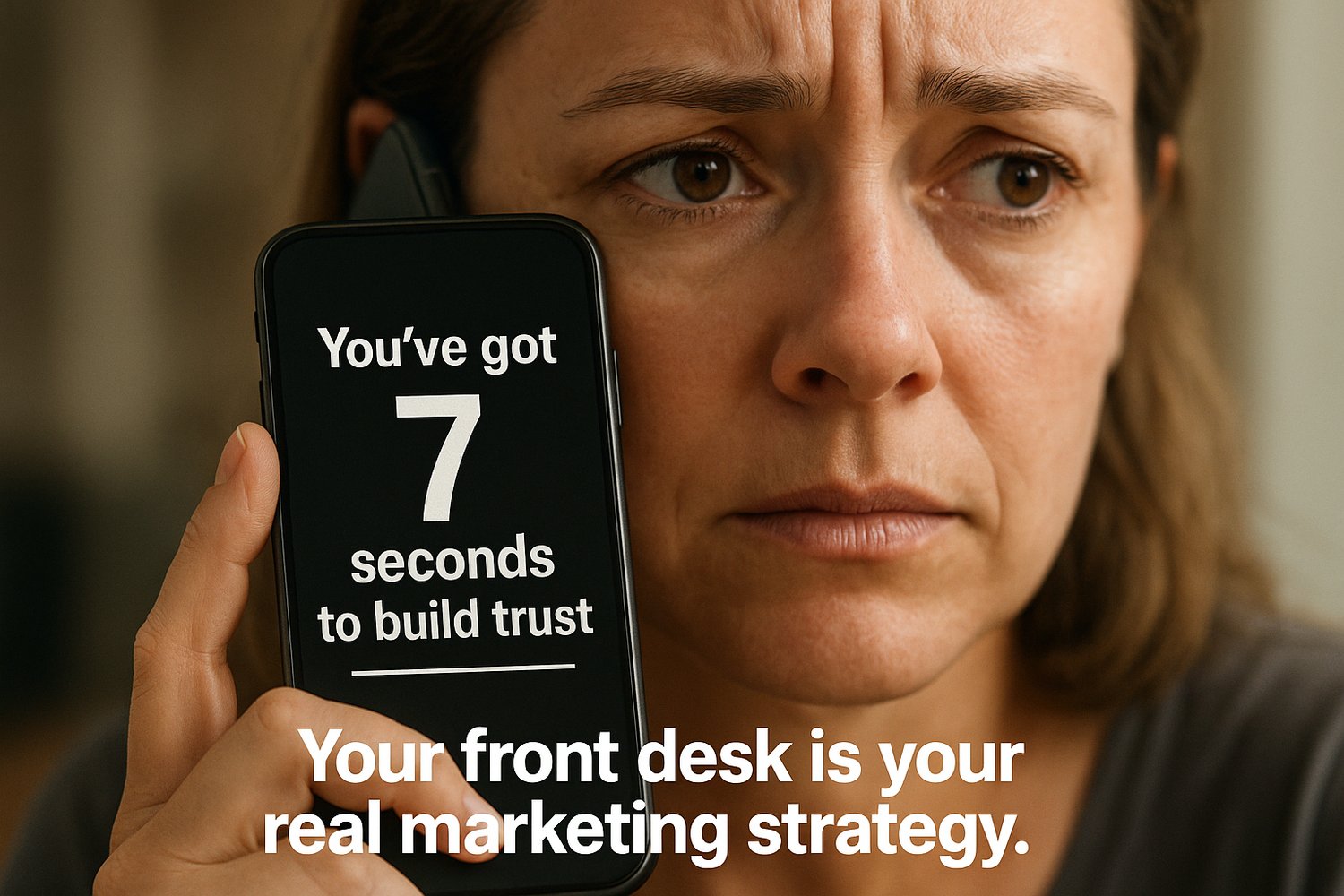

Here's something that'll blow your mind: vet clinics routinely spend thousands on Facebook ads whilst their receptionist is putting callers on hold for three minutes. Every. Single. Time.
The irony? That front desk interaction—the one they're ignoring—has more power to fill their appointment book than any glossy Instagram campaign ever will.
You became a vet to heal animals, not to master the art of conversion funnels. But here's the thing… your front desk team? They're already marketing your practice. The question is whether they're doing it brilliantly or catastrophically.
The Problem Every Vet Clinic Faces (But Won't Admit)
You know that sinking feeling when a client walks out after their appointment, and you just know they won't be back? Nine times out of ten, it's not because of your clinical skills. It's because somewhere between their first phone call and walking out your door, something went wrong at the front desk.
Here's what's really happening: your receptionist is the first voice clients hear, the first face they see, and often the last person they interact with. They're essentially your brand ambassador, sales team, and customer service department rolled into one. Yet most practices treat front desk training like an afterthought.
Key Takeaways (The Stuff That Moves the Needle)
- First impressions stick harder than superglue: Research shows it takes 0.1 seconds for someone to form an opinion about your practice—and your front desk controls that moment completely.
- One bad phone experience kills seven potential appointments: That rushed, impatient tone when booking? It's costing you more than you think.
- Your front desk data is marketing gold: Every missed call, every complaint, every compliment is intel that should be feeding back into your marketing strategy.
- Automated systems free up emotional bandwidth: When your team isn't drowning in admin, they can connect with clients (and that connection converts).
- Brand alignment starts at reception: If your marketing says “caring and professional” but your front desk feels chaotic, you've got a problem.
- Cross-training creates conversion opportunities: A receptionist who understands your services can naturally mention that dental check your client's been putting off.
- The environment speaks before your team does: Cluttered desk, outdated signage, harsh lighting—all of this is marketing, whether you planned it or not.
Why Your Front Desk Is a Marketing Channel (Not Just the Place Where Things Get Organised)
Here's a scenario that plays out daily across veterinary practices. Sarah calls your clinic at 2 pm on a Tuesday. Her cat's been off his food for two days, and she's worried sick. Your receptionist answers on the fourth ring with “Hold please”—no greeting, no warmth, just straight to hold music.
When Sarah finally gets through, she's asked to repeat her cat's symptoms three times because the system's slow and the receptionist seems distracted. The appointment gets booked, but Sarah hangs up feeling like she's bothering you.
Now flip that script. Same call, but this time: “Good afternoon, Riverside Veterinary Clinic, this is Emma speaking. How can I help you and your pet today?”
Emma listens, shows genuine concern, explains what to watch for until the appointment, and even mentions your emergency contact details just in case. Sarah hangs up, feeling supported and confident that she's chosen the right practice.
Both scenarios took the same amount of time. Both booked the same appointment. But only one created a client who'll recommend you to her neighbour.
That's the psychological power of first impressions working for you instead of against you. Your front desk team doesn't just book appointments—they set expectations, build trust, and plant the seeds for five-star reviews.
Here's what most practices miss: every interaction at your front desk creates a ripple effect. Happy clients don't just come back—they tell their friends, leave glowing Google reviews, and become walking advertisements for your practice. One stellar front desk experience can generate ten new client conversations at the local dog park.
But the reverse is equally true. One frustrated client doesn't just leave—they tell everyone who'll listen about their poor experience. And thanks to online reviews, that “everyone” now includes thousands of potential clients.
Training Your Front Desk Staff to Think Like Marketers (Without the Jargon)
Right, here's where it gets interesting. Your receptionist probably didn't apply for a “marketing role”, but that's exactly what they're doing every day. The difference between good practices and great ones? Great practices train their team to embrace this reality.
Start with communication skills that really convert callers into appointments. I'm not talking about pushy sales tactics—I'm talking about genuine care expressed in a way that builds confidence.
For example, instead of “We can fit you in on Thursday at 3,” try “I've got a perfect slot on Thursday at 3 pm with Dr Johnson—she's fantastic with nervous cats and will take great care of Mittens.” Same information, completely different energy.
Emotional intelligence and empathy aren't soft skills in veterinary reception—they're profit drivers. When your team can read the worry in a client's voice and respond appropriately, magic happens. They're not just booking appointments; they're providing reassurance and building relationships.
Here's a game-changer: role-playing scenarios during team meetings. Practice the difficult conversations—the cost discussions, the emergency calls, the clients who are frustrated about wait times. When your team have been practicing these conversations, they handle them with confidence instead of panic.
And here's something most practices never consider: integrating upselling and cross-promotion into natural conversations. I'm not suggesting your receptionist becomes a used car salesman, but they can absolutely mention relevant services. “While Buddy's here for his vaccination, would you like me to check if he's due for his dental clean? Dr Smith mentioned it's really important for his breed.”
The key is training your team to see themselves as advocates for pet health, not just appointment bookers. When they understand the clinical reasoning behind your recommendations, they can communicate them naturally and confidently.
Front Desk Systems That Automate the Boring Stuff (So Your Team Can Focus on the Human Stuff)
Look, I'll be straight with you—your receptionist spending twenty minutes chasing down a no-show isn't just frustrating for them. It's expensive for you.
This is where smart automation comes in. Not the robotic, impersonal kind that makes clients feel like they're dealing with a call centre, but the kind that handles the repetitive tasks, so your team can focus on what matters: connecting with clients.
Automated appointment reminders are the low-hanging fruit here. Text and email confirmations sent 24 and 2 hours before appointments can cut your no-show rate by 30-40%. But here's the kicker—they also free up your team from making dozens of confirmation calls every day.
Call scripts aren't about being robotic—they're about consistency. When your team has a framework for common situations, they sound more professional and confident. Plus, they remember to mention important details like “Please bring a fresh stool sample” instead of having to call the client back later.
Software like GoHighLevel or similar management systems can streamline the entire client communication flow. From initial inquiry to follow-up after treatment, you can nurture relationships without your team drowning in manual tasks.
But here's what really matters: when your front desk isn't buried in admin work, they have the mental space to actually listen to clients, pick up on their concerns, and provide the kind of service that creates loyalty.
The goal isn't to replace human connection with technology—it's to use technology to make room for better human connection.
Creating a Front Desk Environment That Reflects Your Brand
Walk into your reception area right now. Seriously, stop reading and go look.
What does it say about your practice? Whether you've thought about it or not, that space is communicating your brand values to every single client who walks through your door.
Visual branding goes way beyond your logo on the wall. It's the cleanliness of your desk, the organisation of your space, and the quality of your signage. If your marketing materials promise “modern, professional care” but your reception area looks like it hasn't been updated since 1995, you've got a credibility problem.
Lighting matters more than you think. Harsh fluorescent lights make everyone look tired and stressed. Warm, welcoming lighting helps both clients and their pets feel more relaxed. Small change, big impact.
Seating arrangement matters too. Cramped plastic chairs facing each other create awkward situations when nervous dogs are involved. Thoughtful spacing and pet-friendly furniture show you understand your clients' needs.
Digital check-ins and mobile-friendly forms aren't just convenient—they're expectations now. Clients want to fill out paperwork on their phones while walking the dog, not juggle a clipboard with a squirmy puppy on their lap.
Even sensory details matter. The scent of cleaning products might signal “hygienic” to you, but it might signal “harsh chemicals” to anxious pet owners. Fresh air, subtle pet-safe diffusers, or simply good ventilation create a more welcoming atmosphere.
The sound environment is crucial too. Barking dogs echoing off hard surfaces creates stress for everyone. Soft background music or sound-absorbing materials can transform the entire feel of your space.
All of this might seem like marketing fluff, but here's the reality: clients make subconscious judgements about your clinical competence based on these environmental cues. A chaotic, outdated reception area makes them wonder about the rest of your practice.
Leveraging Front Desk Data to Actually Improve Your Marketing (Instead of Just Collecting It)
Your front desk is sitting on a goldmine of marketing intelligence, and most practices are completely ignoring it.
Every phone call, every question, and every complaint is data that should be feeding back into your marketing strategy. But here's what usually happens: the information stays at the front desk and never makes it to the people making marketing decisions.
Call tracking and lead source attribution start at your front desk. When someone calls, your team should be asking, “How did you hear about us?” Not just for curiosity, but because that information tells you which marketing efforts are working.
It's common to see practices spend thousands on Facebook ads, whilst their best lead source was really their Google listing—something they only discover when they start tracking front desk enquiries properly.
Your front desk team are also your best listening post for what clients care about. They hear the questions that don't make it into formal feedback surveys. They know which services clients ask about most, which prices cause hesitation, and which concerns come up repeatedly.
This intelligence should be informing your marketing messages. If your team hears “Do you treat rabbits?” five times a week, that's a signal that your exotic pet services aren't clearly communicated in your marketing.
Rebooking rates, missed calls, and conversion metrics from enquiries to appointments—all of this data lives at your front desk. When you start tracking these numbers, patterns emerge that can dramatically improve your marketing ROI.
For example, if you're getting lots of calls but few bookings, the problem isn't your marketing—it's your phone conversion process. Fix that, and your marketing immediately becomes more effective.
Front Desk Scripts That Convert (Without Sounding Like Robots)
Let's be honest—most front desk scripts sound like they were written by someone who's never actually answered a phone in a veterinary practice.
Here's what works: frameworks, not word-for-word scripts. Your team needs to sound human, but they also need consistency and confidence.
For greeting templates that build trust instantly, try this framework: Practice name + receptionist name + “How can I help you and your pet today?” It's professional but personal, and that last bit shows you understand this is about their beloved companion, not just a transaction.
Rebooking scripts that gently reduce attrition work best when they focus on pet health, not practice convenience. Instead of “Would you like to book your next appointment now?” try “Dr Johnson recommends seeing Bella again in six months to keep on top of her skin condition. Shall we find a time that works for you?”
For conflict resolution, your team needs phrases that defuse tension without admitting fault. “I can understand how frustrating that must be”, acknowledges their feelings without accepting blame. “Let me see what options we have” moves the conversation toward solutions.
Lead qualification templates that feed your CRM should feel conversational. “Just so I can make sure we have everything ready for Max, can you tell me a bit about what's been going on?” This gathers information whilst showing care and preparation.
The key with all of these is training your team to use them as starting points, not rigid scripts. The goal is confident, consistent communication that sounds natural and caring.
Aligning Your Front Desk, Marketing, and Operations (Because Silos Kill Growth)
Here's where most practices completely drop the ball: they treat the front desk, marketing, and clinical teams like separate departments in different universes.
Your front desk team are often the first to know when a marketing campaign isn't working. They're the ones fielding confused calls about unclear offers or booking appointments for services that are overbooked. But if this information doesn't flow back to your marketing decisions, you'll keep making the same mistakes.
Cross-functional collaboration isn't corporate buzzword bingo—it's how you create client experiences that work. When your clinical team, front desk, and marketing efforts are aligned, clients feel it immediately.
Monthly huddles with shared KPIs between reception, marketing, and clinical teams create accountability and shared purpose. Instead of “the marketing people” and “the front desk people”, you become one team focused on client experience and practice growth.
Creating SOPs that connect your front desk to client nurturing funnels ensures nothing falls through the cracks. That new puppy owner who just booked vaccinations? They should automatically receive your puppy care guide and information about training classes. That happens through systems, not hope.
Studies show that practices can increase client retention by 30% simply by aligning these three areas. The front desk team understands which services to promote, marketing messages match the reality of the client experience, and clinical staff know which follow-up protocols support business goals.
The result? Clients felt like every interaction was intentional and caring, rather than disconnected and confusing.
Frequently Asked Questions (The Stuff You're Probably Wondering)
Wait, isn't this just customer service? How is this marketing?
Every interaction with your practice either builds or erodes your brand. Your front desk team are literally marketing your practice with every phone call, every greeting, and every follow-up. The difference is whether they're doing it strategically or accidentally.
My team is already overwhelmed. How can they take on marketing responsibilities too?
They're not taking on extra work—they're doing their existing work more strategically. Good systems and training reduce stress by giving your team frameworks and tools that make their job easier, not harder.
What's the one thing I should focus on first?
Start with phone skills. If someone calls your practice right now, time how long it takes to answer and evaluate the quality of that first interaction. Most practices are losing clients before they even book an appointment.
How do I measure if this is working?
Track your phone-to-appointment conversion rate, client retention rates, and online review frequency. These metrics will improve when your front desk starts functioning as a marketing channel.
Should I invest in expensive practice management software?
Start with the basics: consistent greetings, follow-up protocols, and client feedback collection. Technology amplifies good processes, but it can't fix fundamental communication problems.
What about training costs and time investment?
Poor front desk performance is already costing you—in lost clients, negative reviews, and missed opportunities. Training isn't an expense; it's an investment that pays for itself through improved client retention and referrals.
How do I get my team to buy into this approach?
Help them understand that they're not just receptionists—they're client experience specialists who happen to work at the front desk. Most people want to feel proud of their work and see how they contribute to the practice's success.
What if my front desk staff don't want to do sales?
This isn't about pushy sales tactics. It's about caring communication and helpful service. When your team understands they're advocating for pet health, not pushing services, the resistance usually disappears.
How often should we review and update our front desk processes?
Monthly team meetings should include front desk feedback and process improvements. Quarterly reviews of scripts, systems, and training materials keep everything current and effective.
Can this approach work for small practices with limited staff?
Absolutely. In fact, smaller practices often see faster results because changes can be implemented immediately without complex approval processes. Every practice, regardless of size, benefits from intentional client interactions.
The Bottom Line (And What You Should Do Next)
Your front desk isn't just the place where appointments get booked and payments get processed. It's your frontline marketing engine, your brand ambassador, and your client retention system all rolled into one.
Every call that goes to voicemail, every rushed interaction, and every missed opportunity to connect with a client is money walking out your door. But here's the flip side–every improvement you make to your front desk experience multiplies across every client interaction, every day.
The practices that get this right aren't spending more on marketing—they're making their existing marketing work harder by ensuring every client interaction reinforces their brand promise.
Your dream clients are searching for 'compassionate vet near me' right now. When they call your practice, will your front desk confirm they've found what they're looking for, or will they keep searching?
Comments ()