
Key Takeaways
- Emotional literacy vs emotional intelligence is not about choosing one over the other, but understanding how they work together.
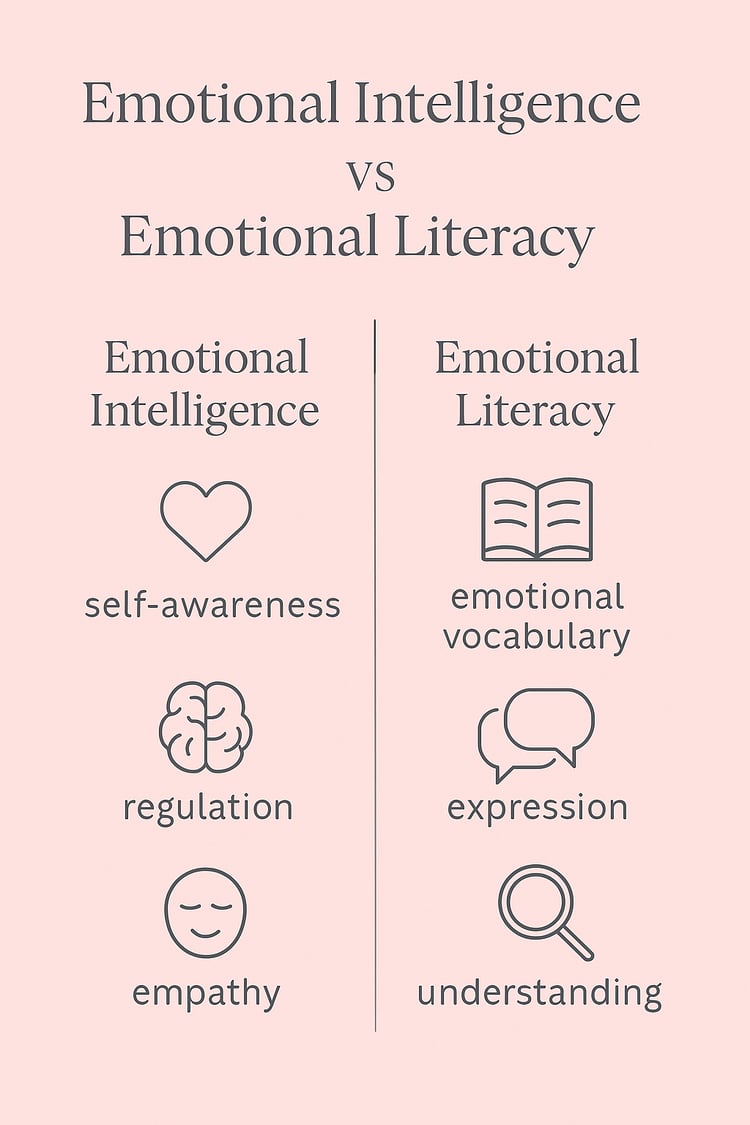
- Emotional literacy helps you name and express your feelings with clarity.
- Emotional intelligence helps you manage those feelings and respond with intention.
- Both skills are essential for personal growth, relationships, parenting, and leadership.
- Building emotional literacy starts with pausing, identifying emotions, and practicing emotional language.
- Emotional intelligence grows as you learn to regulate, connect, and respond with empathy and self-awareness.
- Developing both creates emotional safety within yourself and in your relationships.
Emotional Literacy vs Emotional Intelligence: what is the difference and why does it matter? Learn the real meaning behind both and how they impact your ability to understand, express, and manage emotions in everyday life.
Introduction
We hear these two terms a lot. Emotional literacy and emotional intelligence. And sometimes they get used like they mean the same thing. But if you have ever wondered why your emotional growth still feels confusing even after learning the basics of emotional intelligence, it could be because emotional literacy is still missing.
In this blog, we are going to unpack the difference between the two in a way that actually makes sense. I will break down emotional literacy vs emotional intelligence from a real-life perspective, not just textbook definitions. You will understand what each one means, how they show up in your day to day life, and why both matter if you are trying to grow, heal, or simply understand your emotions better.
And yes, this will be explained in the same honest way I teach all things emotional growth. Simple, real, and without judgment. Whether you are brand new to this work or deep in your journey, knowing the difference between emotional literacy vs emotional intelligence can help you make sense of what you feel and why it matters.
Let’s break it down together.
What Is Emotional Literacy?
Emotional literacy is the ability to recognize, name, and express your emotions in a healthy and clear way. Think of it as the language of feelings. Just like we learn to read words and understand stories, emotional literacy helps us read our emotions and understand what they are trying to tell us.
A person who is emotionally literate can say things like, “I feel frustrated because I was expecting support and did not receive it,” instead of just shutting down or lashing out. They can identify whether they are feeling sadness, guilt, anger, disappointment, or fear. And more importantly, they know how to express those feelings without blaming or suppressing them.
Emotional literacy is something many of us never learned. We were not taught how to put words to our feelings. We were told to calm down, toughen up, or stop overreacting. And so we grew up not knowing how to talk about emotions without shame or confusion. This is what many people refer to when asking, what is emotional illiteracy. It is not a flaw, it is simply a lack of emotional language and awareness that can be improved.
When someone lacks emotional literacy, they may:
- Struggle to name what they are feeling
- Confuse emotions like anger and sadness
- Use general terms like “bad” or “fine” instead of naming the real feeling
- Shut down or explode during emotional conversations
- Feel uncomfortable when others express strong emotions
Developing emotional literacy is a powerful first step. It allows you to slow down, notice what is really going on inside, and give yourself permission to feel without judging those emotions. When you know how to name what you are feeling, you begin to soften the shame around it and open the door to healing and growth.
In my own journey, emotional literacy was one of the most important tools I had to relearn. I used to make decisions based on what I felt in the moment without pausing to explore what those emotions were actually telling me. I would say things like “I am just overwhelmed” or “I do not know why I feel like this,” and then act from that space without clarity. Learning to slow down and name what was underneath the overwhelm gave me a kind of power I did not know I needed.
This is where emotional intelligence begins to come in. Once you can name the emotion, you can start learning how to work with it. Let’s explore what that really means next.
What Is Emotional Intelligence?
While emotional literacy helps you identify and name what you are feeling, emotional intelligence takes it a step further. It is the ability to manage your emotions, respond to them with intention, and use them to build healthier connections with others.
In the comparison of emotional intelligence vs emotional literacy, emotional literacy is the foundation and emotional intelligence is the growth that happens on top of it. You need both, but they serve different roles. A person can know what they are feeling, but if they do not know what to do with those feelings, that is where they get stuck. Emotional intelligence is what helps you move through those feelings instead of getting trapped in them.
Emotional intelligence includes key skills like:
- Self-awareness
- Self-regulation
- Empathy
- Motivation
- Social skills
Let’s use an example. Imagine you are having a difficult conversation at work. Emotional literacy helps you realize that you are feeling anxious, maybe even defensive. But emotional intelligence helps you pause before reacting, ground yourself, and communicate clearly without letting the emotion take over. It also helps you notice how the other person may be feeling, which allows you to respond in a more thoughtful and effective way.
This is also where emotional reading becomes important. Being able to read the emotional tone of a room, a conversation, or even someone’s body language is part of what makes emotional intelligence so impactful. It allows you to adjust, connect, and lead in ways that are emotionally aligned instead of emotionally reactive.
The truth is, many people learn one without the other. They may learn to manage their emotions but still struggle to talk about them. Or they may be great at expressing emotions but not so great at responding calmly under pressure. When you develop both emotional literacy and emotional intelligence together, you create space for emotional clarity, growth, and connection in every area of your life.
Why Both Emotional Literacy and Emotional Intelligence Matter
It is not about choosing one over the other. Emotional literacy vs emotional intelligence is not a competition. It is about understanding how they work together. Emotional literacy helps you recognize and name what you feel. Emotional intelligence helps you respond to it in a way that aligns with your values and goals.
When you are emotionally literate, you create a deeper connection to your internal world. When you are emotionally intelligent, you create better connections with others. Both are needed in relationships, business, parenting, and leadership.
A woman who is emotionally literate might know she is feeling unheard. A woman who is emotionally intelligent will take that awareness and decide how to express it, how to set boundaries, or how to communicate without blame. This combination is powerful.
In business settings, especially in spaces where emotional intelligence for women is still undervalued, being both emotionally literate and emotionally intelligent helps you lead with confidence and clarity. It allows you to trust yourself, connect better with clients or coworkers, and navigate emotional challenges without losing your balance.
In personal growth, both skills help you stop reacting from old wounds and start responding from awareness. You stop taking everything personally. You start giving yourself more space. You recognize when an emotion is valid and when it is a story your past is still trying to tell you.
This is where growth becomes sustainable. And it is why emotional intelligence vs emotional literacy is not an either-or conversation. You are meant to grow in both.
Want to Go Deeper?
If you are curious about how emotional literacy develops or want to understand the science and psychology behind it, this Psychology Today article offers a helpful breakdown. It explores how emotional knowing is linked to emotional literacy and why both matter in daily life. Whether you want to learn more for yourself or to support others, it is a great read to expand on everything we covered here.
How Emotional Intelligence and Literacy Support Personal Growth
Emotional literacy gives you the vocabulary. Emotional intelligence gives you the tools. And when you are working on yourself, both are essential.
Personal growth is not just about achieving goals or becoming a better version of yourself. It is also about becoming more emotionally present. That means learning how to sit with discomfort, celebrate small wins, and move through life without being held hostage by every emotion that shows up.
Here’s how the two work together when it comes to personal development:
- Emotional literacy helps you slow down and notice what you are actually feeling before rushing to fix it.
- Emotional intelligence helps you choose what to do with those feelings in a way that honors your values.
- Emotional literacy creates awareness.
- Emotional intelligence creates alignment.
For example, if you are in a season of rebuilding your confidence after a difficult breakup or career change, emotional literacy helps you name the grief, insecurity, or fear. Emotional intelligence helps you create new habits, set emotional boundaries, and stay connected to yourself without falling into old patterns.
Both emotional intelligence and literacy make self-growth more honest and more sustainable. You are not just forcing yourself to move on. You are guiding yourself through it with emotional awareness and care.
How Emotional Intelligence and Literacy Strengthen Relationships
Relationships are one of the most emotionally charged parts of our lives. Whether it is with a partner, a friend, a parent, or even a child, the way we understand and express emotions plays a huge role in how we connect with others. Emotional literacy and emotional intelligence together create a foundation for healthier, more respectful, and emotionally safe relationships.
Emotional literacy in relationships means you can name how you feel without attacking the other person. You can say, “I feel hurt because I needed more support,” instead of “You never care about me.” It is about using language that honors your emotions without placing blame. When both people in a relationship have emotional literacy, conversations become more honest and less reactive.
Emotional intelligence then takes that awareness and turns it into action. It helps you stay calm in the heat of a disagreement, listen with empathy, and repair connection when things feel tense. Instead of trying to win an argument, emotionally intelligent people try to understand what the relationship needs in that moment.
When emotional literacy and intelligence are both present, relationships are:
- More emotionally safe and supportive
- Less likely to spiral into blame or avoidance
- Built on deeper understanding and mutual care
- Able to repair more quickly after conflict
No relationship is perfect, but when you know how to express yourself clearly and respond with emotional awareness, you create space for growth instead of resentment. You create relationships where both people feel seen and heard, not judged or dismissed.
And that kind of emotional clarity is worth building in every area of your life.
How Emotional Intelligence and Literacy Support Parenting
Parenting challenges you in ways nothing else does. Some days it feels like a beautiful connection, and other days it feels like a test of patience, emotional stamina, and self-control. And that is exactly why emotional literacy and emotional intelligence matter so much in motherhood and caregiving.
When you are emotionally literate, you are better able to name what you are feeling in the moment. That means instead of snapping and saying, “You never listen,” you might pause and realize what you are really feeling is overstimulated or exhausted. Being able to name those feelings helps you respond to your child with more clarity and less guilt later.
And when you develop emotional intelligence, you also build the ability to regulate your reactions and lead by example. It helps you model to your kids that emotions are okay, that taking a breath is okay, and that working through hard feelings is something we can all learn to do. That is powerful parenting—not because it is perfect, but because it is emotionally aware.
Here is what emotional literacy and emotional intelligence can look like in parenting:
- Recognizing when you are feeling overstimulated and stepping away instead of lashing out
- Giving your child words for their feelings instead of just telling them to “calm down”
- Teaching through example by managing your reactions in tense or chaotic moments
- Validating emotions without rushing to fix or silence them
- Holding space for both your child’s experience and your own emotional needs
Raising emotionally aware children starts with becoming emotionally aware yourself. You do not have to get it right all the time, but when you practice naming your emotions and responding with intention, you raise kids who learn to do the same.
How to Start Building Emotional Literacy
If emotional literacy sounds like something you missed growing up, you are not alone. Most of us were not taught how to talk about our feelings clearly. We were either told to stop crying, calm down, or just push through. But the good news is you can learn emotional literacy at any age. It is not too late to begin.
Here is how to get started:
1. Pause and name the feeling.
Instead of saying “I’m fine” or “I’m just having a bad day,” try to name the specific emotion underneath. Is it frustration? Disappointment? Guilt? Naming what you are feeling creates clarity. It brings a sense of power and calm to something that once felt overwhelming.
2. Use emotional vocabulary tools.
If you are not sure what the emotion is, try using an emotion wheel or list of feeling words. These tools help you move beyond just saying “good” or “bad” and into more accurate language that reflects your true experience.
3. Reflect on what triggered it.
Ask yourself, “What happened right before I started feeling this way?” That moment of awareness helps connect the dots between your emotions and your thoughts or surroundings. It turns the emotion into something you can understand instead of something you have to fight.
4. Practice expressing your emotions out loud.
Start small. This could be as simple as saying to yourself, “I feel anxious because I am not sure how this will turn out.” Or you might share with someone you trust, “I feel nervous but excited about this opportunity.” It helps build confidence in using emotional language without shame.
5. Give yourself grace.
You are not going to get it perfect, and that is okay. The point is not perfection. It is about learning to show up for your emotions in a way that brings you peace instead of confusion.
As you build emotional literacy, you will naturally begin to strengthen your emotional intelligence too. The more you understand what you feel, the more you can respond with care and clarity, no matter what life throws your way.
Conclusion: Understanding the Difference Changes Everything
When it comes to emotional literacy vs emotional intelligence, the difference is clear—but so is the connection. One gives you the language to understand what you feel. The other gives you the tools to work with those emotions in a healthy, empowering way.
Together, they help you show up with more clarity in your conversations, more calm in your relationships, and more confidence in yourself. Whether you are a woman navigating motherhood, business, or simply your own healing, building both emotional literacy and emotional intelligence will support you at every stage of life.
And if you ever feel emotionally overwhelmed or unsure where to start, I created a free emotional guide just for you. It includes over 30 emotional experiences women face, with gentle letters, journal prompts, and simple tools to help you slow down, name what you’re feeling, and move through it with clarity. You don’t have to figure it out alone.
Thank you for reading this post be safe and stay kind,

About the Author
Coach Heidy is an emotional intelligence coach who teaches from lived experience, not just theory. Through her personal journey of inner healing and self-awareness, she created the AWARE framework to help others navigate their emotions with clarity and compassion. Her work centers on helping women reconnect with themselves, break free from old emotional patterns, and build a more grounded and peaceful life.
Comments ()