
Key Takeaways
- Your environment influences your emotions, focus, and ability to regulate stress.
- A wellness room doesn’t need to be big, just intentional, calming, and supportive.
- Choose soothing paint colors like beige, sage, and blush to create a peaceful mood.
- Include emotional regulation tools such as journals, aromatherapy, soft lighting, and tactile items.
- Use your space for regular emotional check-ins, not just during moments of stress.
- Simple rituals like lighting a diffuser, writing a word that describes your feeling, or sitting quietly can create nervous system safety.
- Your wellness room should feel like a judgment-free zone, not a place where you pressure yourself to heal perfectly.
- Consistent use of the space helps develop emotional intelligence and creates a deeper connection with your needs and inner peace.
Design a calming wellness room that supports your emotional intelligence journey. Learn how your space can improve your mood, clarity, and emotional balance.
Introduction
Your space speaks. Whether it’s loud and cluttered or quiet and comforting, your environment directly influences how you feel, think, and respond. If you’ve ever walked into a room and immediately felt overwhelmed or at peace, that’s no accident. Our surroundings are constantly sending signals to our nervous system.
Creating a dedicated wellness room or even a small cozy corner in your home is more than a Pinterest-worthy project. It’s a powerful way to support your emotional well-being and develop deeper emotional intelligence. When your environment supports your ability to pause, breathe, and reflect, it becomes a safe space where emotional regulation becomes second nature.
In this blog, you’ll learn how to create a calming, emotionally intelligent space that feels good to be in. I’ll walk you through the key elements of a wellness room, from paint colors that promote peace to tools you can keep within reach for emotional check-ins. I’ll also include cozy product recommendations from Amazon and 3 visual examples you can recreate at home.
Your Environment Shapes Your Emotions More Than You Think
Think about the last time you walked into a messy room. Even if it wasn’t yours, did your shoulders tense up? Did your thoughts feel just a little more scattered? Now think about stepping into a calm, tidy space with soft lighting and soothing scents. You probably felt your body exhale before you even noticed it.
That’s because your environment speaks directly to your nervous system. The colors on the wall, the lighting, the clutter, the textures, and even the scent in the air all influence how safe and supported you feel. And when you don’t feel safe, your emotions react. You become more irritable, less focused, and more emotionally sensitive.
A wellness room, or even a wellness corner, can help reverse that.
This space doesn’t need to be big or expensive. It just needs to feel emotionally safe. A place where you can take a deep breath, slow down, and come back to yourself. When designed intentionally, this kind of space becomes a natural support system for your mental clarity and emotional regulation. You don’t have to try to calm down. Your environment does some of that work for you.
This is exactly why emotional intelligence isn’t just something you practice in conversations or journaling, it’s also something you design into your space. A peaceful room can become a cue that says, “You’re allowed to feel everything here, and you don’t need to fix it all right now.”
Whether you’re dealing with overstimulation, decision fatigue, or just trying to process a hard day, the energy of your space matters. With the right setup, your wellness room becomes more than just cute decor, it becomes part of your healing.
Emotional Regulation Tools to Keep in Your Wellness Room
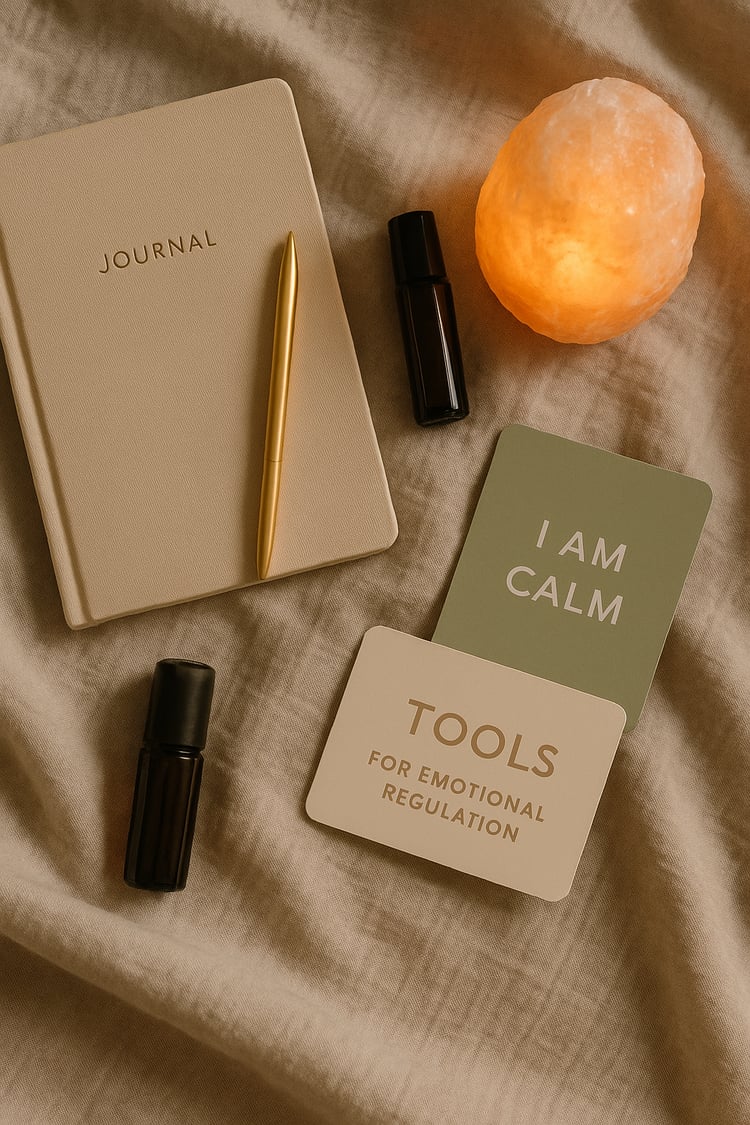
Once you’ve created a calm environment, the next step is stocking it with tools that support your emotional well-being. Think of this as your emotional first-aid kit, items that help you check in with your feelings, reset your nervous system, and build the kind of self-awareness that leads to emotional intelligence.
The goal isn’t to fill the room with stuff. It’s to be intentional. Every item should feel like a gentle reminder to slow down, feel safe, and reconnect with yourself.
Here are a few must-have emotional regulation tools to include:
1. A Journal You Actually Want to Write In
This isn’t just for brain dumps. Journaling helps you process your thoughts without judgment. Keep a soft-cover journal with thick, easy-to-write-on paper nearby. Pair it with a pen you love using.
👉 Check out this journal: Per Se Lined Journal Notebook
2. Aromatherapy That Helps You Breathe Again
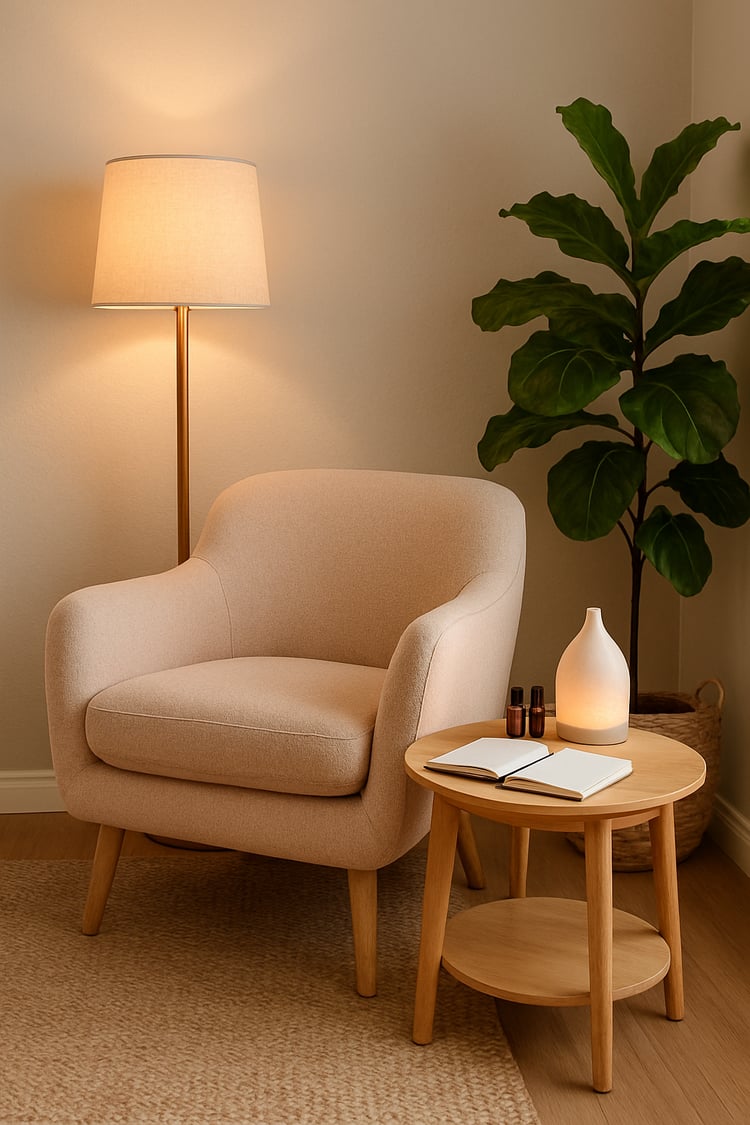
Scents have a powerful effect on your emotions. Lavender can soothe anxiety. Citrus can lift your mood. Eucalyptus can bring clarity. Add a diffuser with calming essential oils to create a subtle atmosphere shift.
👉 Check out this diffuser and essential oils: ceramic diffuser, essential oils
3. Weighted or Heated Blanket for Instant Comfort
Sometimes your body needs grounding before your mind can calm down. A soft weighted blanket or a warming throw gives your nervous system that “held” feeling without needing words.
👉 Check out this heated blanket: Heated Blanket Electric Throw
4. Visual or Tactile Calming Tools
Keep a few items you can touch or look at to help redirect energy when you’re feeling overwhelmed. This could be smooth worry stones, a sand timer, or a calming affirmation card deck.
👉 Check out this affirmation cards: Daily mindfulness affirmation cards
5. A Soft Light Source for Mood Shifts
Overhead lighting can be harsh. Add a small lamp with a warm lightbulb or a Himalayan salt lamp to create a cozy glow that supports a sense of calm and stillness.
👉 Check this lamp out: Himalayan pink salt lamp
The beauty of these tools is that they become part of your emotional rhythm. When you enter the space and reach for your journal or turn on your diffuser, you’re telling your nervous system, “This is where we reset.” Over time, these small rituals build a habit of checking in with yourself emotionally, and that’s where emotional intelligence starts to grow.
Color Psychology and Visual Design for Emotional Support
Color isn’t just visual, it’s emotional. The tones you surround yourself with influence how your body feels and how your mind processes. In a wellness room designed to support emotional intelligence, your color choices should be soft, grounding, and calm. This isn’t the space for high-contrast or energizing colors.
This is the space where your emotions get to breathe.
Here’s a breakdown of color tones that help support emotional well-being:
Soft Neutrals
These create an instant sense of calm and spaciousness. Think soft beiges, warm whites, and barely-there greys. These tones help reduce mental clutter and bring in a sense of clarity.
🎨 Paint suggestions:
- Benjamin Moore “Balboa Mist”
- Sherwin-Williams “Shoji White”
- Behr “Swiss Coffee”
Muted Greens and Earthy Sages
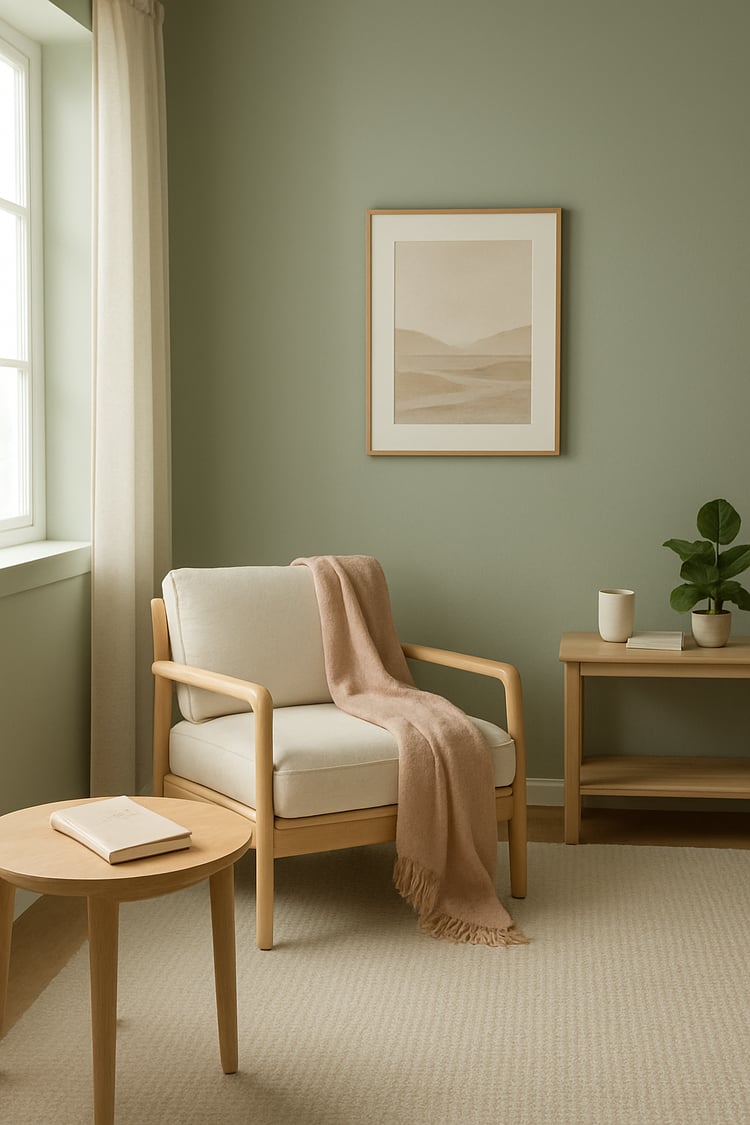
Green is the color of balance. It reminds your nervous system of nature, rest, and renewal. Earthy greens and dusty sages are perfect for grounding your emotions without feeling heavy.
🎨 Paint suggestions:
- Farrow & Ball “Lichen”
- Behr “Breezeway”
- Sherwin-Williams “Clary Sage”
Blush, Clay, and Soft Rose Tones
Blush isn’t just trendy—it’s emotionally supportive. It brings warmth and softness, especially for spaces where you want to feel safe expressing emotion.
🎨 Paint suggestions:
- Benjamin Moore “First Light”
- Clare Paint “Wing It”
- Behr “Smoky Pink”
Once you choose your palette, think about the textures in your space too. A soft area rug in a natural material, sheer curtains to diffuse light, and cozy throw pillows in those same calming colors all help turn the room into a mood-reset zone. Add framed prints with affirming words or abstract art in soft tones to give your eyes a place to rest and your emotions a sense of ease.
Keep clutter to a minimum. Too many visual distractions can stir up anxious energy. The goal isn’t to make the room perfect, but to make it feel peaceful. The less your brain has to “manage” what it’s seeing, the more your body can relax.
This is what emotional intelligence looks like in your space. It’s creating an environment that doesn’t just look good, but actually feels like a deep exhale.
How to Actually Use Your Wellness Room for Emotional Check-Ins and Nervous System Resets
Designing a beautiful space is one thing. Actually using it to support your emotional health is another. A wellness room only becomes powerful when you begin treating it as more than decor. It becomes your place to pause. To reset. To come back to yourself without needing to be productive or “on.”
So how do you use the space in a way that actually supports your emotional intelligence?
Let’s start with one core idea: your wellness room is a mirror. It reflects how safe you feel with your own emotions. And the more often you spend time there, the easier it becomes to sit with feelings instead of pushing them away.
Here's how to use this space intentionally, even if you only have 10 minutes.
1. Begin With an Emotional Check-In
When you enter the room, pause before doing anything. Sit down, take a breath, and ask yourself:
- What am I feeling right now?
- Where do I feel it in my body?
- What do I need in this moment?
You don’t need to have a clear answer. You don’t even need to label it correctly. The point is to start the conversation with yourself. This check-in is the foundation of emotional intelligence. It builds awareness, curiosity, and a habit of turning inward with kindness.
Pro tip: Keep a small card with those three questions written down and place it somewhere visible. It makes the process even easier when your mind feels foggy.
2. Match the Energy of the Space to Your Nervous System
Your nervous system needs different things at different times. Sometimes you need stillness. Other times you need comfort. Other times you just need to breathe and cry in peace.
Use the room based on what your body is asking for:
- Overwhelmed or overstimulated? Lower the lights, turn on your diffuser, and wrap yourself in a weighted blanket. Just sit or lie down. No journaling. No fixing. Just presence.
- Disconnected or numb? Sit in front of a mirror with soft lighting and gently name how you're feeling out loud. Hearing your own voice helps bring you back into your body.
- Anxious or spiraling? Use a tactile tool like a worry stone or a sand timer. Something small you can hold or watch to ground your thoughts and calm your breath.
- Sad or heavy? Let yourself cry, write a letter you never send, or read a quote that reminds you you're not alone.
These aren’t dramatic practices. They’re gentle nervous system resets that help your emotions move through instead of getting stuck. The more you honor what your body is asking for, the safer it begins to feel inside your own mind.
3. Create Rituals Around It, Not Just Aesthetic Moments
It’s easy to treat the wellness room like a place you should use when things get bad. But what if you started using it daily, even when you're feeling okay?
Make it part of your emotional hygiene, just like brushing your teeth or stretching your body. It doesn’t have to be long. Even five minutes of intention makes a difference.
Here are some tiny rituals you can start building:
- Light your diffuser and write down one word that describes your current emotional state
- Pull an affirmation card and reflect on it for one minute
- Write a letter to your future self when you're feeling overwhelmed
- Sit in silence with your hand on your heart and repeat: I am allowed to feel everything without fixing it right now
These moments build inner safety. And inner safety is what makes emotional regulation sustainable. You won’t need to escape or avoid your feelings when you’ve built a space that welcomes them.
4. Make Your Wellness Room a Judgment-Free Zone
This part matters. If your room becomes a place where you feel like you have to “do self-care right” or use it “enough,” it stops feeling safe. You don’t need to be productive in your healing. You don’t need to have a breakthrough every time you sit down.
You just need to be.
Let this room be your soft place to land. The place where you drop the pressure. The place where no one’s watching. The place where your emotions don’t need to be perfect to be valid.
That’s emotional intelligence in practice. That’s what turns a pretty room into a powerful one.
Conclusion
A wellness room isn’t just about making your home look peaceful. It’s about creating a space that actually feels like peace. A space that helps you reconnect to yourself. A space where you can regulate, reflect, and reset when life gets overwhelming.
When you’re surrounded by calming colors, textures that feel safe, and tools that support your emotions, your body starts to feel grounded again. You stop running on autopilot. You stop ignoring your needs. And you start responding with emotional intelligence instead of reacting out of stress.
The more you care for your environment, the more it starts to care for you.
Whether you have a whole room or just a corner, let it become your reminder that it’s okay to slow down. It’s okay to feel. It’s okay to need softness and stillness. You deserve a space that reflects who you are becoming.
And if you’re ready to take the next step in your emotional growth, explore this blog on emotional intelligence or download A Guide for Life, an emotional support tool for the moments that feel too heavy to carry alone.
Please note that: As an Amazon Associate, I earn from qualifying purchases at no extra cost to you.
Thank you for reading this post be safe and stay kind,

About the Author
Coach Heidy is an emotional intelligence coach who teaches from lived experience, not just theory. Through her personal journey of inner healing and self-awareness, she created the AWARE framework to help others navigate their emotions with clarity and compassion. Her work centers on helping women reconnect with themselves, break free from old emotional patterns, and build a more grounded and peaceful life.
What's Your Emotional Intelligence Archetype?
Take this quiz to find out!
You might be interesting in reading this article:
5 Best Emotional Intelligence Books That Actually Change How You Think
Comments ()