
Key Takeaways
- Stress is not a single emotion, it is often a buildup of many unspoken ones
- Emotional intelligence helps you pause, process, and respond instead of reacting
- Daily check-ins and small tools create emotional clarity and reduce overwhelm
- Real goals for managing stress start with understanding your emotional patterns
- You do not have to eliminate stress, but you can learn how to carry it with strength
- Emotional intelligence turns pressure into presence and chaos into clarity
Explore the role of emotional intelligence in stress management and how it helps you handle emotions, pressure, and goals for managing stress with more clarity and calm. Learn to respond, not react.
Introduction
Stress is something we all face, but not everyone knows how to manage it in a way that actually feels supportive. For a long time, I thought managing stress meant pushing through, staying busy, or pretending
I was fine. But I’ve learned that real stress management is not about pretending you are okay, it is about knowing how to respond when you are not.
That is where emotional awareness comes in. Because stress is not just a mental challenge. It is an emotional one. It affects how you think, how you show up, and how you treat yourself and the people around you.
If you are looking for better ways to show up under pressure, manage your energy, and stay emotionally grounded through it all, this post is for you.
What Is Emotional Intelligence?
Emotional intelligence is the ability to recognize, understand, and manage your own emotions while also being able to connect with and respond to the emotions of others.
It is not about being emotionless. It is about being emotionally aware. It is what helps you pause before reacting, stay present in uncomfortable moments, and move through hard emotions without being controlled by them.
In the context of stress, emotional intelligence gives you tools to step back, regulate your reaction, and navigate what is happening without falling apart internally.
Is Stress an Emotion? Understanding What You're Really Feeling
Stress is not just an emotion, but it is deeply connected to how you experience and express emotion. At its core, stress is your body’s and mind’s response to pressure. That pressure can come from responsibilities, fear of failure, emotional overload, or even your own inner expectations.
So while stress itself is not classified as a single emotion like anger or sadness, it is often the result of many emotions that have not been processed or named. For example:
- Stress can feel like anxiety when you are worried about what could go wrong
- It can feel like overwhelm when everything feels like too much at once
- It can feel like frustration when you do not feel in control
- It can feel like guilt when you are taking on too much and blaming yourself
This is why emotional intelligence is so important. It helps you pause and ask, “What am I really feeling right now?” That awareness is often what helps you release stress instead of carrying it around all day without knowing why you are snapping, shutting down, or feeling disconnected.
The more you can identify the emotions beneath your stress, the more power you have to work through them. That is where real management starts, not with the perfect routine or productivity hack, but with a moment of honest emotional clarity.
The Role of Emotional Intelligence in Managing Stress Day to Day
Managing stress is not about finding a quick fix or setting boundaries once. It is a daily practice of checking in with yourself and responding to what your body and emotions are trying to tell you. This is where emotional intelligence makes a real difference. Not just in theory, but in the everyday moments that can easily build up and wear you down.
Here is how it supports stress management in real life:
1. You notice stress before it takes over
Emotional awareness helps you catch the early signs. Maybe your shoulders are tense, your thoughts feel heavy, or your patience is thinning. Instead of brushing it off or forcing yourself to push through, you pause and ask, “What am I really feeling right now?”
2. You regulate your response instead of reacting automatically
When something throws off your schedule or energy, you no longer spiral. You do not snap, shut down, or carry it with you all day. With emotional awareness, you pause, take a breath, and choose how to respond from a place of clarity.
3. You stop making everything personal
Stress gets heavier when you carry emotions that do not belong to you. A short text, someone’s bad mood, or a comment in a meeting can feel personal if you are not grounded. When you grow your emotional intelligence, you remind yourself, “This might not be about me,” and give yourself permission to let it go.
4. You set boundaries with clarity and care
You stop saying yes out of guilt or fear of conflict. You begin to honor what you need without apology. Saying no becomes an act of self care, not selfishness. And your stress decreases because you are no longer overextending yourself.
5. You manage your energy, not just your time
A full schedule does not mean you are productive. Emotional intelligence helps you manage what is happening internally. You begin asking questions like, “What is draining me today? What helps me reset? How do I want to feel at the end of this day?” These check-ins shift how you move through pressure and keep you emotionally present.
Stress becomes easier to manage when you stop reacting to everything and start responding with intention. And emotional intelligence is the key that makes that shift possible.
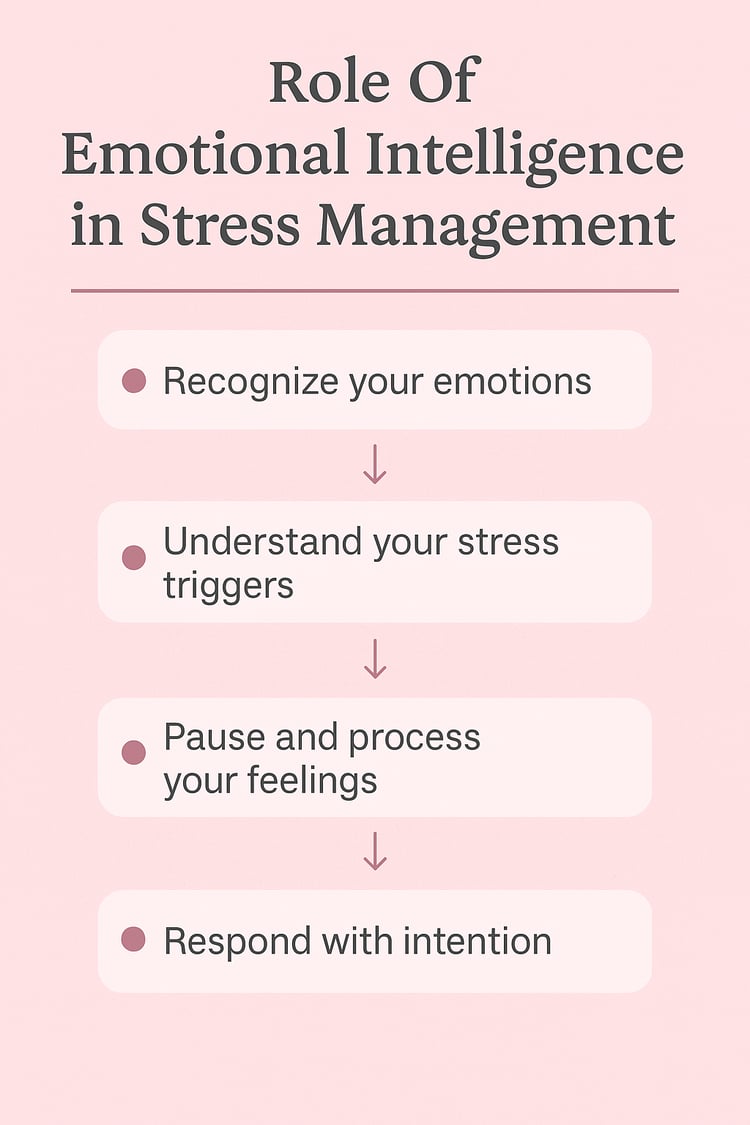
Goals for Managing Stress with Emotional Intelligence
When most people think of stress management, they set surface-level goals. They try to get more sleep, take a break, or stay organized. Those things help, but if you are not emotionally grounded, even the best routine can fall apart when life gets heavy.
This is where emotional intelligence shifts everything. It gives your goals more depth. You stop chasing perfection and start building resilience. You stop trying to control stress, and you learn how to move through it without losing yourself.
Here are meaningful goals for managing stress through emotional intelligence:
1. Understand your emotional patterns
Before you can manage stress, you need to know what your triggers are. Are you overwhelmed by silence or overstimulation? Do you shut down when plans change? One of the most powerful goals is to understand how your body and mind respond under pressure. Once you know what sets you off, you can work with it, not against it.
2. Respond instead of react
Set a goal to practice pausing. Even just five seconds of awareness can shift how you respond. This is one of the most effective ways to reduce emotional damage and build trust with yourself and others. Every
pause becomes a moment of power.
3. Stay connected to your body
Stress often disconnects you from your physical needs. You forget to drink water, ignore fatigue, and overlook how tight your chest or stomach feels. Make it a goal to check in with your body at least once a day. What do you need right now: rest, movement, nourishment, stillness?
4. Build a safe space to process emotions
Managing stress requires emotional release, not just management. Journal, voice note, walk, or talk things out with someone safe. Set a goal to express, not suppress. That is how you stop the emotional buildup that leads to burnout.
5. Practice self compassion during stressful seasons
You are not meant to handle everything perfectly. A goal worth setting is learning to be gentle with yourself when you fall short. This softens the pressure and allows you to reset without shame. The more emotionally compassionate you are with yourself, the easier it becomes to recover from stress and stay present.
These are not one-time achievements. They are goals you grow into, day by day. They help you build real emotional strength, not just to survive stress, but to navigate it with grace, clarity, and self trust.
Stress Doesn’t Just Disappear, But You Can Change How You Carry It
One of the biggest myths around stress is that it is something you can eliminate completely. That if you just rest enough, plan better, or meditate more, the stress will go away for good. But real life does not work like that. Things will still go wrong. People will still need you. Unexpected moments will still show up.
The goal is not to get rid of stress. The goal is to carry it differently.
Emotional intelligence gives you the emotional space to feel stress without being overwhelmed by it. You become the kind of woman who feels it fully and still chooses how to respond. That shift creates power.
Not forced power, but the grounded kind that helps you stay clear, centered, and in control of your own energy.
This means you do not ignore what is happening. You do not stuff down your emotions or pretend to be unaffected. Instead, you stay present. You check in with your body. You ask honest questions like, “What am I really feeling right now?” and “What can I do to support myself through this moment?”
Changing how you carry stress changes how you move through life. You stop carrying it all at once. You start holding it with awareness, care, and self respect.
You still have emotions. You just stop letting them manage you.
And that is where your strength starts to show. Not in how well you avoid stress, but in how well you manage your heart while walking through it.
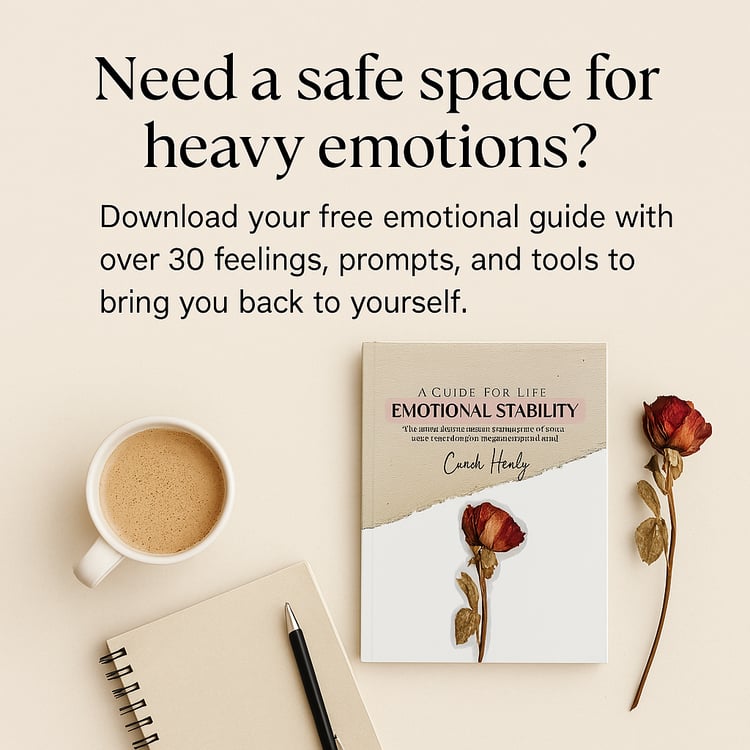
Download FREE guide
Real-Life Examples of Managing Stress with Emotional Intelligence
It is one thing to understand stress management in theory. But the real shift happens when you see what it looks like in everyday moments. Emotional intelligence is not a personality trait. It is something you practice in small choices when life feels chaotic, uncertain, or overwhelming.
Here are a few everyday examples of what it might look like in real life:
You have a packed schedule and someone adds one more thing.
Instead of snapping or saying yes out of guilt, you pause. You check in with yourself. You respond calmly and say, “I’d love to help, but I don’t have capacity right now.” That one boundary protects your peace.
You get an unexpected message that throws off your mood.
Your heart races. Your mind jumps to conclusions. But instead of reacting, you take five minutes to breathe, drink water, and ask, “What am I feeling? What is true here?” You move forward from presence, not panic.
Your child, partner, or friend is upset and you feel emotionally flooded.
Instead of shutting down or trying to fix it, you stay grounded. You hold space. You remind yourself, “I can be present without solving everything.” This emotional regulation allows you to connect without losing yourself.
You are working on a goal and feel stuck or discouraged.
You feel tension in your chest. You notice the inner critic getting loud. Instead of pushing harder or quitting altogether, you journal your thoughts, remind yourself why you started, and ask, “What small step can I take today?” You stay connected to your intention even through resistance.
These are not perfect reactions. They are powerful moments of emotional choice. This is how stress begins to shift. Not because the pressure disappears, but because you show up with more awareness, presence, and strength than you did before.
Things to Practice Emotional Intelligence When Stress Hits
When stress builds, you need more than a to-do list or a motivational quote. You need tools that bring you back to your center. Emotional intelligence management is about knowing what to reach for in those in-between moments, the ones where you are on the edge but still have a choice.
Here are simple but powerful tools to help you practice emotional intelligence when stress shows up:
1. The body scan check-in
Pause and bring your awareness to your body. Start from your forehead and slowly move down to your toes. Ask, “Where am I holding tension? What am I feeling in my chest, jaw, hands?” Naming your physical sensations often helps uncover the emotions underneath the stress.
2. The emotional name-and-validate method
When you feel overwhelmed, put a name to it. Say to yourself, “I feel anxious,” or “I feel discouraged,” and then follow it with, “That makes sense.” This practice helps you meet your emotions instead of resisting them, which reduces the intensity of stress right away.
3. Grounding through breath and movement
Take a few deep, slow breaths. Or place your feet firmly on the floor and notice the surface beneath you. You are reminding your nervous system that you are safe and supported, even if everything feels uncertain. This small step creates the space to choose your next move with clarity.
4. Micro-journaling for clarity
When your thoughts feel like a storm, give them somewhere to land. Grab a notebook or open your notes app and write down whatever is circling in your head. You do not need to write a full journal entry. A few lines can help you see your situation from a new angle.
5. Repeat a grounding phrase
Something as simple as “I can handle this one moment at a time,” or “I am allowed to slow down” can shift your entire state. Keep one or two phrases close that remind you of your strength and help you reconnect to your emotional center.
The more you use these tools, the more automatic they become. And the more emotionally equipped you feel, not just when everything is calm, but when life is moving fast and stress is rising.
Conclusion
Stress is part of life, but suffering through it alone or reacting to it without understanding does not have to be. The more you connect with your emotional self, the more you begin to realize that stress management is not just about doing less. It is about feeling more clearly and responding with care.
Emotional intelligence gives you space between how you feel and how you show up. It gives you tools to slow down, name what is real, and move through your day with more calm, even when everything around you feels uncertain.
Whether you are dealing with emotional overwhelm, pressure at work, family tension, or just the everyday mental load, you are allowed to slow down. You are allowed to take care of your inner world, not just your outer one.
And if you ever need a safe place to go when emotions feel heavy, I created a free emotional guide that walks you through over 30 different feelings. Inside, you will find journal prompts, letters, and tools to help you come back to yourself when you needed the most.
Thank you for reading this post be safe and stay kind,

About the Author
Coach Heidy is an emotional intelligence coach who teaches from lived experience, not just theory. Through her personal journey of inner healing and self-awareness, she created the AWARE framework to help others navigate their emotions with clarity and compassion. Her work centers on helping women reconnect with themselves, break free from old emotional patterns, and build a more grounded and peaceful life.
What's Your Emotional Intelligence Archetype?
Take this quiz to find out!
You might be interesting in reading this article:
Identify Your Influence Style and Maximize Your Impact
Comments ()