Your Cart
Loading

Dyspraxia - The Basics

Dyspraxia is a form of neurodiversity that can impact a wide variety of areas of life. At its most basic level, it affects signals that the brain sends to the rest of the body which leads to its ability in affecting someone physically, emotionally, their mental health and sensory interpretations.


Like all other forms of neurodiversity, whilst you can undergo therapy and other activities to prevent it from being so dominating on someone's life, it cannot be cured as it is not an illness.
Areas Dyspraxia can affect

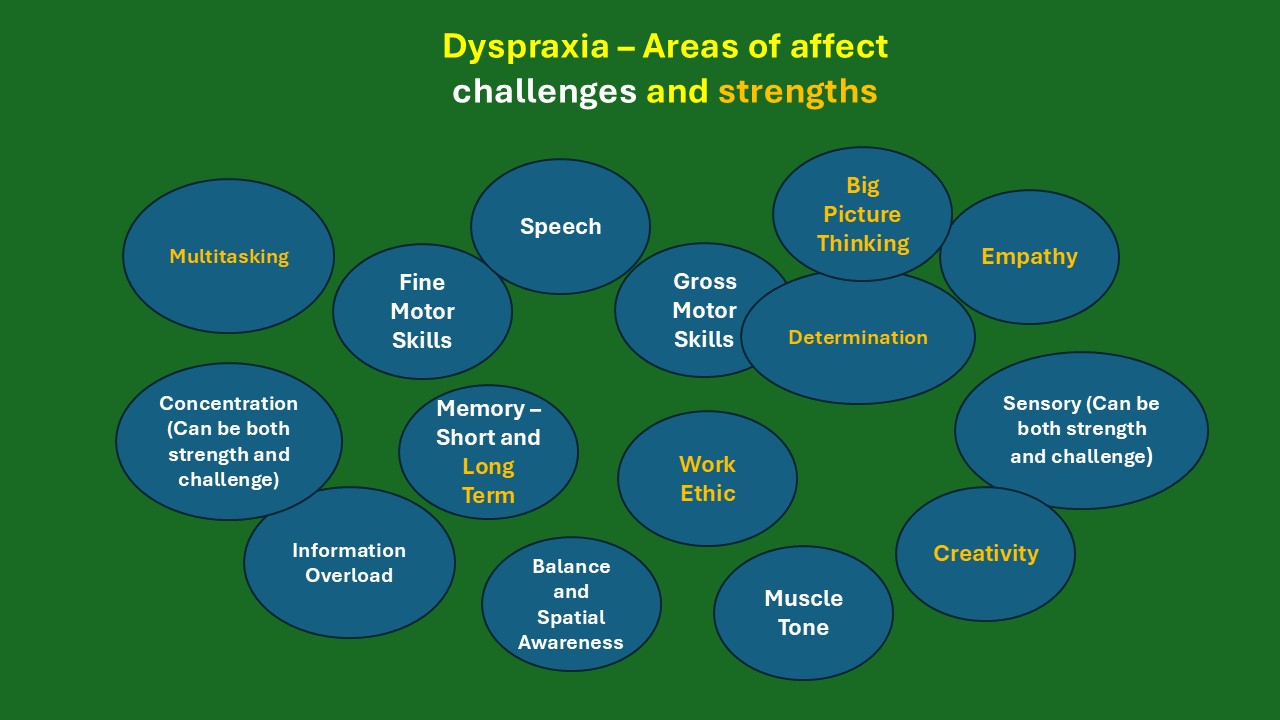
Dyspraxia can affect a wide variety of someone's life including the following:


  • Fine Motor Skills - one of the most common being struggles with hand-eye coordination.


  • Gross Motor Skills- Physical motion and balance can be particular struggles with a common relation to hypermobility.


  • Memory- Memory is a particular example of how Dyspraxia impacts information processing, with having long term memory being a potential strength including piecing out specifics in recognisable patterns whilst short term memory can be a struggle.


  • Empathy - Living with something that can make some simple tasks in life very difficult creates a tendency for many people with Dyspraxia to have a strong sense of empathy.


The image on the left indicates a variety of areas that can be strengths (in orange) or challenges (in white) of Dyspraxia, a couple drifting between the two such as concentration where individuals can be easily distracted but at the same time can go through large phases of an almost hyper concentration over their work.


It is important to note that these are just some examples of areas it can effect, there are still others that I did not list.


Misconceptions

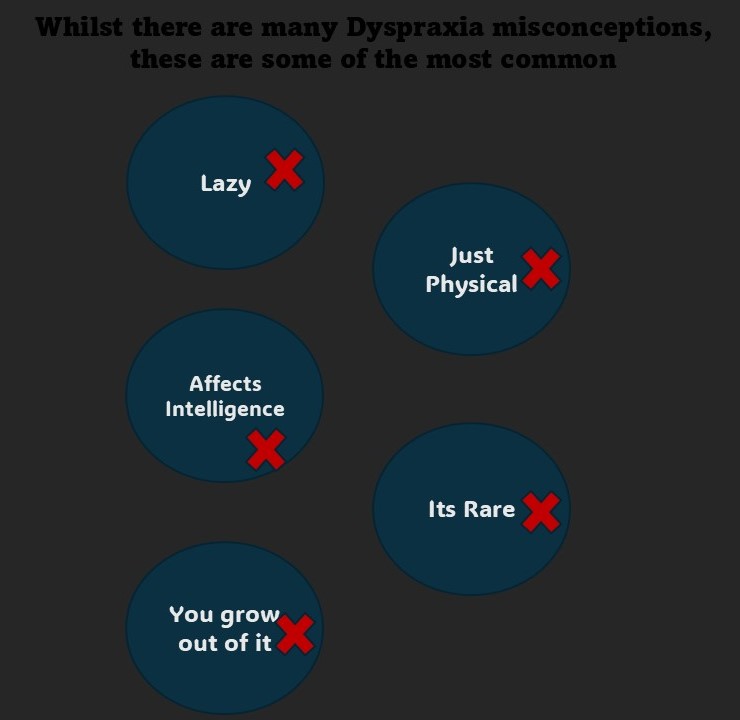
Unfortunately Dyspraxia like every form of neurodiversity has its fair amount of misconceptions about it.


Whilst those in the image are some of the more common misconceptions, there are other areas as well such as it being seen as the same as Dyslexia when they are both separate.


On a general note, whilst you can find support over certain areas, you do not grow out of neurodiversity and there is no cure. It is not a disease.

My Own Story and some more details

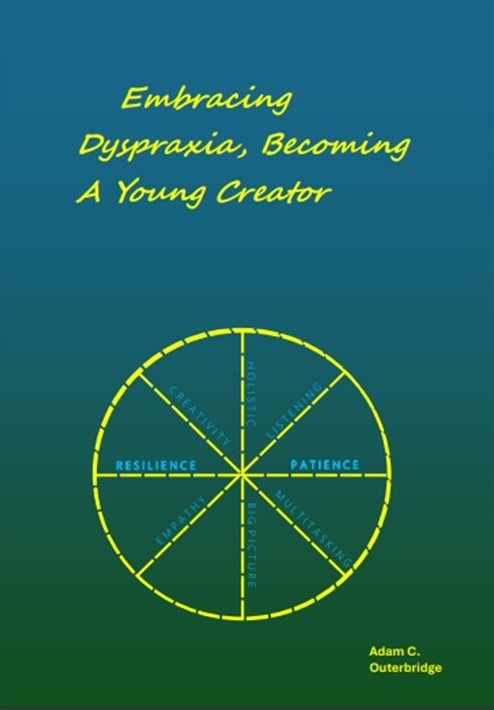
A while back now I chose to write a small piece about my own experience growing up with Dyspraxia but not only the areas of my struggles and pushes to make people aware, I also decided to talk about my own experiences of Dyspraxia's potential strengths.


I talk about how in part I am a creator thanks to the wide imagination that being neurodivergent has allowed me and how it is allowed me to utilise the worlds I grew up loving as a part of my inspiration.