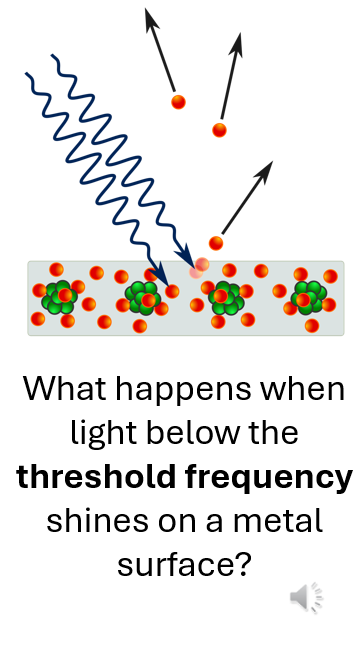
When light below the threshold frequency shines on a metal, its photons don’t have enough energy to free electrons from the surface. Each photon transfers its energy to just one electron, so if that energy is less than the metal’s work function, no electrons can escape. Increasing the light’s intensity only adds more low-energy photons — it doesn’t make individual photons more energetic.