

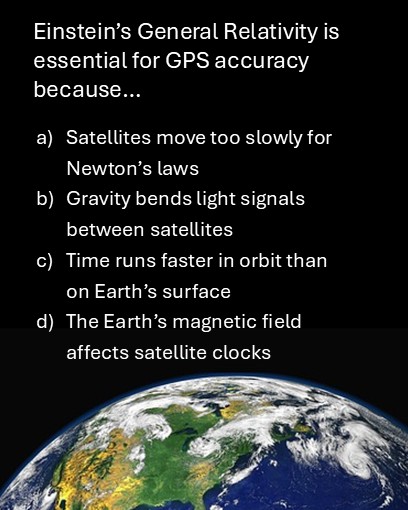
GPS satellites orbit about 20,000 km above Earth, where gravity is weaker. According to Einstein’s General Relativity, weaker gravity makes time tick slightly faster — around 45 microseconds per day faster than clocks on Earth. If this effect weren’...
Read More
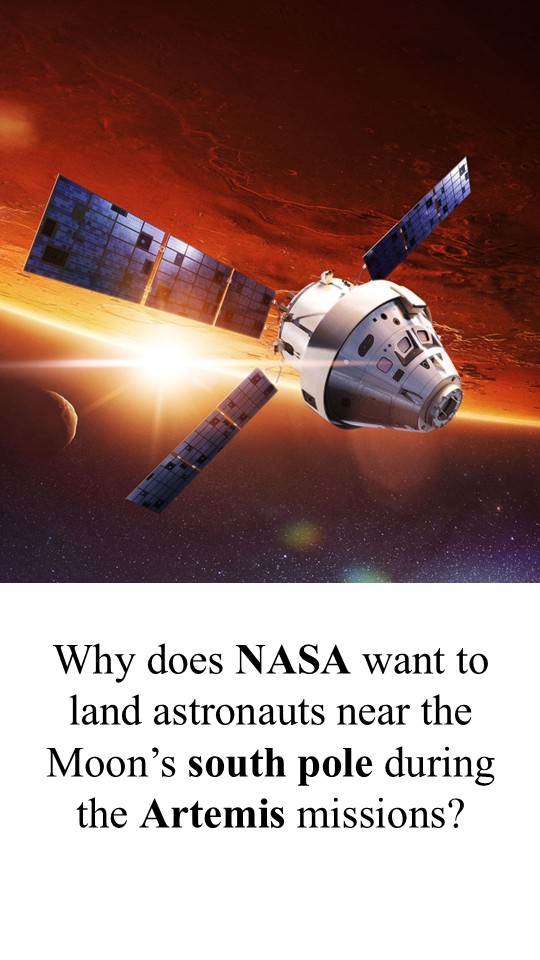
Near the south pole of the Moon, some craters never receive sunlight and remain permanently dark and extremely cold. Scientists think these shadowed regions may contain large amounts of water ice. This ice could provide drinking water, oxygen, and e...
Read More
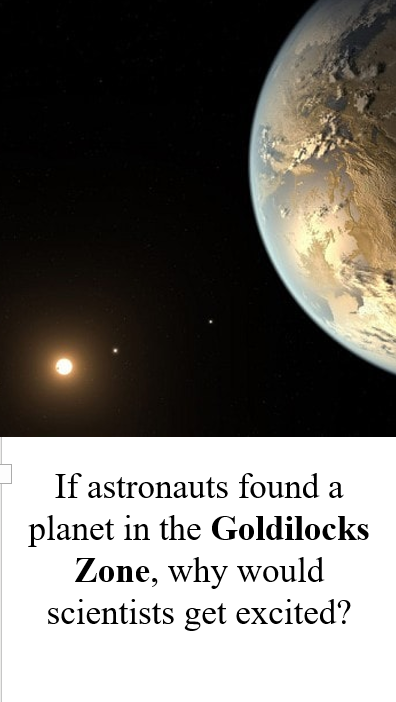
The Circumstellar Habitable Zone (Goldilocks Zone) is the region around a star where a planet could have liquid water on its surface. If a planet is too close to its star it becomes too hot; too far away and it becomes too cold. The energy received ...
Read More
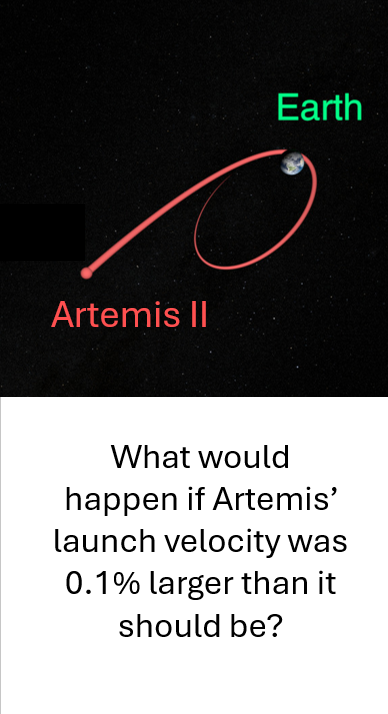
For Artemis II, the spacecraft is launched at about 10.8 kms⁻¹ to follow a free-return trajectory past the Moon. If the launch velocity were 0.1% larger (10.81 kms⁻¹), the spacecraft would have greater kinetic energy. It could potentially ...
Read More
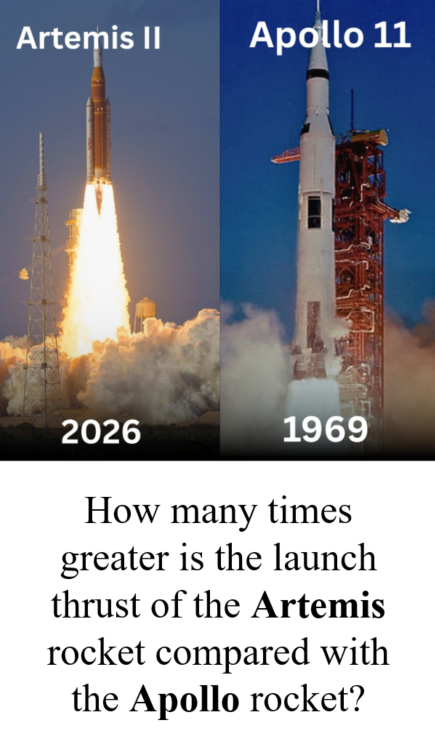
The Space Launch System used in the Artemis program produces about 39 MN of launch thrust. The Saturn V used in the Apollo program produced about 35 MN. So Artemis produces only about 1.1× more thrust. Both rockets need similar thrust because they m...
Read More
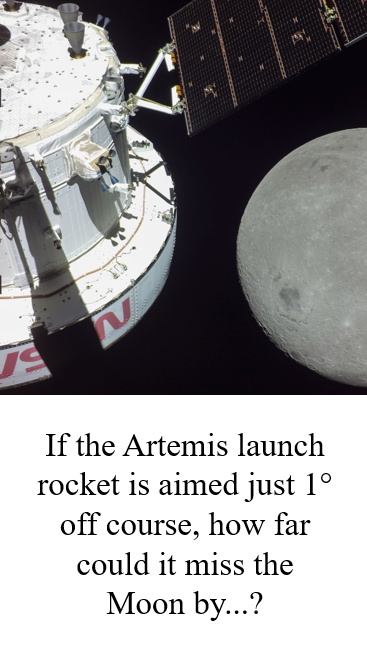
The Moon is about 384,000 km from Earth, so even a tiny launch error becomes huge over such a long distance. If the spacecraft is aimed just 1° off course, the sideways error grows as it travels. Using d = Rsinθ the miss distance is 384,000 x sin1° ...
Read More
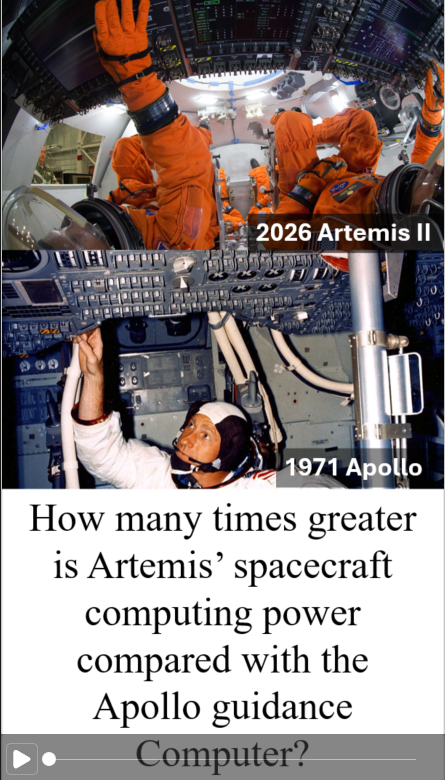
The Apollo Guidance Computer used in the Apollo program ran at about 0.043 MHz with only 64 KB of memory. The Orion spacecraft used in the Artemis program uses modern radiation-hardened processors such as the RAD750 processor. Advances in microelect...
Read More
The energy of the gamma rays keeps the sun's core hot. Some of those gamma rays also escape into the sun's outer layers, where they collide with electrons and protons and lose energy. As they lose energy, they change into ultraviolet, infr...
Read More
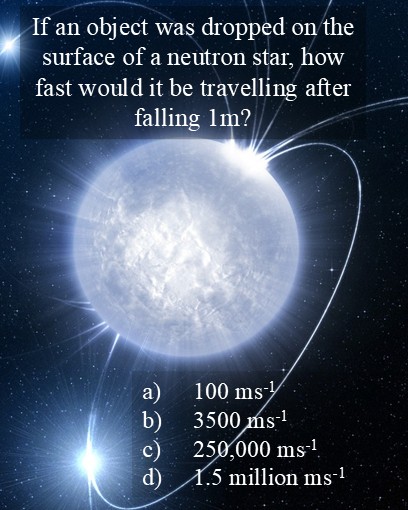
If an object was dropped on the surface of a neutron star, how fast would it be travelling after falling 1m? The acceleration is so big, it will be travelling at 1/200 the speed of light after falling 1m. For comprehensive Physics tutorial videos, w...
Read More
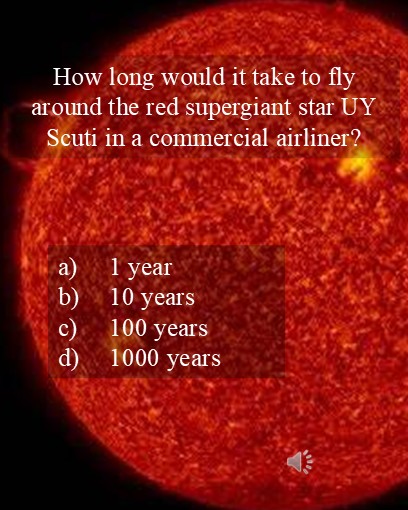
For comprehensive Physics tutorial videos, worked examples, exam questions, quizzes and tracked progress, go to https://payhip.com/GradeAPhysics #physics #exams #success #tutorial #alevel Are you studying A-level Physics and want to improve your ...
Read More
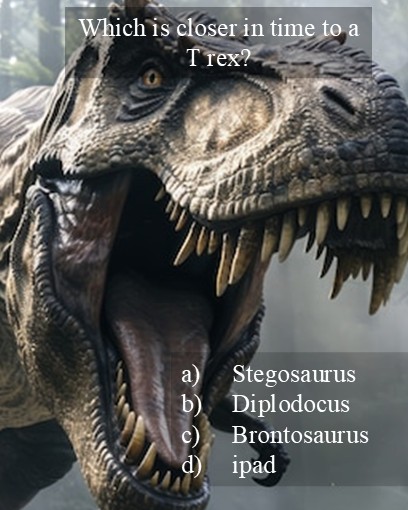
Stegosaurus, Diplodocus and Brontosaurus all lived about 150 Million years ago in the Jurassic period. T Rex lived in the late Cretaceous period which lasted until the asteroid impact about 66 Million years ago. For comprehensive Physics tutorial vi...
Read More
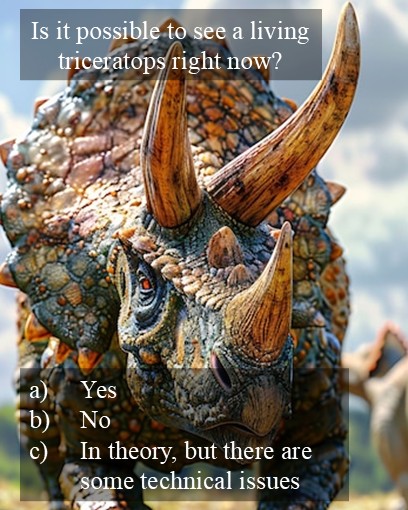
The galaxy NGC 4845, is about 65 Million light years from Earth. Triceratops lived until the asteroid impact about 65 Million years ago. If intelligent alien life exists in NGC 4845, they could look at light from Earth and see dinosaurs walking arou...
Read More
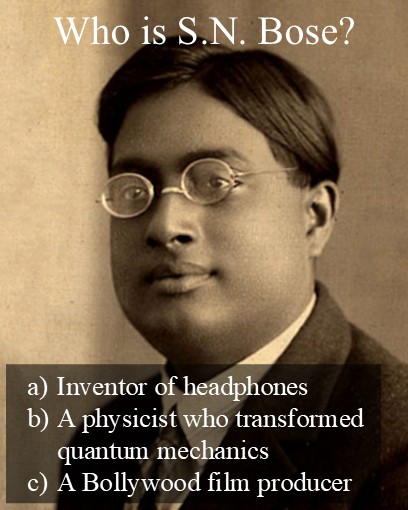
Satyendra Nath Bose was the brilliant Indian physicist who worked with Albert Einstein to develop Bose-Einstein Statistics. His work explained how particles called bosons behave - a discovery so groundbreaking, an entire class of particles was named...
Read More
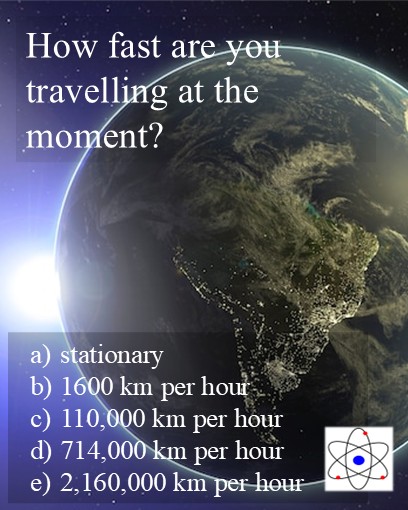
The surface of Earth moves at about 1600 kph due to its rotation. The Earth orbits the Sun at about 110,000 kph. The Earth is orbiting the Milky Way galaxy at about 714,000 kph. The Milky Way galaxy is moving through the Universe at about 2,160,000 ...
Read More
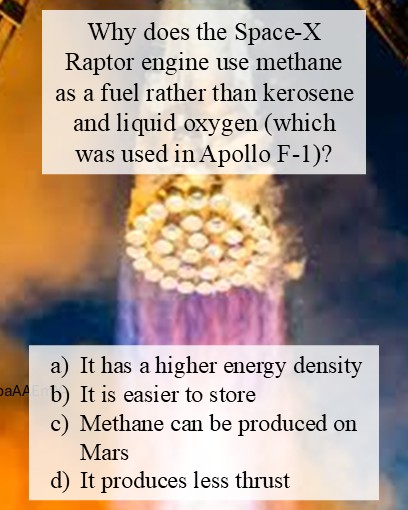
The Raptor engine has several advantages such as producing a high thrust with high efficiency. However, a key benefit is methane can be produced on Mars using the Sabatier reaction (CO2 + 4H2 → CH4 + 2H2O). This aligns with a broader trend o...
Read More