
When people think of North Queensland, they often picture sugarcane fields, tropical beaches and the Great Barrier Reef. But it would be hard to go past one of the region's quieter icons: the humble roadside banana stall. These simple honesty stalls are a way to support local growers, learn where your food comes from and turn an everyday stop into a memorable learning experience for children.
What is a Roadside Banana Stall?
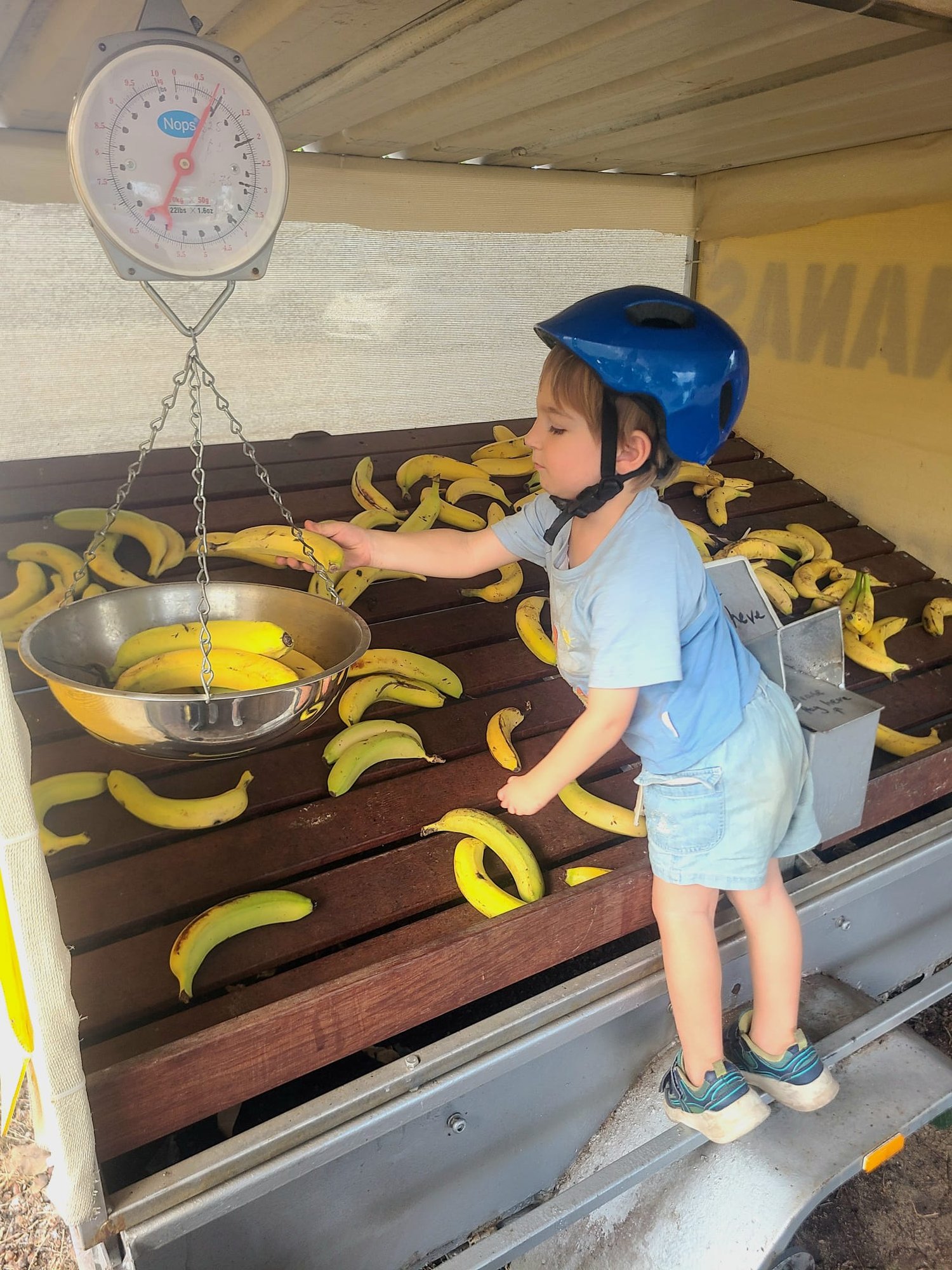
When I first moved to North Queensland, I discovered something I'd never seen before — roadside banana stalls. They're exactly what they sound like: simple little stands beside the road where local growers sell fresh bananas. Most operate on an honesty system. You choose your bananas, weigh them, work out the cost from the sign, and leave your payment in a secure cash box.
I'd driven past them many times. For some reason, I never stopped. Perhaps because it was cash only, and these days I rarely carry cash. But ever since our family started recycling bottles and cans through the Containers for Change scheme, I've found myself keeping a little cash in my purse. That spare change finally gave me a reason to pull over.
What Children Can Learn From Buying Fruit
I'm so glad we did. The bananas were fresh, delicious and rather affordable compared to what I'd pay at the supermarket. It reminded me why I love buying directly from local growers whenever I can. Buying directly from growers gives us a chance to support the people who grow our food and learn more about where it comes from. It can also give us the chance to appreciate fresh produce that might not always look exactly like the fruit we see lined up in a supermarket.
What I thought would be a quick stop to buy fruit became something much more. My son wanted to come with me to get the bananas. I let him. And from there, the conversation flowed. Our neighbour has a banana tree that he was quite fascinated by. I told him that the bananas in the stall likely came from a plantation with hundreds of banana plants.
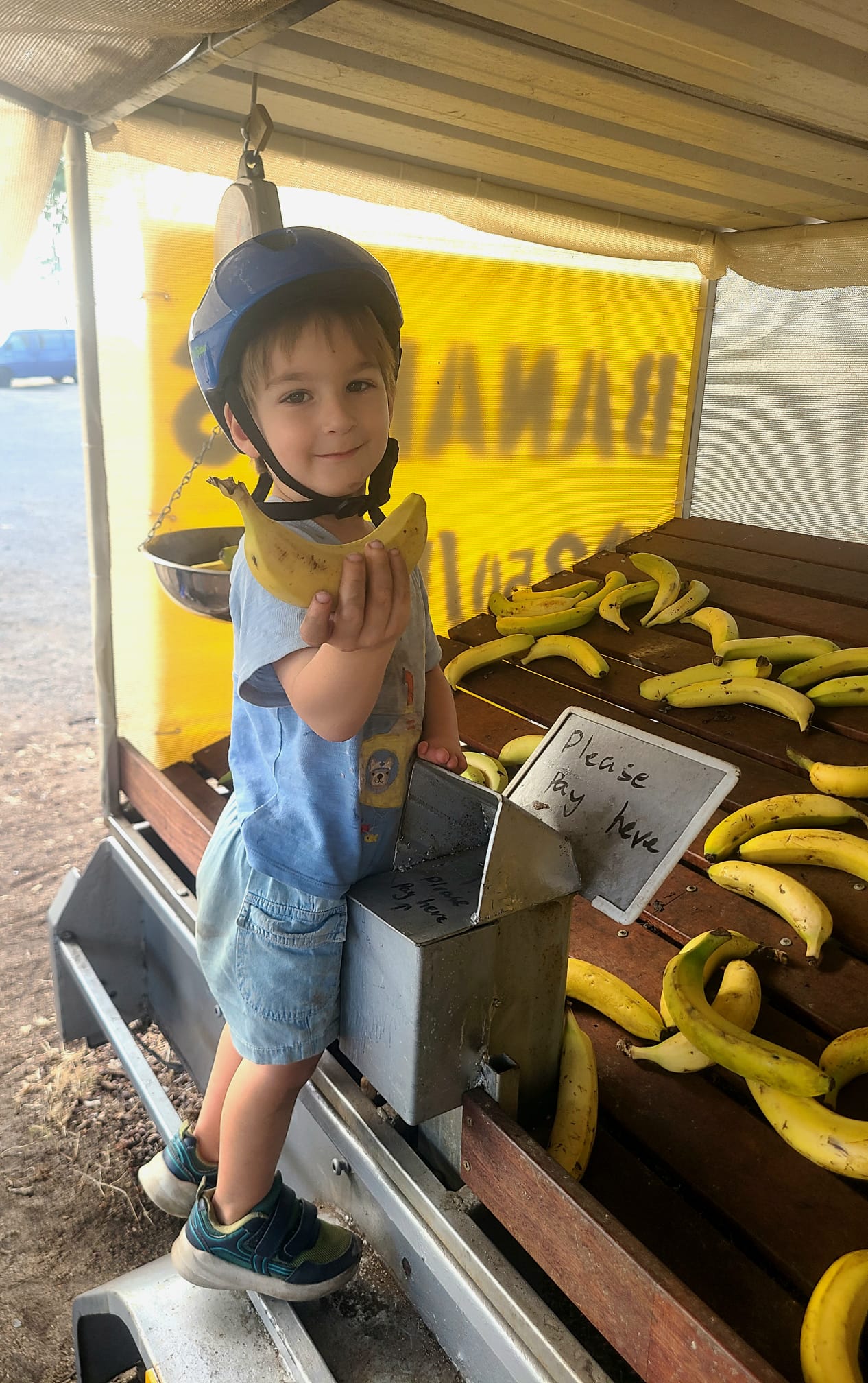
We looked at the bananas together.
"These green ones aren't ripe yet."
"But these yellow ones are ready to eat."
My son counted each banana we placed on the scale.
We watched the dial slowly move until it reached one kilogram.
We read the sign together.
"BANANAS – $2.50 per kilo."
(And yes... I absolutely couldn't spell the word bananas aloud to my son without singing it to Gwen Stefani's B-A-N-A-N-A-S!)
Then came one of my favourite moments. The coins my son had earned from recycling bottles and cans helped pay for our bananas. He could see that the money he'd earned had value. Just like Mum and Dad, he was helping buy the groceries.
Later that afternoon, we set the banana peels aside to feed our neighbour's chickens.
One simple stop had sparked conversations about farming, maths, reading, money, sustainability and caring for animals.
Finding Teaching Moments in Everyday Life
As a parent, I feel guilty at times for not having elaborate activities to help my children learn. But I've realised some of the richest learning doesn't happen in the classroom. When I slow down enough to notice the opportunities already around us, I can invite my son in and nurture his curiosity naturally.
Experiences like this are one of the reasons I'm so passionate about writing children's books about Australian agriculture. When children understand where food comes from, they begin to appreciate the people, places and hard work behind it. Whether that's stopping at a roadside banana stall, visiting a local farmers' market or simply asking questions while grocery shopping, every experience helps build that connection.
We don't all grow up on farms, but we can all nurture curiosity about the journey our food takes before it reaches our plates. That's exactly what I hope to do through my books.
My children's picture book, The Sugarcane Harvester Song, explores where sugar comes from through the eyes of a young child observing a harvester in the paddock. It was created to spark conversations about Australian agriculture and help children discover where an everyday ingredient, sugar, comes from.