

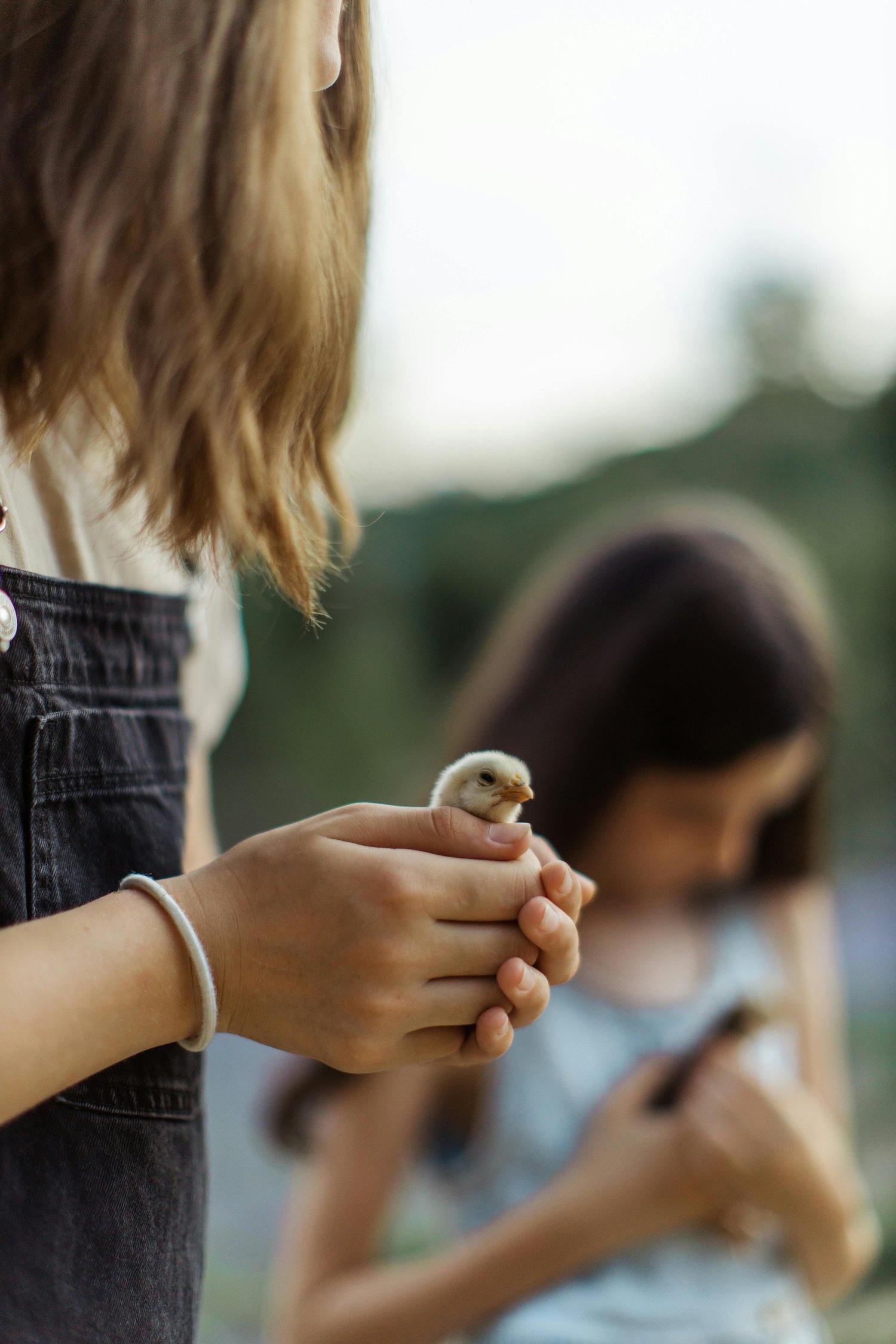
One thing I often notice when speaking with Australian farming families is how naturally children become involved in caring for animals. Whether they live on a sugarcane farm, cattle property, hobby farm, or small acreage, many children learn responsibility through daily interactions with animals.
Whether it's feeding chickens, collecting eggs, checking water troughs, or helping bottle-feed calves, caring for animals becomes part of everyday life.
It made me think about a small routine in our own home.
There’s a small bin beneath our kitchen counter where we collect veggie scraps throughout the week. Banana peels. Carrot tops. Lettuce ends. Every couple of days, my son helps carry it outside. He already knows where it’s going.
“For the chickens,” he says proudly.
How Caring for Animals Builds Empathy
We don’t actually keep hens ourselves, but our neighbour does. Sometimes the scraps end up in the compost, but often, they’re carried next door to feed her girls. My son has had the chance to gently pat them. Sometimes, he watches them peck happily from the other side of the coop. They cluck excitedly as the scraps are scattered across the ground.
He’s quick to notice if one of us accidentally tosses veggie scraps into the rubbish instead of the scraps bin.
“That’s for the chickens,” he’ll remind us seriously.
Somewhere along the way, he’s begun to understand that those scraps have value beyond our kitchen bench. To him, it probably feels like a small and ordinary routine. But moments like these quietly teach children something important. Animals depend on us. Even simple interactions with animals help children begin to understand care, responsibility, and connection in very tangible ways. They learn that living things have needs. That routines matter. That food doesn’t simply disappear when we’re finished with it. What we don't use can nourish someone else.
Lessons Children Learn from Farm Life
We have pets at home, and I already see how naturally children respond to the responsibility of helping care for them. Filling water bowls. Offering gentle pats. Noticing when an animal seems excited, nervous, hungry, or tired. But I imagine children growing up on farms experience these lessons in even grander ways. Farm life creates countless opportunities for children to care for animals as part of everyday life. Feeding chickens before school. Checking water troughs. Helping bottle-feed calves. Collecting eggs. Watching quietly and learning animal behaviours over time.
These aren’t always framed as “teaching moments,” but they become exactly that. Children learn patience. Gentleness. Empathy. Consistency. They begin to understand that caring for animals means showing up every day — not just when it feels exciting or convenient. And perhaps most importantly, they develop a sense of connection to the living world around them.
At a time when so much competes for children’s attention, there’s something deeply grounding about these slower moments. Watching chickens peck through scraps. Listening to contented clucks from inside a coop. Learning that small actions can help care for another living thing.
These moments may seem simple, but they stay with children.
It’s one of the reasons I’m so passionate about stories that connect children to farming, food production, animals, and the natural world. Even when children don’t grow up on farms themselves, books and real-world experiences can still help nurture curiosity, empathy, and appreciation for the people and animals that help feed our communities.
Sometimes, those lessons begin with something as small as a veggie scraps bin beneath the kitchen counter.