

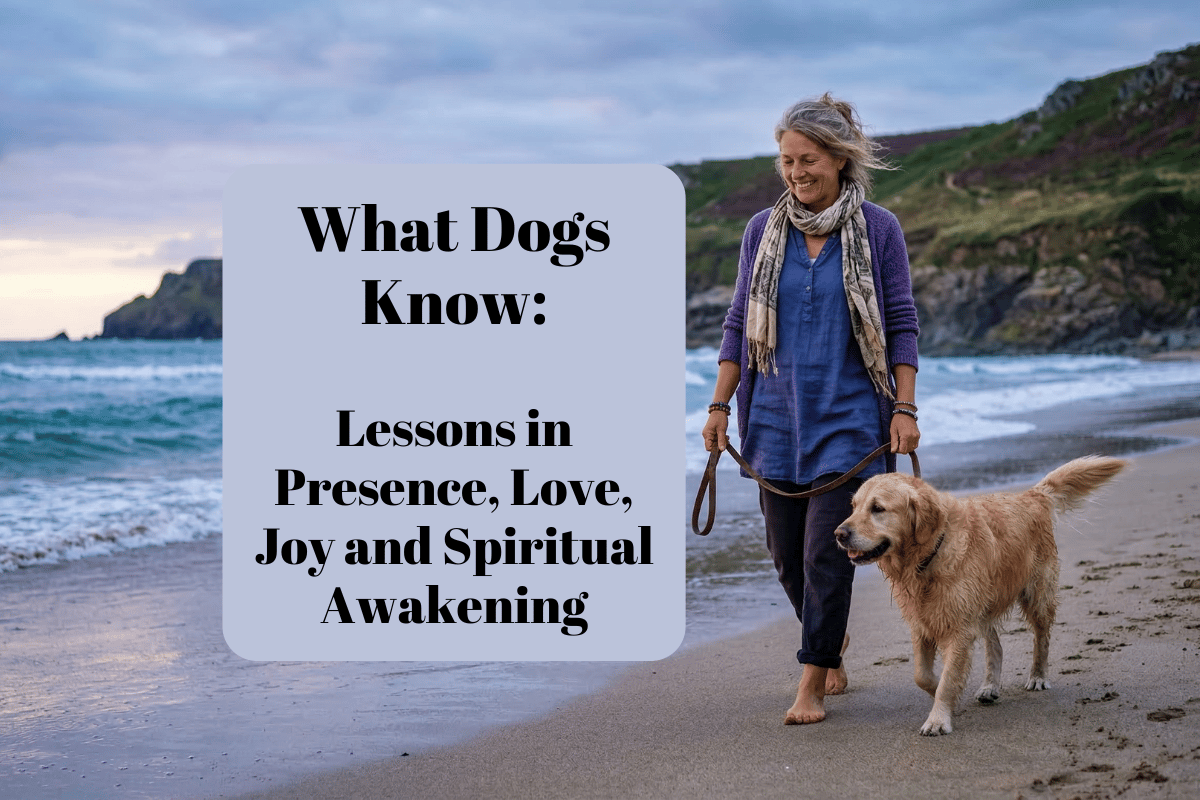
Every time I come home, Suki is waiting. It doesn’t matter whether I’ve been gone for three hours or twenty minutes — she greets me with the same wholehearted joy every single time. Tail moving, body wriggling, trying to reach my face. Entirely present. Entirely delighted. No trace of resentment for the time I was away, no cool reserve to make a point. Just this moment, and her happiness to be in it with me.
I’ve been thinking about what that actually means — not as a cute detail about dog behaviour, but as something genuinely instructive. What Suki does instinctively, many of us spend years trying to practise: being fully here, releasing what has passed, meeting each moment without the weight of the one before it.
Dogs, it turns out, are extraordinary spiritual teachers. And many of us have been lucky enough to live with them.
They exist in the moment, not yesterday
A dog wakes up without the previous day’s grievances. They don’t ruminate on the argument from this morning or rehearse tomorrow’s anxieties. Every walk is, to them, the walk. Every greeting is given in full.
The spiritual traditions — from Buddhism to mindfulness to the teachings of Eckhart Tolle — point again and again to the present moment as the only place where life actually happens.
We understand this intellectually, and still we spend enormous energy elsewhere: replaying the past, rehearsing the future, negotiating with versions of reality that exist only in our minds. A dog doesn’t do this. Presence isn’t a practice for them — it’s simply their nature.
To live alongside a dog and really pay attention is to receive a quiet, daily demonstration of what presence looks like from the outside. What it feels like to be with someone who is entirely here.
Unconditional love as a mirror
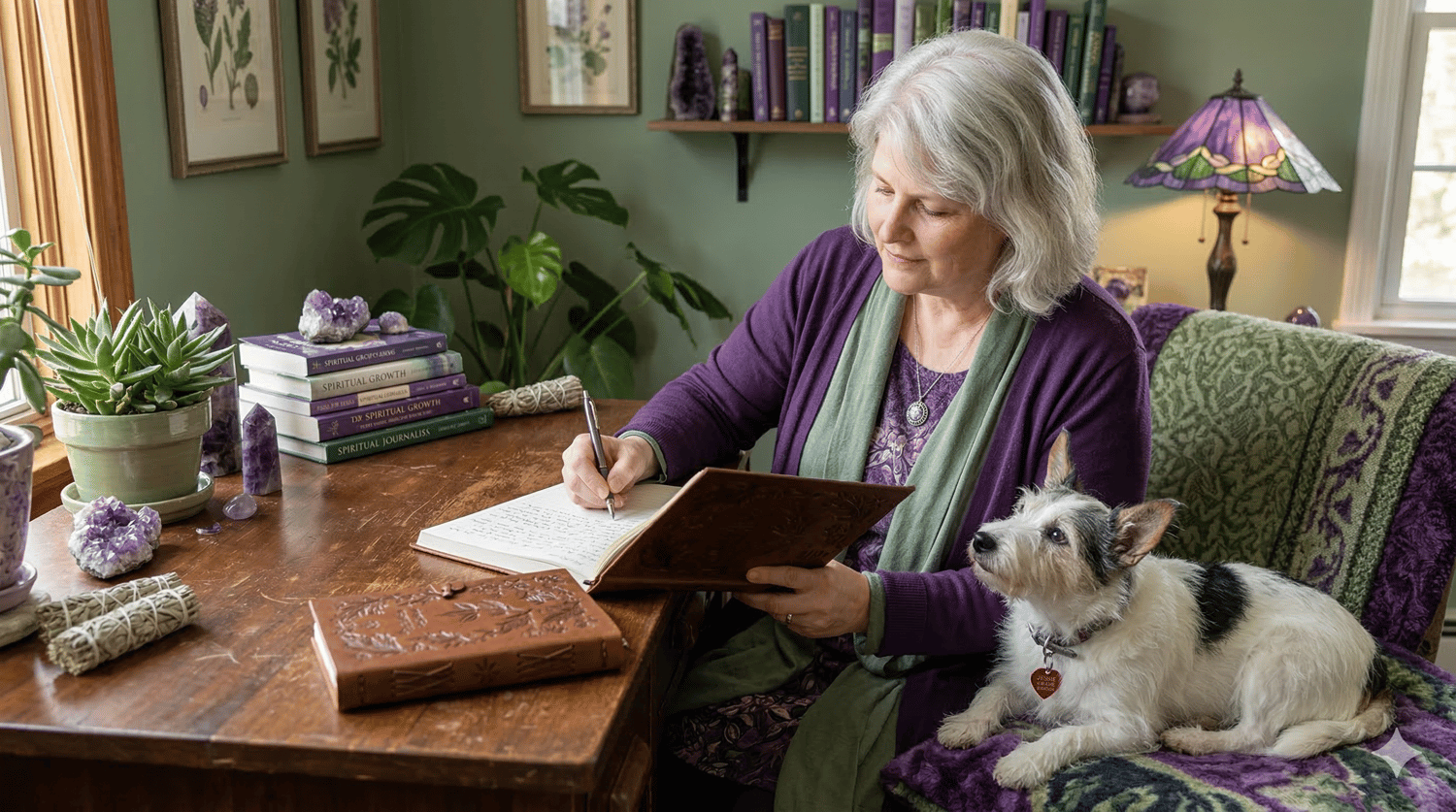
Suki doesn’t love me because I’m having a good day, or because I’ve been productive, or because I’m presenting a particular version of myself. She loves me when I’m tired and short-tempered, when I haven’t been for our walk yet, when I’m sitting quietly doing nothing at all. The love simply is, independent of my performance or my mood.
This kind of love is rare enough between humans that we often spend years searching for it, or grieving its absence. And yet here it is — offered freely, every day, by a creature who asks very little in return.
There’s something spiritually significant about being on the receiving end of unconditional love. It has a frequency — one that tends to soften us, open us, raise our capacity for the same quality of acceptance toward ourselves and others.
My previous dog, Jessie — a Jack Russell of considerable personality and even more considerable heart, who left us in 2021 — had this quality in abundance. She had a presence about her, and was definitely opinionated, but utterly devoted. Anyone who met her felt it.
Dogs reflect back to us what it looks and feels like to love without conditions. That is not a small thing.
Trust, forgiveness, loyalty
Dogs trust completely. They extend it not as a considered risk but as a default — and when that trust is occasionally broken, they forgive with a speed that would take most humans weeks of therapy to reach. They don’t carry grievances. They move back toward love as naturally as water finds level.
These qualities — trust, forgiveness, loyalty — are ones the spiritual traditions consistently identify as pathways to inner freedom. Withheld trust keeps us defended and contracted. Unforgiven things drain energy that could flow toward growth. Loyalty — the steady, non-contingent kind a dog offers — creates the safety in which both beings can fully be themselves.
Watching Suki problem-solve during play, seeing how quickly she reads a room, noticing the intelligence behind those eyes — it reinforces something I’ve always believed: that animals are not lesser versions of consciousness, but different expressions of it.
Living alongside them, if we pay attention, teaches us as much as any book.
Aloka: the dog who carried peace across a continent
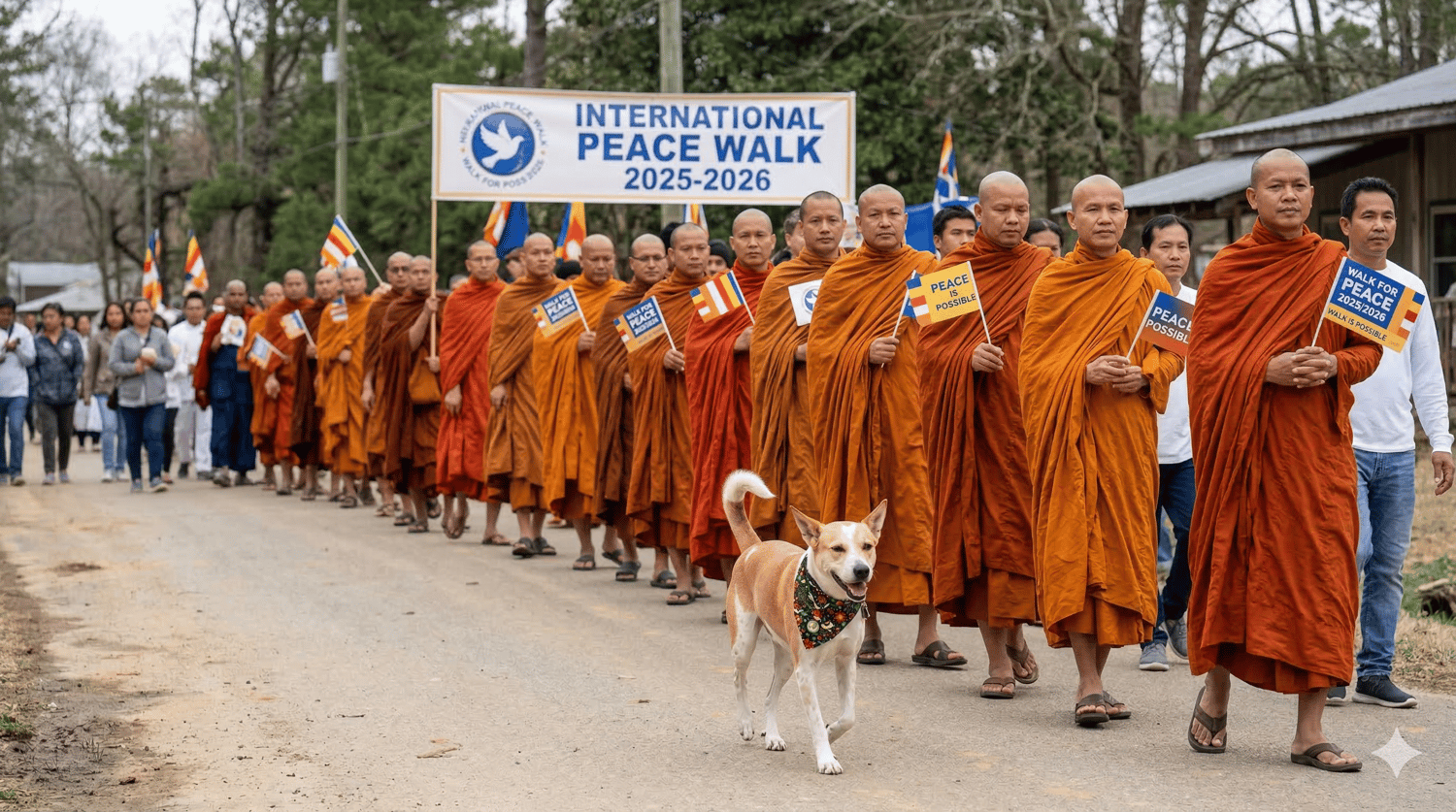
In 2022, a group of Theravada Buddhist monks were walking a peace pilgrimage across India. Somewhere along the road, a stray dog began following them. He had no name then, no collar, no particular destination — only some quiet recognition that this was where he belonged.
The monks named him Aloka, which means ‘divine light’. He stayed with them through illness, through hardship, through being struck by a vehicle on the road — and still he returned to walk beside them. By the time the same monks began their 2,300-mile Walk for Peace across America in October 2025 — from Fort Worth, Texas to Washington D.C. — Aloka walked with them again, and the world followed.
Hundreds of thousands of people tracked the journey on social media. Strangers waited along highways to catch a glimpse. Churches opened their doors. A message of solidarity arrived from the Dalai Lama. And through it all, Aloka — a small, unremarkable-looking rescue dog with a marking on his head said to resemble a heart — became the face of the whole movement.
When he suffered a leg injury midway through the walk and had to undergo surgery, the outpouring of concern from around the world was extraordinary. He rejoined the monks on day 89. On the final day, 10th February 2026, he walked the last steps of the journey at his monks’ side.
What Aloka demonstrated — without agenda, without language, without any understanding of what he represented — was exactly what the monks were walking to teach: presence, loyalty, quiet determination, and love that doesn’t stop when the road gets hard.
Writer Shen Yu, who documented the journey, described Aloka as a reminder that wisdom isn’t always spoken. Sometimes it simply walks beside you.
I followed Aloka’s journey with deep interest, and I’ve since read Shen Yu’s book about him. If his story resonates with you, I’d encourage you to seek it out — it’s a quiet and moving account of what one small dog, and the humans who walked with him, had to teach the world about peace.
The teacher at your feet
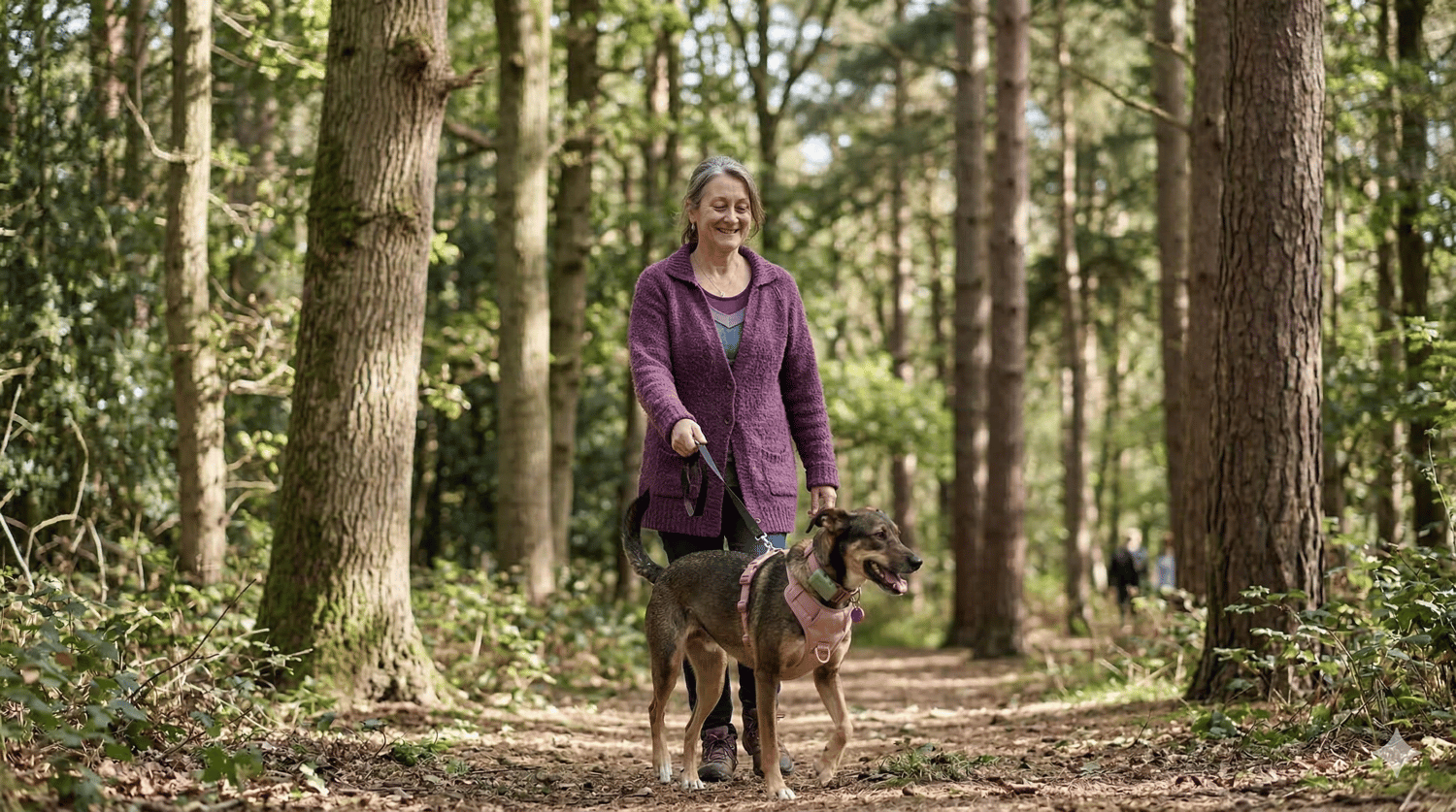
Whether you have a dog or not, the qualities they embody — presence, unconditional love, trust, forgiveness, loyalty, unself-conscious joy — are qualities available to all of us as conscious choices.
They are, in many traditions, considered markers of spiritual maturity: not things we arrive at after years of discipline, but things we can practise in the small moments of each day.
If you do share your life with a dog, consider what they might already be teaching you. Not as a metaphor, but as a living demonstration. Every greeting that asks nothing of you but your presence. Every moment of simple joy that doesn’t need a reason. Every quiet act of trust offered again, even after it’s been tested.
Suki reminds me of these things regularly — usually at the front door, usually at speed, usually accompanied by a great deal of noise. And I am, every time, grateful.
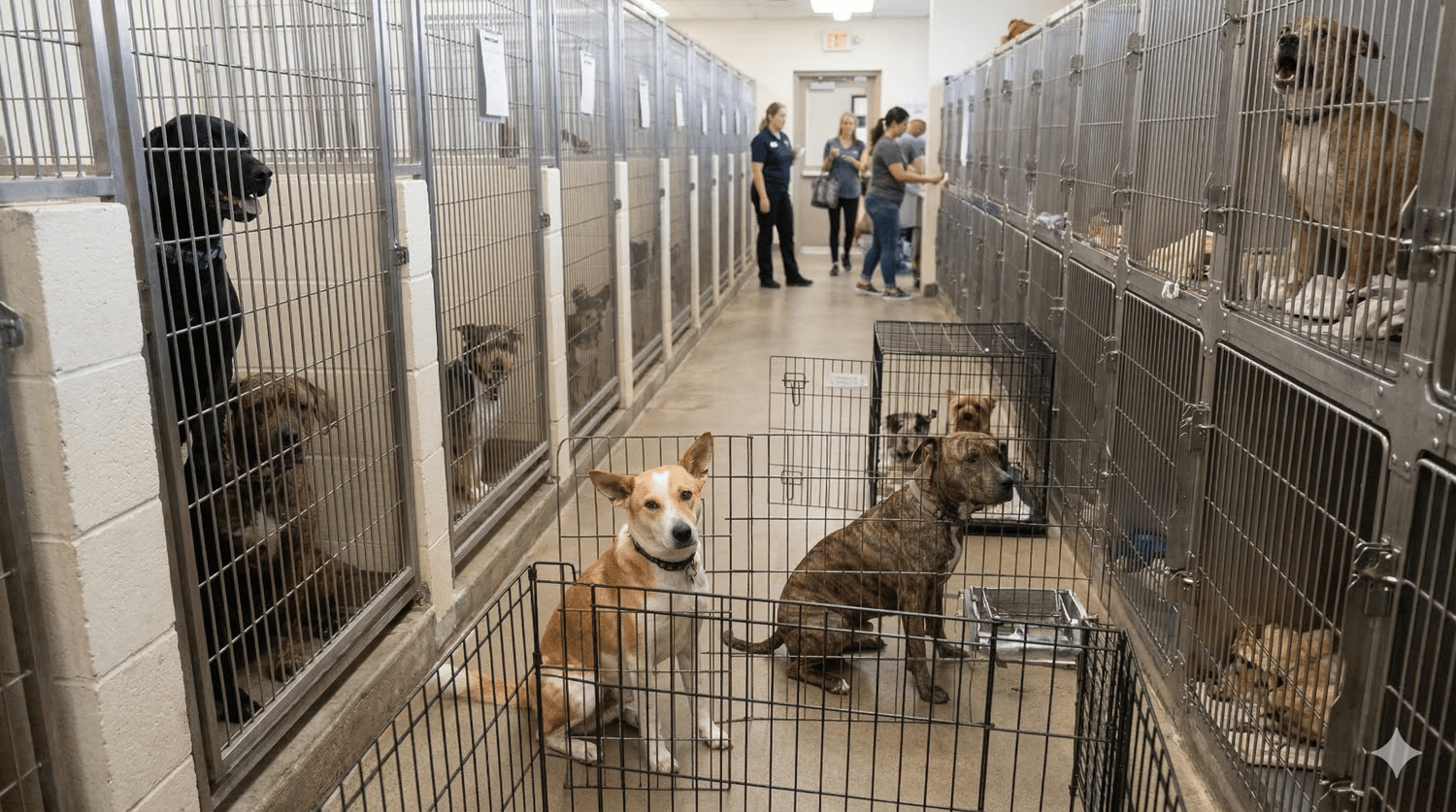
Not every dog is this lucky
Suki came to us from Romania, where she and her siblings — just three months old — were left on the streets because nobody had bought them.
That’s not an unusual story. It’s a common one. Across the world, dogs are abandoned when they become inconvenient, surrendered to shelters when they stop being puppies, or left to fend for themselves on the streets of countries where stray populations run into the millions.
Some spend years in kennels, passed over again and again because they’re not young enough, small enough, or ‘cute’ enough by whatever arbitrary measure a potential adopter applies that day.
The qualities we’ve been reflecting on in this post — unconditional love, trust, loyalty, forgiveness — shouldn't only be offered to the dogs who are fortunate enough to end up in warm homes. They also belong to the dog sitting in a shelter kennel right now, wondering why no one has come. To the stray navigating a city alone. To the animal who has known unkindness at human hands and still, somehow, extends trust when a gentle one appears.
If this post has stirred something in you, here are a few ways to honour that:
- Consider adopting a dog rather than buying. Rescue organisations — local and international — have dogs of every age, size, and temperament waiting for the right home. Suki is proof that a rescue dog gives back every bit as much as any other.
- If adoption isn’t possible right now, consider donating to a reputable animal shelter or rescue organisation. Even a small regular contribution makes a real difference to the animals in their care.
- If you already share your life with a dog, let this be a gentle reminder of the responsibility that comes with that — to provide not just food and shelter, but the companionship, stimulation, and love that a dog genuinely needs to thrive.
Suki is loved unconditionally in our home — and she returns it tenfold, every single day. Every dog deserves that. Not all of them get it. That gap is something we can each, in whatever small way we’re able, help to close.
If this resonates and you’d like to explore presence, alignment, and living more consciously through your own writing practice, the Making You Happen journals collection offers a gentle starting point. The 7-Day Soul Reset Journal in particular — seven days of prompts designed to help you release, reconnect, and realign — is a natural companion to the kind of reflection this post invites. Browse the full journals collection here.
Comments ()