

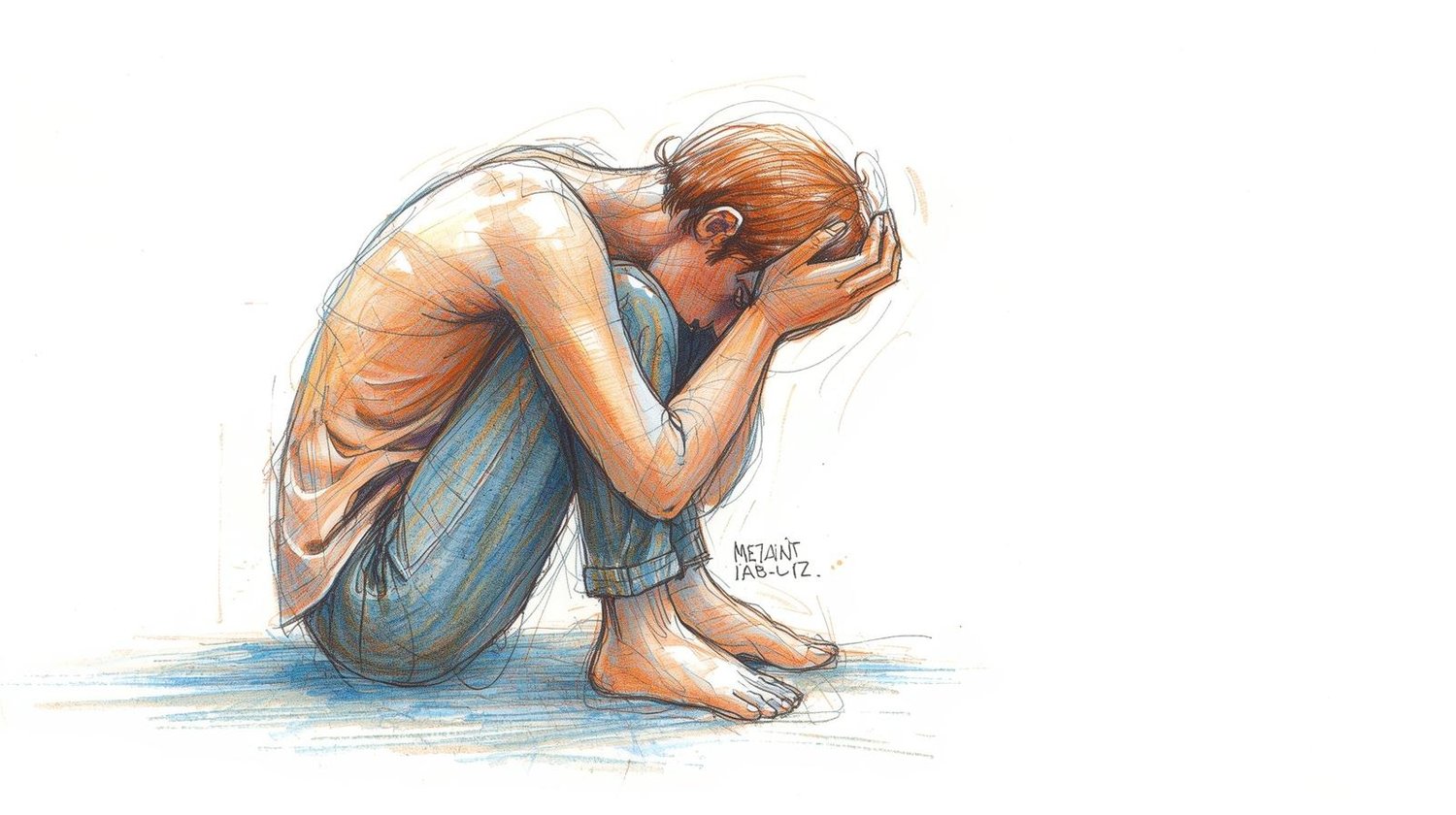
Anxiety doesn’t always look the way we expect it to.
For many adults, anxiety isn’t constant panic or visible distress. It’s the overthinking after a conversation, the tight chest during meetings, the difficulty relaxing even when things are “going well,” or the sense that your mind never quite turns off. It’s showing up to work, parenting, relationships, and responsibilities—while quietly managing an internal sense of pressure or unease.
As a Licensed Mental Health Counselor, I see how often adults minimize their anxiety because they’re still functioning. But functioning is not the same as feeling okay.
Anxiety Isn’t a Personal Failure
One of the most harmful myths about anxiety is that it means you’re weak, incapable, or “not coping well enough.” In reality, anxiety is often the nervous system doing its best to protect you—sometimes too well.
Many adults with anxiety are:
- High achievers
- Caregivers or people who prioritize others
- Highly self-aware and responsible
- Emotionally attuned to their environment
Anxiety often develops not because someone is failing, but because they’ve been holding too much for too long.
When you feel anxious, what do you tend to tell yourself about it? Is that message compassionate or critical?
How Anxiety Shows Up in Adults
Anxiety doesn’t always announce itself clearly. It often disguises itself as everyday stress, irritability, or exhaustion.
Some common adult anxiety experiences include:
- Constant mental replaying or “what if” thinking
- Difficulty resting without guilt
- Physical symptoms like headaches, stomach issues, or muscle tension
- Avoiding situations not because you don’t care, but because you care too much
- Feeling emotionally overwhelmed yet disconnected at the same time
If any of this resonates, you’re not alone—and you’re not imagining it.
Why Anxiety Feels So Hard to “Turn Off”
Anxiety lives in the body as much as it does in the mind. Logic alone rarely quiets it. That’s why telling yourself to “calm down” often doesn’t work.
When your nervous system perceives threat—whether real or emotional—it shifts into protection mode. Over time, chronic stress, trauma, societal pressure, or unresolved emotional experiences can keep that system on high alert.
This is not a flaw. It’s a learned survival response.
What does your anxiety try to protect you from? Failure? Rejection? Loss of control?
Managing Anxiety Is Not About Eliminating It
Many adults come to therapy wanting anxiety gone completely. While that’s understandable, a more realistic and compassionate goal is learning how to relate to anxiety differently.
Effective anxiety management often includes:
- Increasing awareness of emotional and physical cues
- Learning regulation skills for the nervous system
- Setting boundaries that reduce chronic overwhelm
- Challenging internalized expectations and perfectionism
- Creating space for rest without guilt
Progress doesn’t mean anxiety disappears—it means it no longer runs your life.
Starting the Conversation
Anxiety thrives in silence and self-judgment. One of the most powerful steps toward healing is naming it—whether with a therapist, a trusted person, or even yourself.
If you’ve ever thought:
- “Other people handle this better than I do.”
- “I should be able to manage this on my own.”
- “Nothing is technically wrong, so why do I feel this way?”
Those thoughts are common—and they’re worth exploring, not suppressing.
If anxiety could speak, what would it say it needs right now?
You Deserve Support
Managing anxiety as an adult doesn’t mean you’ve failed at coping—it often means you’ve been coping alone. Therapy can be a space to understand your anxiety without judgment, learn practical tools, and reconnect with a sense of safety in your body and mind.
Awareness is the first step.
Compassion is the next.
Clinical Disclaimer
This blog is intended for educational and informational purposes only and is not a substitute for professional mental health treatment, diagnosis, or individualized care. Reading this content does not establish a therapeutic relationship between you and the author. If you are experiencing a mental health emergency, please contact local emergency services or a crisis hotline immediately.
Comments ()