

Short answer: the CRA doesn't care which tool you use. It requires complete, organized records that show the date, amount and source of income and properly supported expenses, kept for six years. A spreadsheet is usually enough for a sole proprietor...
Read More

Short answer: a computer or other general-purpose data-processing equipment (Class 50) that you acquired after April 15, 2024 and that became available for use in 2026 can be written off 100% in its first year. Most other equipment gets a larger-tha...
Read More
Short answer: you must pay quarterly tax instalments for 2026 if your net tax owing is more than $3,000 ($1,800 if you live in Quebec on December 31) for 2026 and was also above that amount in either 2025 or 2024. The 2026 due dates are March 15, Ju...
Read More
Short answer: self-employed Canadians can deduct part of their home costs on line 9945 of Form T2125 if the workspace is their principal place of business, or is used only for the business and regularly to meet clients. You split the costs on a reas...
Read More
Short answer: if you're self-employed and use your car for both business and personal driving, you deduct only the business share of your vehicle costs, worked out as business kilometres divided by total kilometres. The CRA's preferred evidence is a...
Read More
Short answer: Canadian landlords can deduct current expenses (repairs that restore the property, insurance, mortgage interest, property tax, utilities you pay, advertising, management fees) in the year they're incurred, but capital expenses (things ...
Read More
Short answer: a Canadian freelancer's bookkeeping spreadsheet needs two logs. An income log with date, client, invoice number, amount before tax and GST/HST charged, and an expense log with date, supplier, description, amount, GST/HST paid and the T...
Read More
Short answer: if you only rent out space with basic services (heat, utilities, parking, laundry), the CRA generally treats Airbnb income as rental income on Form T776. If you add services like meals, cleaning during stays or tours, it can become bus...
Read More
Short answer: yes, if you drive for Uber, Lyft or another commercial ride-sharing app in Canada, you must register for GST/HST from your very first paid trip, even if you earn far less than $30,000. The CRA says taxi operators and commercial ride-sh...
Read More
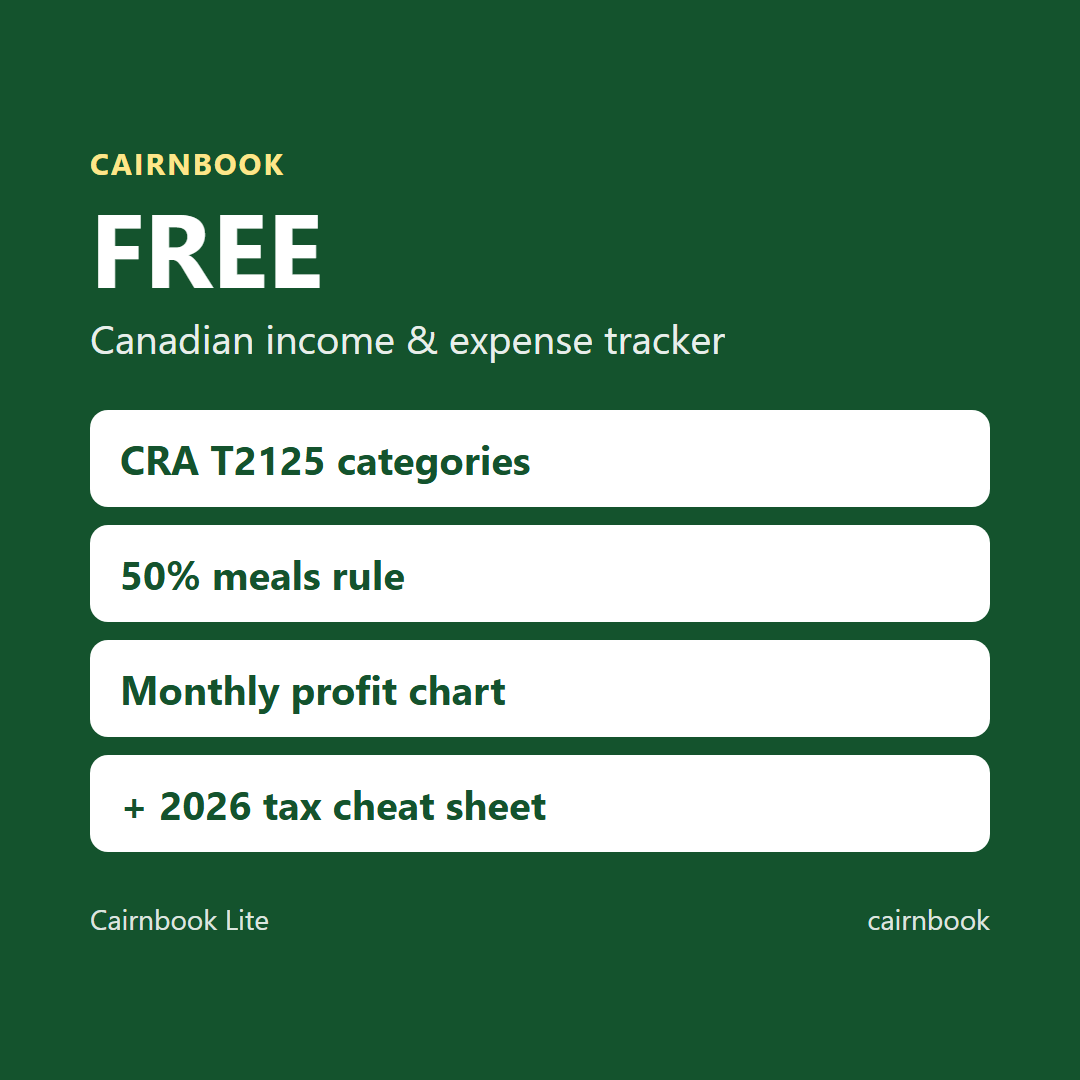
If you're just starting out, you don't need accounting software - you need a clean record of what came in, what went out, and which CRA category each expense belongs to. What's in the free Cairnbook LiteIncome log (amount before tax, GST/HST charged...
Read More
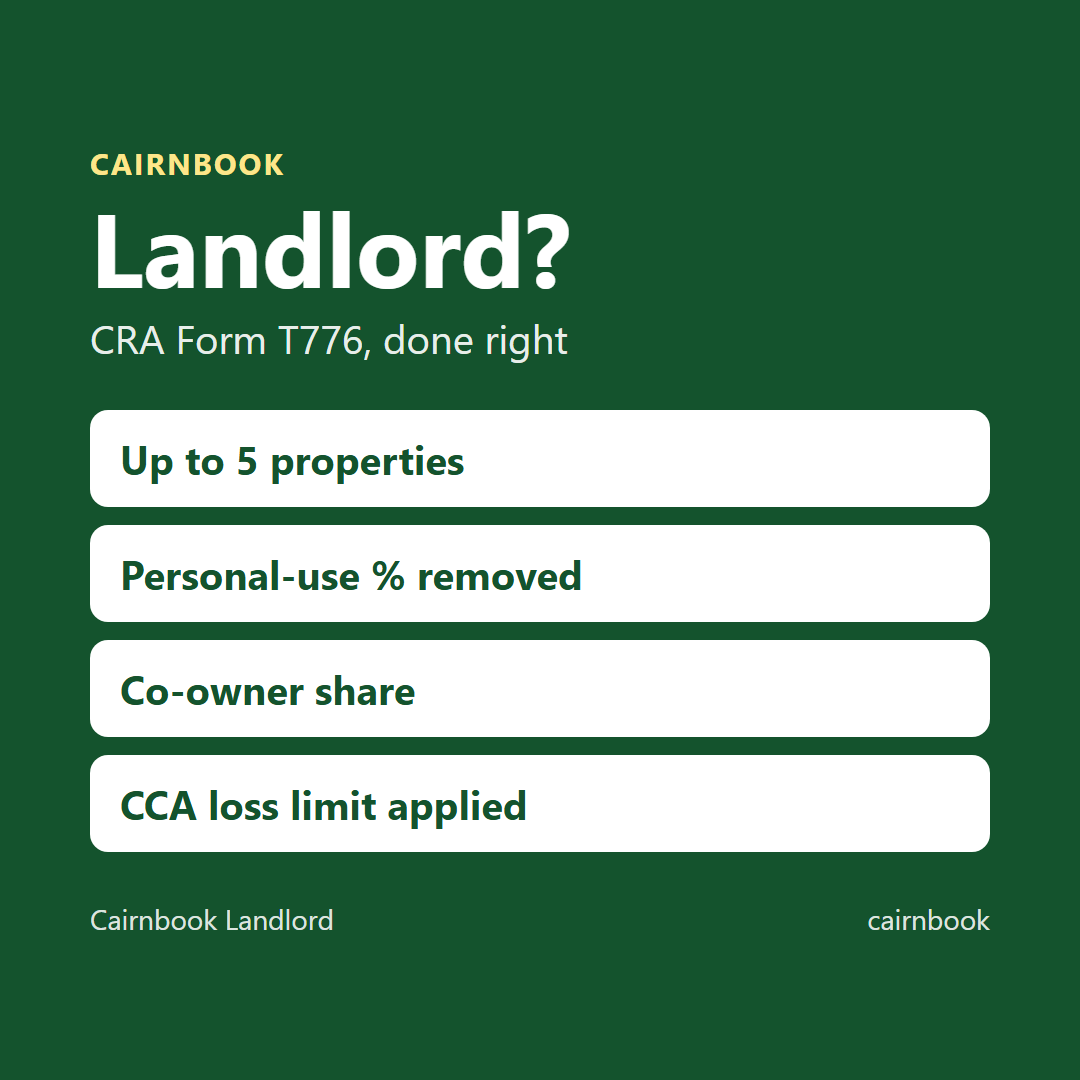
Rental income from a basement suite, a condo or a duplex unit goes on Form T776, Statement of Real Estate Rentals. Here's how the main lines fit together. IncomeLine 8141: gross rents (the form reports rents in the year you receive them)Line 8230: o...
Read More
Short answer: a self-employed home daycare provider in Canada reports all fees and subsidies as business income on Form T2125, keeps every receipt and bank record for at least six years, and gives each parent a signed receipt per child that includes...
Read More
Answers to the questions we get most about Cairnbook and Cairnbook Landlord. Which Cairnbook do I need?Cairnbook 2026 - to finish your 2026 books and file your return in spring 2027.Cairnbook 2027 - for bookkeeping from January 1, 2027 (built from C...
Read More
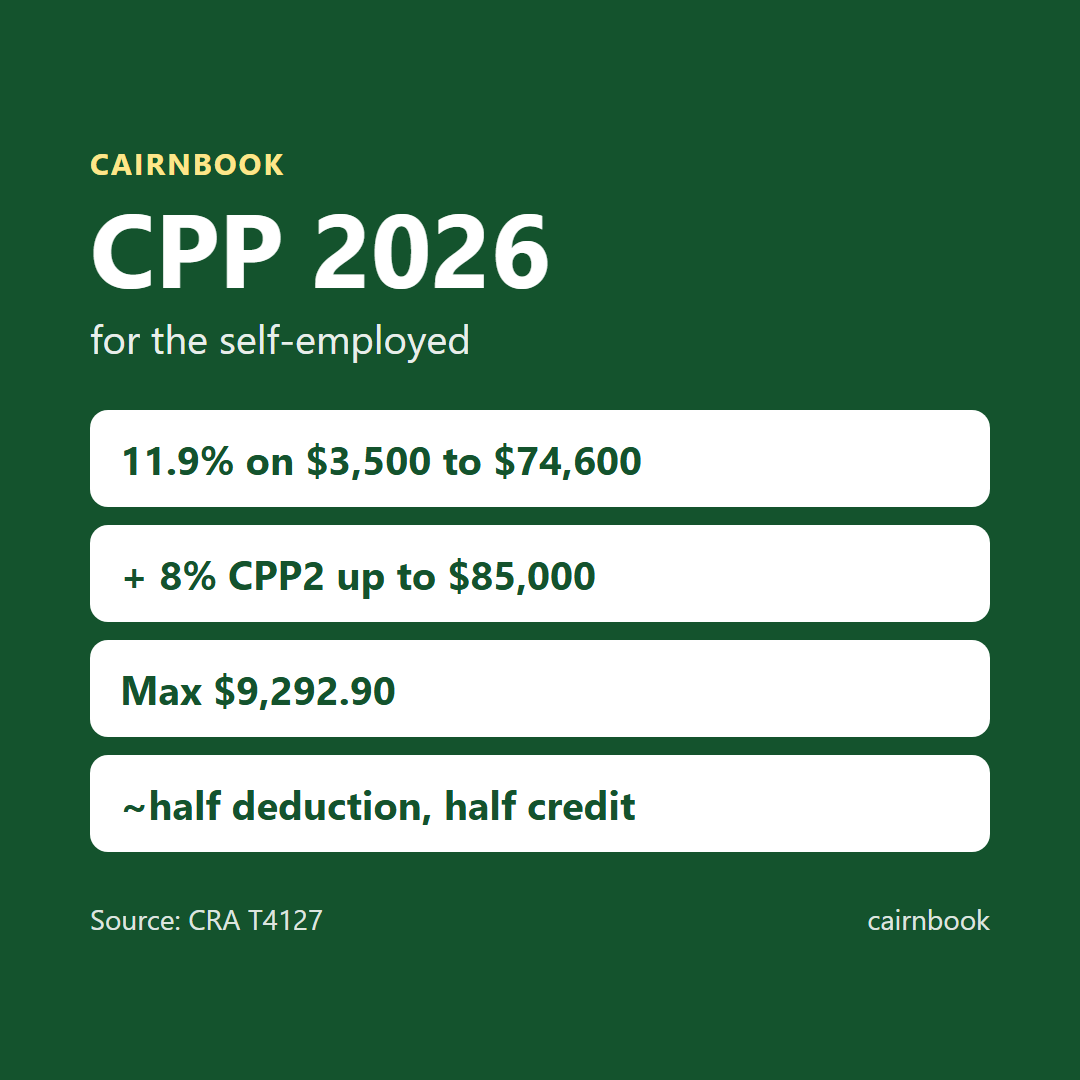
Self-employed people pay both the employee and employer share of the Canada Pension Plan. Here are the official numbers. 2026Basic exemption: $3,500Maximum pensionable earnings (YMPE): $74,600Rate on self-employment: 11.9% (2 x 5.95%) - maximum $8,4...
Read More
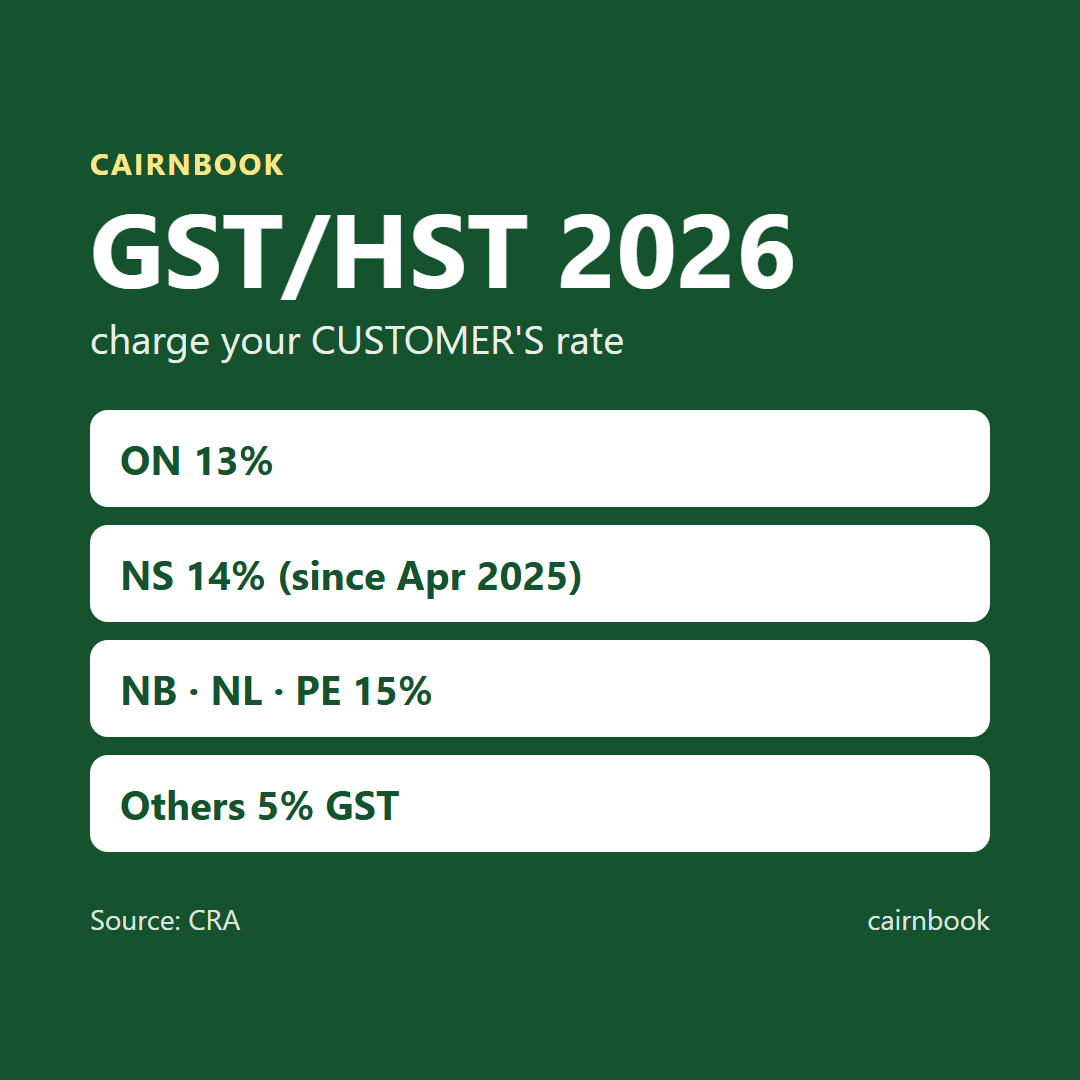
Once you're registered, the rate you charge generally depends on where your customer is, not where you are. 2026 ratesOntario: 13% HSTNova Scotia: 14% HST (down from 15% since April 1, 2025)New Brunswick, Newfoundland and Labrador, Prince Edward Isl...
Read More