Helping Children Plan, Focus, Remember and Get Things Done
What is Executive Functioning?
Executive functioning is a set of mental skills that help children manage everyday tasks. These skills allow them to plan, pay attention, remember instructions, control their emotions and impulses, solve problems, and complete activities independently.
Think of executive functioning as the brain's "management system." It helps children organize their thoughts, actions, and behaviour so they can successfully learn, play, and complete daily routines.
These skills develop gradually throughout childhood and continue maturing into early adulthood.
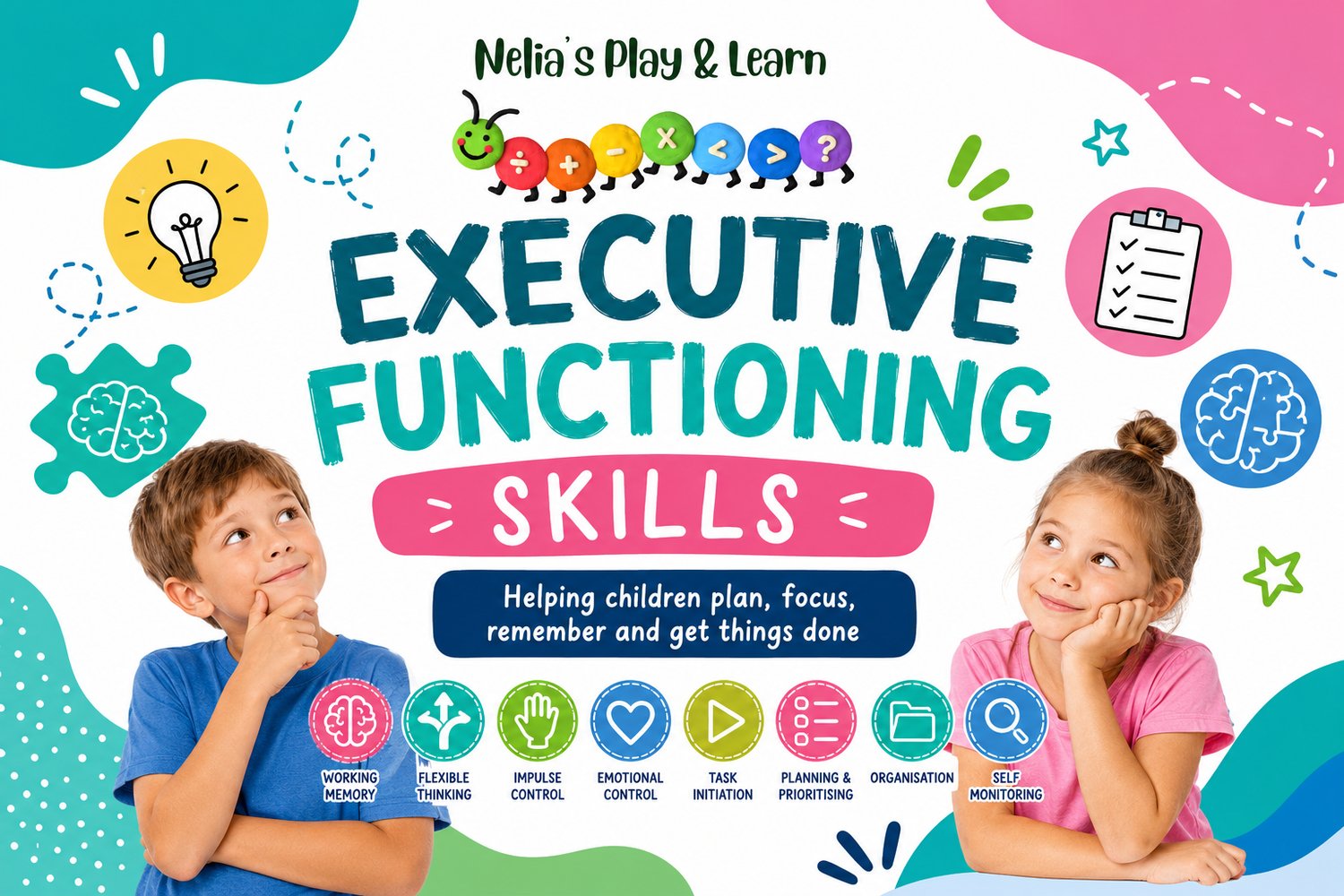
The 8 Executive Functioning Skills
1. Working Memory: The ability to remember and use information while completing a task, such as following multi-step instructions or solving a maths problem.
2. Flexible Thinking: The ability to adapt when plans change, solve problems in different ways, and cope with unexpected situations.
3. Impulse Control: The ability to stop and think before acting, waiting for the right time to speak or make a decision.
4. Emotional Control: The ability to manage emotions appropriately when things become difficult, frustrating, or disappointing.
5. Task Initiation: The ability to start a task independently without needing repeated reminders.
6. Planning & Prioritising: The ability to make a plan, set goals, and decide which steps need to happen first.
7. Organisation: The ability to keep belongings, information, and time organised so tasks can be completed efficiently.
8. Self-Monitoring: The ability to recognise mistakes, evaluate performance, and make changes when needed.
What Does It Look Like When a Child Struggles?
A child with executive functioning difficulties may:
- Frequently forget instructions.
- Lose school books, stationery, or personal belongings.
- Struggle to start homework or chores.
- Become overwhelmed by larger tasks.
- Have difficulty planning ahead.
- Move from one activity to another without finishing.
- Act impulsively or interrupt others.
- Have emotional outbursts when routines change.
- Struggle to manage time effectively.
- Need constant reminders to stay on task.
These challenges are not a sign of laziness - they often reflect skills that are still developing and may need extra support.
How Can You Help Improve Executive Functioning?
There are many ways to strengthen executive functioning skills:
- Encourage daily physical activity and movement, as exercise supports brain development, attention, self-regulation, and learning.
- Create consistent routines with visual schedules, checklists, and step-by-step instructions to reduce cognitive overload.
- Play games that challenge thinking, such as memory games, puzzles, sequencing activities, obstacle courses, and problem-solving games.
- Seek professional support when needed. A Kinderkineticist can use movement-based activities to develop skills such as planning, attention, working memory, self-control, and organisation while improving overall motor development.
How Can a Kinderkineticist Help?
Executive functioning and movement development are closely connected. During movement, children constantly practise planning, remembering instructions, controlling impulses, solving problems, and adjusting their actions.
A Kinderkineticist uses age-appropriate activities and games to improve these skills while developing balance, coordination, strength, and overall motor competence. By combining movement with cognitive challenges, children can strengthen the foundation needed for learning, independence, and everyday success.
👉 Read my blog on What is Kinderkinetics? to learn how movement-based therapy supports your child's development.