Have you ever wondered how your child can run, jump, catch a ball, or even stand on one leg without thinking about every tiny movement?
While the thinking part of the brain often gets most of the attention, many of the most important jobs actually happen in the lower parts of the brain. These areas work together behind the scenes to make movement smooth, balanced, and coordinated.
The Journey from Brain to Muscle
Every movement starts in the brain.
- The brain decides to move.
- A message travels down the spinal cord.
- The message is carried through motor neurons to the muscles.
- The muscles contract, creating movement.
This entire process happens in a fraction of a second!
The Lower Parts of the Brain and Their Jobs
Spinal Cord
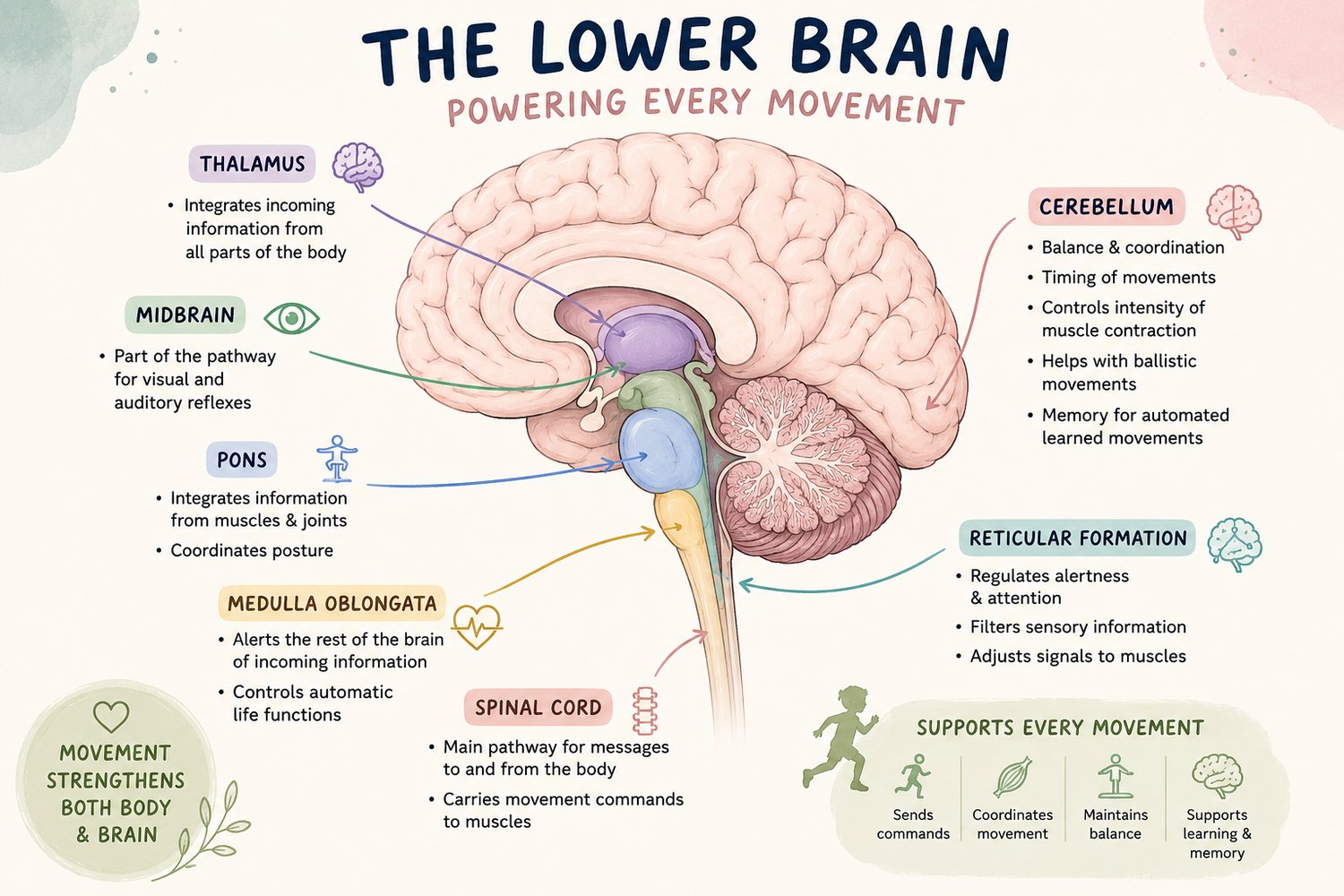
The spinal cord is the main communication highway between the brain and the rest of the body. It carries movement commands to the muscles and sends sensory information back to the brain.
Medulla Oblongata
The medulla acts like an early warning system. It alerts the rest of the brain when important information is coming in from the body and also controls many automatic functions that keep us alive.
Pons
The pons gathers information from the muscles and joints. It helps the brain understand where the body is and coordinates posture so that we can move efficiently without falling over.
Cerebellum
Often called the "movement coordinator," the cerebellum plays a huge role in making movement smooth and accurate.
It helps with:
- Balance
- Coordination
- Timing of movements
- Controlling how strongly muscles contract
- Fast, powerful movements (such as jumping or throwing)
- Remembering automatic movements like riding a bicycle, swimming, or handwriting
Without the cerebellum, movements would appear clumsy, shaky, and poorly timed.
Thalamus
The thalamus acts as the brain's information centre. It receives sensory information from all parts of the body, organises it, and passes it on to the higher parts of the brain where it can be interpreted.
Reticular Formation
The reticular formation helps control how alert and focused we are.
It:
- Regulates the signals sent from the brain to the muscles.
- Helps organise incoming sensory information.
- Works with the thalamus to control attention and alertness.
This is one reason why children who are tired often have poorer balance, slower reactions, and struggle to concentrate.
What Happens in the Brain When We Walk?
Walking may seem simple, but your brain is incredibly busy!
As you walk:
- Your muscles and joints constantly send information back to the brain.
- The cerebellum adjusts your balance and coordinates each step.
- The pons helps keep your posture upright.
- Your spinal cord carries messages between your brain and muscles.
- Blood flow to the brain increases, supplying oxygen and nutrients that support healthy brain function.
All of this happens automatically, allowing you to walk while talking, thinking, or looking around.
Why Movement Is Good for the Brain
Movement doesn't just strengthen muscles - it strengthens the brain too!
Research has shown that exercise:
- Increases blood flow to the brain.
- Delivers oxygen and nutrients needed for healthy brain function.
- Supports learning, memory, and concentration.
- Stimulates the production of important molecules that help brain cells grow and communicate.
- Helps protect cognitive function over time.
Fun Brain Facts
⭐ Every time you exercise, your cerebellum helps coordinate movement while your body releases endorphins. These natural chemicals can improve mood, reduce stress, decrease sensitivity to pain, and help you feel happier.
⭐ Regular physical activity improves blood flow to the brain, which has been linked to better memory, learning, and overall cognitive function.
Final Thoughts
Every jump, skip, throw, or climb depends on an incredible team of brain structures working together. The lower parts of the brain quietly coordinate balance, posture, muscle control, attention, and movement every second of the day.
That's one of the many reasons active play is so important for children. Every opportunity to move is also an opportunity to strengthen the brain and build the foundations for learning, confidence, and lifelong health.