Have you ever wondered why one child seems to cope well with busy environments while another startles easily, fidgets constantly or struggles to settle?
Our bodies are designed to react to the world around us. During infancy, primitive reflexes help babies respond to their environment and keep them safe. As children grow, these reflexes should naturally integrate, allowing the brain to take over and respond in a calmer, more controlled way.
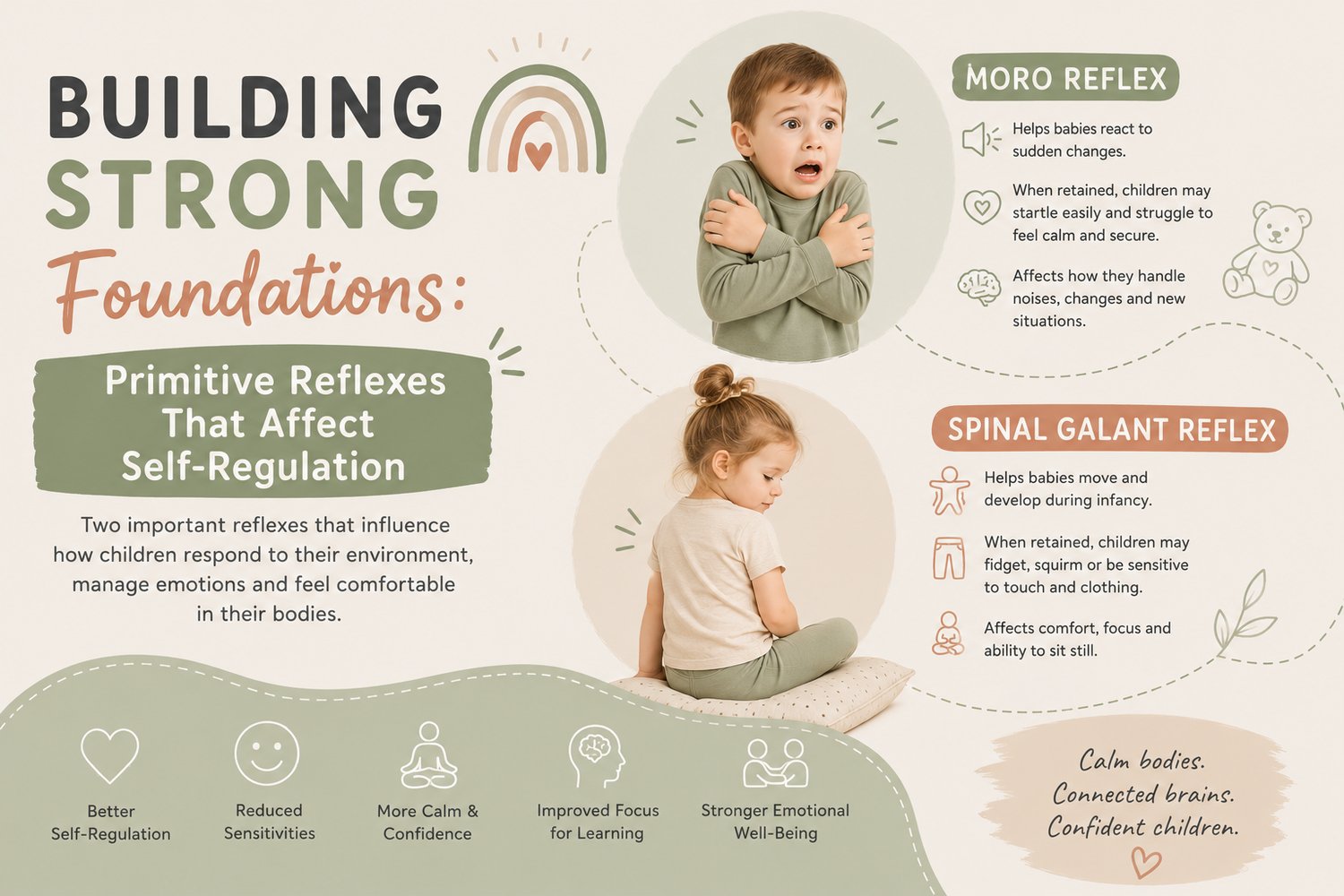
Two primitive reflexes play an important role in this process: the Moro Reflex and the Spinal Galant Reflex.
If these reflexes remain active beyond infancy, some children may find it harder to regulate their bodies, stay comfortable or focus on everyday activities. Let's explore what each reflex does and what it might look like in daily life.
What is the Moro Reflex?
The Moro Reflex, often called the startle reflex, is one of the first reflexes babies are born with.
When a baby hears a sudden noise, experiences a quick movement or feels startled, they automatically throw their arms out before bringing them back in.
This reflex is an important survival response during infancy and helps babies react to unexpected situations.
As the nervous system matures, the Moro Reflex should integrate, allowing children to respond calmly rather than automatically reacting to every unexpected event.
A child with a retained Moro Reflex may:
- Startle easily at unexpected sounds.
- Become overwhelmed in noisy or busy environments.
- Find changes in routine difficult.
- Be sensitive to bright lights, loud noises or certain textures.
- Become anxious in unfamiliar situations.
- Struggle to settle after becoming upset.
💡 How movement helps
Activities that provide gentle movement, rhythm and deep pressure - such as swinging, rolling, animal walks and heavy work - can help support body awareness and self-regulation.
What is the Spinal Galant Reflex?
The Spinal Galant Reflex is activated when the skin along one side of a baby's lower back is gently touched.
During infancy, this reflex helps babies move through the birth canal and later supports the movements needed for crawling.
As children grow, this reflex should naturally integrate.
A child with a retained Spinal Galant Reflex may:
- Fidget constantly while sitting.
- Wiggle or squirm in their chair.
- Dislike tight waistbands or certain clothing.
- Be unusually ticklish around the waist or lower back.
- Struggle to stay seated during meals or schoolwork.
- Be easily distracted by clothing or physical discomfort.
💡 How movement helps
Activities that involve crawling, climbing, rolling and playful core-strengthening games help children develop better body awareness and postural control.
How Do These Reflexes Work Together?
Think about your body's alarm system.
When everything is working well, your brain can decide whether something is truly important or whether it can simply ignore it.
The Moro Reflex and Spinal Galant Reflex both influence how children respond to their environment. When these reflexes remain active, some children may be more aware of noises, movement, clothing or other sensations than their peers.
This doesn't mean they are being "naughty" or "not listening." Their nervous system may simply be working harder to process the world around them.
Understanding this helps us respond with patience and support rather than frustration.
Final Thoughts
Every child experiences the world differently, and many factors influence attention, behaviour and emotional regulation. A retained primitive reflex is only one possible piece of the developmental puzzle.
By understanding how the Moro and Spinal Galant reflexes work, parents can better appreciate why some children may find everyday situations more challenging. Through play, movement and supportive environments, children can continue building the strong foundations they need for learning and daily life.