
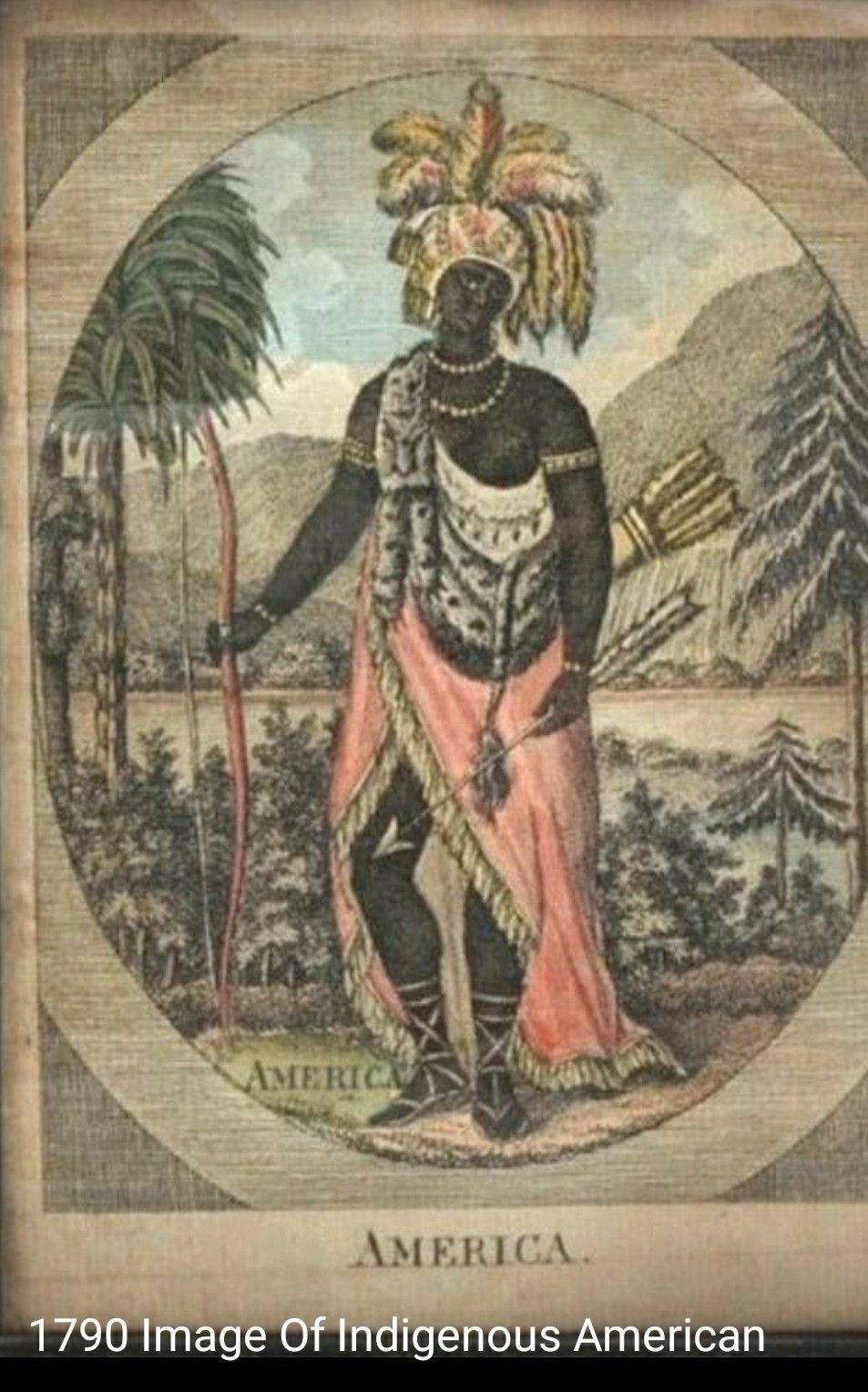
America, c. 1790 — Indigenous Woman as the Living Land
This early representation reflects how America was once understood — Indigenous, sovereign, adorned, and alive. It is not a portrait of a single tribe or individual, but an affirmation of Indigenous presence and continuity before imposed reclassification.
Before colonization, the peoples of this land were many nations with deep roots, languages, laws, and regalia of their own. We were not defined by race, color, or foreign categories, but by kinship, land, clan, and responsibility. Our identities existed long before renaming, reclassification, or erasure. Okla Falama honors the original continuity of the Indigenous American Indian—people of the land who have always been here, who endured, and who remain living today.
We are nations of this land—defined by lineage, language, and culture, not by imposed labels. Our identity did not begin with records, and it did not end with reclassification. Okla Falama stands for that unbroken continuity: the living Indigenous American Indian people.