

A personalised order can look straightforward until the details start to multiply. A batch of mugs, tags or embroidered gifts may have different names, colours and quantities. The price matters, but so does knowing exactly which version the customer has agreed to before anything is made.
That is one of the decisions behind Made & Margin, the personalised product app I built for small workshops. The app is now available, and this is a closer look at why its proof stage matters.
I started with the price. If someone buys blanks in packs, uses a little vinyl or transfer paper on each piece, spends time setting up a design and allows for the occasional failed item, those parts should have a place in the working. Made & Margin lets the maker enter their own pack prices, materials, hands-on and machine time, packaging, delivery and selling fees. The numbers come from the maker; the app does not fetch live supplier prices or marketplace rates.
But a priced quote is only the first part of a custom job. The risk I kept coming back to was a maker moving a job into production because the broad idea had been discussed, while a name or design detail was still unsettled. I wanted the app to make that pause visible.
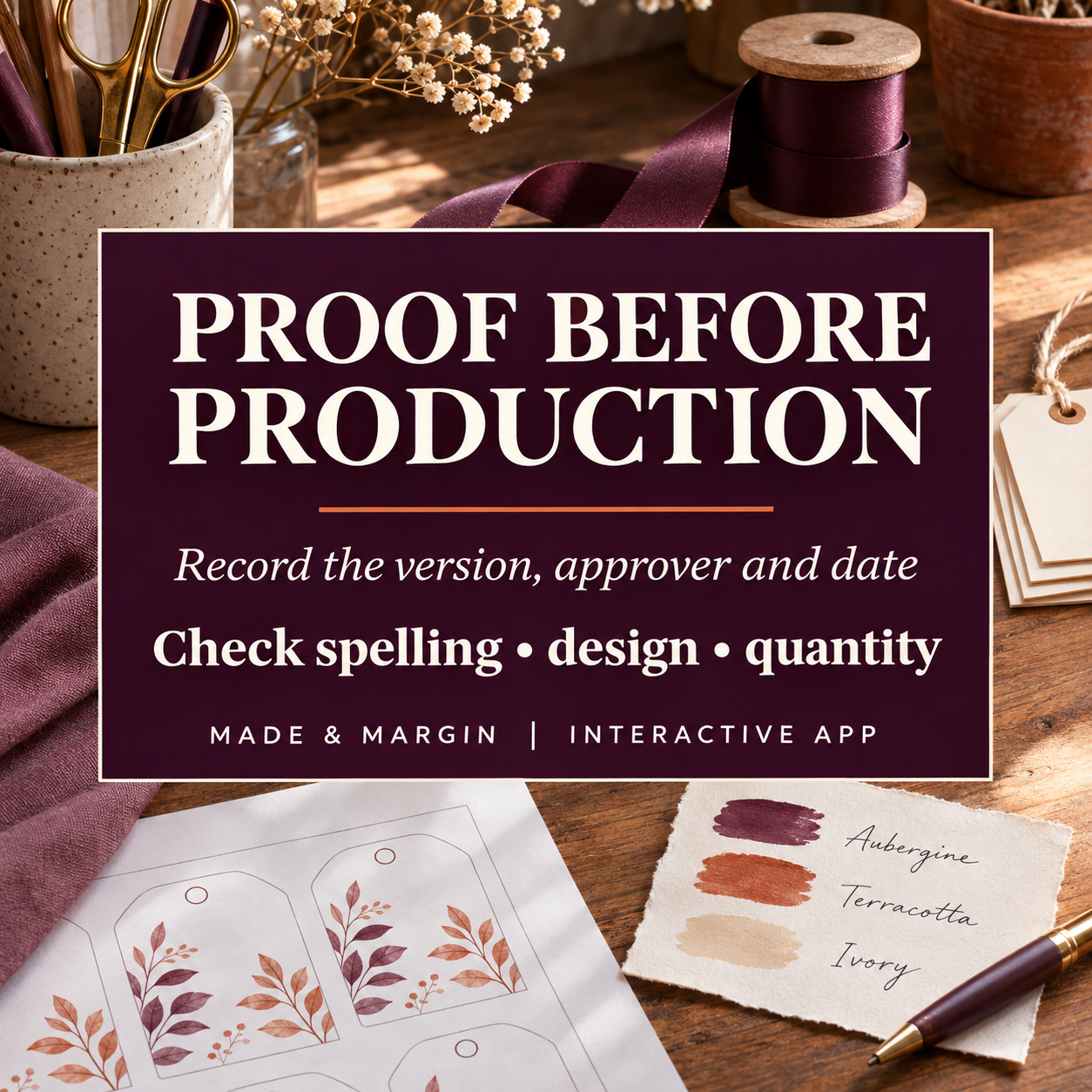
In the current build, a job has an enquiry and proof stage before it can be marked ready or making. The maker records the proof version, who approved it and the date, then checks spelling, design and quantity. That is a record of approval received elsewhere. The app does not send proofs, collect signatures or message the customer.
There is another detail I think matters: an approval belongs to a particular specification. If the personalisation, notes or proof version change after approval, the app clears the recorded checks and returns the job to the proof stage. It is a small piece of friction on purpose. The maker has to confirm the revised details before continuing.
Once the details are settled, the production rail carries the job through making, packing and dispatch. The saved quote keeps its original cost snapshot, so changing a material price later does not quietly rewrite an older order. Stock availability and payments are recorded manually; this is not a stock or payment system.
You can explore the full journey in the released app, from pricing an enquiry through proof, production and dispatch. As with any workshop record, the maker still needs to check the customer's actual approval and their own costs before acting on it.
Comments ()