
Why Understanding Your Leadership Capacity Changes Everything
Terrell Dallas | Citadel S. Systems
What is leadership capacity is one of the most important — and most misunderstood — questions in leadership today.
Here is the quick answer:
Leadership capacity is the total bandwidth a leader has to think clearly, make sound decisions, inspire others, and sustain performance — especially under pressure. It is not just what you know or what skills you have. It is how much you can hold before your judgment starts to slip.

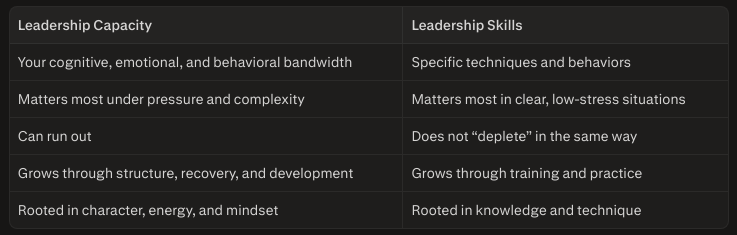
Key differences at a glance
The data tells a sobering story. Only 40 percent of leaders rate the quality of leadership in their organization as high. Just 7 percent of CEOs believe their companies are actually building effective leaders. And only 25 percent of leaders consistently inspire peak performance in their teams. The problem is not effort alone. It is capacity. gallup
I’m Terrell Dallas, Founder of Citadel S. Systems, and since 2023 I have worked alongside founders and senior operators to diagnose where capacity is collapsing and install governance systems that protect it. If you are carrying more than your structure is designed to hold, this guide was built for you. forbes +1
What leadership capacity means
When we talk about what is leadership capacity, we are moving beyond the traditional checklist of leadership. Most management training focuses on what leaders should do. True leadership capacity is about what a leader can hold, process, and sustain without losing clarity. It is the difference between having an answer and having enough bandwidth to use the answer wisely. forbes +1
Within the Enterprise, capacity is a governed resource. It is not infinite, and it is not protected by motivation alone. Every decision, every conflict, every pivot, and every expectation draws from the same internal reservoir, which is why structure matters so much when pressure rises. boardwise octopusventures
Why it matters in a VUCA world
In a world defined by volatility, uncertainty, complexity, and ambiguity, leadership capacity becomes the difference between response and reaction. The modern leader is expected to think fast, stay steady, and make clean judgments while the environment keeps changing. That is not simply a skill challenge. It is a bandwidth challenge. linkedin
This is where the enterprise lens matters. When the market gets louder, when the organization gets heavier, and when responsibility starts routing through one person, the real question becomes whether the leader has enough internal structure to carry the load. If not, the system begins to distort the person. Leadership Burnout
Capacity versus skill
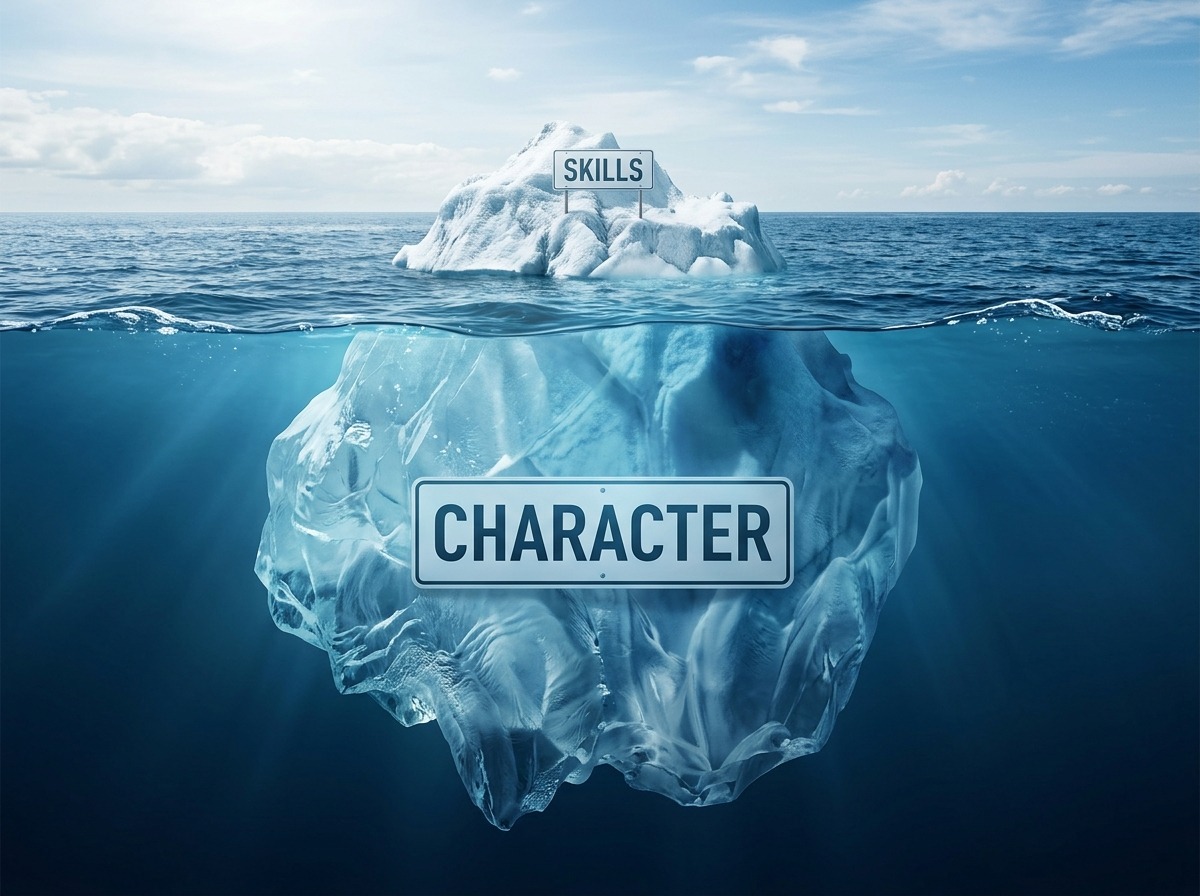
We often use the iceberg metaphor to explain this distinction.
Skills are the visible tip: public speaking, budgeting, running a meeting, writing strategy, or giving feedback. Capacity is the submerged foundation: character, composure, judgment, recovery, and the ability to remain stable when conditions become
The lesson is simple. A leader can be highly skilled and still become ineffective if the foundation beneath those skills is too small. When that happens, the issue is not competence alone. It is load-bearing structure.
The four dimensions of leadership fitness
Building leadership capacity is similar to building physical fitness. No one expects a person to run a marathon without training the heart, lungs, and muscles. In the same way, no one should expect a leader to carry scale, stress, and complexity without developing the internal systems that make endurance possible.
Character as the Foundation
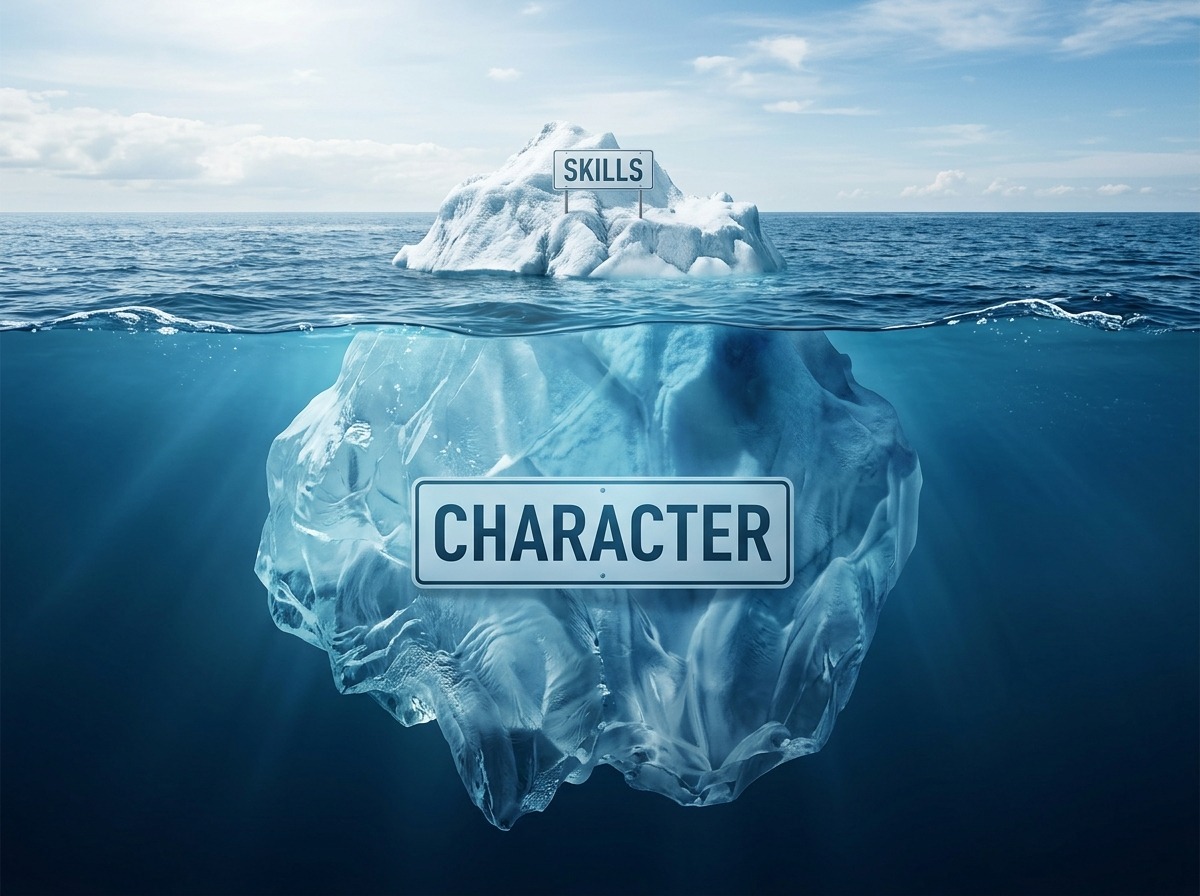
At the bottom of the leadership iceberg sits character. This is not about being agreeable. It is about structural integrity. If a leader’s inner commitments and outer actions do not match, energy leaks everywhere. That leakage shows up as hesitation, confusion, and fatigue. boardwise
Humility also matters because it expands capacity. A leader who can admit limits can use the brains of others instead of carrying every burden alone. Value clarity matters too, because when your values are clear, decisions become less draining. You are no longer deciding from scratch every time; you are aligning with something stable. linkedin
Energy management and cognitive clarity
You cannot lead well if you are running on empty. High-capacity leaders treat sleep, nutrition, and recovery as part of the job, not as side concerns. The best leaders do not just work harder; they manage their energy so their judgment remains usable under pressure. forbes
This is where relief becomes practical. When a leader protects recovery, they protect discernment. When they ignore recovery, cognitive volatility increases, and the organization begins to feel the cost through slower decisions, sharper reactions, and weakened consistency. octopusventures
Why organizations must prioritize capacity
For decades, many organizations have overvalued capability while underestimating capacity. Capability tells you what someone can do in a clean, controlled setting. Capacity tells you what they can still do when the environment becomes noisy, the stakes rise, and the load becomes personal. indeed
That is why burnout is not just about hours. It is about the erosion of judgment under sustained pressure. A company can have talented people and still lose them if the structure around them cannot absorb the weight they are carrying. ninety
The ripple effect of bandwidth
A leader’s bandwidth affects everything around them. If the CEO becomes reactive, the next layer becomes anxious. If the next layer becomes anxious, managers become controlling. If managers become controlling, the culture becomes defensive. Eventually, the organization starts confusing motion for health. gallup
The opposite is also true. When leaders operate from clear capacity, people feel more stable, decisions move more cleanly, and the organization becomes safer for honest work. That is why governance is not bureaucracy in this context; it is relief. diligent
How to build leadership bandwidth
The good news is that capacity is not fixed. It can expand, but not by reading more books alone. It expands through vertical development: changing how a leader thinks, processes pressure, and structures responsibility.
Vertical development
Most training is horizontal. It adds more tactics, more tools, and more information. Vertical development upgrades the operating system. It changes the level at which the leader makes sense of reality. That is the difference between collecting techniques and becoming structurally stronger. reactcreator
Action-reflection cycles help because they force a leader to examine how they thought, not just what they did. Paradigm shifts help because they challenge assumptions that silently limit growth. Contextual coaching helps because it reveals leaks that a leader cannot see from inside the system. Governance systems help because sometimes the issue is not the leader’s will. It is the distribution of responsibility. boardwise
Practical strategies for growth
Digital hygiene matters because constant alerts drain attention. Tactical breathing matters because it helps a leader move from reaction to response. Mentorship matters because a higher-level perspective can show blind spots sooner. And capacity-based goals matter because they shift attention from output alone to the structure that makes output sustainable.
One practical example is simple: instead of setting a goal to sell more, set a goal to delegate three recurring decisions by month-end. That creates relief, frees bandwidth, and begins restoring structure where overload had taken root. diligent
How to measure capacity
If you cannot measure it, you cannot manage it. Capacity may feel soft, but its effects are visible. Strong capacity shows up in strategic patience, emotional regulation, and effective delegation. Weak capacity shows up in snapping, congestion, and the feeling of being mentally depleted even after rest. forbes
Signs of strong capacity
A strong-capacity leader can see beyond the immediate crisis. They can receive hard feedback without collapsing into defensiveness. They trust systems to handle the how so they can focus on the why. That is not passive leadership. It is governed leadership. indeed
Signs of weak capacity
Weak capacity usually appears as decision congestion, reactive behavior, and an inbox that becomes the bottleneck for everything. When that happens, the leader is not merely busy. They are carrying too much responsibility through too few channels. drfinney
Capacity in the real world
High-capacity leadership is not theoretical. Organizations like Morning Star show what happens when leadership responsibility is distributed instead of concentrated. That kind of structure reduces congestion at the top and increases stability throughout the system. gallup
AI adoption offers another example. Leaders with strong capacity do not fear new tools. They use them to automate routine cognitive work so they can spend more time on judgment, strategy, and human-centered leadership. In that sense, technology becomes relief when it is governed well. reactcreator
Frequently asked questions
How is leadership capacity different from leadership skills?
Skills are what you do. Capacity is the bandwidth you have to use those skills effectively when you are tired, stressed, or facing complexity.
Skills are the apps; capacity is the processor, battery, and stability underneath them.
What are the signs of low leadership capacity?
The most common signs are shortened patience, emotional volatility, inability to delegate, and the feeling of being physically present but mentally depleted.
When those signs appear repeatedly, the issue is usually structural, not moral.
Can leadership capacity be increased?
Yes, but not through traditional one-off training alone. It requires vertical development, coaching, recovery discipline, and better governance systems that move responsibility into the right places.
Closing note
Again, I'm Terrell Dallas and I believe the greatest risk to any enterprise is not a lack of talent. It is the erosion of leadership capacity under pressure. When founders and executives are buried under low-level decisions, the organization loses clarity, and the leader loses room to think.
We do not just teach leadership.
We help architect systems that preserve bandwidth, distribute load, and create structural relief.
If you want to go deeper, explore the Founder profile here: Terrell D. Dallas,
and the resource library here: Citadel S. Systems.
The question is not whether you are capable.
It's whether your structure can hold the future you are building.