


Run the Plays You Actually Need to Build a Structure in 30 Days for Life After Sports.
A $27 Post-Game Playbook™ for Athletes navigating transition from the locker room to the office. The scoreboard is gone, but the game isn't over.
"The locker room is empty..."
"Everything depends on me..."
"Build a structure in 30 days to sustain real life pressure..."
You didn’t lose who you are — you lost the structure that used to tell you who you were every single day. The jersey gave you identity without you having to think about it. When it’s gone and nothing replaces that system, the page feels blank for a reason.
That blank page isn’t the end; it’s the first honest signal. Chapter 1 shows you exactly what happened and why it feels this way. If you’re ready to see it clearly, the Playbook starts there.
The lights go out, the schedule disappears, and suddenly there’s nowhere you’re required to be. That silence is the first thing most people try to outrun — more hustle, more noise, more doing.
But the emptiness isn’t a problem with you; it’s the absence of the hidden structure that used to hold everything together. Chapter 1 names that moment so you don’t have to keep guessing what’s missing. The Playbook begins right there.
The transition isn’t scenery — it’s architecture. You’re moving from a world that organized your days, your money, your purpose, to one where you have to build all of it yourself.
Most people try to force the old effort into the new environment and wonder why it feels unstable. Chapter 2 looks at what provision really was in the game and why it feels so different now. The Playbook gives you the map so you don’t have to figure it out alone.
The game gave you rhythm, feedback, teammates, and a scoreboard. The office gives you emails, meetings, and quiet mornings with no one telling you where to be.
That gap isn’t a motivation problem — it’s a structure problem. Chapter 4 shows how effort without the right system turns into carrying everything yourself. The Playbook helps you see the difference between performing and actually leading your own next chapter.
Purpose didn’t disappear — it lost the system that used to deliver it daily. In the game it came from showing up, executing, and being part of something bigger.
Now it feels like you have to invent it from scratch. Chapter 5 explains why effort alone isn’t enough when there’s nothing built to hold it. The Playbook starts by helping you see what’s really going on so you can build something that actually lasts.
The discipline, the consistency, the ability to perform under pressure — all of that is still there. What changed is the system around it. In the locker room those skills were supported and distributed.
Now they’re concentrated on you. Chapter 3 shows how being the most reliable person can quietly become a trap. The Playbook helps you turn those same strengths into a structure that works for you instead of depending on you.
Yes — and it’s not because you’re weak or broken. It’s because the structure that used to carry your effort, your identity, and your provision is gone, and nothing replaced it automatically.
That unsupported responsibility creates a quiet strain most people never name correctly. Chapter 5 looks at why the weight feels personal even when it’s structural. The Playbook gives you language for what’s happening so it stops feeling like it’s all on you.
The empty feeling isn’t a flaw — it’s feedback. The routine didn’t just organize your day; it organized your purpose, your provision, your identity.
When it vanishes, everything starts to route back to you. Chapter 6 introduces the silent count — the pause before you automatically carry what arrives. The Playbook shows you how to start seeing clearly instead of just moving faster.
NIL taught you how to monetize your name and story — but it was still inside a system that handled most of the structure.
Now that system is gone, and the provision depends on you keeping it going. Chapter 2 looks at what provision really was and why it feels unstable without the right architecture. The Playbook gives you the first steps to build something that continues even when you pause.
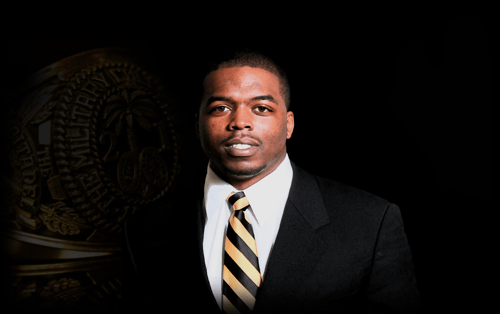
My name is Terrell Dallas.
In life after sports, I experienced confusion, doubt, and loss of support.
After I "figured it out," I founded an Enterprise — now, I architect governance structures that preserve leadership capacity in high-stakes environments.
I work with founders, senior executives, managing partners, operators, and athletes when complexity increases and leadership load begins to carry more than it should.
I specialize in Leadership stability, mapping authority, and installing Systems to preserve Executive endurance.
This work precedes clarity as the evolution of "coaching."
It is Leadership Preservation.
Professional.
Confidential.
Private.
Journals, Publications, and Weekly Insights