
You finished a meal, and a thought arrived quickly: “I ruined today.” It may urge you to skip the next meal, make a stricter rule, or start over tomorrow. Before acting on that thought, you can pause and look at what actually happened. This short visual reset gives you three questions to try. It is based on the approach behind The Next Meal Reset, an illustrated workbook developed from Kota Tominaga’s work on appetite and diet guilt.
Why one meal can feel like a verdict
The story that follows the meal
Imagine you ate differently from what you planned. The event is one meal. The story might be, “I have no self-control,” “The whole day is wasted,” or “I need to make up for this.” The story can feel urgent even though it is an interpretation, not a complete account of the day.
That distinction matters. If the thought becomes a command, the next action may be chosen to silence guilt rather than to meet your actual needs. An ordinary next meal can start to look like a punishment or a test.
When a food rule becomes a test
Rules can be useful shortcuts, but they can also turn eating into a pass-or-fail exercise. A restaurant dinner, a late workday, or a shared dessert may not fit a rigid plan. That does not tell you everything about your choices or your worth. Cleveland Clinic describes how food shame and all-or-nothing food rules can feed guilt when a personal rule is broken.
The question here is what you need to understand before choosing what comes next.
Step 1 — name the thought
Put words around the moment
Try one neutral sentence about the event: “Dinner happened later than planned,” or “I had a larger portion than I expected.” Then write down the thought that followed: “I ruined today.” Keeping the event and the thought on separate lines helps you see the difference between them.
If writing is inconvenient, you can say both sentences quietly to yourself. The aim is observation, not a perfect analysis.
A thought is information, not an instruction
Ask: “What is this thought asking me to do?” If the answer is “skip food,” “make a harsh rule,” or “exercise to repay the meal,” pause before deciding. You are allowed to notice the pressure without agreeing to it.
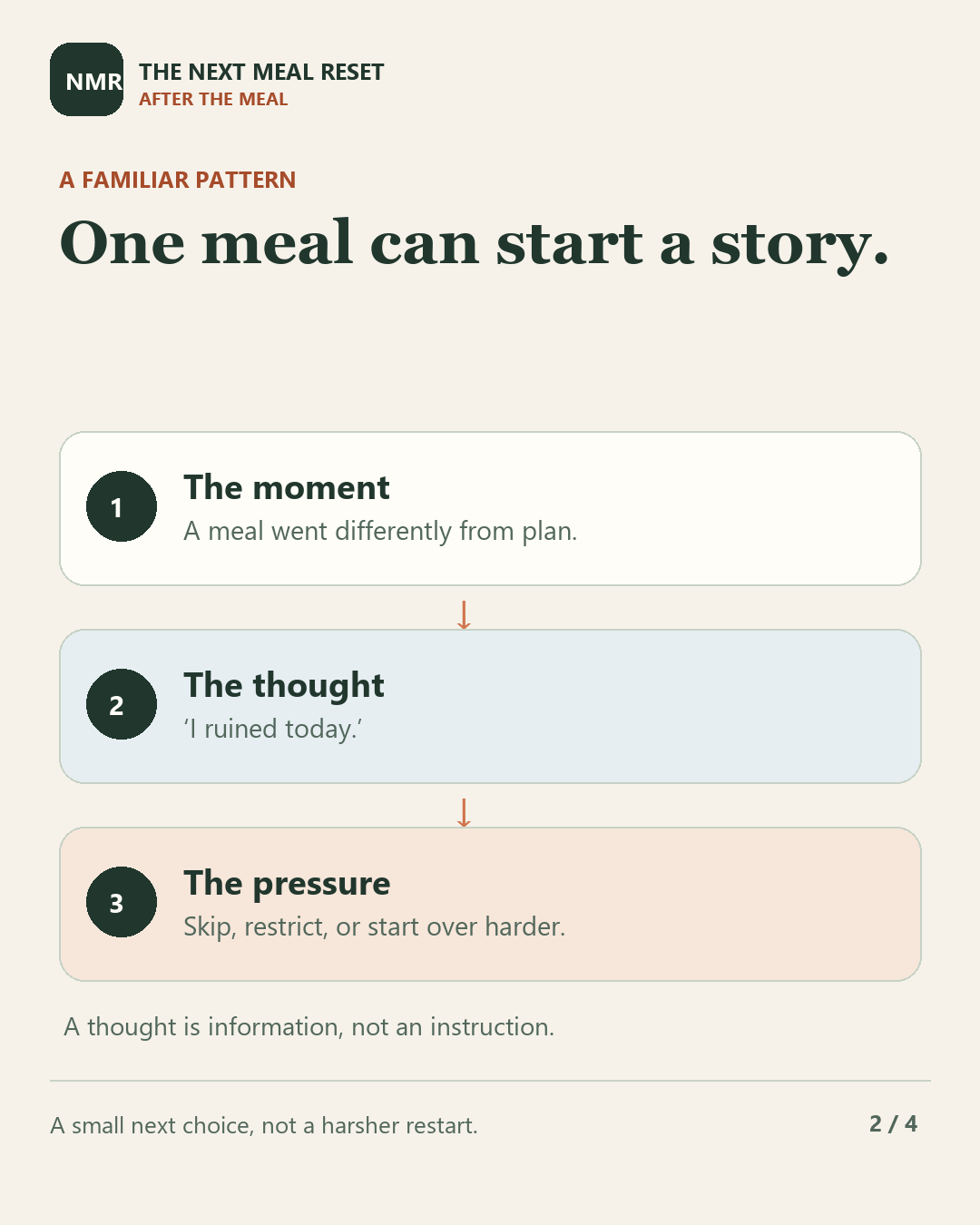
The first diagram maps this familiar path: a moment, a thought, and then pressure to restart more strictly. Seeing the path can make the next choice easier to consider.
Figure 1 — The pattern: One meal can start a story. The moment → “I ruined today” → pressure to skip, restrict, or restart harder.
Step 2 — look at the context
Time, energy, and options
Ask three concrete questions: When did I last eat? How much energy did today take? What food was actually available? You do not need to defend the meal to answer them. You are gathering information that a pass-or-fail verdict leaves out.
For example, a snack after a long day may be connected to timing, fatigue, or limited options. You can use that information to plan for the next similar day, without turning this one into a character judgment.
People and plans
Social meals have their own context. Who were you with? What mattered about the occasion? Did your schedule change? Enjoyment, connection, culture, and practical needs can all be part of a meal. A flexible plan can make room for them.
This is the distinctive question in The Next Meal Reset: what was happening around the food? The answer can reveal a small, useful next step that a stricter rule would miss.
Step 3 — plan the next ordinary meal
Leave repayment out of the plan
The next meal does not need to settle an account with the previous one. Instead of asking how to “undo” what happened, ask what would make the next eating moment workable. That might mean checking your schedule, noticing hunger, arranging accessible food, or returning to an established plan from your own clinician.
This article is not individualized nutrition advice. If you have a medical condition, an eating disorder, or a treatment plan, follow your qualified care team’s guidance.
Make the next step practical
Try this three-line note:
Thought: “I ruined today.”
Context: “Dinner was late, and I was tired.”
Next choice: “I will plan an ordinary next meal that fits tomorrow’s schedule.”
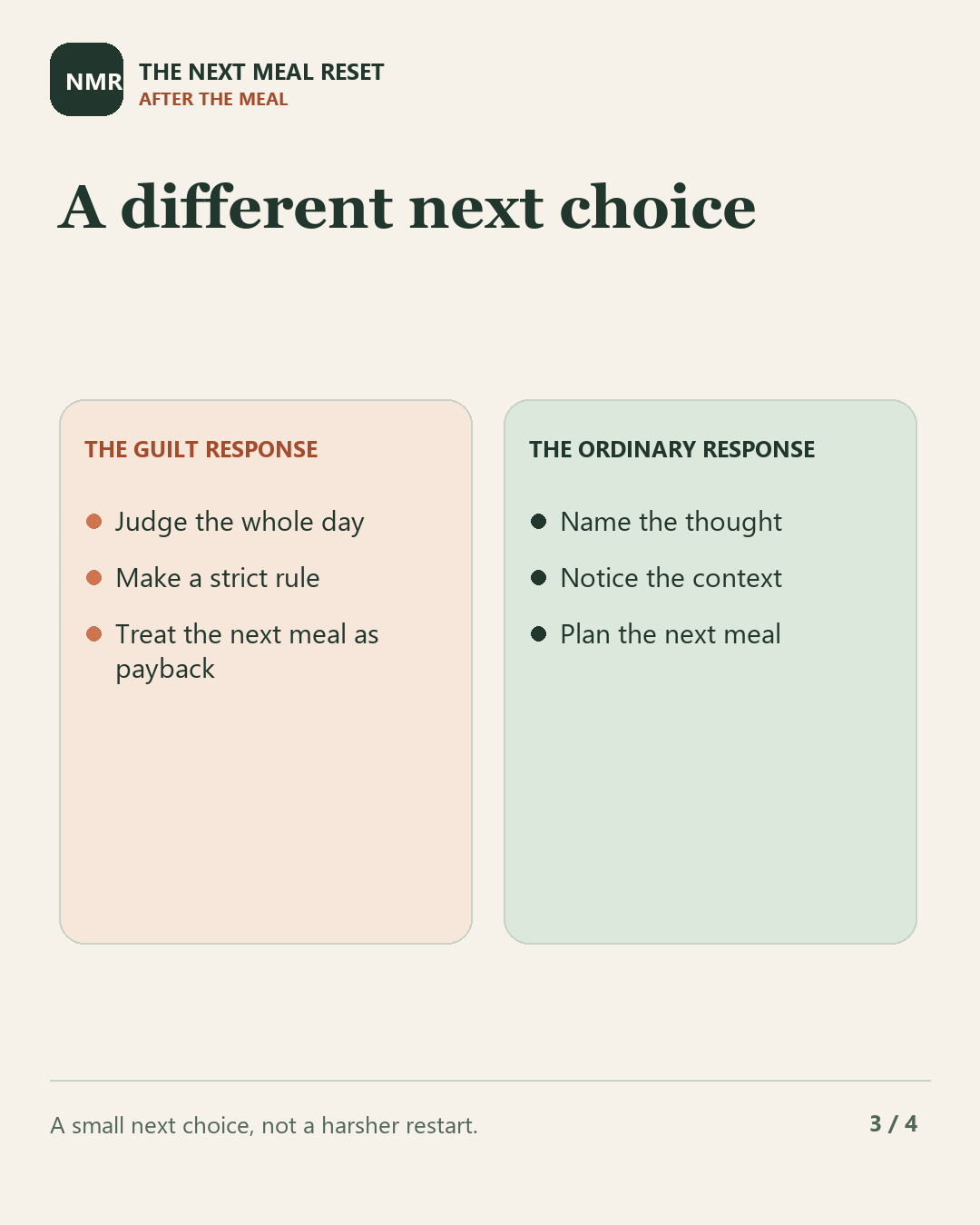
The second diagram compares two paths: a guilt response that adds rules and an ordinary response that names the thought, notices the context, and plans the next meal.
Figure 2 — Two paths: Judge the whole day → make a strict rule → use the next meal as payback; or name the thought → notice the context → plan the next meal.
Try the reset in real life
After a long day
You ate a snack while finishing work and now feel you should “be stricter” tomorrow. Try: “I was working late. I can notice when I last ate and what was available. What would make tomorrow’s long afternoon easier?” The answer might be a practical option for food or a pause in your schedule. It does not have to be a vow.
After a restaurant or celebration
You enjoyed a meal with friends, then started replaying it. Try: “I was sharing a meal with people I care about. My next choice can respect both my needs and the occasion.” If a specific practical lesson appears, write it down. If none does, you do not need to invent a penalty.
These examples are prompts, not rules. Adapt the words to your circumstances and the advice of your care team, if you have one.
When to seek more support
Notice the level of distress
Food guilt can be painful. If thoughts about eating are frequent, intense, or changing how you live, a worksheet may not be enough. The National Eating Disorders Association lists overwhelming shame and guilt after eating among signs that deserve attention, particularly in the context of eating disorder relapse.
Speak with a qualified professional
A qualified clinician or eating-disorder specialist can help you work out what kind of support fits your situation. Seek medical advice promptly for concerning symptoms such as vomiting after meals, feeling faint, or severe restriction. You deserve support without waiting for a problem to look a certain way. The NHS explains what to look for and how to seek help.
A small way to keep practicing
Try the free one-minute card
Want a small first step? Get the free four-page reset card and printable worksheet: https://payhip.com/b/IGpuM
Read the free sample
If the three-line note feels useful, preview the first 15 pages of The Next Meal Reset at https://payhip.com/b/P2qzh. The sample shows the format and the first visual guides before you decide whether to buy.
Use the workbook at your own pace
The full 132-page PDF includes 20 modules, 40 diagrams, reflection questions, everyday examples, and a suggested 30-day route. You can start with the situation that fits your day and return to earlier pages when you need them. The workbook is educational self-reflection; it does not treat an eating disorder or promise weight loss.
Sources and support: Cleveland Clinic on food shaming: https://health.clevelandclinic.org/food-shaming ; National Eating Disorders Association on relapse signs: https://www.nationaleatingdisorders.org/relapse/ ; NHS overview of eating disorders and getting help: https://www.nhs.uk/mental-health/feelings-symptoms-behaviours/behaviours/eating-disorders/overview/ . This English article and its diagrams were newly developed based on Kota Tominaga’s approach.