
Year 10 Nervous Control and Thermoregulation Assessment Pack: Life Processes (2027 science curriculum)
Everything you need to gather and judge evidence for Year 10 Life processes (nervous control and thermoregulation) against the five progress descriptors: practicals, conversations, student work and tests.
DESCRIPTION
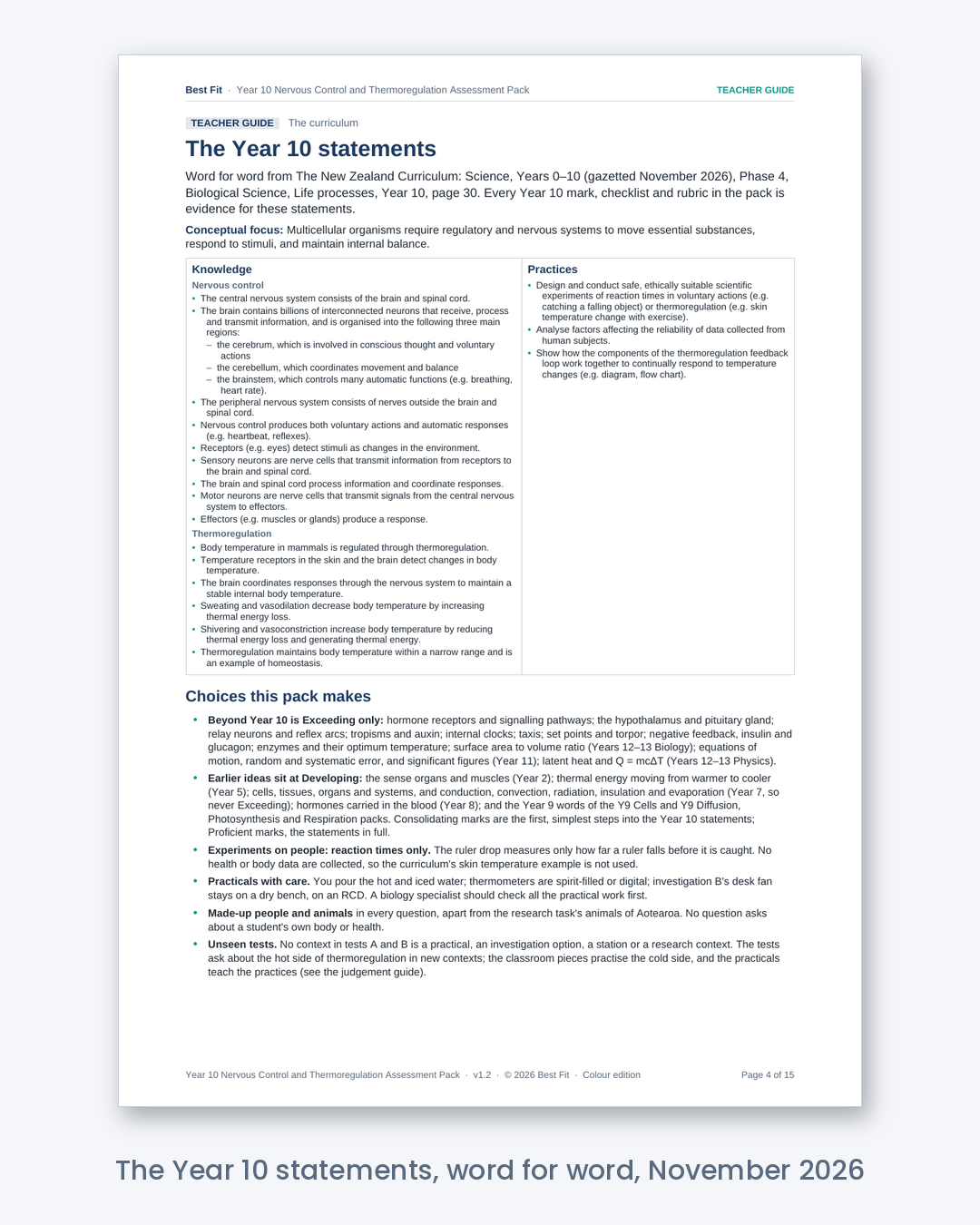
Built for Science Years 0–10 (gazetted November 2026), Phase 4, Biological Science: Life processes, Year 10 (nervous control and thermoregulation). Every Year 10 knowledge and practice statement is quoted word for word in the teacher guide and mapped to the evidence that shows it.
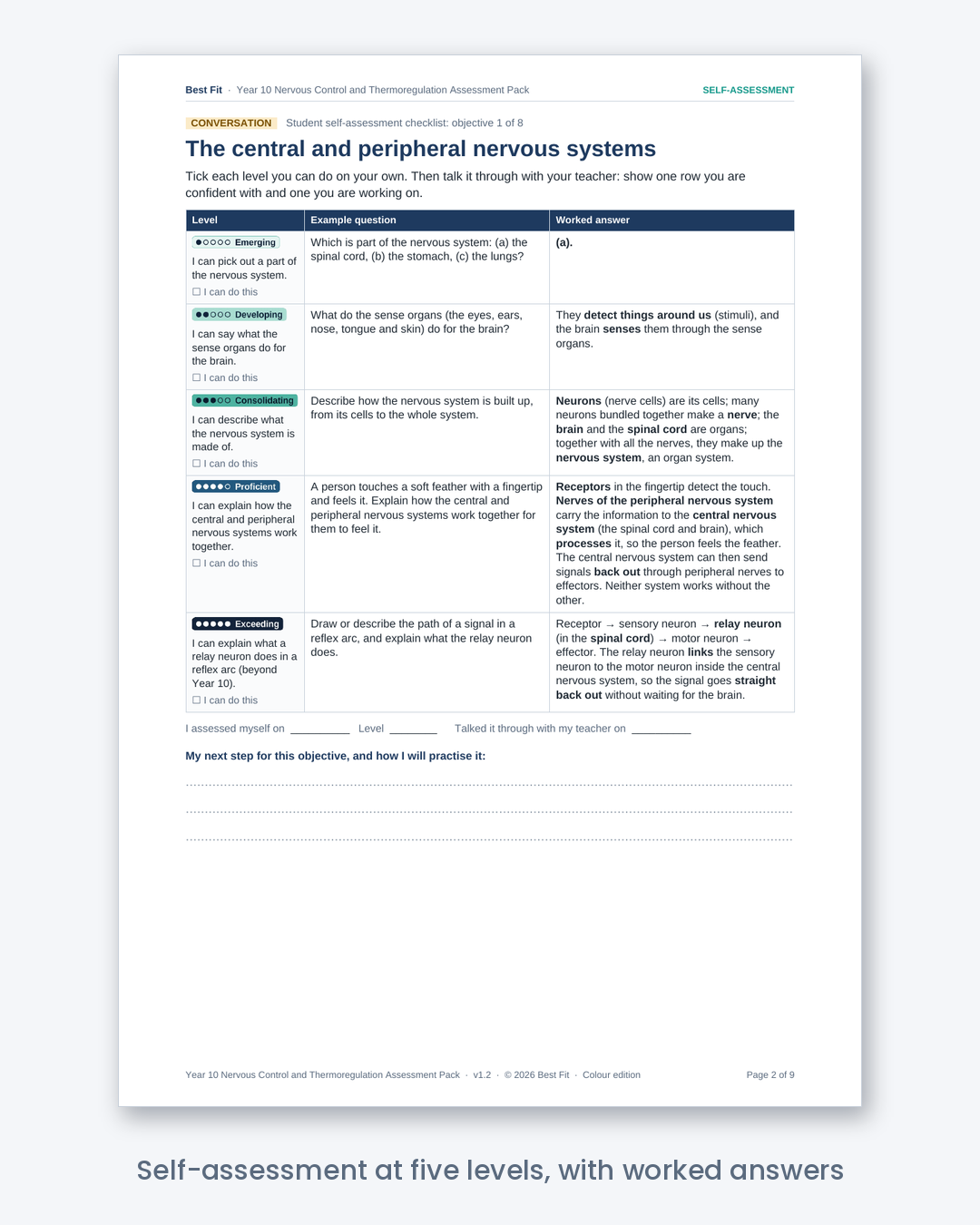
Eight sections: the central and peripheral nervous systems · the brain's three main regions · from stimulus to response · voluntary actions and automatic responses · reaction times: data from people · sensing temperature · cooling down and warming up · homeostasis: the feedback loop.
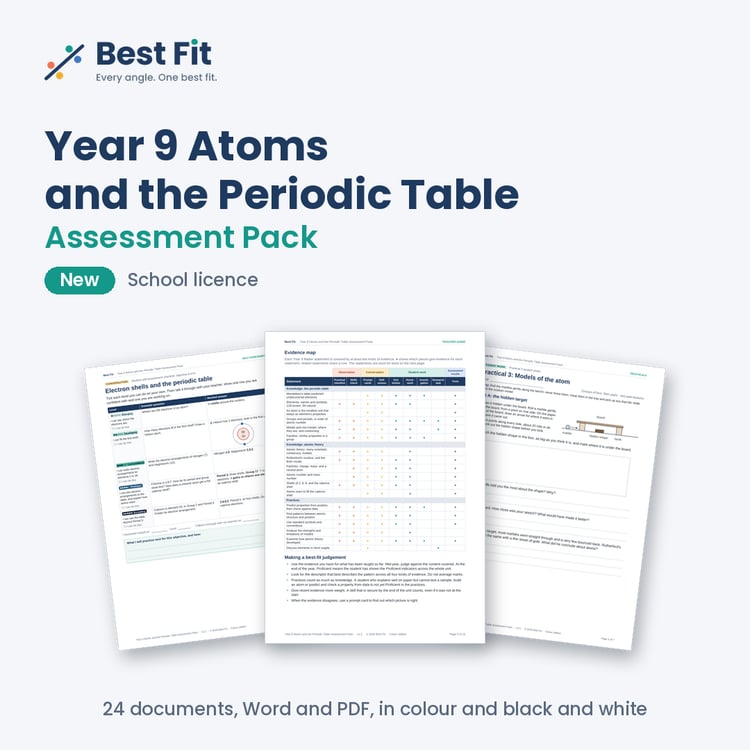
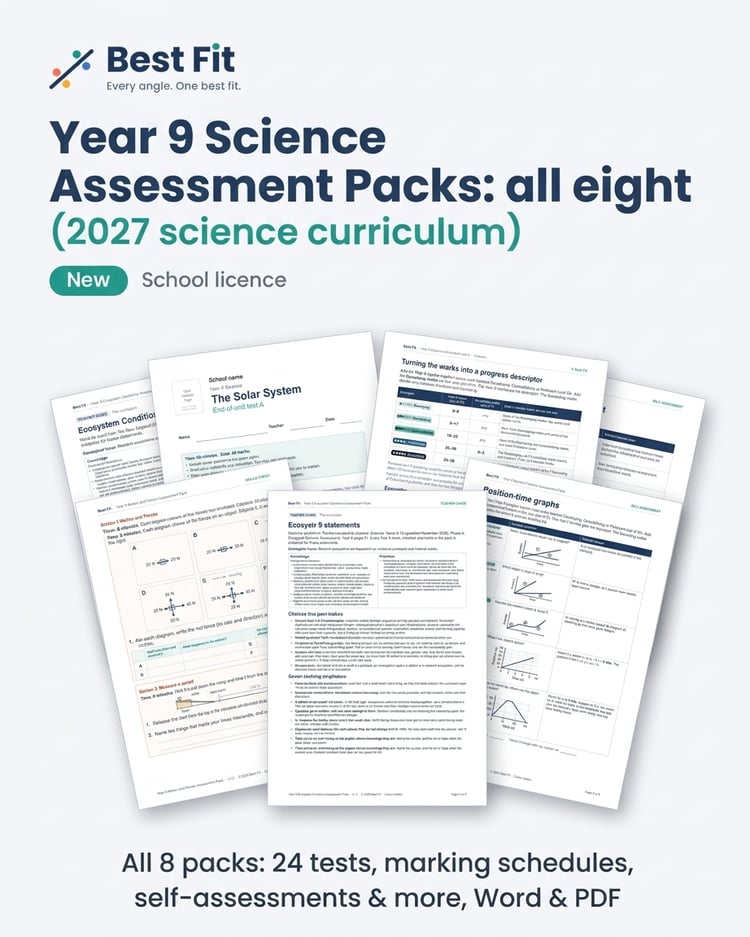
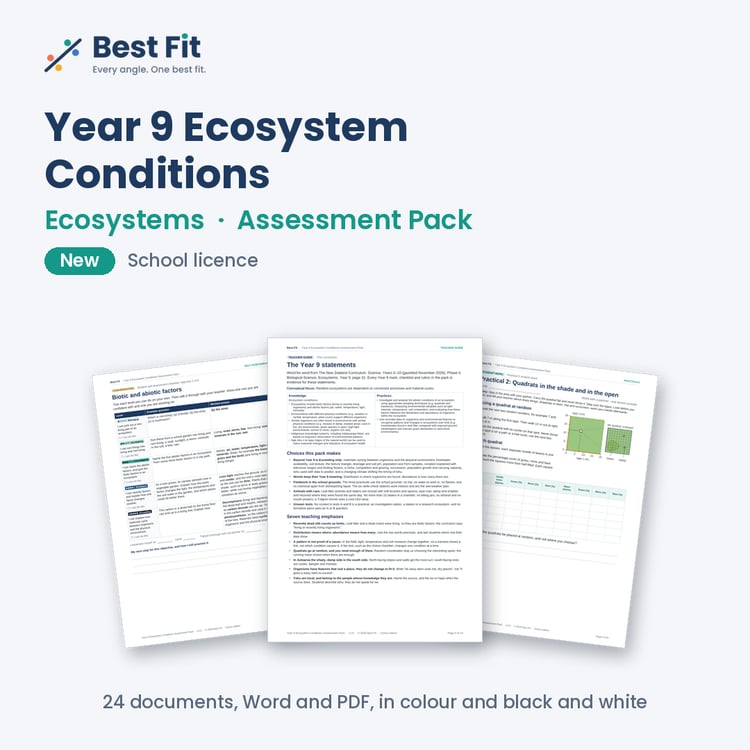
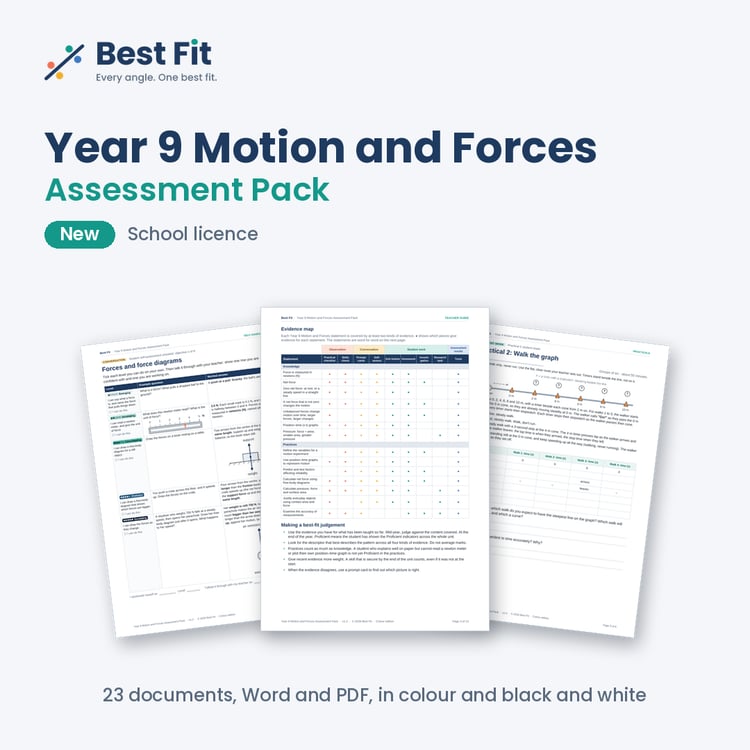
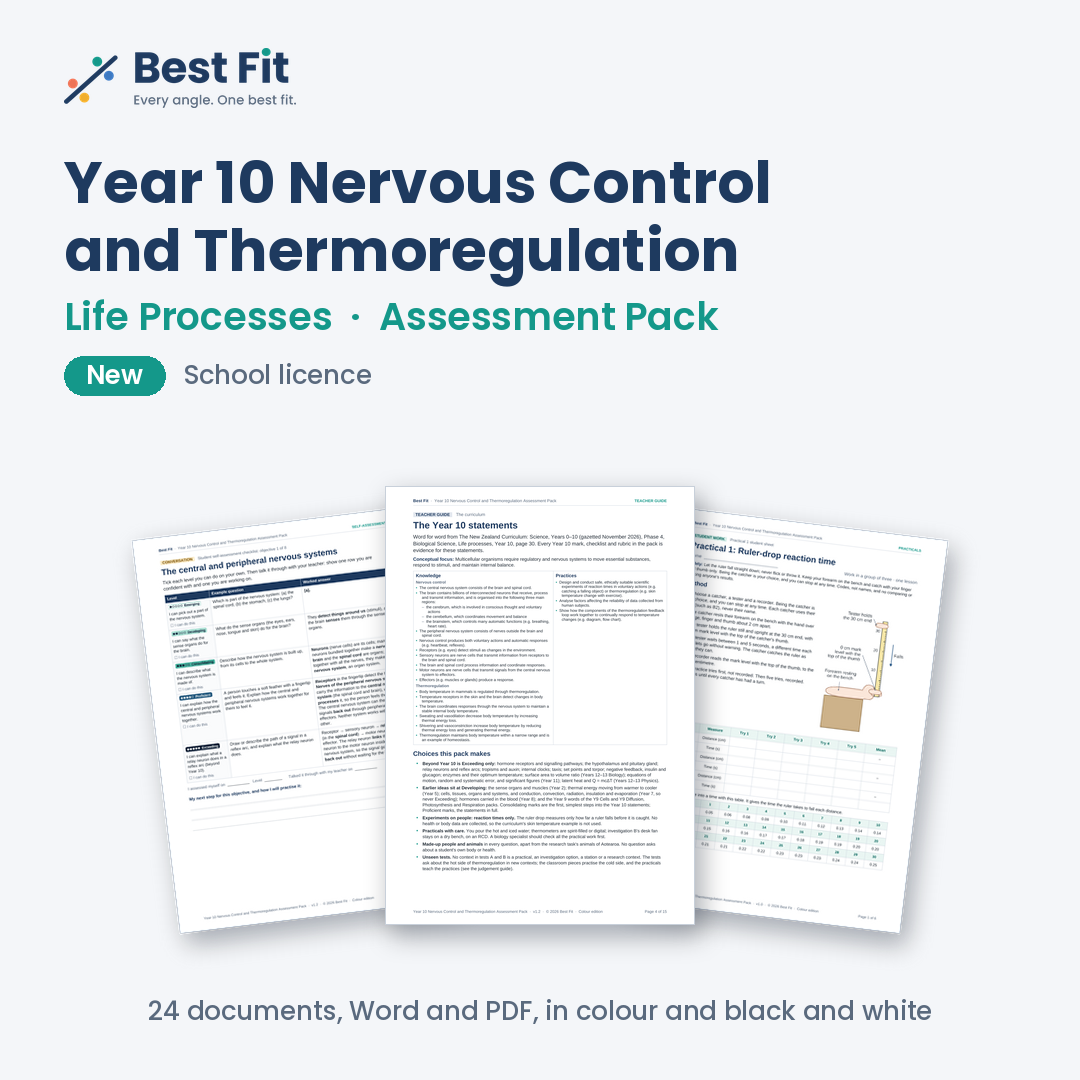
What's inside: 24 documents, each as a Word file and a PDF, in a colour edition and a black-and-white edition.
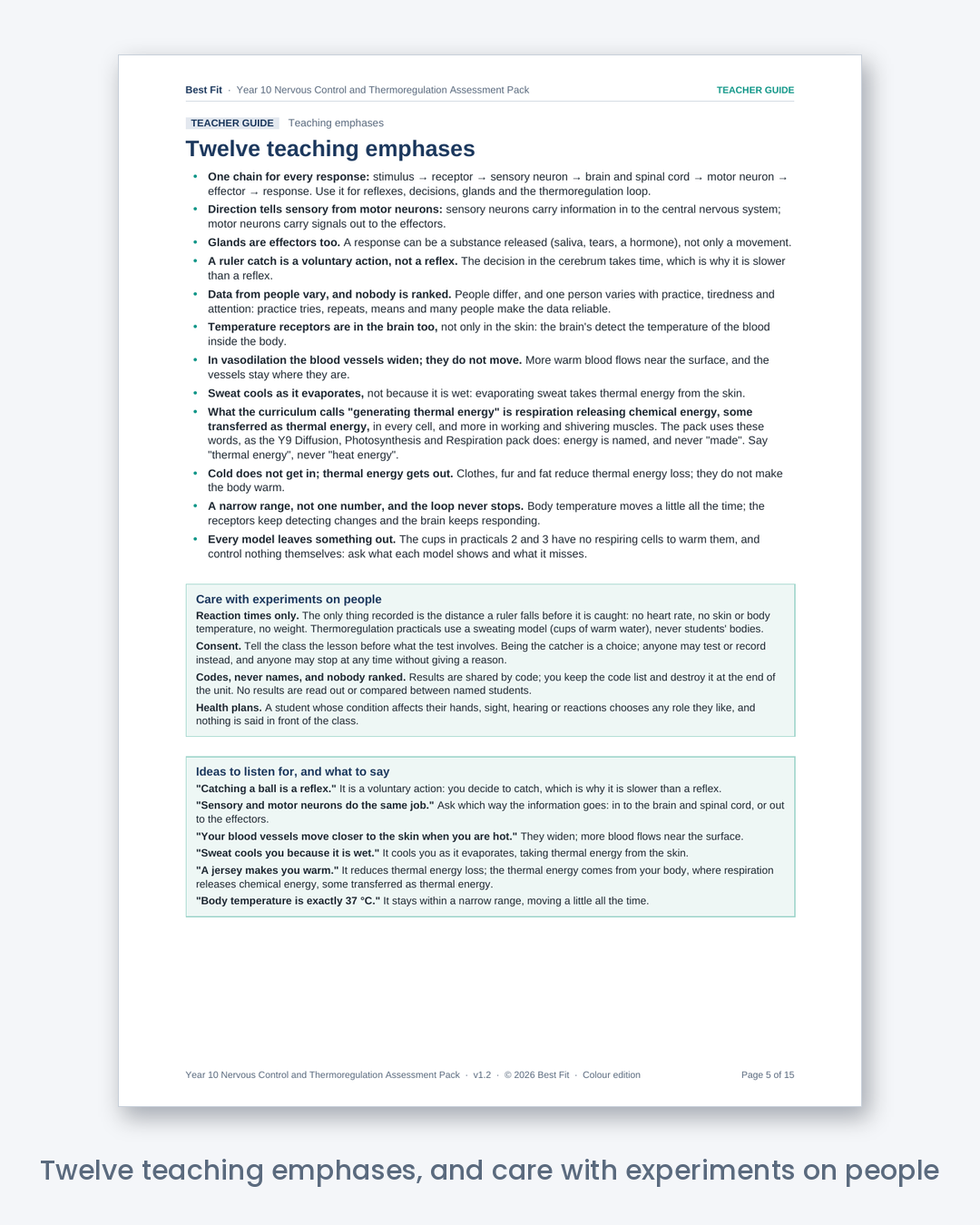
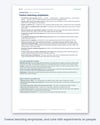
- Start here: a teacher guide with twelve teaching emphases, care with experiments on people, descriptor indicators for every section, an evidence map, a teaching plan, judgement guides, an optional lamb's brain, and a list of every line about the animals of Aotearoa and every te reo Māori word for your kaiako Māori to check.
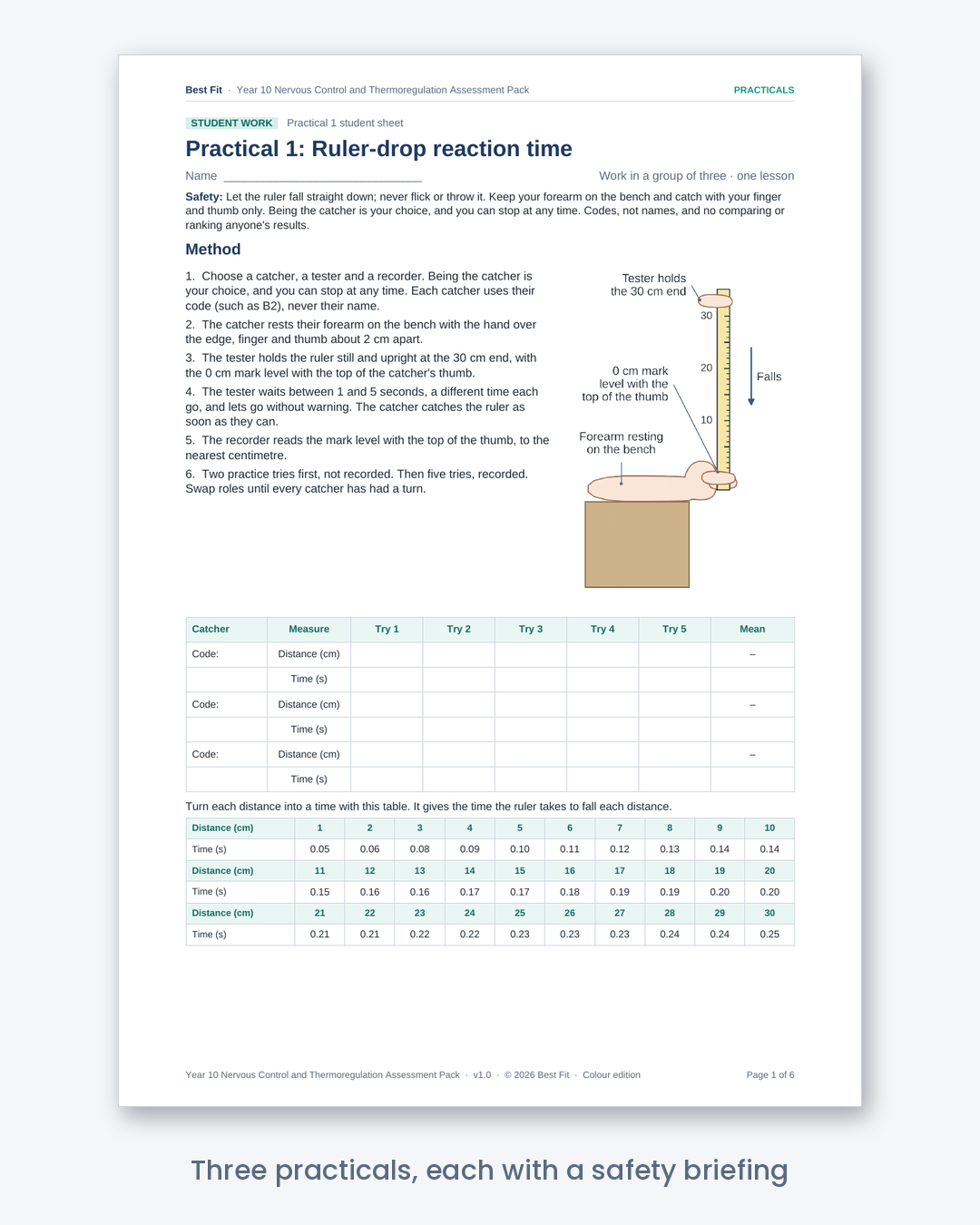
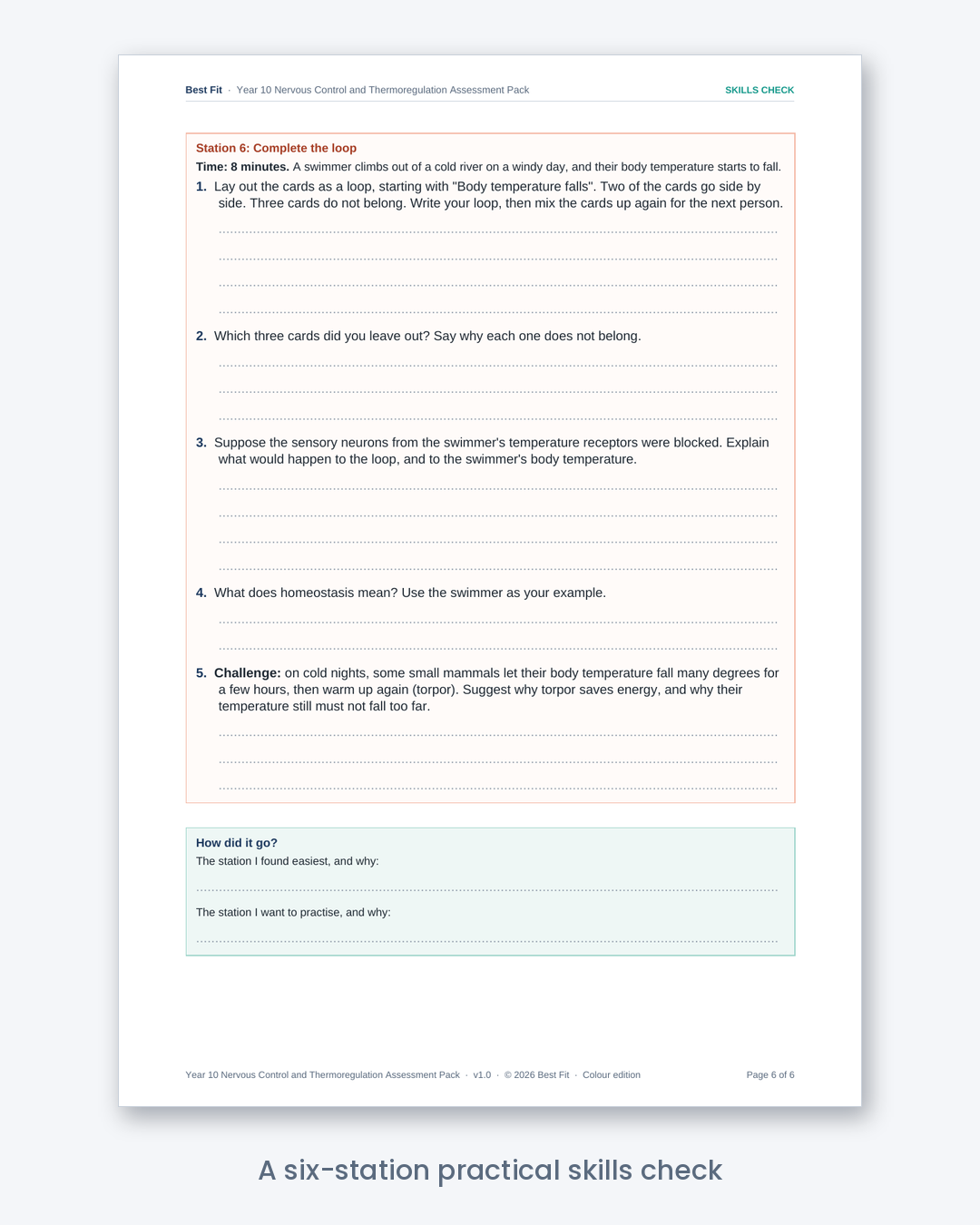
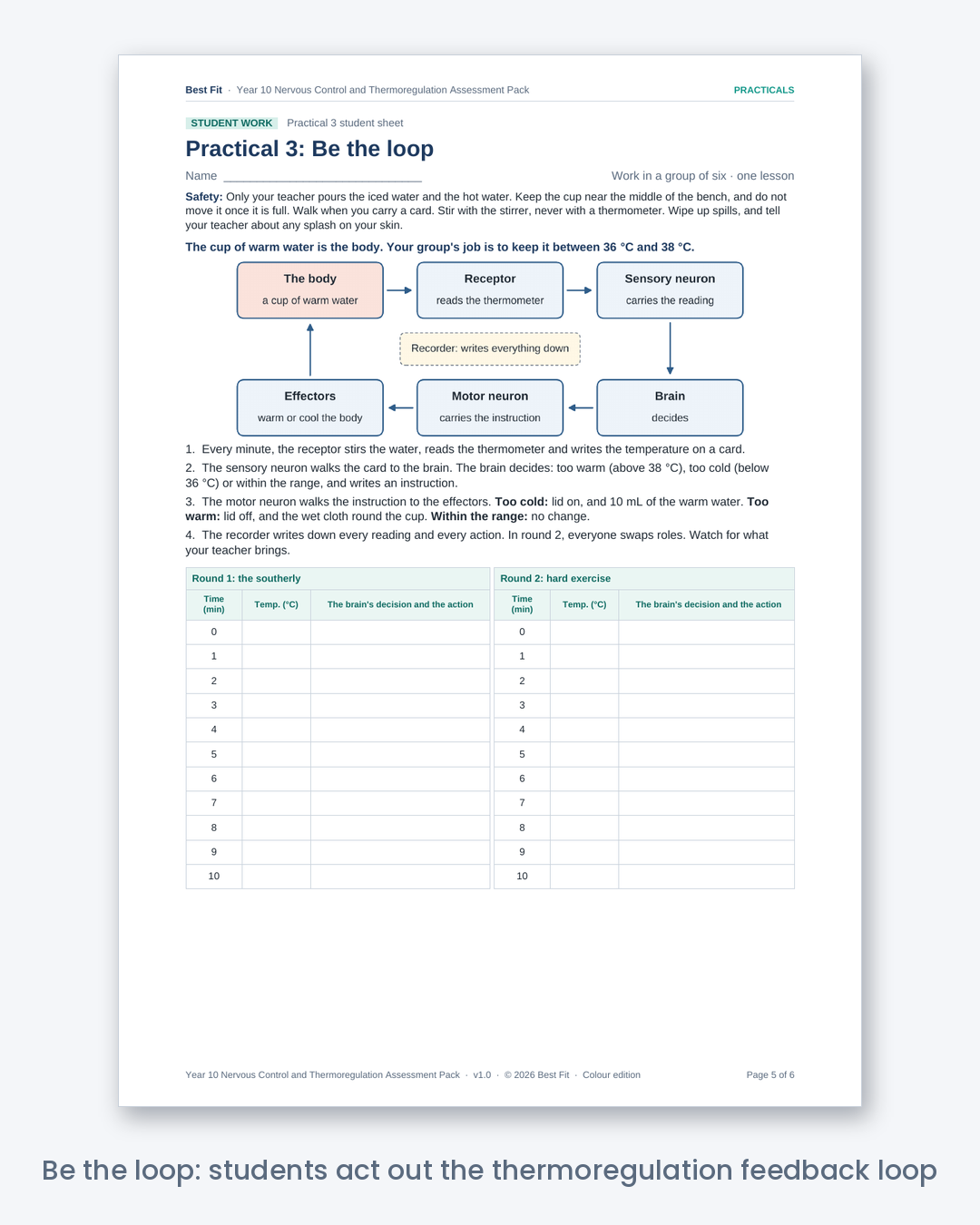
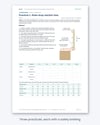
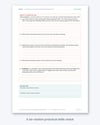
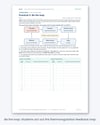
- Observation: three practicals (Ruler-drop reaction time · The sweating model · Be the loop, where students act out the thermoregulation feedback loop) with teacher notes, safety briefings, student sheets and observation checklists, plus a six-station practical skills check with printable card sorts.
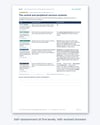
- Conversation: four prompt cards, a self-assessment (eight objectives at five levels, each with an example question and a worked answer) and an I can checklist.
- Student work: eight exit tickets, printed two to a sheet, with teacher keys; four homework tasks with answers; an investigation in two options sharing one rubric (a factor that changes reaction time, or a factor that changes how fast the sweating model cools), with back-up class results; and a research task, "Keeping warm and keeping cool in Aotearoa" (kekeno, pekapeka, kororā or sheep after shearing, with dairy cows as an optional swap), with a rubric.
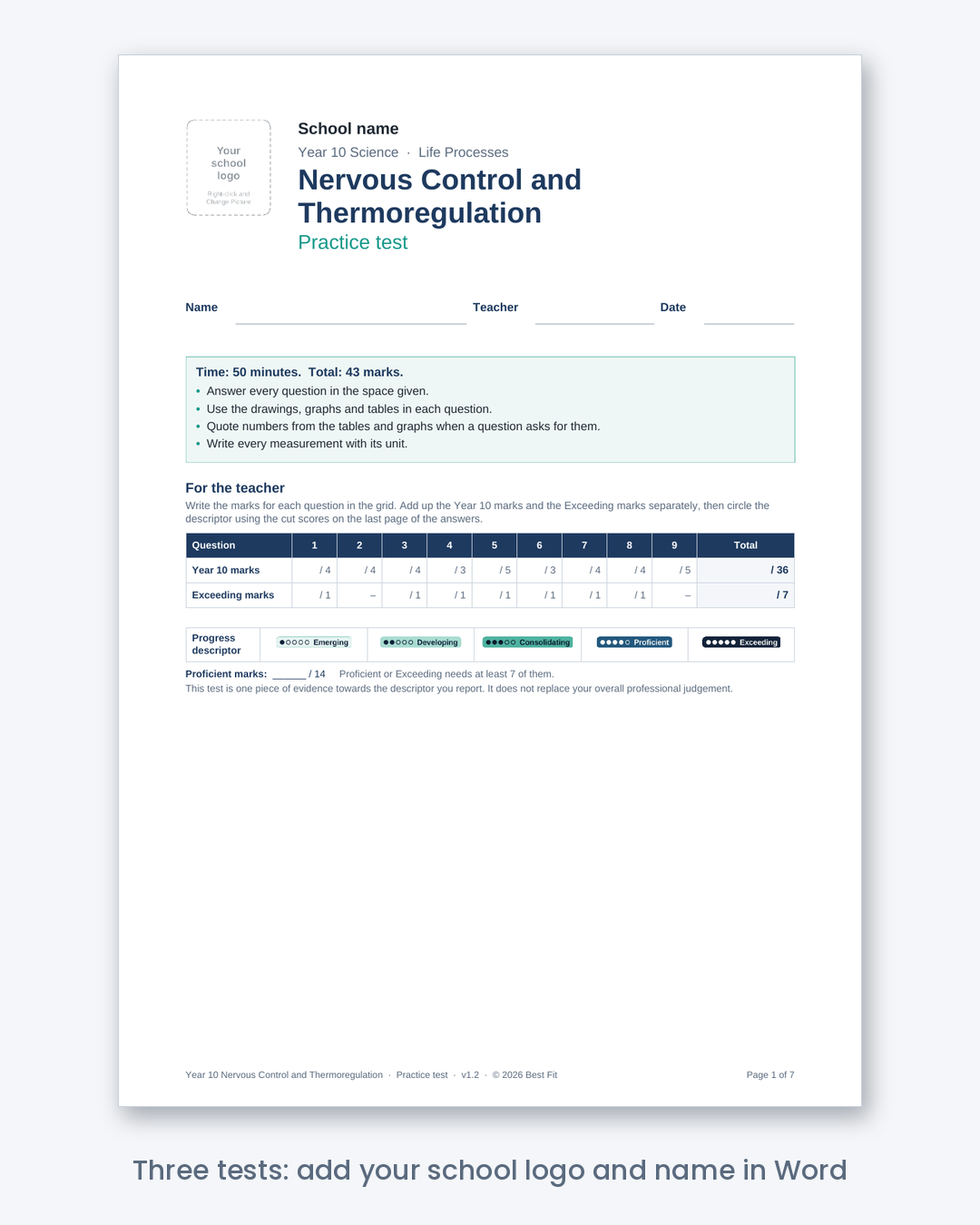
- Assessment results: a practice test and parallel end-of-unit tests A and B, each with 36 Year 10 marks and 7 Exceeding marks, marking schedules and cut scores. Editable Word copies let you add your school's logo and name.
- Tracker: an evidence tracker that brings everything together into one best-fit judgement.
Good to know
- Experiments on people measure reaction times only: consent, the right to stop, codes instead of names, nobody ranked, and no heart rate, skin temperature or weight.
- Thermoregulation is modelled with cups of warm water in wet and dry cloth, never measured on students. The teacher pours all hot water, and every practical is flagged for a biology specialist to check against your school's rules.
- "Thermal energy", never "heat energy".
- Animal facts from Te Ara, the Department of Conservation, the Ministry for Primary Industries and DairyNZ, with every line flagged for your kaiako Māori to check before you teach.
- Ideas beyond Year 10 (hormone receptors, reflex arcs, tropisms, internal clocks, random and systematic error, latent heat, negative feedback, enzymes and more) appear only in Exceeding marks.
- Unseen tests: no test context is a practical, an investigation, a station or a research animal. The tests ask about the hot side of thermoregulation in new contexts; the classroom pieces practise the cold side.
- No marks beside the questions on student papers: the marks are in the answers, and every mark names the descriptor it is evidence for.
- Free sample pages available for the Year 9 Electricity Assessment Pack so you can check them out before you buy: https://payhip.com/b/7NAoc
- Pairs with the other Y10 Science Assessment Packs or will all Junior Science Assessment Packs through the bundles.
- Add the report builder upgrade once it is released and it writes copy-ready report comments that fit your reporting system's character limits. [Free sample: https://payhip.com/b/DYCBE]
School licence: every teacher and student at one school may use and copy these files, including on your school's learning platform. Please don't share them outside your school.
Best Fit is not registered for GST.