

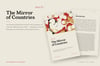






The Mirror of Countries — An Ottoman Admiral's Walk Home From India, 1554–1557 (PDF + EPUB)
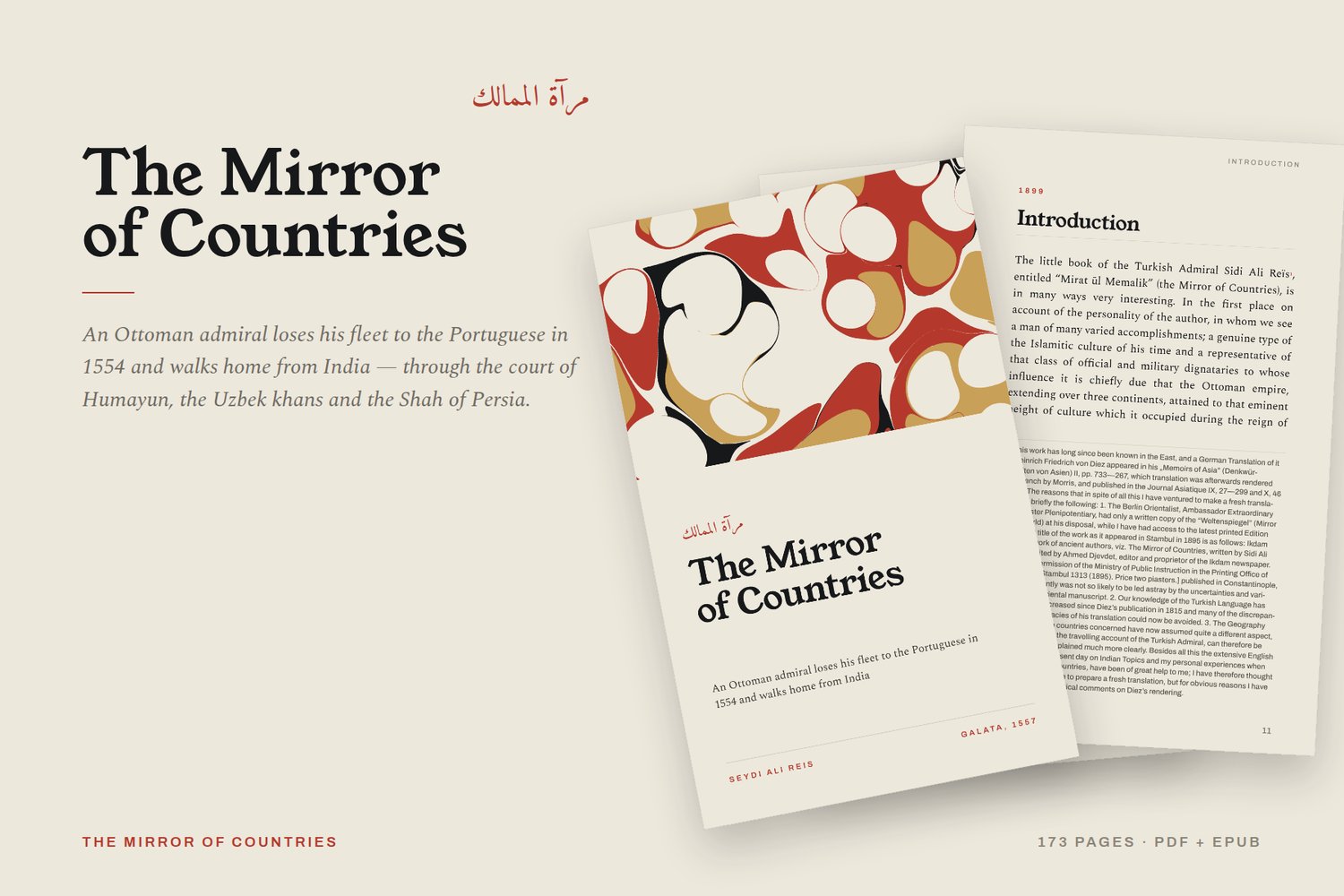
In 1554 Seydi Ali Reis sailed out of Basra with fifteen galleys and orders from Suleiman the Magnificent to bring them home. He fought the Portuguese twice off Oman, lost what was left of the fleet to the monsoon, and washed up in Gujarat on the wrong side of Asia. He sold the galleys, made the buyer sign a note promising to pay Constantinople, and set out to walk back with about fifty men.
It took four years.
He crossed Sind in the middle of a succession war. He reached Lahore in October 1555 and was held there until the emperor had seen him. Humayun received him at Delhi with four hundred elephants — and then would not let him leave, setting him instead to calculate eclipses with the court astrologers and telling him that with a year's more practice his verse would supplant the greatest poet in the Chagatai language. Then Humayun fell on the stairs of his library and died, and it was the shipwrecked Turkish admiral who told the panicking court how to conceal an emperor's death until the heir could be crowned.
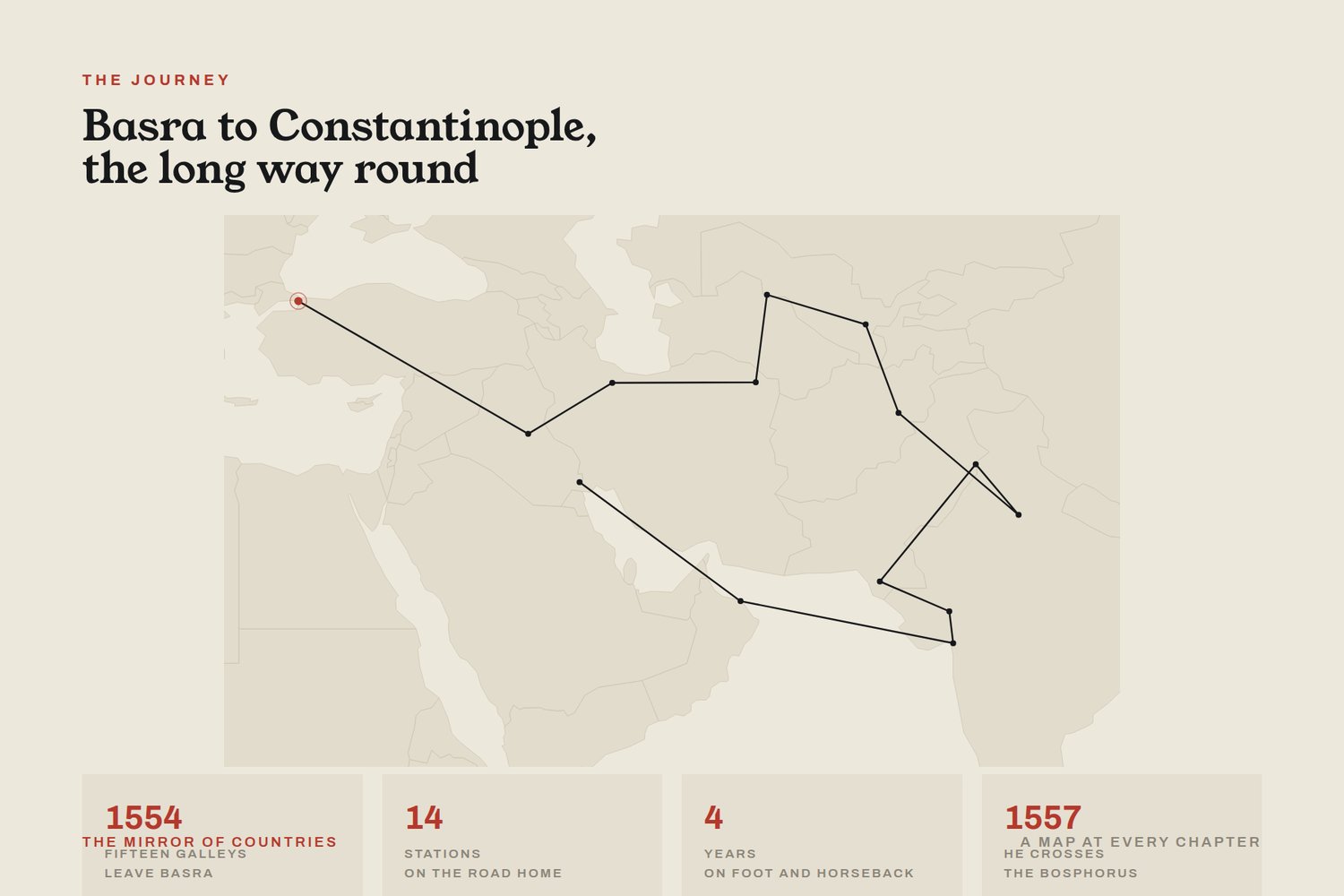
He went on: Kabul, the Oxus in boats, Samarkand, Bukhara, ten days of desert into Khiva, an argument with Shah Tahmasp's theologians, Baghdad. He crossed the Bosphorus in May 1557 and rode to Edirne to face the Sultan whose fleet he had lost. Suleiman kept him.
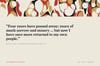
The Mirror of Countries is the book he wrote that summer, though he admitted it ought to have been called a tale of woe.
This edition
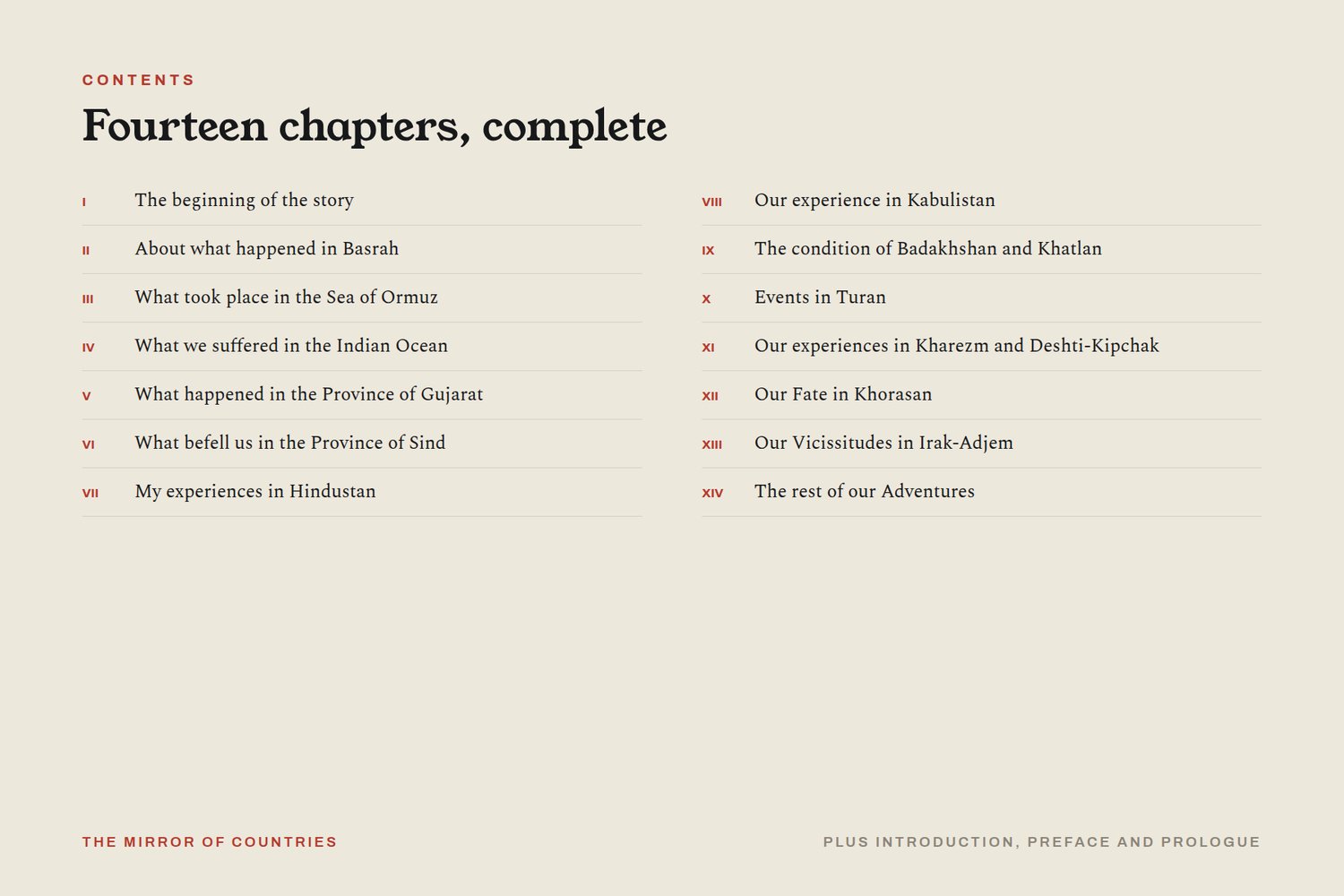
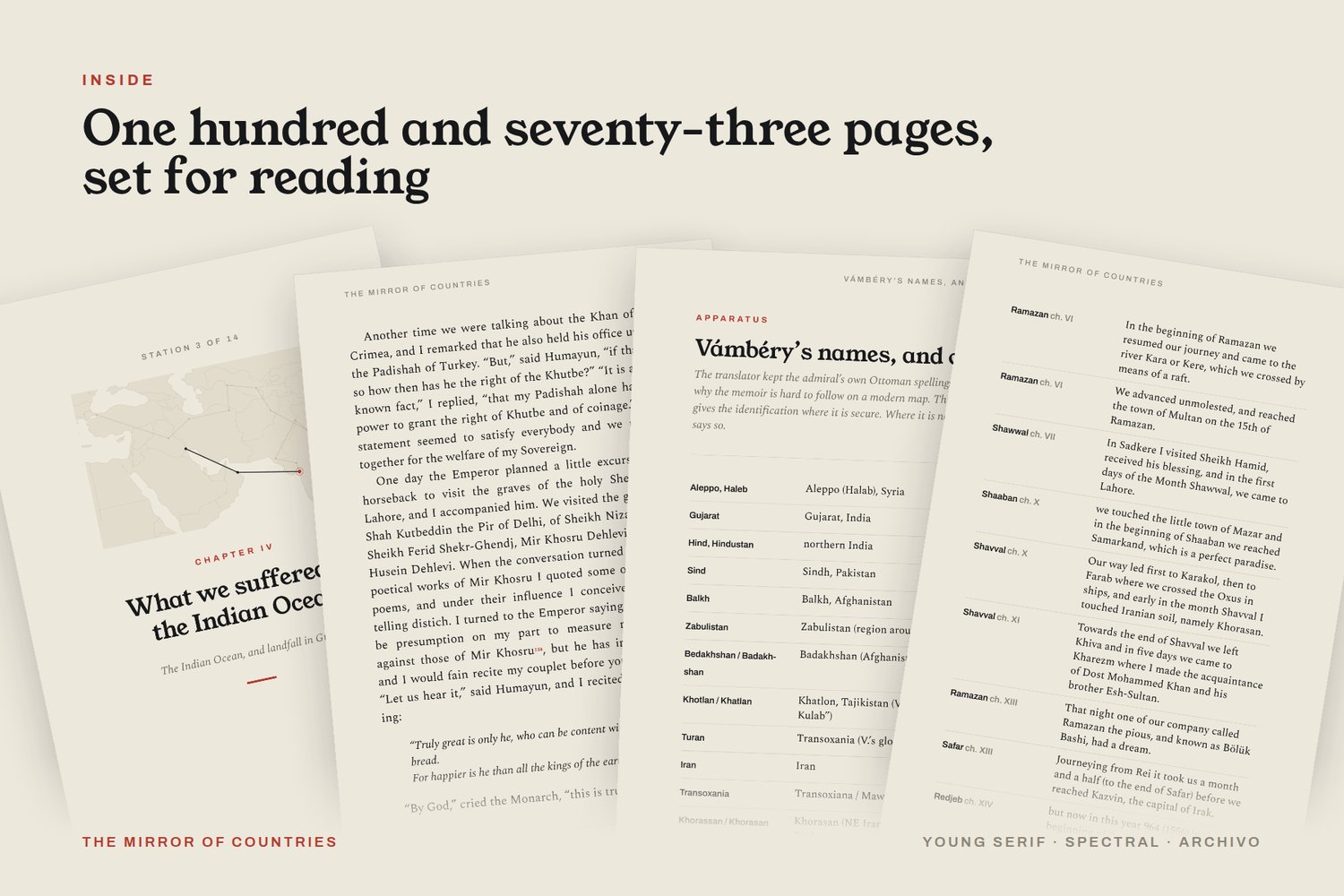
- the complete 1899 English translation by Ármin Vámbéry, all fourteen chapters plus his introduction, the Turkish publisher's preface and the author's prologue;
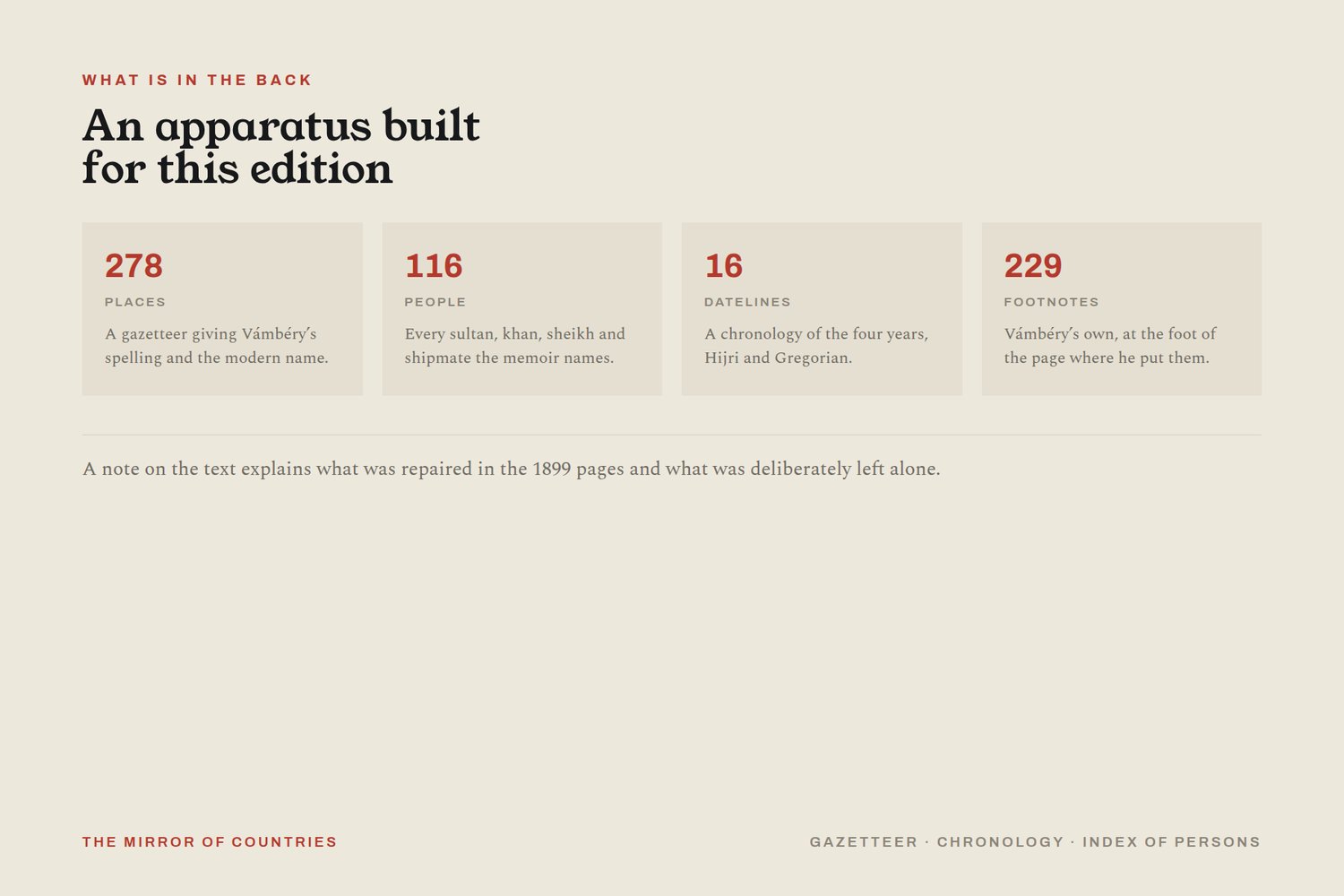
- all 229 of Vámbéry's own footnotes, in his wording, at the foot of the page where he put them;
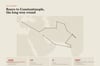
- a route map at the head of every chapter, drawn from the itinerary in the text and advancing station by station as the journey does;
- a gazetteer of 278 places giving Vámbéry's spelling against the modern name;
- an index of 116 people, a chronology of the four years in Hijri and Gregorian dates, and a note on the text;
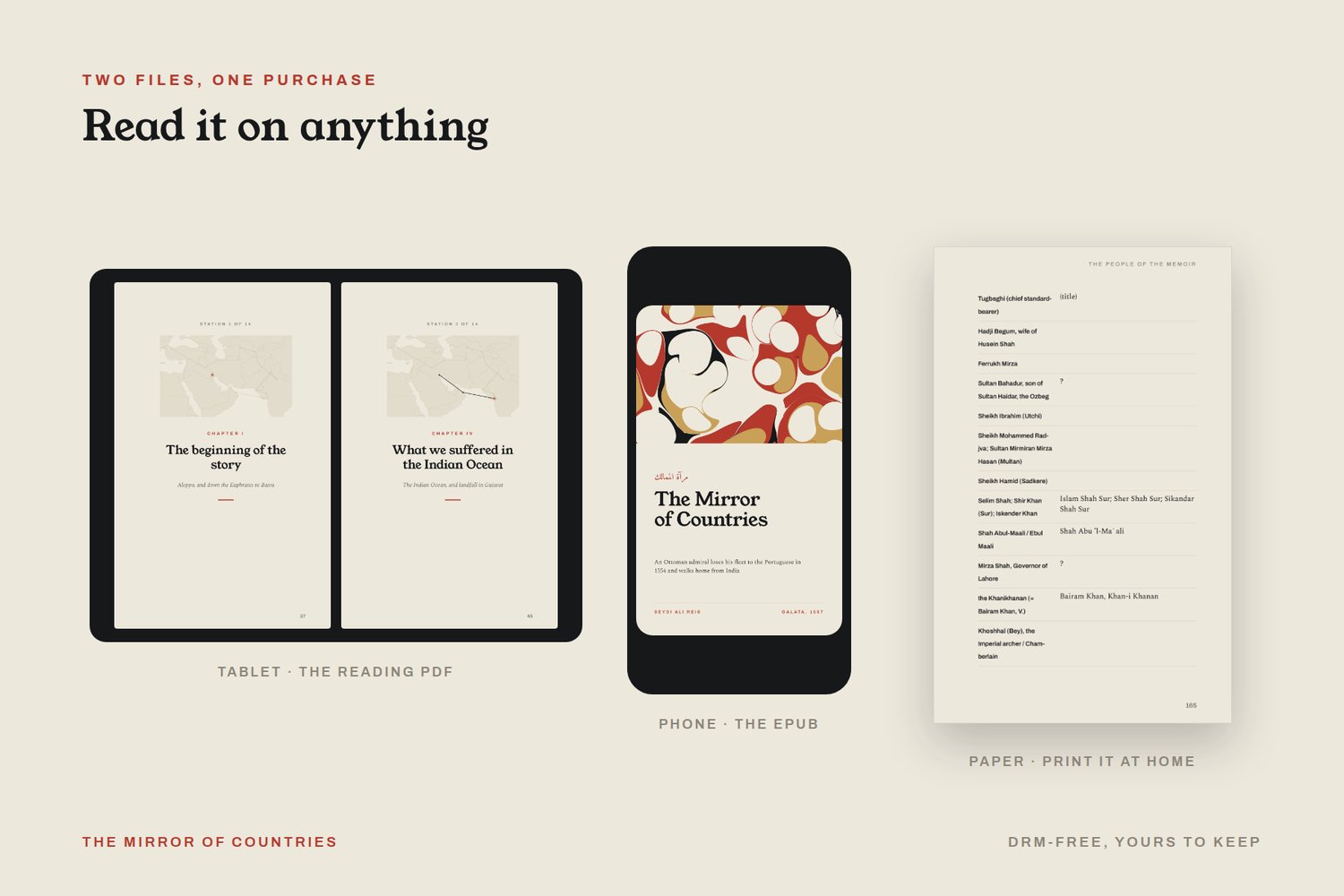
- a cover whose marbled band is not a scan: it is generated by the method the Ottoman binders used, each drop of colour displacing the whole surface.
On the text
Set again from a scan of the Luzac edition of 1899 rather than copied from an existing digital file. 651 corrections were made and logged, 78 of them judgment calls reasoned individually. Vámbéry's spellings, bracketed insertions and paired dates stand exactly as printed; errors in the printed book are recorded rather than quietly mended. Vámbéry died in 1913, so the translation and its notes are in the public domain, as is the sixteenth-century original.
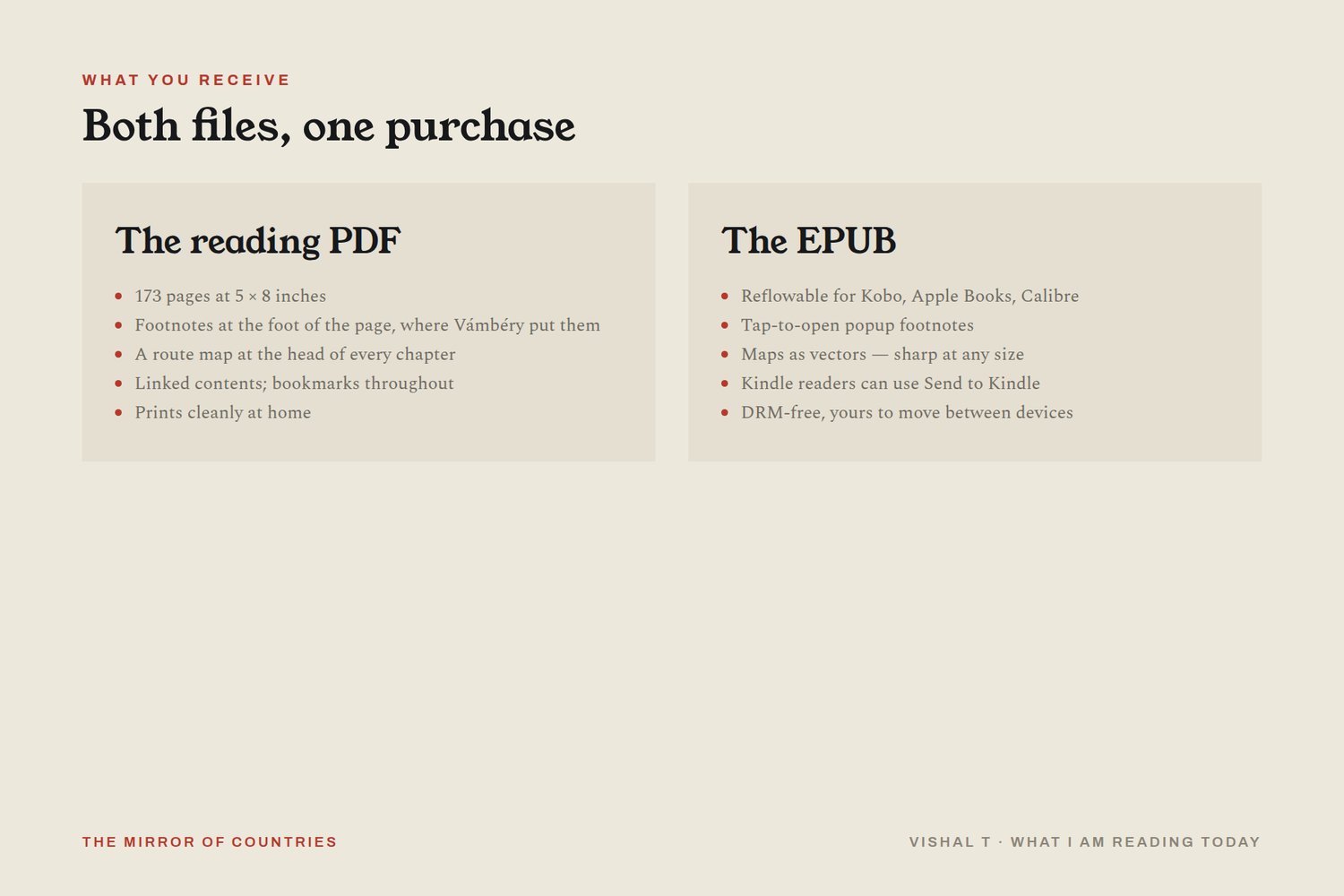
You receive
- a 173-page designed PDF at 5 × 8 inches, for screen reading or printing at home;
- a reflowable EPUB with popup footnotes, for Kobo, Apple Books and most e-readers; Kindle readers can use Amazon's Send to Kindle;
- DRM-free files that are yours to keep and move between devices.
Newly set and edited by Vishal T · @whatiamreadingtoday7