

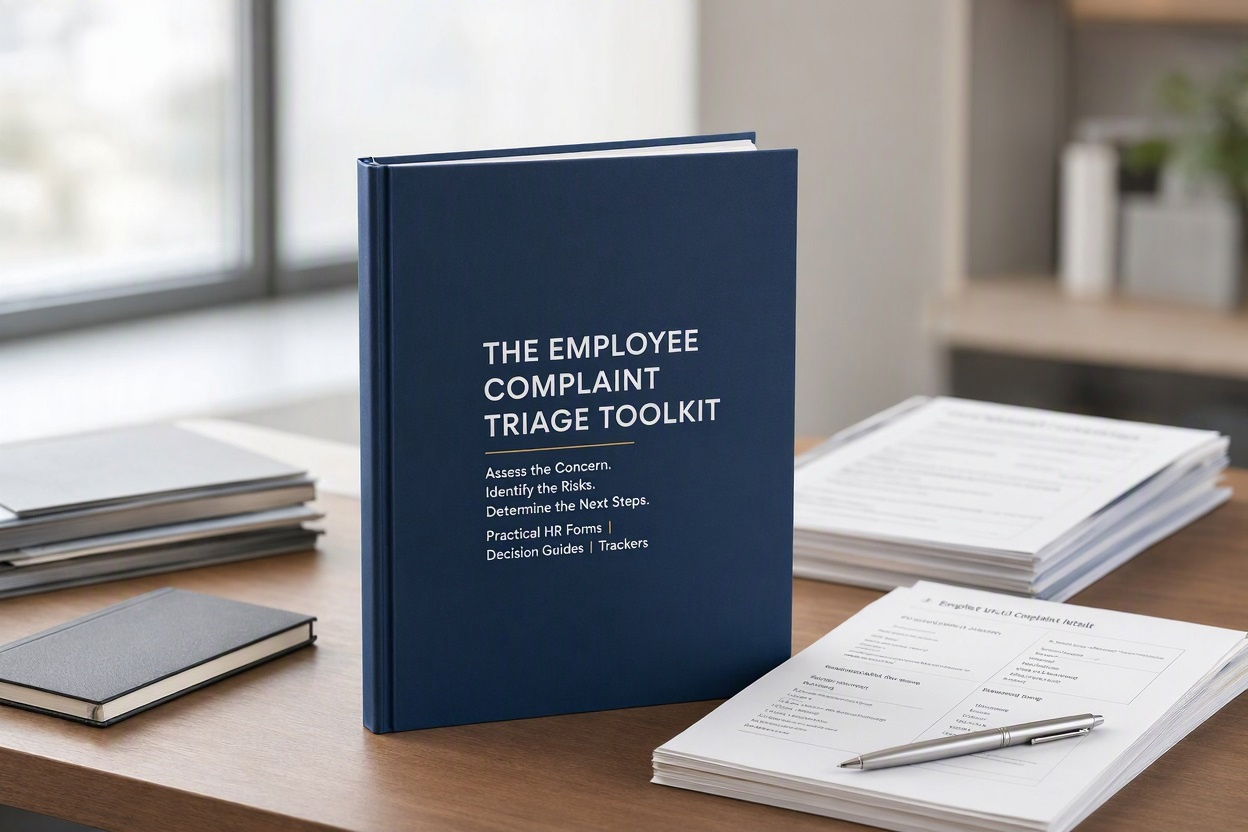
THE EMPLOYEE COMPLAINT TRIAGE TOOLKIT
Assess the Concern. Identify the Risks. Determine the Next Steps.
An employee raises a complaint. What happens next?
Do you know how urgent it is?
Does the concern require immediate protective action? Is there a potential safety issue, allegation of harassment, discrimination, retaliation, serious misconduct, or another matter requiring specialist attention?
What information should HR gather first?
Who needs to be informed?
How do you document the complaint without making assumptions or reaching premature conclusions?
And how do you ensure the matter does not disappear into a crowded inbox while everyone waits for someone else to act?
Employee complaints can be sensitive, complex, and difficult to manage. Delayed responses, incomplete records, inconsistent decisions, and unclear responsibilities can make an already difficult situation harder to resolve.
THE EMPLOYEE COMPLAINT TRIAGE TOOLKIT gives HR professionals a structured starting point for assessing complaints, identifying potential urgency, documenting information, and organising appropriate follow-up.
Instead of relying entirely on memory, instinct, or an improvised process, use practical tools to help determine what needs attention, what information is missing, and which next steps require consideration.
WHAT'S INCLUDED IN THE TOOLKIT?
1. Employee Complaint Intake Form
A structured form for recording the complaint, date received, people involved, employee's account, relevant dates, supporting information, immediate concerns, and requested assistance.
2. Complaint Triage Assessment Worksheet
A practical worksheet to help HR identify the nature of the concern, potential seriousness, urgency, immediate risks, missing information, and the need for further assessment.
3. Complaint Severity and Urgency Decision Guide
A decision-support guide to help distinguish routine concerns from matters that may require prompt or immediate attention. It highlights potential safety risks, threats, serious misconduct allegations, harassment, discrimination, retaliation, and other high-risk concerns.
4. Immediate Risk and Safeguarding Checklist
A checklist to help HR consider whether anyone may face an immediate threat, whether urgent assistance is required, and whether appropriate interim safeguards should be considered while the matter is assessed.
5. Complaint Documentation Checklist
A practical review tool covering the complaint record, relevant dates, people involved, supporting documents, witness information, actions taken, decisions, and outstanding information.
6. Complaint Escalation and Referral Guide
A structured guide to help identify when a matter may need referral to a senior HR professional, designated complaint handler, safeguarding lead, security, legal adviser, or relevant external authority, depending on the circumstances and applicable requirements.
7. Escalation Action Log
A reusable record for documenting the date of escalation, reason for referral, person or function receiving it, decision or direction received, action owner, due date, outcome, and next review.
8. Complaint Status and Follow-Up Tracker
Track the complaint reference, current stage, outstanding information, responsible person, target dates, next action, and review arrangements.
9. Employee Communication and Acknowledgement Guide
Practical guidance for acknowledging a complaint, explaining next steps, setting realistic expectations, and communicating professionally without promising a particular outcome.
10. Complaint Triage Decision Record
A structured record of the initial assessment, relevant information considered, urgency rating, reasons for the proposed route, referral decisions, outstanding questions, and review requirements.
11. Interim Safeguards and Action Planner
A planning tool for recording potential interim measures, the reason they are being considered, who is responsible, implementation arrangements, review dates, and any necessary safeguards against unfair treatment.
12. Complaint Review and Handover Checklist
A checklist to help ensure the next responsible person receives the relevant records, understands outstanding risks and actions, and knows what needs to happen next.
13. Common Complaint-Handling Mistakes Guide
Guidance on avoiding common problems such as dismissing concerns prematurely, promising absolute confidentiality, delaying urgent escalation, treating allegations as proven facts, or allowing complaints to go untracked.
14. Employee Complaint Triage Workflow
A practical workflow covering receipt, immediate risk checks, initial assessment, documentation, referral, action tracking, and review.
WHO IS THIS TOOLKIT FOR?
- HR managers and HR executives
- Employee relations professionals
- HR generalists and HR business partners
- SME owners and managers responsible for employee concerns
- Designated workplace complaint handlers
- People managers who work with HR when complaints arise
It is especially useful for organisations that need a more structured starting point for receiving and assessing employee complaints.
THE PROBLEMS THIS TOOLKIT HELPS YOU ADDRESS
“We have received a complaint. How serious is it?”
Use the triage worksheet and decision guide to organise an initial assessment and identify issues that may need urgent attention.
“What should we ask and record first?”
Use the intake form and documentation checklist to capture the employee's account and identify information that may still be required.
“Does this need to be escalated?”
Use the escalation guide to identify matters that may require specialist review or referral under your organisation's procedures.
“Who is responsible for the next step?”
Use the escalation action log and follow-up tracker to record ownership, deadlines, decisions, and outstanding actions.
“How do we explain the process to the employee?”
Use the communication guide to support clear, professional acknowledgement and appropriate updates.
“How do we make sure nothing important is overlooked?”
Use the workflow and review checklists to establish a more consistent approach to initial assessment and follow-up.
WHY A TRIAGE PROCESS MATTERS
Not every complaint requires a formal investigation, but every complaint should receive appropriate consideration.
Triage is an initial assessment. It helps identify urgency, possible risks, and the appropriate next steps. It does not determine whether an allegation is true, replace a fair investigation, or justify dismissing a complaint because it initially appears minor.
The aim is to help HR respond proportionately, recognise matters that require specialist attention, maintain clear records, and ensure that important actions are not overlooked.
IMPORTANT INFORMATION
This toolkit provides general HR guidance and documentation resources. It is not legal advice, an investigation manual, or a substitute for your organisation's approved procedures and applicable legal obligations.
The appropriate response depends on the nature of the complaint, the available information, the potential risks, and the relevant jurisdiction and workplace policies. Serious or urgent concerns may require immediate action or specialist advice. Do not delay emergency assistance or required reporting while completing a form.
Protect sensitive information, restrict access to authorised personnel, and follow applicable data protection and record-retention requirements. Avoid promising absolute confidentiality when information may need to be shared appropriately.
BE BETTER PREPARED WHEN A COMPLAINT ARRIVES
Employee complaints can be difficult to predict. Your initial response should not have to depend on improvisation.
Use a clearer structure to assess urgency, record relevant information, identify appropriate referrals, and track the next steps.
Get THE EMPLOYEE COMPLAINT TRIAGE TOOLKIT and build a more organised starting point for handling employee concerns.