
The Science Behind Speech Access
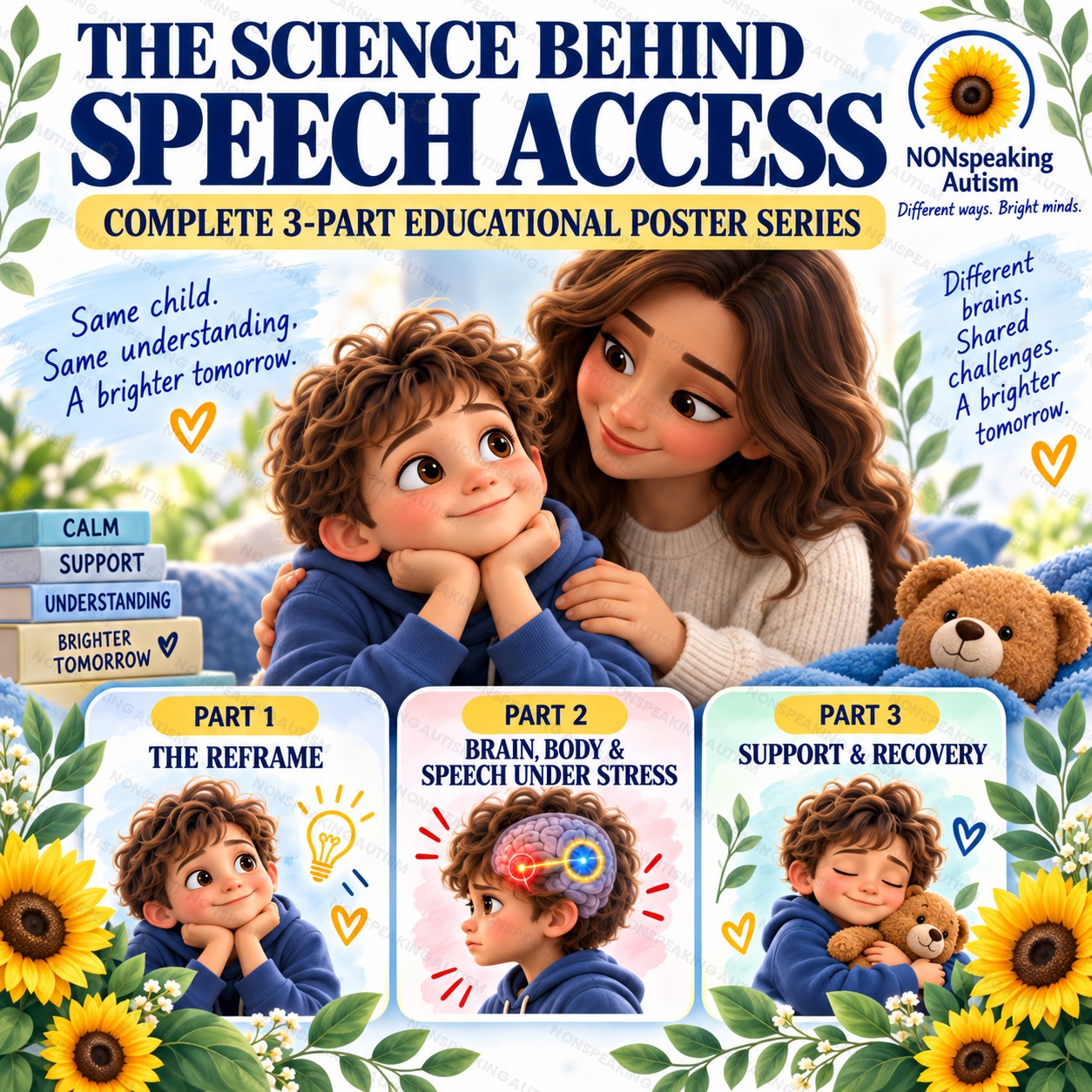
The Science Behind Speech Access— Complete 3-Part Educational Poster Series
The Science Behind Speech Access, Stress & Support
Speech is not always equally accessible in every situation.
For some autistic people, spoken words may become quieter, slower, harder to access or temporarily unavailable during periods of sensory overload, stress, uncertainty, fatigue or increased communication demand — even when understanding, thoughts and the desire to communicate remain present.
This 3-part research-informed educational poster collection explores situational changes in speech from three connected perspectives: understanding the experience, understanding what may happen under stress, and providing supportive responses that reduce pressure and respect all forms of communication.
Designed in the distinctive Nonspeaking Autism visual style, the collection turns complex ideas about communication, regulation and nervous-system load into accessible visual guides for families, schools, professionals and wider autism education.
💙 Part 1 — The Science Behind Situational Speech Loss: The Reframe
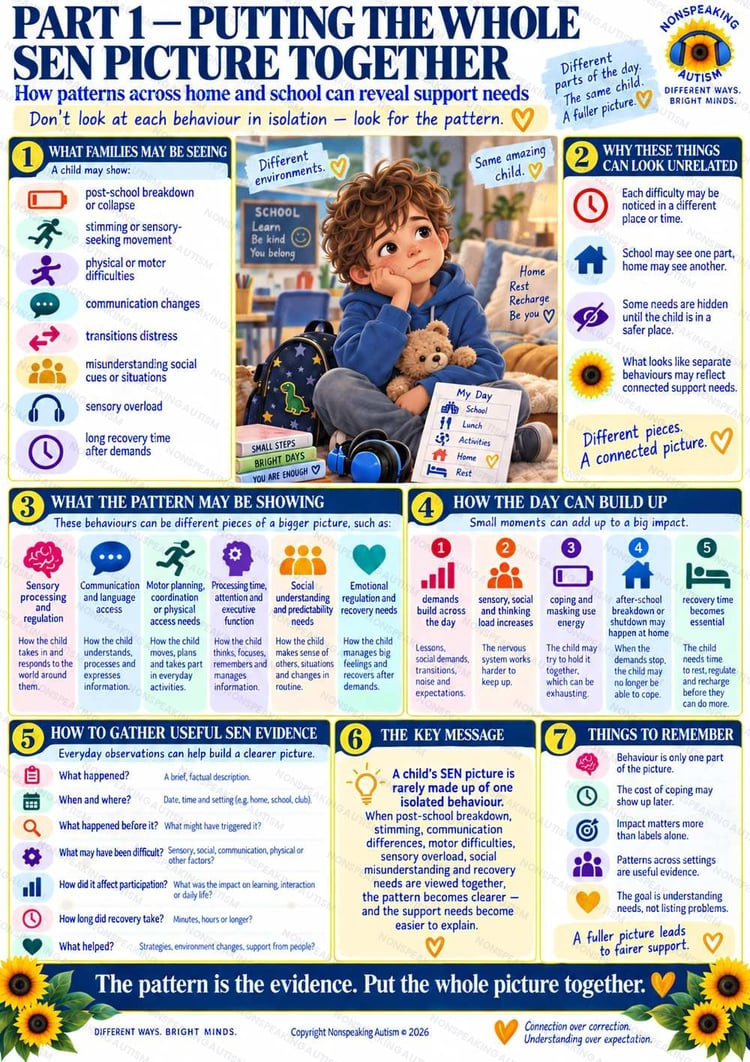
Part 1 introduces the central idea that speech access can change without understanding disappearing.
It explores:
- What situational speech loss can mean
- Why speech may be available in one setting but difficult in another
- Quiet or whispered speech, one-word responses and long pauses
- Scripts or repeated phrases
- Gestures, pointing and AAC as communication
- Why reduced speech can sometimes be mistaken for rudeness, shyness or refusal
- How sensory, social and language demands may affect access to spoken communication
- The importance of looking beyond outward behaviour
The central reframe is simple:
Same person. Same understanding. Different setting. Different access to speech.
🧠 Part 2 — Speech Access Under Stress: Brain, Body & Speech
Part 2 looks more closely at why speech may become harder to access when nervous-system demands increase.
It explores common factors such as:
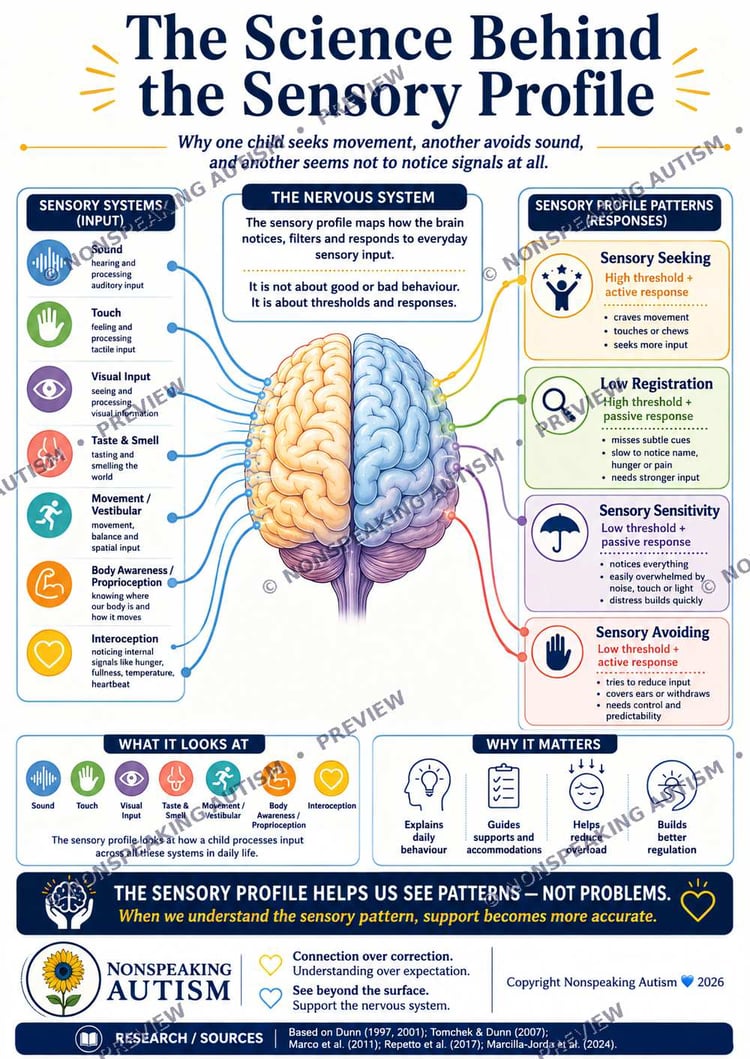
- Sensory overload
- Social pressure
- Fatigue
- Unexpected change
- High language demand
- Anxiety or uncertainty
- Increased arousal
- Working-memory and processing demands
- Regulation and motor-planning demands
- Freeze or shutdown responses
The poster illustrates how multiple demands can build together and make spoken output increasingly difficult.
It also highlights practical responses that may help in the moment, including reducing verbal pressure, allowing additional processing time, accepting gestures, typing or AAC, offering simple choices and lowering sensory load.
The message is:
The nervous system may go quiet before the mind does.
🌱 Part 3 — Supporting Speech Access: Support & Recovery
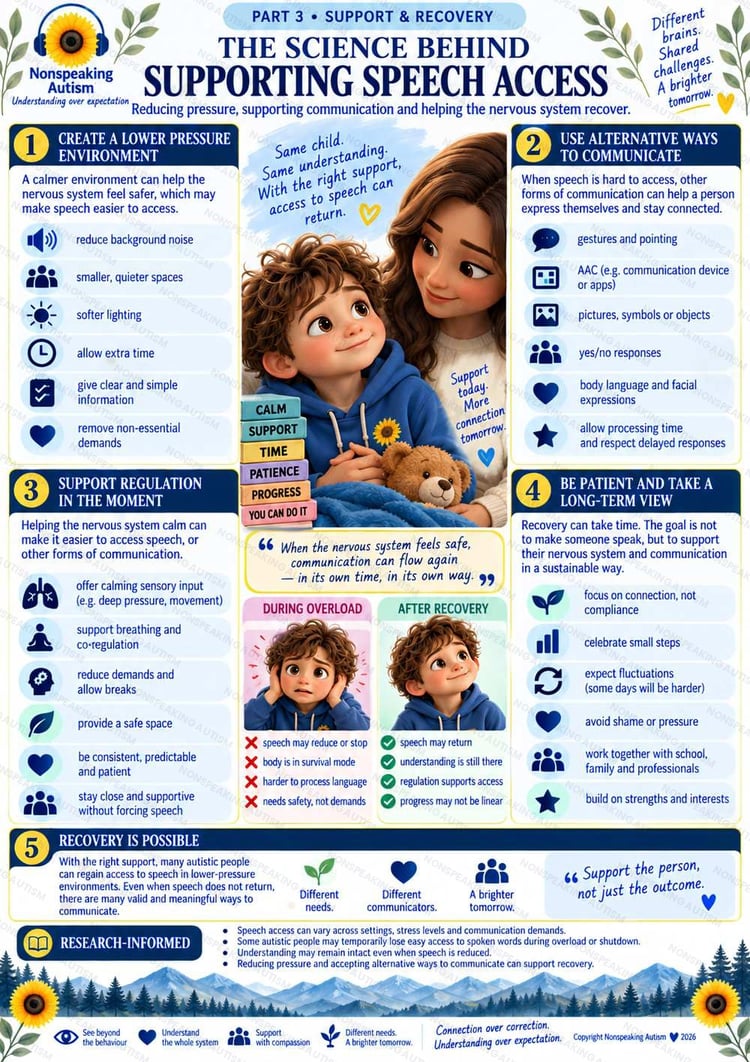
Part 3 moves from understanding to practical support.
Rather than making spoken communication the immediate goal, it focuses on creating conditions in which the person can feel safer, less pressured and better able to communicate in whatever way is accessible to them.
Supportive approaches explored include:
- Reducing background noise
- Using smaller or quieter spaces
- Softer lighting
- Allowing additional time
- Giving clear and simple information
- Removing non-essential demands
- Supporting regulation and co-regulation
- Providing safe sensory input where appropriate
- Offering a safe space
- Remaining consistent and predictable
- Accepting gestures, pointing, pictures, symbols and AAC
- Respecting delayed responses
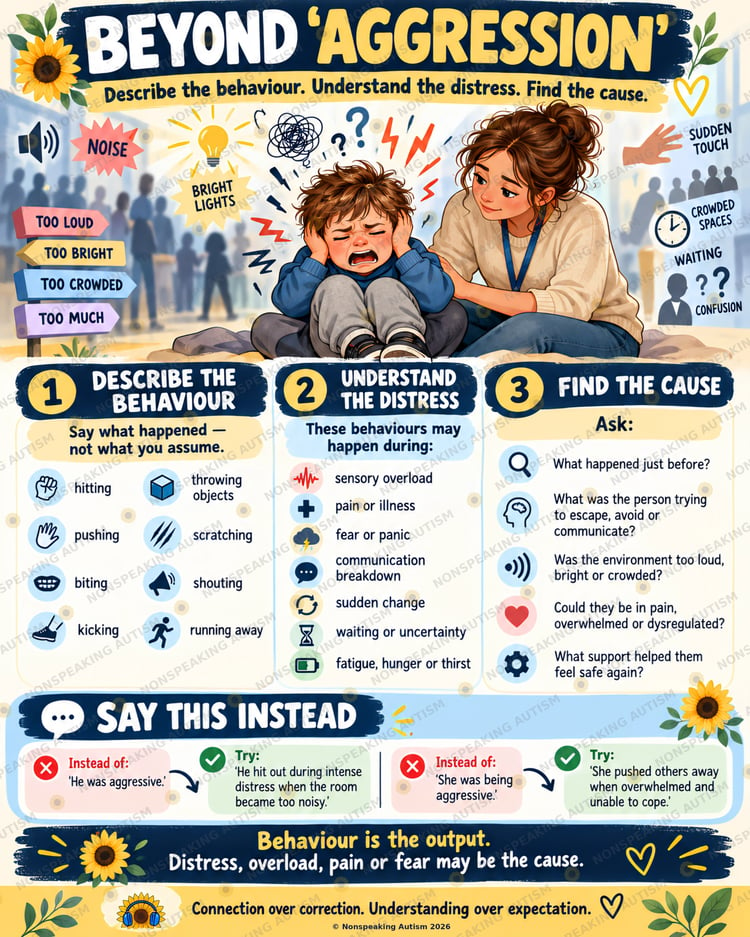
- Avoiding shame and communication pressure
- Supporting recovery after overload
- Taking a longer-term, person-centred view
It reinforces an important principle:
Support the person, not just the outcome.
📦 What You Receive
Your purchase includes:
3 × educational posters from the Situational Speech Loss series:
Part 1: The Science Behind Situational Speech Loss — The Reframe
Part 2: Speech Access Under Stress — Brain, Body & Speech Under Stress
Part 3: Supporting Speech Access — Support & Recovery
Each purchased poster is supplied as a high-quality A2 PDF — exact 420 × 594 mm page size, suitable for digital viewing or printing.
The purchased files are supplied clear and without the promotional preview watermark. Watermarks visible on Payhip listing images are used for preview and copyright-protection purposes.
Digital download only — no physical product will be shipped.
🏫 Who Is This Collection For?
This collection may be useful for autistic people, parents and caregivers, teachers, SEN/SEND staff, teaching assistants, speech and language professionals, occupational therapists, support workers, therapists, healthcare professionals, autism organisations and anyone seeking a more compassionate understanding of fluctuating speech access.
It can be displayed or used as an educational discussion resource in homes, classrooms, staff rooms, clinics, therapy environments, support settings and professional training.
🌻 The Aim of the Series
These posters encourage a shift away from:
“Why aren't they speaking?”
towards:
“What might be making speech harder to access right now, and how can we support communication without increasing pressure?”
Speech is one form of communication. Reduced access to speech should not automatically be interpreted as reduced understanding, unwillingness to engage or absence of communication.
Different communication does not mean less communication.
⚠️ Educational Disclaimer
This resource is provided for educational and informational purposes only. It is not intended to diagnose autism, speech or language conditions, anxiety, selective mutism or any other medical, developmental or psychological condition, and it is not a substitute for individualised medical, psychological, speech and language, occupational therapy or other professional advice.
Communication experiences vary considerably between individuals. Sudden, unexplained or concerning changes in speech or communication should be appropriately assessed rather than automatically attributed to autism, stress, sensory processing or nervous-system regulation.
© Copyright & Use
Copyright © Nonspeaking Autism 2026. All rights reserved.
Purchase is for the purchaser's personal or professional educational use. The digital files may not be resold, redistributed, uploaded, shared publicly, reproduced as another commercial product or claimed as another person's work without permission.
Connection over correction. Understanding over expectation. 💙