
The Science Behind Emotional Sensitivities in Autism
The Science Behind Emotional Sensitivities in Autism
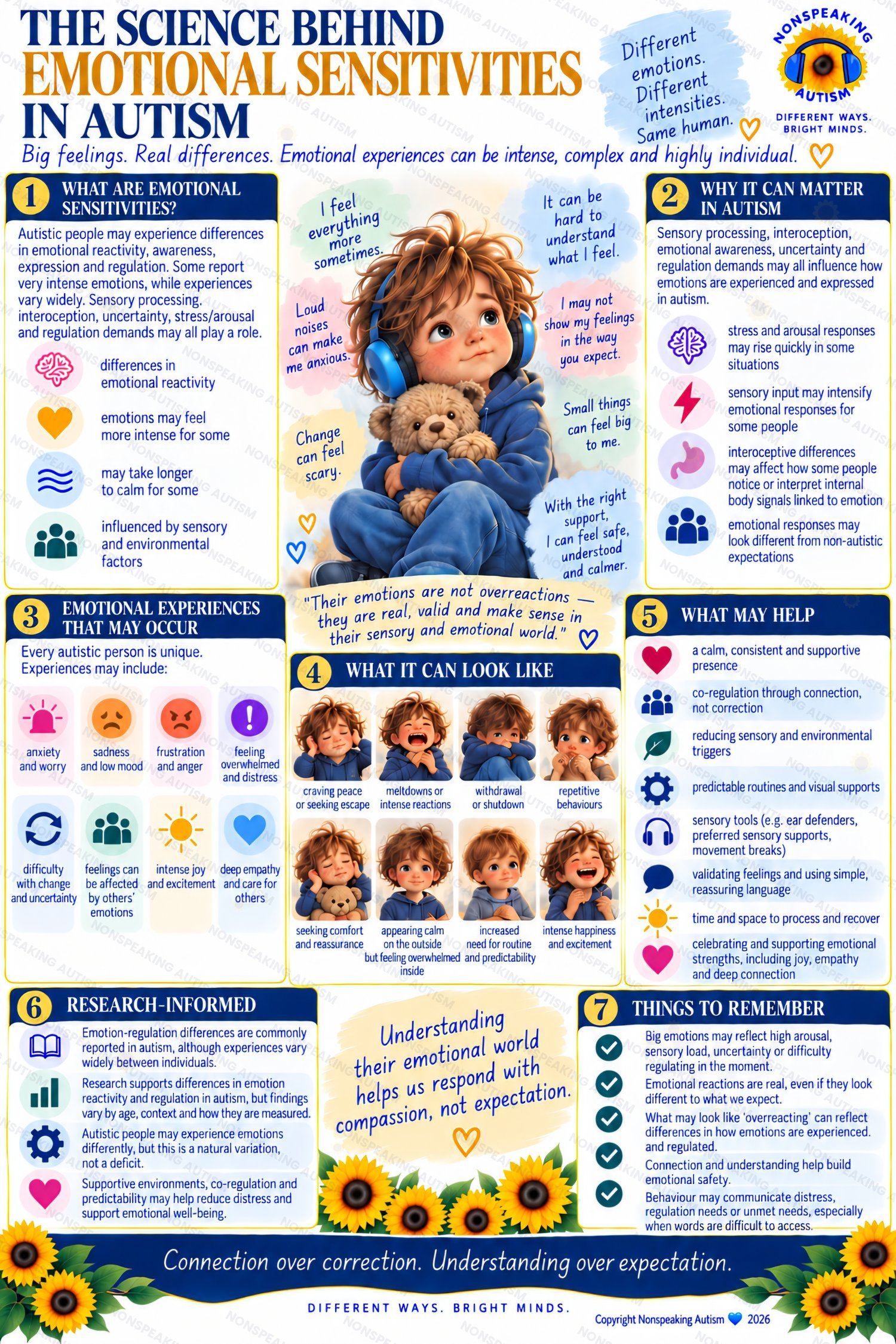
Big feelings. Real differences. Emotional experiences can be intense, complex and highly individual.
Autistic people can experience emotions in many different ways.
For some, feelings may arrive quickly, intensely or physically. Small changes may feel enormous. Sensory input may amplify distress. Uncertainty can increase anxiety. It may take longer for the nervous system to settle after something difficult — while joy, excitement, empathy and connection can also be experienced deeply.
At the same time, what someone feels internally may not always match what other people see externally.
The Science Behind Emotional Sensitivities in Autism is a compassionate, research-informed educational poster designed to help families, educators and professionals understand the possible connections between emotion, sensory processing, interoception, uncertainty, arousal and regulation.
Rather than judging the size of an emotional response from the outside, this resource encourages us to become curious about what the person may be experiencing underneath.
The central message is:
Different emotions. Different intensities. Same human.
🧠 What Are Emotional Sensitivities?
Emotional sensitivity is not one single autistic trait, and there is no universal autistic emotional profile.
However, some autistic people report differences in areas such as:
- emotional reactivity
- awareness and identification of emotions
- emotional expression
- regulation and recovery
- sensory influences on emotion
- awareness of internal body signals
- responses to uncertainty and change
- stress and arousal
For some people, emotions may feel particularly intense or difficult to regulate once the nervous system becomes highly activated.
Others may experience strong emotions internally while showing relatively little outwardly.
This is why outward behaviour alone does not always tell us how a person is feeling.
💙 Big Feelings Are Still Real Feelings
An emotional response that appears disproportionate to an observer can make sense when we understand the person's experience.
Something that looks “small” from the outside may occur alongside:
sensory overload
unexpected change
uncertainty
communication difficulty
fatigue
accumulated stress
frustration
unmet needs
difficulty identifying internal signals
previous demands throughout the day
The visible event may therefore be only the final part of a much larger picture.
Instead of immediately asking:
“Why are they overreacting?”
we can ask:
“What is making this feel so big right now?”
That change in perspective can completely change the support we offer.
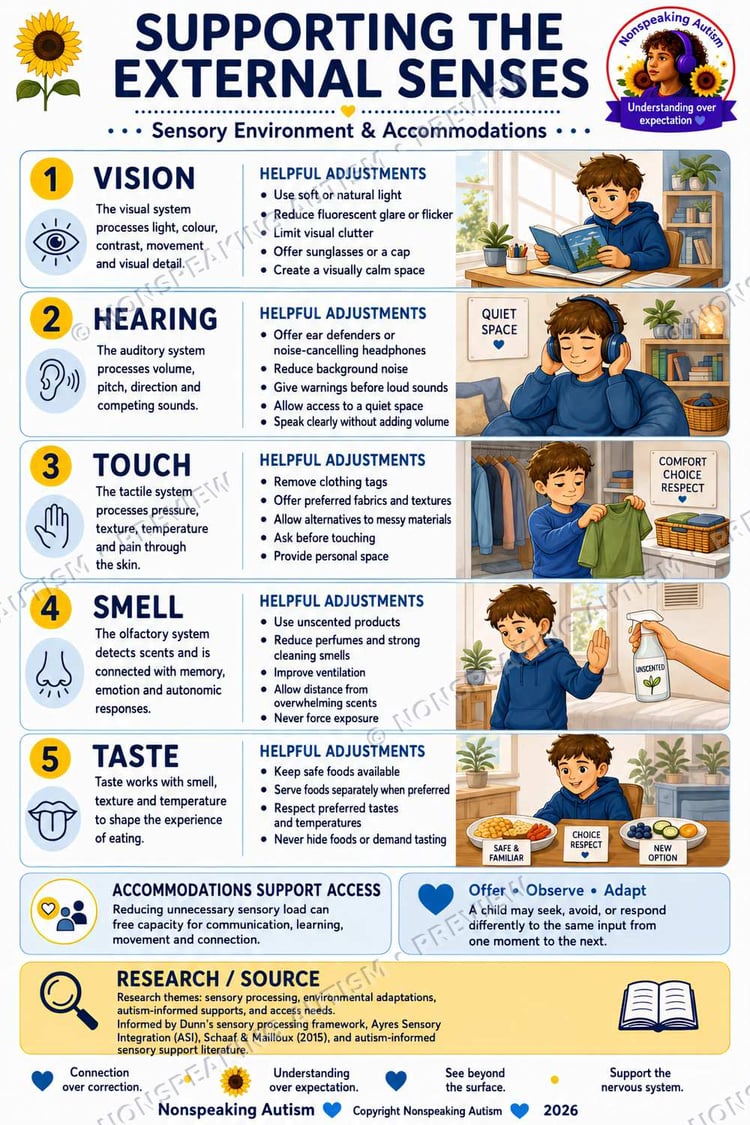
⚡ Sensory Processing & Emotional Intensity
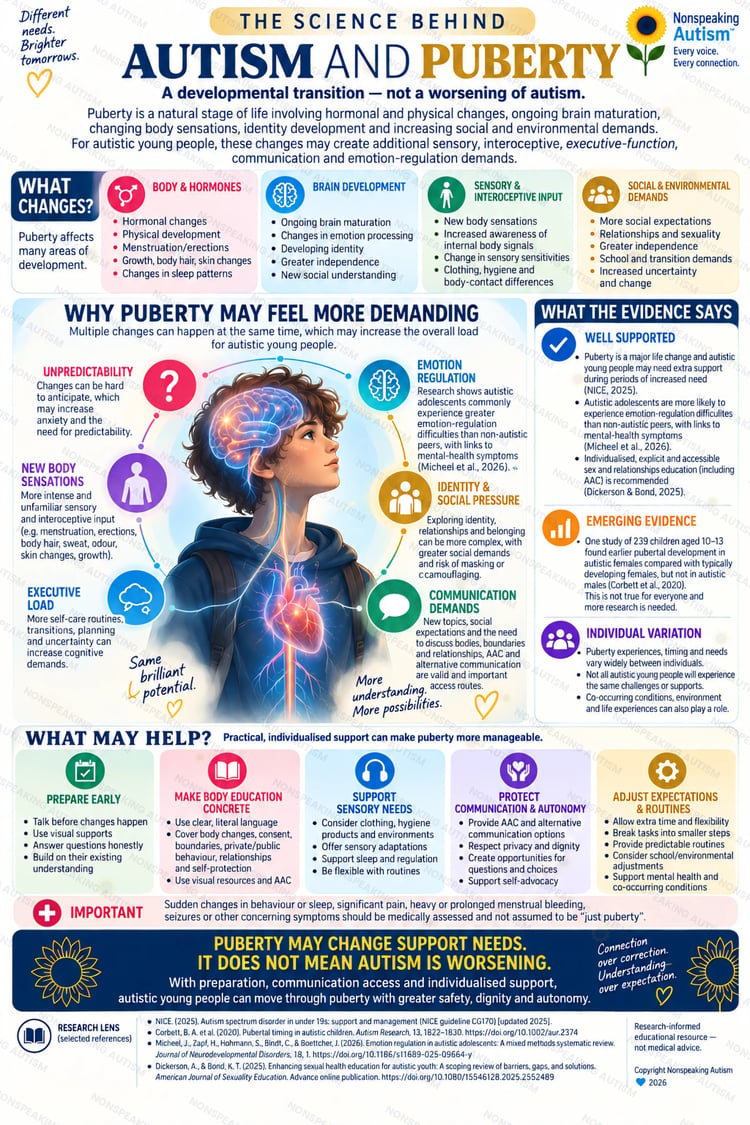
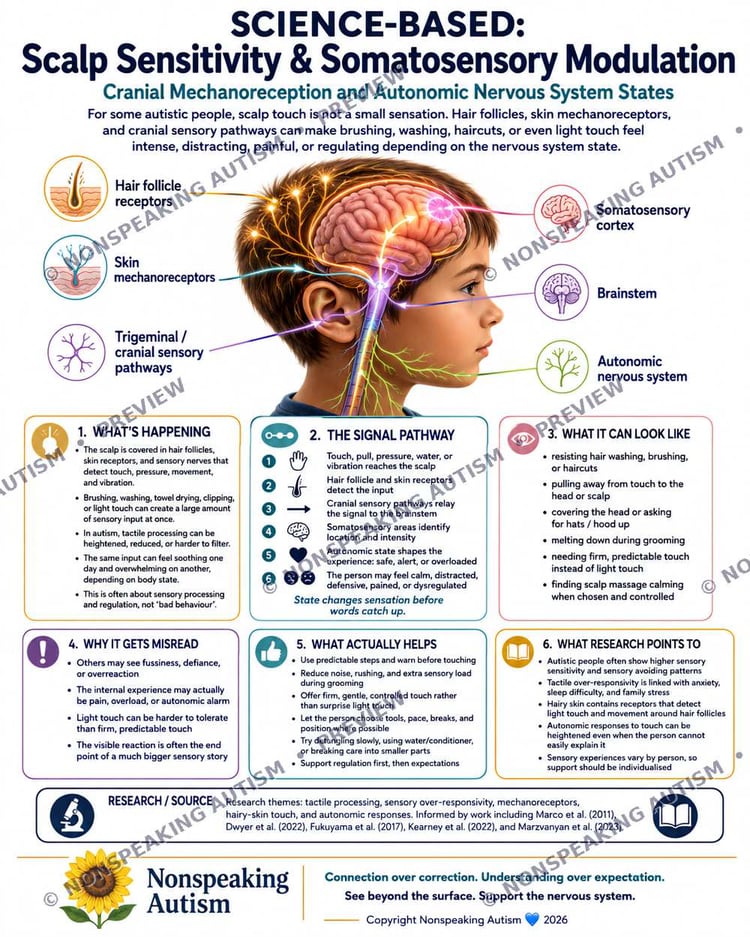
Sensory and emotional experiences do not necessarily operate independently.
For someone already trying to process intense noise, bright light, uncomfortable clothing, movement, smells, crowds or other sensory information, there may be less capacity available for managing an additional emotional demand.
For example, a change of plan might be manageable in a calm environment but much harder after a noisy school day.
A social misunderstanding might be easier to process when rested than when hungry, tired or already overloaded.
This is why context matters.
The nervous system does not experience each demand in isolation.
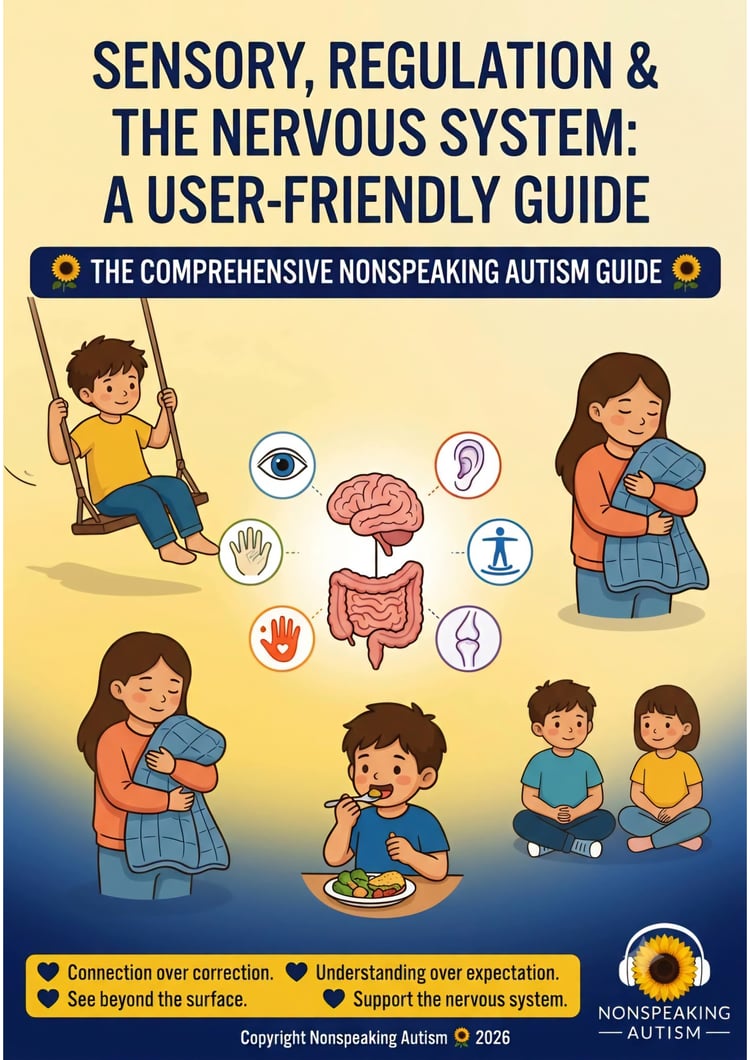
🫀 Interoception — Understanding Signals From Inside the Body
Interoception refers broadly to the perception of signals originating from within the body.
These signals can contribute to experiences such as:
hunger
thirst
temperature
heart rate
breathing
physical tension
toileting needs
arousal and aspects of emotional experience
Some autistic people experience differences in how internal signals are noticed or interpreted.
For example, someone may recognise that something feels “wrong” without immediately being able to identify whether they are anxious, hungry, overwhelmed, tired, in pain or experiencing another internal state.
This does not mean autistic people lack emotions.
It means that the relationship between bodily signals, emotional awareness and interpretation can be different and is highly individual.
🔄 Change, Predictability & Uncertainty
Uncertainty can be particularly difficult for some autistic people.
Not knowing:
what is happening next
how long something will last
whether plans are changing
what another person expects
when an uncomfortable situation will end
can add another layer of nervous-system demand.
Predictability does not mean life must become completely rigid.
It means providing enough information and preparation to make an environment more understandable and manageable.
Visual schedules, warnings before transitions, clear explanations and allowing additional processing time may help some people.
🌈 Emotional Experiences That May Occur
Emotional sensitivity is not only about distress.
The poster recognises a broad range of experiences, including:
- anxiety and worry
- sadness or low mood
- frustration and anger
- overwhelm and distress
- difficulty with change and uncertainty
- sensitivity to other people's emotions
- intense joy and excitement
- deep empathy and care for others
Autistic emotional experience should not be reduced to meltdowns or difficult moments.
Joy matters too.
So do affection, enthusiasm, connection, humour, empathy, fascination and excitement.
👀 What Emotional Overload Can Look Like
When demands exceed someone's available capacity, we may see:
- seeking peace or trying to escape
- meltdowns or intense emotional reactions
- withdrawal or shutdown
- repetitive behaviours or increased stimming
- seeking comfort and reassurance
- appearing calm externally while struggling internally
- increased need for routine and predictability
- intense happiness or excitement
These are possible presentations, not a checklist.
The same person may respond differently at different times.
A child who cries one day may become quiet another day.
Someone who manages at school may become overwhelmed after returning home.
Someone who appears calm may still be experiencing substantial internal distress.
Visible behaviour is only part of the story.
🤝 What May Help?
Support does not have to begin with changing the emotion.
Often, it begins by changing the conditions surrounding the person.
Helpful approaches may include:
A calm, consistent and supportive presence
A regulated adult can offer safety, predictability and connection during difficult moments.
Co-regulation through connection — not correction
During intense distress, immediate reasoning, demands or consequences may add further pressure. Safety and regulation can come first.
Reducing sensory and environmental triggers
Where possible, reduce unnecessary noise, light, crowding, demands or other identified stressors.
Predictable routines and visual supports
Making expectations and transitions clearer can reduce uncertainty.
Preferred sensory supports
Ear defenders, movement, familiar sensory tools or other individually preferred supports may help some people regulate.
Validating feelings
Acknowledging an emotion does not mean agreeing with every interpretation or behaviour.
It means communicating:
“I can see this is hard for you.”
Time and space
Some people need considerably longer than others to process an emotional experience and return to their usual regulation.
🌻 Co-Regulation Before Correction
When a child is highly distressed, their immediate need may not be a lesson about how they “should” behave.
They may first need:
safety
reduced demands
connection
communication access
sensory support
time
predictability
Once the nervous system is calmer, reflection and problem-solving may become more accessible.
This does not mean boundaries disappear.
It means understanding that teaching and reasoning are often more effective when a person has enough capacity to engage with them.
Connection over correction.
💛 Emotional Expression May Look Different
Autistic people do not necessarily express emotions in ways other people expect.
Someone may:
laugh when nervous,
become very quiet when distressed,
use repetitive movement when excited,
show little facial expression despite strong feelings,
need time before communicating what happened,
or communicate distress through behaviour when spoken language becomes difficult to access.
This is why we should be cautious about assuming we know someone's internal state purely from their outward expression.
Different expression does not mean absence of emotion.
🔬 Research-Informed
This resource is informed by research concerning emotion regulation in autism, sensory processing, interoception, anxiety, uncertainty and autistic emotional experience.
The evidence suggests that emotion-regulation differences are commonly reported in autistic populations, while also showing substantial variation between individuals.
Research also supports associations among sensory experiences, anxiety, uncertainty and emotional regulation in autism. However, these relationships are complex.
Terms such as “emotional sensitivity” and “big feelings” are accessible educational language, not separate medical diagnoses or claims that all autistic people experience emotions in the same way.
Importantly, research findings describe group-level patterns.
They should never be used to predict an individual autistic person's emotional experience simply because that person is autistic.
Things to Remember
Big emotional responses may reflect high arousal, sensory load, uncertainty, accumulated stress, communication difficulty or regulation demands.
An emotional reaction can be genuine even when it looks different from what another person expects.
What appears to be “overreacting” may make considerably more sense once the person's experience and environment are understood.
Behaviour can sometimes communicate distress, regulation needs or unmet needs, particularly when words are difficult to access.
And emotional differences are not solely difficulties.
Autistic people can also experience tremendous:
joy
enthusiasm
care
connection
empathy
passion
excitement
Support should recognise emotional strengths as well as emotional challenges.
👨👩👧 Who Is This Resource For?
This poster may be useful for:
- parents and caregivers
- autistic children, teens and adults
- families learning about autism
- teachers and classroom staff
- special-education and SEND professionals
- school psychologists and counselors
- occupational therapists
- speech-language therapists/pathologists
- psychologists
- therapists and allied-health professionals
- support workers
- early-years professionals
- autism and neurodiversity organizations
- professional-development and staff-training settings
- clinics, classrooms and family resource spaces
It can be used as a conversation starter, educational visual, family resource or professional training aid.
📦 What You Receive
Your purchase includes:
1 × The Science Behind Emotional Sensitivities in Autism educational poster
1 × high-resolution PDF
The purchased file is supplied clear and without the promotional preview watermark.
Any watermark displayed on Payhip preview/listing images is used for copyright and preview protection and is not present on the purchased resource.
Digital download only — no physical product will be shipped.
⚠️ Important Educational & Medical Disclaimer
This resource is provided for educational and informational purposes only.
It is not medical advice, psychological advice, a diagnosis, therapy, an individual assessment or a substitute for personalised advice from an appropriately qualified healthcare, mental-health, educational or therapy professional.
Autistic people are highly individual. A person may experience some, many or none of the examples described in this resource.
Emotional distress and changes in behaviour can also have causes unrelated to autism.
New, sudden, severe, unusual or prolonged changes in mood, behaviour, communication, responsiveness or functioning should not automatically be attributed to autism, sensory processing or emotional dysregulation.
Where there are concerns about significant distress, safety, pain, illness, breathing, consciousness, responsiveness or mental or physical health, appropriate professional or medical assessment should be sought.
💛 The Message Behind the Resource
When an emotion looks enormous from the outside, our first instinct can be to make it smaller.
But sometimes the better starting point is understanding why it feels enormous to the person experiencing it.
A loud room.
An unexpected change.
A confusing social situation.
A body signal that is difficult to interpret.
An accumulation of demands nobody else has noticed.
Or simply an emotion experienced with extraordinary intensity.
Understanding does not mean removing every challenge from life.
It means responding to the person in front of us with curiosity, compassion and appropriate support rather than judgement.
Because:
Their emotions are not automatically “overreactions.”
They are real experiences that deserve to be understood in context.
Different emotions. Different intensities. Same human.
Understanding their emotional world helps us respond with compassion, not expectation.
Connection over correction. Understanding over expectation.
Different Ways. Bright Minds.
©️ Copyright & Permitted Use
Copyright © 2026 Nonspeaking Autism. All rights reserved.
Purchase permits use for personal, home, classroom, school, clinic or individual professional educational purposes.
The digital file may not be resold, redistributed, file-shared, uploaded elsewhere, commercially reproduced, altered for resale or incorporated into another product for sale without permission.