


Car Fringe Benefits Tax Calculator (Australia, Excel): Statutory vs Log Book, FBT and RFBA
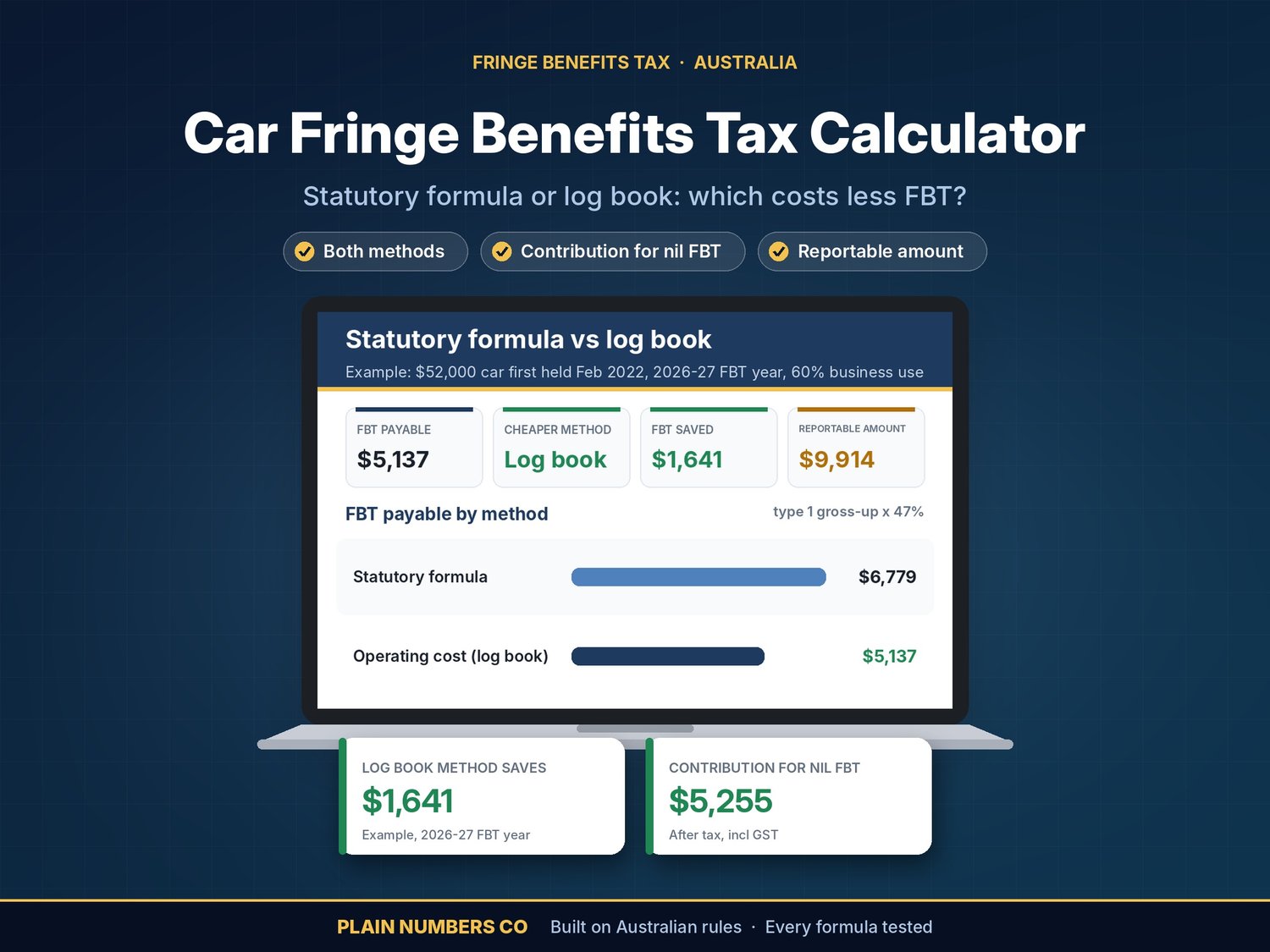
How much FBT is payable on the car you provide to an employee or director, and does the statutory formula or the log book (operating cost) method cost less? Enter the car, its costs, the log book result and any employee contributions. The workbook works out FBT under both methods, tells you which is cheaper and by how much, the after-tax employee contribution that would bring FBT to nil, and the reportable fringe benefits amount for the employee's income statement.
Built for Australian small business owners and employers providing a car for private use.
What it works out for you:
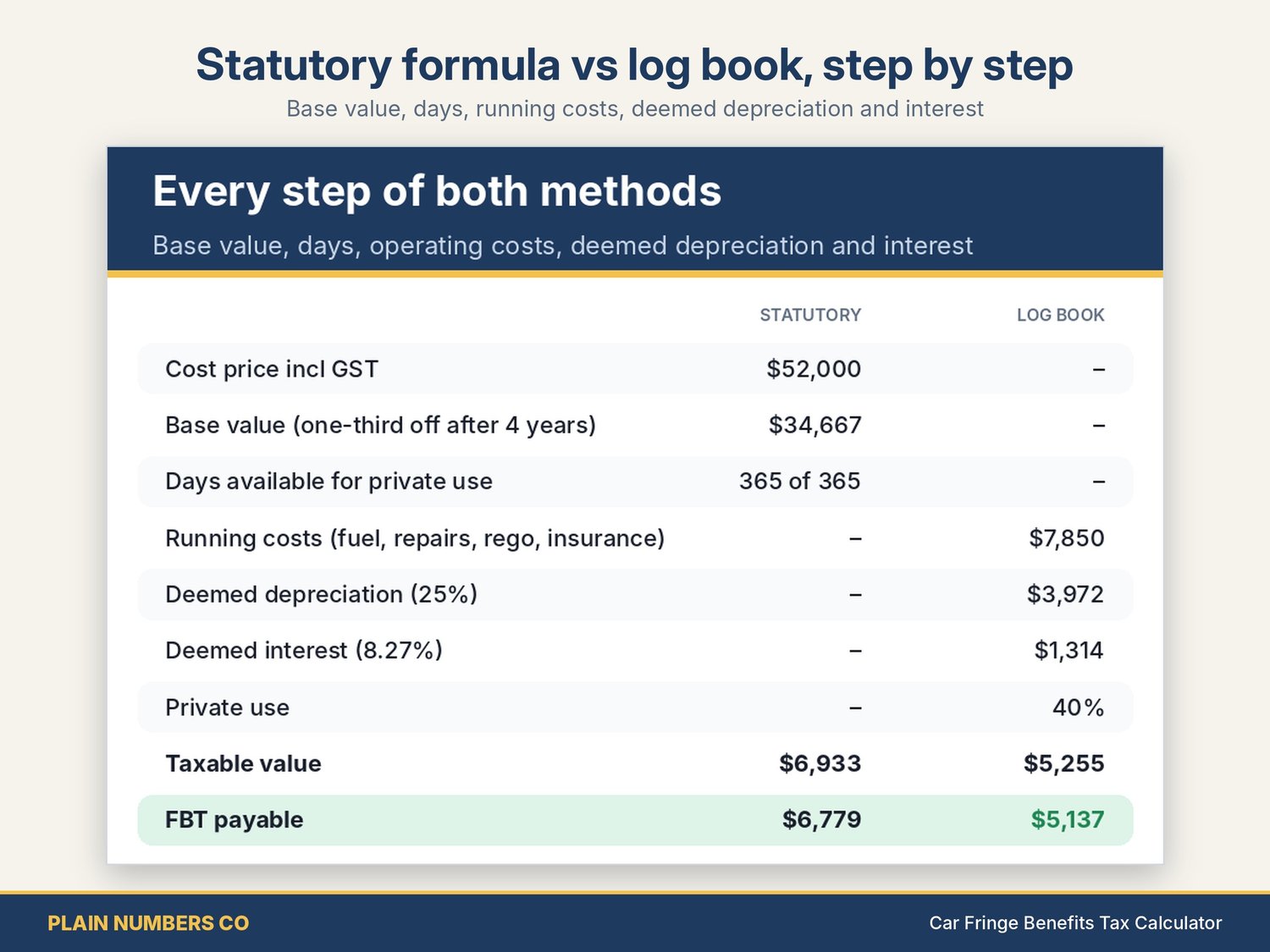
- Statutory formula: base value incl GST and accessories, the one-third reduction once the car has been held more than 4 years, days available for private use, 20%, less employee contributions
- Operating cost (log book) method: running costs, lease payments, and for owned cars deemed depreciation (25% diminishing value, worked out year by year from the date first held) and deemed interest at the ATO statutory rate for the FBT year (8.27% for 2026-27)
- FBT payable under each method at 47%, with the type 1 (2.0802) or type 2 (1.8868) gross-up depending on whether the employer was entitled to a GST credit on the car
- Which method is cheaper, and the FBT saved by choosing it
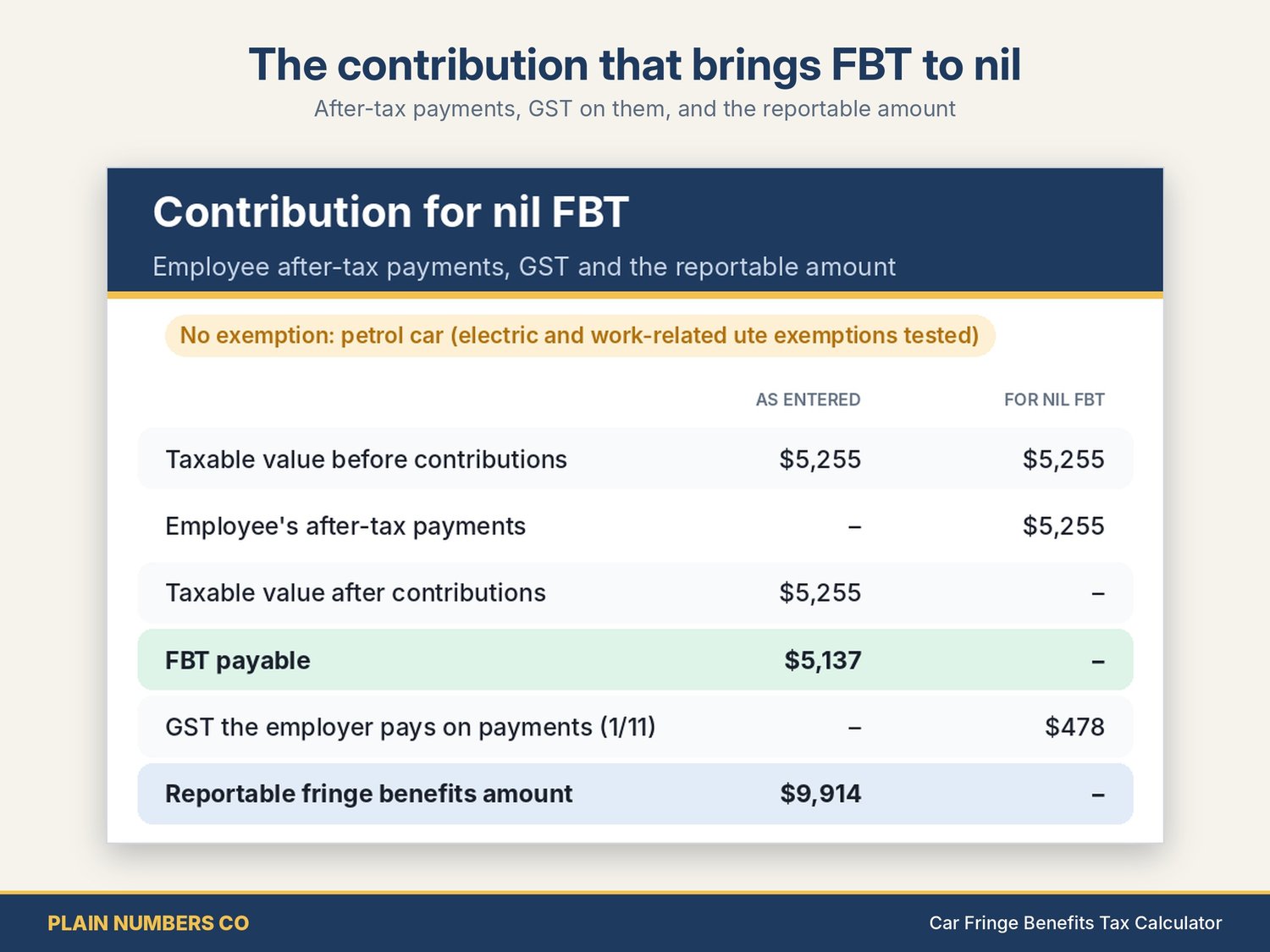
- The employee contribution needed for nil FBT, the GST of 1/11 the employer pays on it, and the employee contribution method (ECM) explained
- Exemptions: the electric car exemption (battery electric and hydrogen fuel cell, the luxury car tax threshold test, the plug-in hybrid cut-off of 1 April 2025 and its transitional rule) and the work-related exemption for panel vans and utes with minor private use
- Reportable fringe benefits amount (over $2,000, x 1.8868), including exempt electric cars, which are still reportable
- FBT years 2025-26, 2026-27 and 2027-28 (366 days)
- A plain-English summary and a Checks tab that confirms everything adds up
In the included example ($52,000 car first held in February 2022, 60% business use from the log book, 2026-27 FBT year), the statutory formula gives FBT of $6,779 and the log book method $5,137: a saving of $1,641. An after-tax employee contribution of $5,255 would bring FBT to nil.
Also free: the Car FBT Quick Check, a one-page browser version that compares the two methods for one car.
What you get: one Excel workbook (Home, Dashboard, Your Details, Summary, Calculator, Rules & Rates, Checks, Notes & Sources), with example data included. Works in Microsoft Excel and LibreOffice.
Every rate, threshold and rule was checked against the ATO website and the Federal Register of Legislation on 24 October 2026, and every source is listed inside the file. The ATO hasn't yet published the statutory interest rate for 2027-28: the workbook flags it and asks you to enter it when it's out.
Built and checked by a CPA. Every formula tested against a separate calculation.
Designed by Plain Numbers Co with the help of AI tools. Listing images are designed previews of the actual file.
30-DAY MONEY-BACK GUARANTEE: if it doesn't work for your situation, message us within 30 days. We'll fix it, or refund you in full if you'd rather. This is in addition to your rights under the Australian Consumer Law, which are not excluded.
General information only, not tax, financial or legal advice. It doesn't take your circumstances into account. Check with a registered tax agent before you lodge your FBT return.