
🌻 FREE DOWNLOAD — WHAT IS A SENSORY DIET?
🌻 FREE DOWNLOAD — WHAT IS A SENSORY DIET?
A Supportive Guide to Sensory Regulation, Comfort & Everyday Wellbeing
UK Edition | A2 Printable Autism & SEND Educational Poster | Nonspeaking Autism
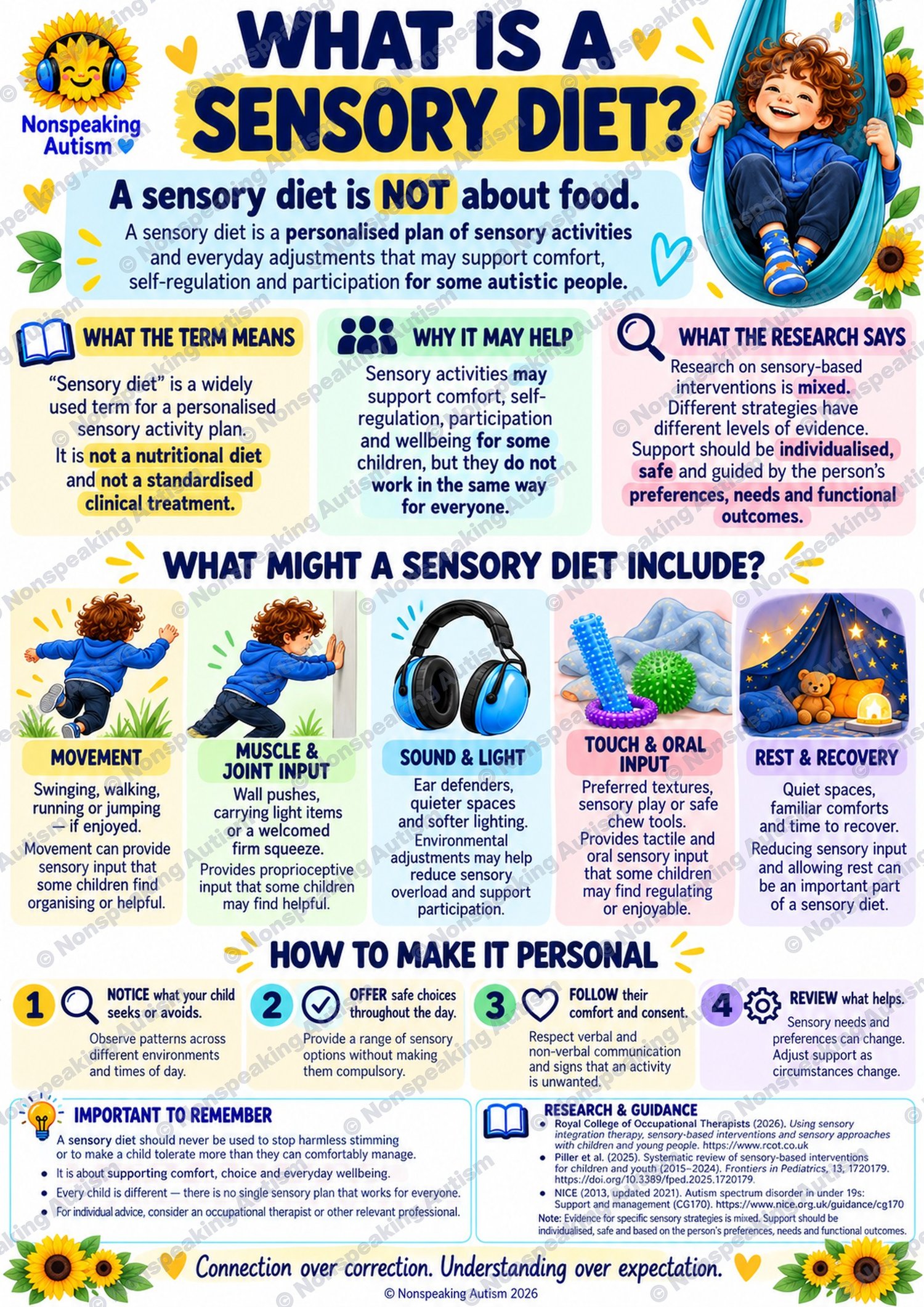
💙 A sensory diet is NOT about food. It is about understanding sensory needs and supporting everyday participation.
Every autistic child experiences the sensory world differently.
Some children enjoy movement, pressure, touch or particular sensory experiences. Others may find certain sounds, lights, textures or environments uncomfortable or overwhelming.
Some children seek particular sensations while avoiding others. Their preferences and needs may also change throughout the day.
A sensory diet is a commonly used term for a flexible, personalised plan of sensory activities and everyday environmental adjustments.
It is not a nutritional diet, a standardised clinical treatment or a one-size-fits-all programme.
Sensory activities and adjustments may support comfort, self-regulation, participation and wellbeing for some autistic children, but they do not work in the same way for everyone.
This FREE, research-informed educational poster introduces sensory diets in an accessible, compassionate and neurodiversity-affirming way.
Designed for parents, carers, teachers and SEND professionals, it encourages us to understand individual sensory experiences rather than assume that every child needs the same sensory strategies.
The goal is not to stop stimming or demand tolerance. It is to support safety, choice and everyday wellbeing.
🧠 WHAT IS A SENSORY DIET?
Despite its name, a sensory diet has nothing to do with food or nutrition.
The term is often used to describe an individualised selection of sensory activities, environmental adjustments and opportunities for rest that may help a person participate more comfortably in everyday life.
A sensory support plan might involve:
- Offering movement opportunities
- Providing access to preferred sensory activities
- Adjusting noise or lighting
- Making sensory tools available
- Supporting access to quieter spaces
- Allowing time for rest and recovery
- Reducing unnecessary sensory demands
- Respecting the child's preferences and communication
Importantly, sensory support does not always mean adding more stimulation.
For some children, reducing sensory input may be more helpful than introducing another activity.
A personalised plan should fit the person — not force the person to fit the plan.
💛 WHAT THIS POSTER EXPLORES
1. Understanding the Term “Sensory Diet”
The poster explains that a sensory diet is:
- A widely used term for a personalised sensory activity plan
- Flexible and responsive to individual needs
- Focused on comfort, access and meaningful participation
- Not a nutritional diet
- Not a standardised clinical treatment
- Not a guaranteed solution for sensory distress
A sensory diet should never be used as a way of making an autistic child appear less autistic.
It should not be designed to suppress harmless stimming, enforce compliance or make a child tolerate uncomfortable experiences.
2. Why Sensory Activities May Help
Different sensory activities may provide experiences that some children find enjoyable, comforting or helpful.
For example, a child may enjoy swinging, walking, using ear defenders or spending time in a quieter environment.
These experiences may help some children feel more comfortable or participate in activities that matter to them.
However, the benefits are individual.
An activity that helps one child may be uncomfortable, ineffective or unsuitable for another.
Sensory support should be based on the child's own experience, not assumptions about autism.
3. What the Research Says
Research on sensory-based interventions is mixed.
Different strategies have different levels of evidence supporting their effectiveness.
Some approaches have shown benefits for certain individuals or specific outcomes, while evidence for other approaches remains limited or inconsistent.
This means:
- No single sensory diet works for everyone.
- A particular activity should not be assumed to improve regulation.
- Support should be individualised.
- Safety, preferences and consent matter.
- Strategies should be reviewed against meaningful everyday outcomes.
Research-informed practice means recognising both the potential benefits and the limitations of sensory approaches.
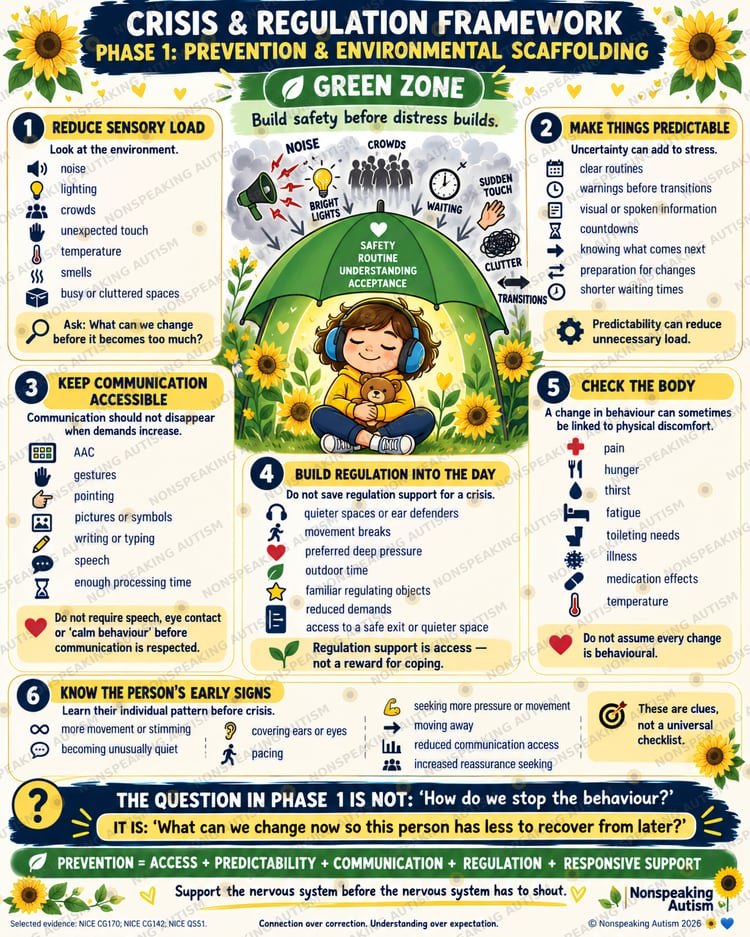
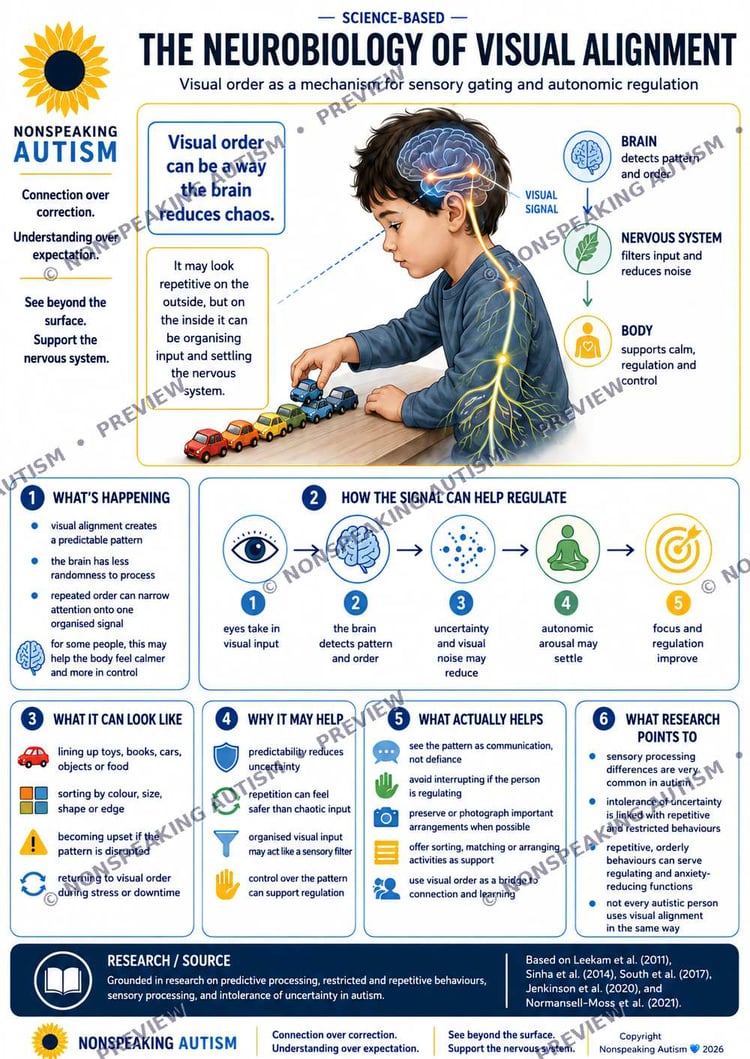
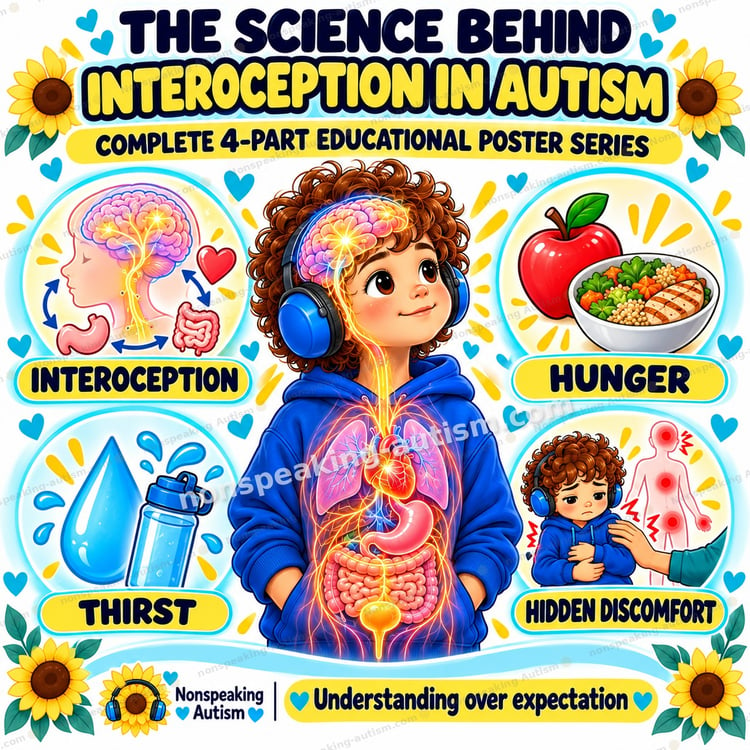
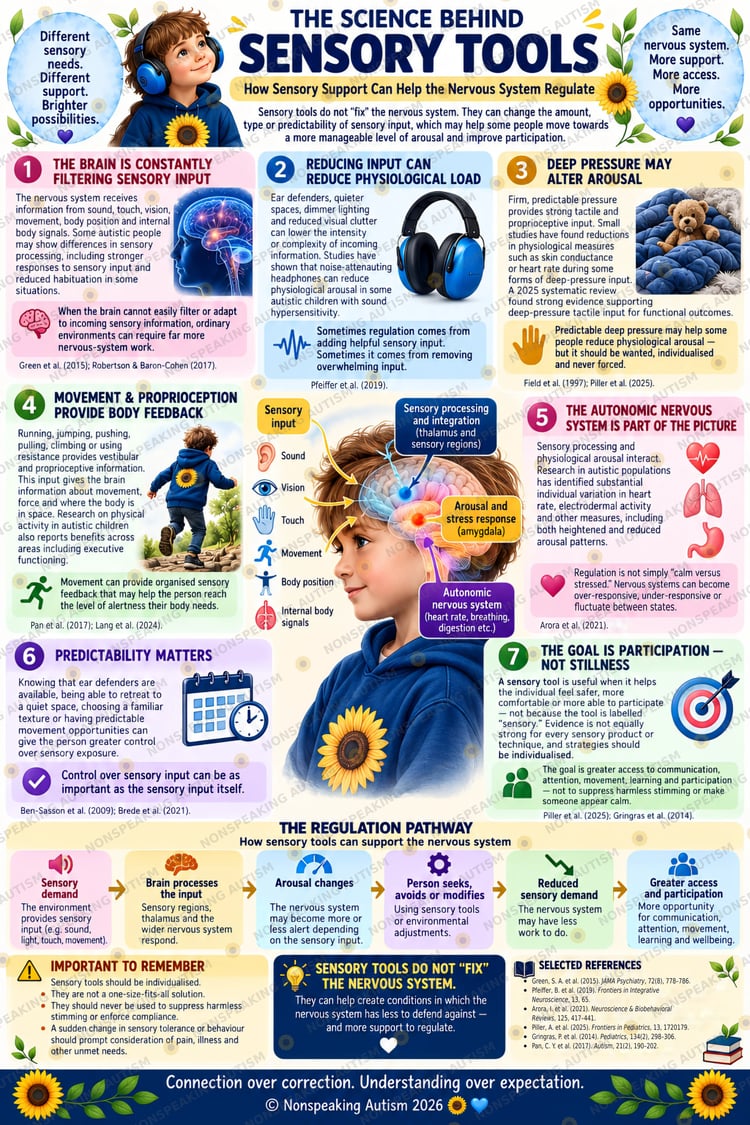
🌈 FIVE AREAS A SENSORY DIET MIGHT INCLUDE
🏃 1. Movement
Movement can provide vestibular and proprioceptive sensory experiences.
Examples include:
- Walking
- Running
- Swinging
- Jumping
- Other preferred movement activities
Some children may find movement enjoyable or helpful for attention, comfort or participation.
Others may prefer gentler movement or need support because of physical, balance or coordination difficulties.
Movement should always be appropriate to the child's abilities, preferences and safety.
Movement is a choice, not a compulsory intervention.
💪 2. Muscle & Joint Input
Proprioception involves sensory information about body position, movement and effort.
Activities that provide muscle and joint input may include:
- Wall pushes
- Carrying suitable lightweight items
- Pushing or pulling appropriate objects
- Preferred active play
- Welcomed firm pressure
Some children may enjoy these experiences, but their effects are not universal.
Firm touch or pressure must never be forced.
Any activity should be appropriate for the child's physical abilities and health needs.
🎧 3. Sound & Light Adjustments
Everyday environments can create sensory barriers.
Possible adjustments include:
- Ear defenders
- Quieter spaces
- Softer lighting
- Reduced background noise
- Access to breaks from busy environments
- Greater control over sensory surroundings
These adjustments may help make classrooms, homes and community spaces more comfortable and accessible.
The aim is not to make children tolerate overwhelming environments. It is to reduce unnecessary barriers.
🧸 4. Touch & Oral Sensory Input
Some children enjoy exploring particular textures or using preferred sensory objects.
Examples include:
- Familiar tactile materials
- Sensory play
- Preferred fidget objects
- Suitable textured items
- Purpose-designed chew tools, where appropriate
Not every child enjoys the same sensations.
Touch and oral sensory activities must respect preferences, consent, hygiene and safety.
Chew tools should be appropriate for the individual's needs and used with suitable supervision.
🌙 5. Rest & Recovery
Rest is an important part of considering sensory wellbeing.
A child may need:
- A quiet space
- Reduced demands
- Familiar comfort items
- Time away from busy environments
- Predictable recovery opportunities
- A break from unnecessary sensory stimulation
A sensory plan does not need to keep a child constantly active.
Sometimes the most supportive adjustment is simply allowing the nervous system and body time to recover.
Rest is not avoidance or failure. It can be an important part of participation and wellbeing.
💙 HOW TO MAKE SENSORY SUPPORT PERSONAL
The poster introduces four simple principles.
1. NOTICE
Observe what your child enjoys, seeks, avoids or finds difficult.
Consider patterns across different environments, times of day and activities.
2. OFFER
Provide safe sensory choices without making activities compulsory.
Give the child opportunities to choose, decline or change an activity.
3. FOLLOW
Respect comfort, preferences and consent.
Pay attention to speech, AAC, gestures, facial expressions, movement and other communication.
A child should be able to indicate that an activity is unwanted.
4. REVIEW
Notice what actually helps.
Sensory preferences, health, energy levels and environmental demands may change.
Adjust support accordingly.
Personalised sensory support should remain flexible, respectful and responsive.
🏫 USING THIS POSTER IN UK SCHOOLS & SEND SETTINGS
This resource may support conversations about sensory needs, accessibility and reasonable adjustments.
It can help parents, carers and school staff consider:
- Classroom noise and lighting
- Access to quieter areas
- Movement opportunities
- Sensory tools and personal preferences
- Communication access
- Predictable transitions
- Physical comfort
- Rest and recovery
- Individual sensory barriers to participation
The poster may be useful during discussions with:
- Class teachers
- Teaching assistants
- SENCOs
- SEND support teams
- Occupational therapists
- Speech and language therapists
- Early years practitioners
- Other professionals supporting autistic children
Sensory support should be considered alongside communication needs, physical health, emotional wellbeing and the child's own preferences.
The purpose of reasonable adjustments is to reduce barriers to access and participation — not to reward compliance.
🔬 RESEARCH & PROFESSIONAL GUIDANCE
Sensory processing differences are widely recognised in autism, but sensory experiences and support needs vary considerably between individuals.
Research on sensory-based interventions has produced mixed findings.
Some strategies may be beneficial for particular individuals or outcomes, while others require stronger evidence.
This is why sensory approaches should be chosen carefully, reviewed regularly and linked to meaningful everyday goals.
📚 Selected Research & References
1. Royal College of Occupational Therapists (RCOT). (2026).
Using sensory integration therapy, sensory-based interventions and sensory approaches with children and young people.
Professional guidance on sensory approaches, individualised practice and consideration of evidence.
https://www.rcot.co.uk/explore-resources/children-young-people-families/sensory-approaches
2. Piller, A., et al. (2025).
Systematic review of sensory-based interventions for children and youth (2015–2024).
Frontiers in Pediatrics, 13, Article 1720179.
https://doi.org/10.3389/fped.2025.1720179
3. National Institute for Health and Care Excellence (NICE). (2013, updated 2021).
Autism spectrum disorder in under 19s: Support and management (CG170).
https://www.nice.org.uk/guidance/cg170
Research Evidence Note
These references support the broader educational discussion of sensory processing, environmental adjustments and sensory-based approaches.
They do not establish that every activity described in this poster is effective for every autistic child.
Evidence for specific sensory strategies varies.
This poster is not a validated assessment, prescribed sensory diet or standardised clinical intervention.
Sources:
👨👩👧 WHO IS THIS FREE RESOURCE FOR?
This educational poster may be helpful for:
- Parents and carers of autistic children
- Autistic children and young people
- Autistic adults exploring sensory support
- Teachers and teaching assistants
- SENCOs and SEND professionals
- Occupational therapists
- Speech and language therapists
- Early years practitioners
- Family support workers
- Professionals supporting sensory accessibility
- Anyone learning about personalised sensory support
It can be used for educational discussions, parent information, staff awareness and conversations about sensory needs.
📦 WHAT YOU RECEIVE
💛 FREE DIGITAL DOWNLOAD
Your download includes:
1 × What Is a Sensory Diet? — A2 Educational Poster
Print specifications:
- Format: High-resolution PNG and print-ready PDF, where both are included in the download
- Paper size: A2 portrait
- Dimensions: 420 × 594 mm
- PNG resolution: 4961 × 7016 pixels
- Print resolution: 300 DPI
- Full-colour illustrated educational design
- British English wording
- Nonspeaking Autism branding
The poster includes explanations of sensory diets, five possible sensory support areas, four principles for personalisation, research guidance and safety reminders.
The downloadable files are intended for printing without promotional preview watermarks.
This is a digital product. No physical poster will be posted.
⚠️ IMPORTANT DISCLAIMER
This resource is intended for general educational and informational purposes only.
It does not provide a diagnosis, occupational therapy assessment, prescribed treatment programme or individualised clinical advice.
Sensory activities should be selected according to the person's preferences, communication, physical abilities, health needs and safety.
Never force sensory input, deep pressure, physical contact or activities that cause discomfort or distress.
Some sensory tools and activities may present risks depending on the individual's age, abilities and circumstances.
Seek advice from a suitably qualified occupational therapist or other relevant healthcare professional when individual assessment or specialist guidance is required.
No single sensory approach is suitable for everyone.
©️ COPYRIGHT & PERMITTED USE
Copyright © 2026 Nonspeaking Autism. All rights reserved.
This resource is provided FREE of charge through Payhip for personal, family, classroom, school and individual professional educational use.
You may print the poster for these purposes.
You may not:
- Resell the poster or digital files
- Redistribute the original downloadable files
- Upload the files to another website or digital platform
- Remove the branding and claim the artwork as your own
- Reproduce the artwork commercially
- Include the poster in products or collections for resale
Please share the original Payhip product link rather than redistributing the downloadable file.
💛 THE MESSAGE BEHIND THIS RESOURCE
A sensory diet should not be about changing who an autistic child is.
It should not be used to stop harmless stimming, demand compliance or make a child endure overwhelming experiences.
It should be about listening, observing and responding to individual needs.
Some children may benefit from movement.
Others may prefer quiet.
Some may enjoy particular textures, while others need less sensory input.
And what helps today may not be what helps tomorrow.
There is no single sensory plan that works for everyone.
The most important questions are:
“What does this person find comfortable?”
“What support do they want or need?”
“Is this helping them participate in ways that matter to them?”
Because meaningful sensory support begins with understanding, choice and respect.
🌻 Connection over correction. Understanding over expectation. 💙
Nonspeaking Autism © 2026