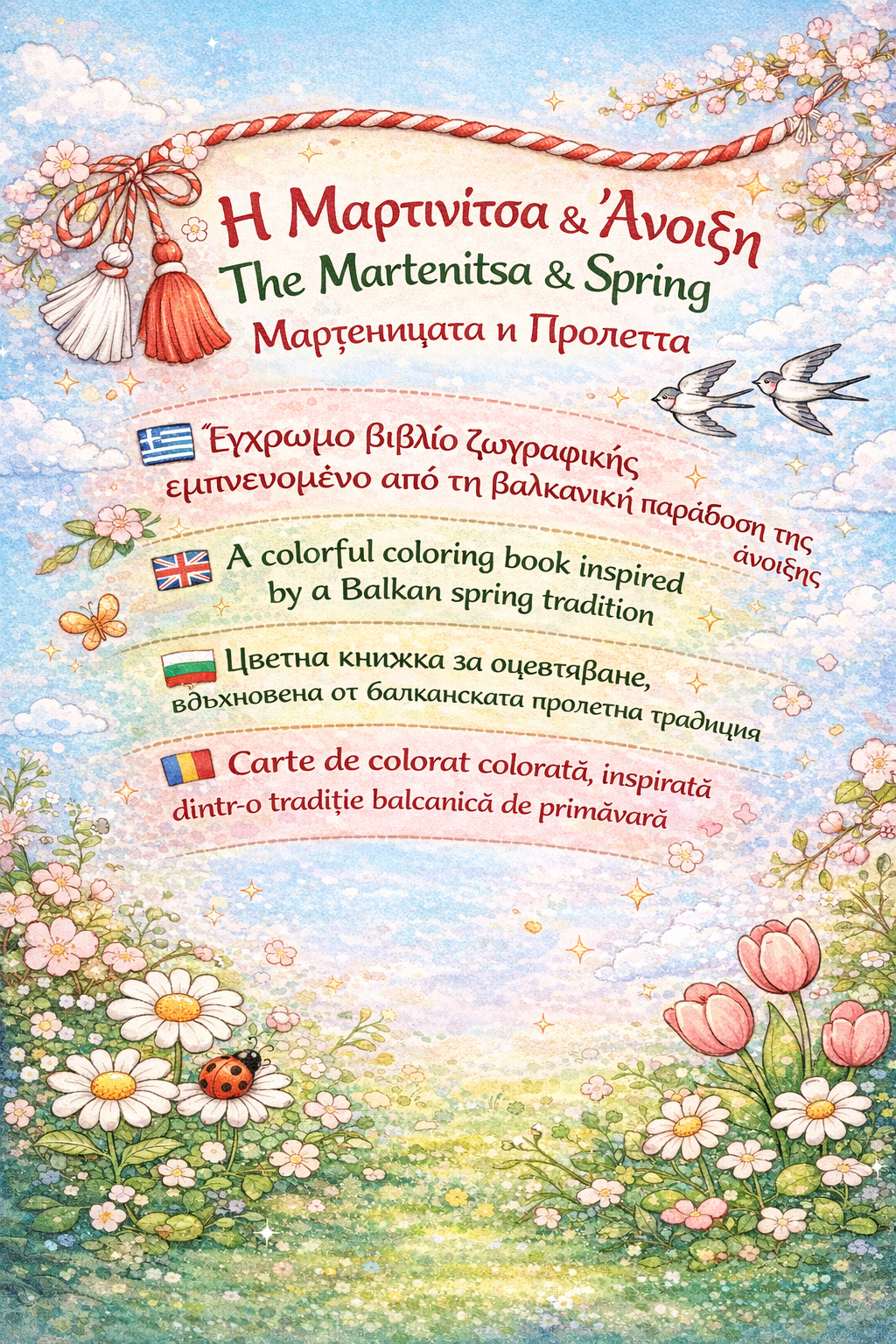
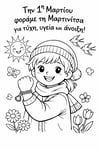

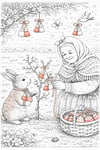
The martenitsa and the spring, 54 designs, coloring ebook, digital printable product, instantly download
The martenitsa and the spring, 54 designs, coloring ebook, digital printable product, instantly download. Το έθιμο της μαρτινίτσας: ένα κόκκινο-άσπρο νήμα που ενώνει λαούς
Η μαρτινίτσα (ή «μάρτης», «μαρτιά», Mărțișor, «marteniça») είναι ένα παλιό βαλκανικό έθιμο που συνδέεται με τον ερχομό της άνοιξης, την αναγέννηση της φύσης και την προστασία από το “κακό μάτι”.
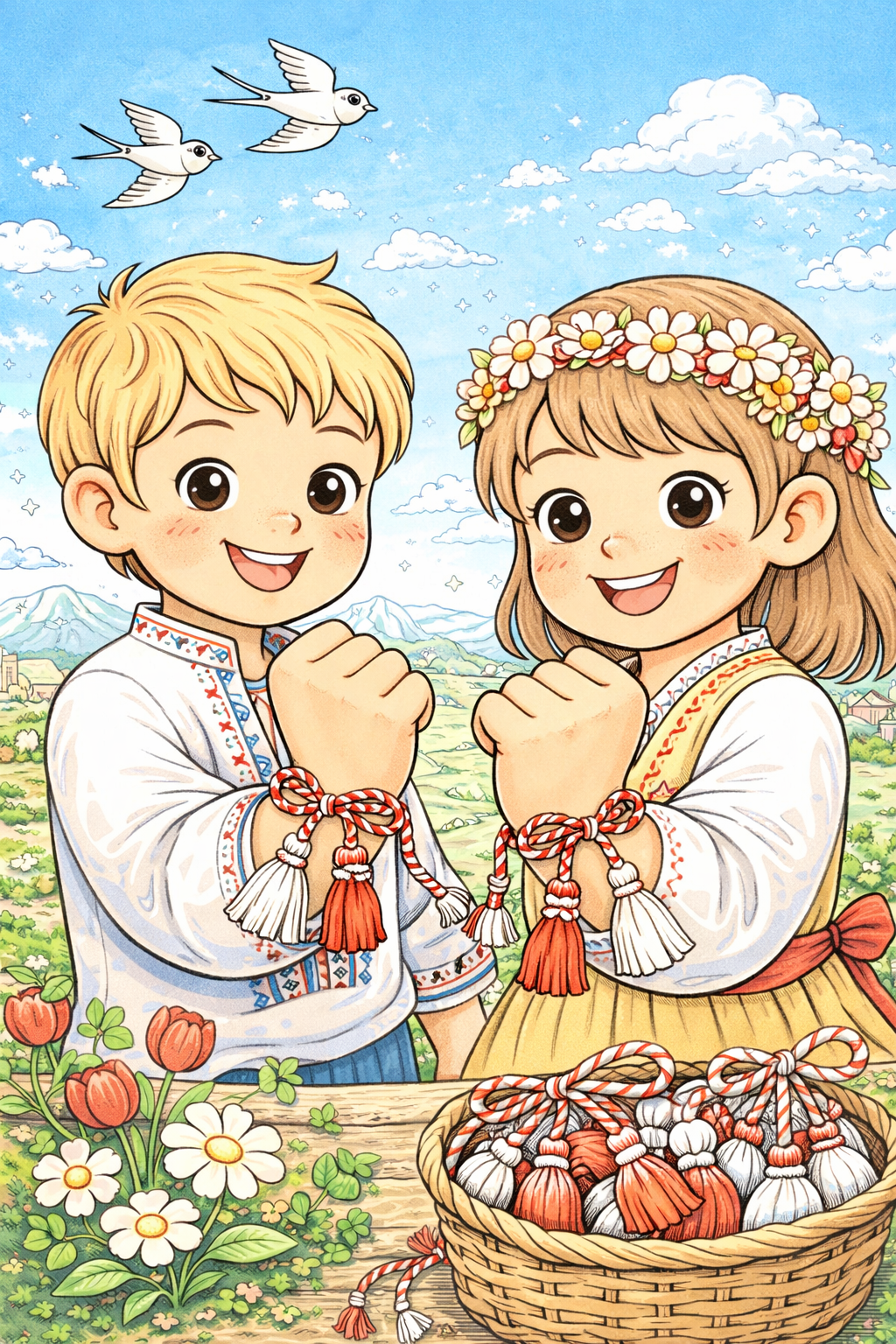
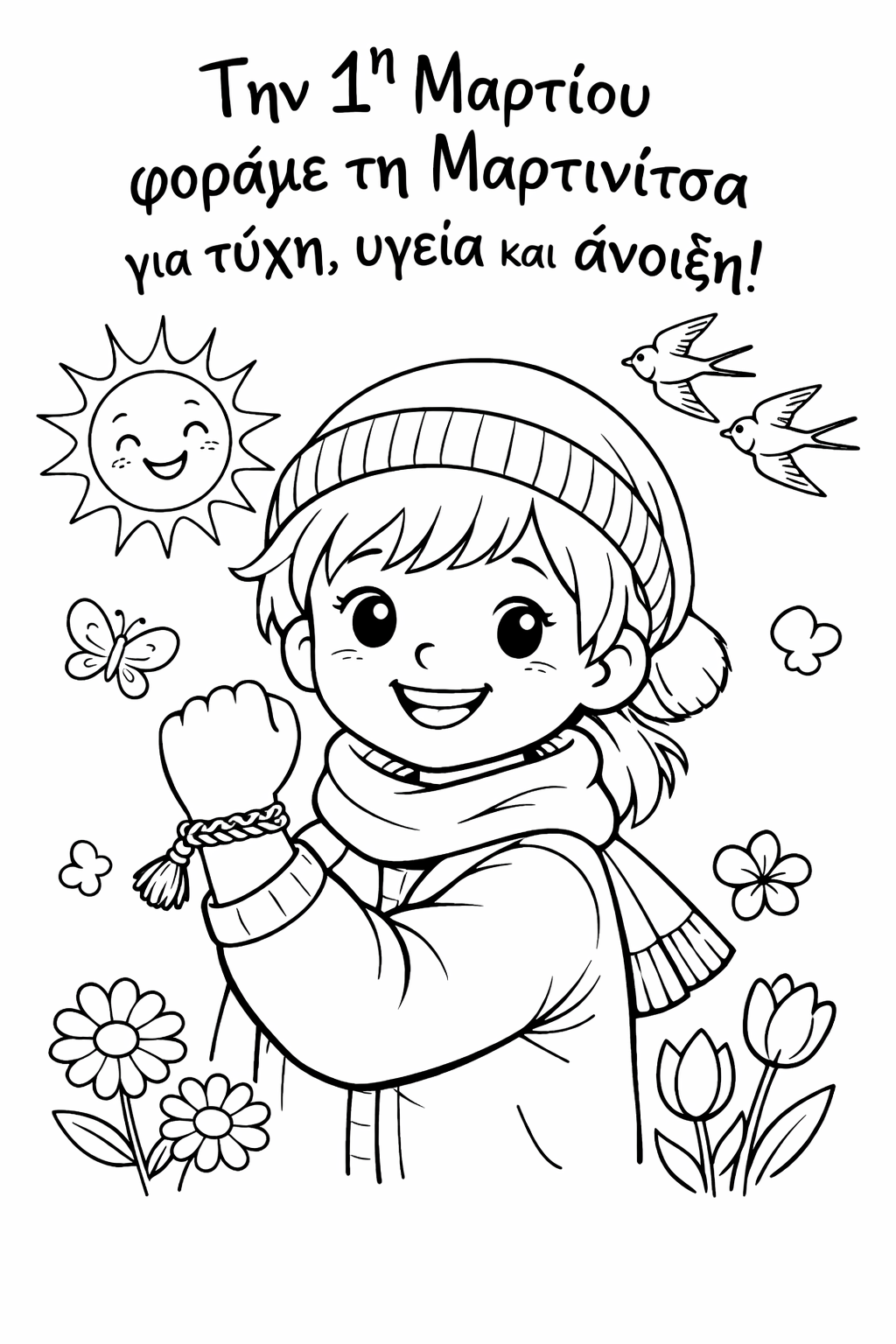
Φτιαγμένη από κόκκινη και άσπρη κλωστή, φοριέται από την 1η Μαρτίου και αφαιρείται όταν εμφανιστεί το πρώτο χελιδόνι ή ανθίσει κάποιο δέντρο.
Παρότι κάθε χώρα έχει τις δικές της παραλλαγές, το μήνυμα είναι κοινό: ευχή για υγεία, τύχη και νέο ξεκίνημα.
Βουλγαρία: η πατρίδα της «Μαρτενίτσα»
Στη Βουλγαρία το έθιμο έχει ιδιαίτερη βαρύτητα.
Η Martenitsa συχνά παίρνει τη μορφή δύο μικρών φιγούρων από νήμα, του Πίτσο (κόκκινος) και της Πέντα (άσπρη).
- Φοριέται στις 1 Μαρτίου, ημέρα της Baba Marta, μυθικού συμβόλου που «φέρνει» την άνοιξη.
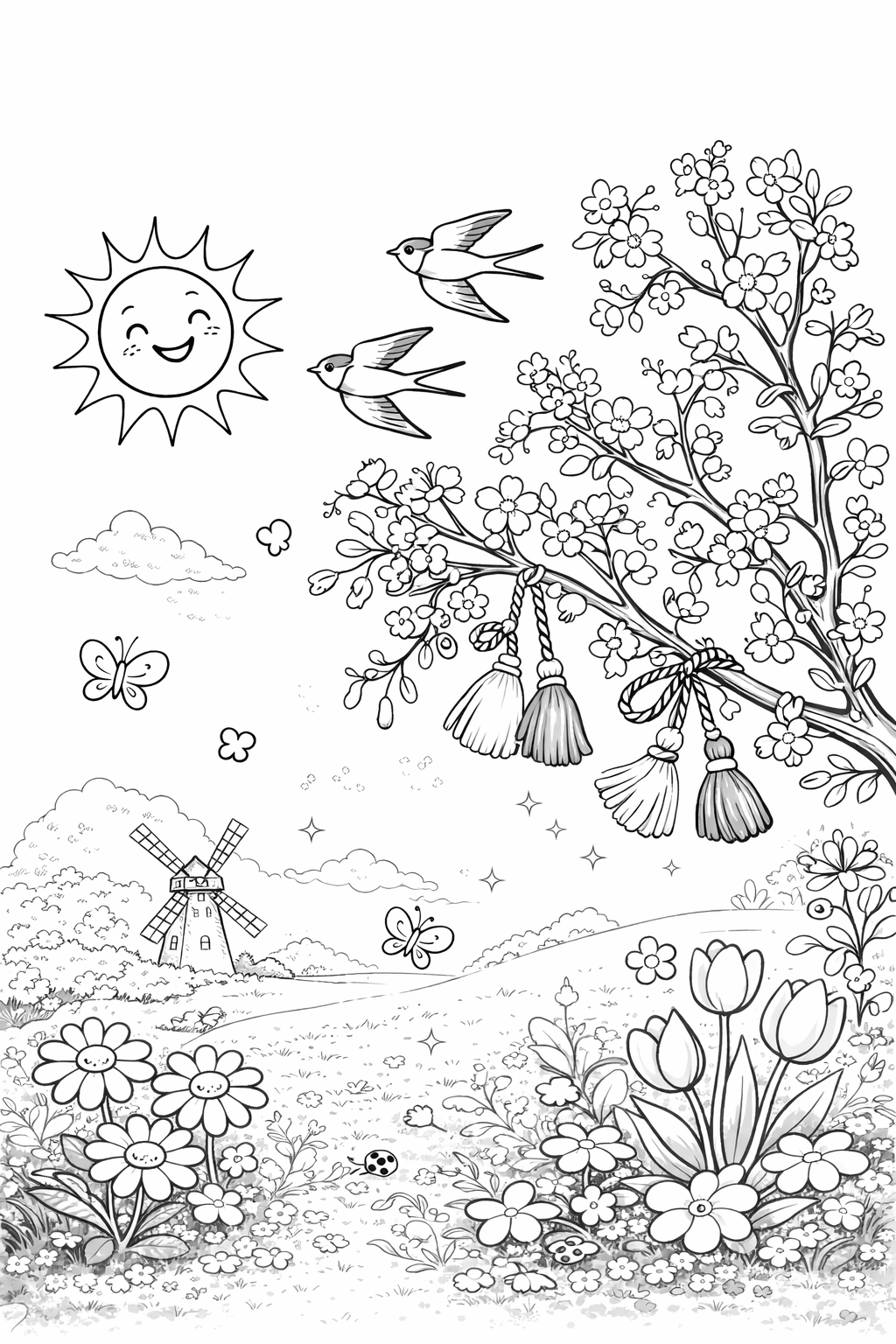
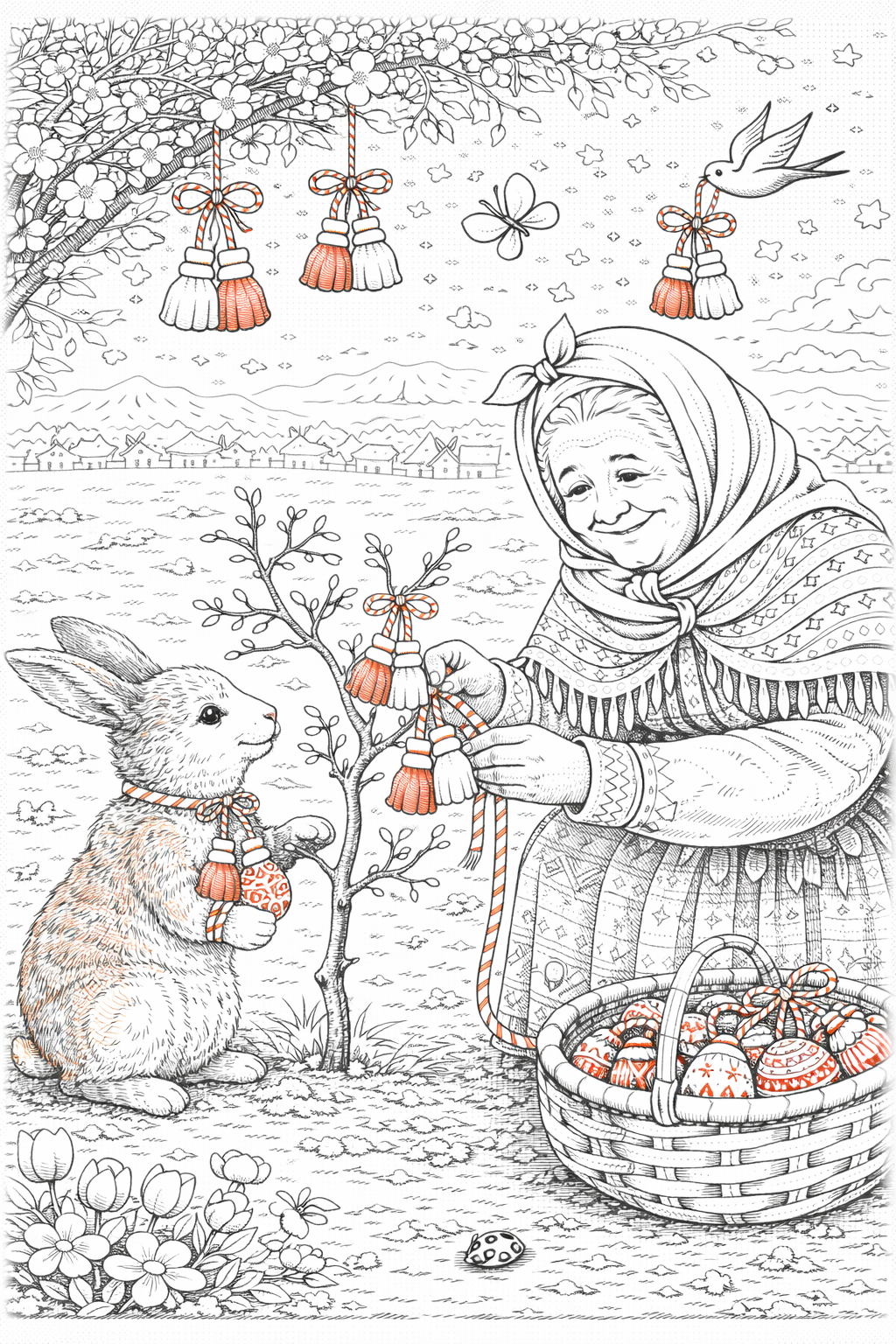
- Όταν εμφανιστούν τα πρώτα σημάδια άνοιξης, η μαρτενίτσα κρεμιέται σε κλαδί δέντρου.
- Έχει αναγνωριστεί ως στοιχείο άυλης πολιτιστικής κληρονομιάς από την UNESCO.
Ελλάδα: ο «Μάρτης» που προστατεύει από τον ήλιο
Στην Ελλάδα το έθιμο είναι γνωστό ως Μάρτης.
- Φοριέται κυρίως στο χέρι, ειδικά από τα παιδιά, για να μην «τα κάψει» ο πρώτος ήλιος.
- Βγαίνει όταν φανούν τα χελιδόνια και κρεμιέται σε ανθισμένα κλαδιά, για να «πιάσει» η ευχή.
- Συνδέεται με παλιές αγροτικές παραδόσεις και λαϊκές δοξασίες.
Τουρκία: «marteniçka» και ευχές για καλοτυχία
Στην Τουρκία το έθιμο συναντάται κυρίως σε βαλκανικές κοινότητες και δυτικές περιοχές.
- Το κόκκινο και άσπρο νήμα συμβολίζει υγεία, ζωή και αγνότητα.
- Φοριέται μέχρι να φανούν σημάδια άνοιξης και μετά δένεται σε δέντρο.
- Το μοίρασμα θεωρείται πράξη φιλίας και καλής πρόθεσης.
Ρουμανία: το γοητευτικό «Mărțișor»
Στη Ρουμανία (και στη Μολδαβία) το έθιμο λέγεται Mărțișor και έχει έντονο συμβολικό χαρακτήρα.
- Στις 1 Μαρτίου οι άνθρωποι φορούν μια μικρή κόκκινη-άσπρη κορδέλα μαζί με φυλαχτό — συχνά λουλούδι, πέταλο ή μικρό μενταγιόν.
- Παραδοσιακά, οι άντρες το προσφέρουν σε γυναίκες ως ευχή για υγεία και καλοτυχία όλη τη χρονιά.
- Λίγες μέρες αργότερα (συνήθως μέχρι τις 8 ή 9 Μαρτίου), το Mărțișor δένεται σε ανθισμένο δέντρο ή φυλάσσεται ως ενθύμιο.
- Το έθιμο έχει επίσης ενταχθεί σε καταλόγους άυλης πολιτιστικής κληρονομιάς, υπογραμμίζοντας τη σημασία του για την ταυτότητα της περιοχής.
Κοινά σύμβολα — διαφορετικές αφηγήσεις
Παρά τις τοπικές παραλλαγές, η μαρτινίτσα —ο Μάρτης, το Martenitsa ή το Mărțișor—:
- συμβολίζει την ισορροπία (κόκκινο-άσπρο, ζωή-αγνότητα),
- γιορτάζει την ανανέωση της φύσης,
- καλλιεργεί την ιδέα της κοινότητας και της ανταλλαγής ευχών.
Το έθιμο αποκαλύπτει τις κοινές πολιτιστικές ρίζες των Βαλκανίων, δείχνοντας πώς οι παραδόσεις ταξιδεύουν και προσαρμόζονται χωρίς να χάνουν τη γοητεία τους.
Η μαρτινίτσα —σε όποια μορφή κι αν τη συναντήσουμε— είναι κάτι παραπάνω από στολίδι. Είναι υπόσχεση άνοιξης, υγείας και ελπίδας· ένα μικρό νήμα που ενώνει χώρες, μνήμες και ανθρώπους.
The custom of the martinitsa: a red and white thread that unites peoples
The martinitsa (or “martyr”, “martia”, Mărțișor, “marteniça”) is an old Balkan custom associated with the arrival of spring, the rebirth of nature and protection from the “evil eye”.
Made of red and white thread, it is worn from March 1st and removed when the first swallow appears or a tree blooms.
Although each country has its own variations, the message is common: a wish for health, luck and a new beginning.
Bulgaria: the homeland of the “Martenitsa”
In Bulgaria, the custom has particular significance.
The Martenitsa often takes the form of two small figures made of thread, Pitso (red) and Penta (white).
It is worn on March 1, the day of Baba Marta, a mythical symbol that "brings" spring.
When the first signs of spring appear, the martenitsa is hung on a tree branch.
It has been recognized as an element of intangible cultural heritage by UNESCO.
Greece: the "March" that protects from the sun
In Greece, the custom is known as March.
It is mainly worn on the hand, especially by children, so that the first sun does not "burn" them.
It comes out when the swallows appear and is hung on flowering branches, so that the wish "catches".
It is associated with old agricultural traditions and folk beliefs.
Turkey: "marteniçka" and wishes for good luck
In Turkey, the custom is mainly found in Balkan communities and western regions.
The red and white thread symbolizes health, life and purity.
It is worn until signs of spring appear and then tied to a tree.
Sharing is considered an act of friendship and goodwill.
Romania: the charming “Mărțișor”
In Romania (and Moldova) the custom is called Mărțișor and has a strong symbolic character.
On March 1, people wear a small red-and-white ribbon along with an amulet — often a flower, petal or small pendant.
Traditionally, men offer it to women as a wish for health and good luck throughout the year.
A few days later (usually by March 8 or 9), the Mărțișor is tied to a flowering tree or kept as a souvenir.
The custom has also been included in the lists of intangible cultural heritage, underlining its importance for the identity of the region.
Common symbols — different narratives
Despite local variations, the martini —Martenitsa, Martenitsa or Mărțișor—:
symbolizes balance (red-white, life-purity),
celebrates the renewal of nature,
cultivates the idea of community and the exchange of wishes.
The custom reveals the common cultural roots of the Balkans, showing how traditions travel and adapt without losing their charm.
The martini —in whatever form we encounter it— is more than just an ornament. It is a promise of spring, health and hope; a small thread that unites countries, memories and people.