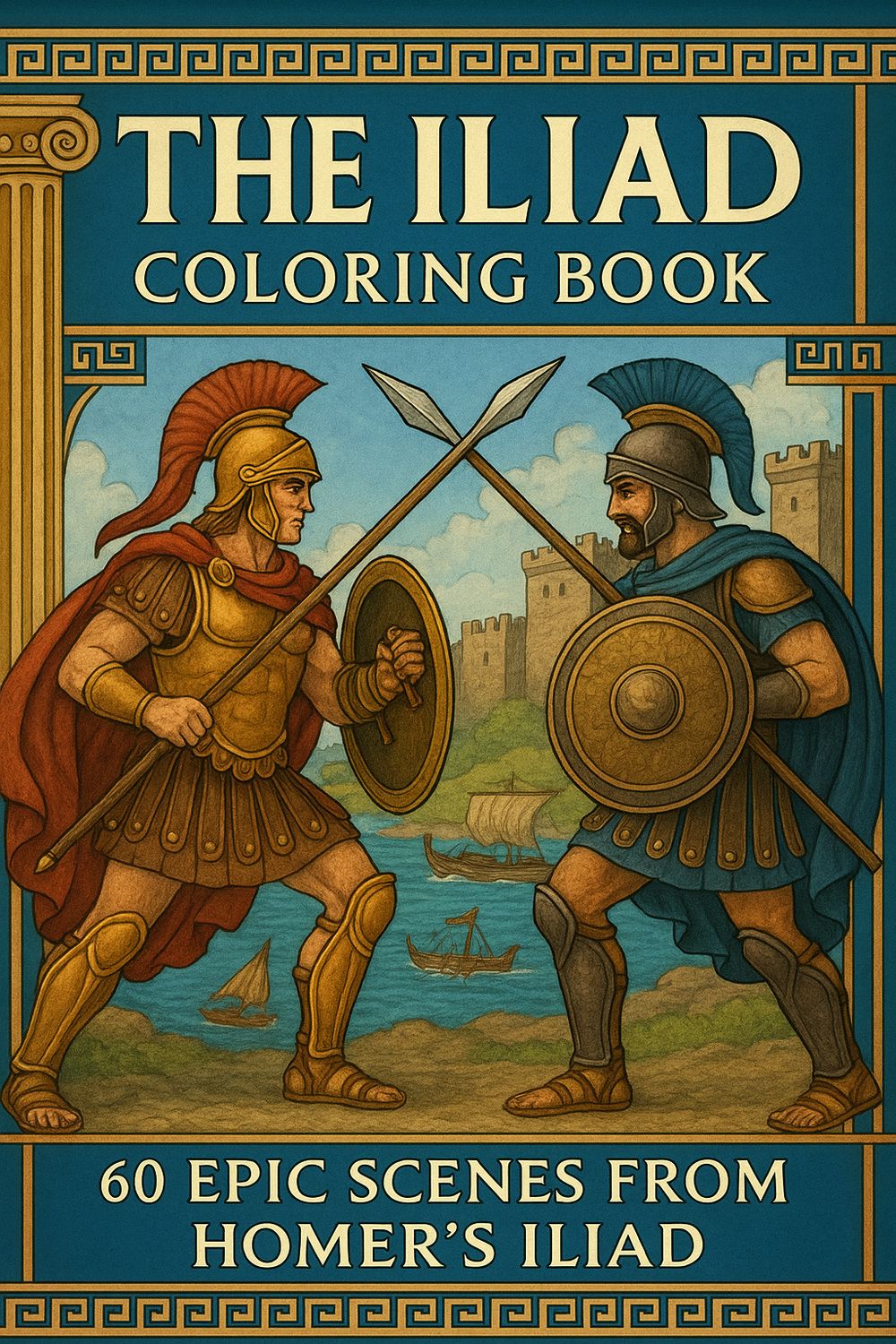
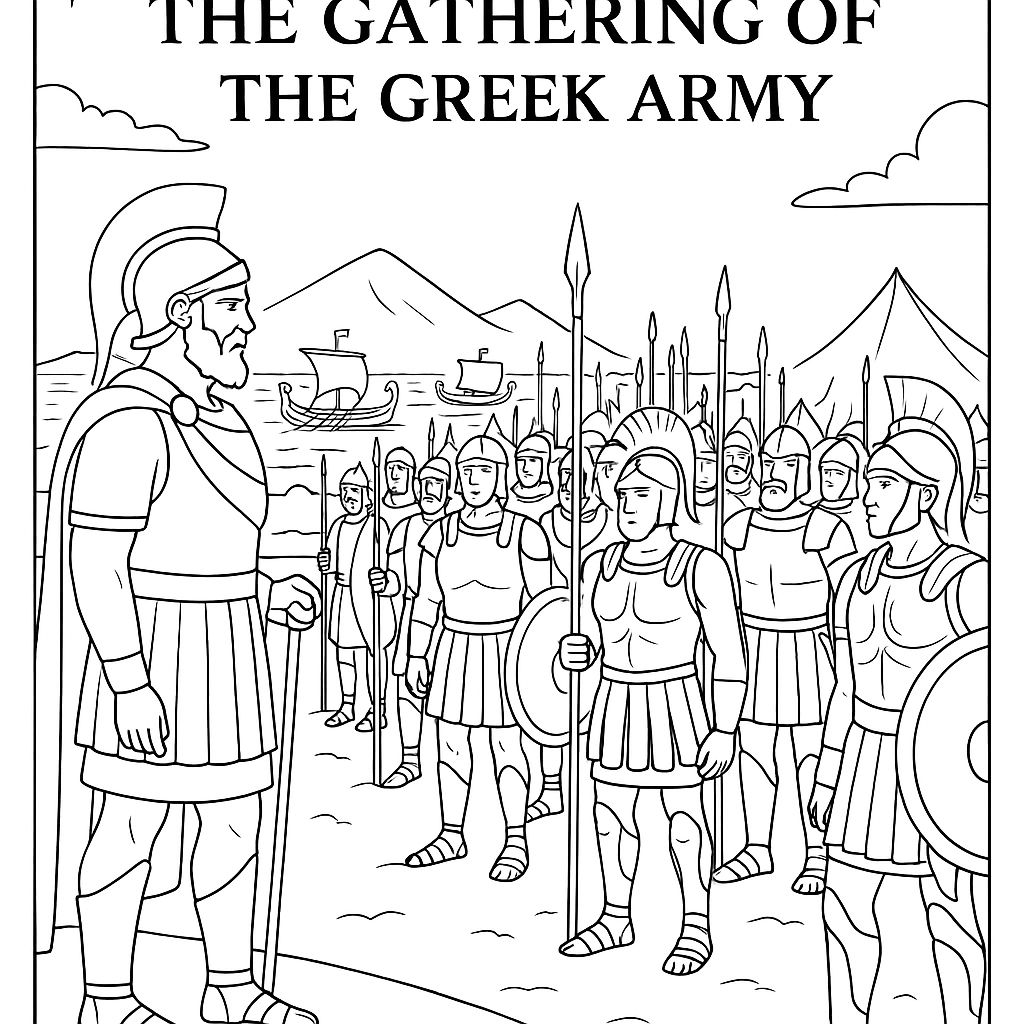
Iliad of Homer, coloring ebook, 61 designs, digital product, instantly download
Iliad of Homer, coloring ebook, 61 designs, digital product, instantly download. The Iliad of Homer: Origins, Themes, Characters & Legacy of the World’s Greatest Epic
Introduction
Few works in human history have shaped literature, culture, and storytelling as profoundly as Homer’s Iliad. Written nearly 3,000 years ago, the poem remains a foundational text of Western civilization, influencing everything from classical philosophy to modern cinema.
Set during the Trojan War, the Iliad is not a simple tale of heroes and battles. It is a deep exploration of anger, honor, mortality, glory, and the fragile nature of human life.
This article offers an in-depth look at the epic: its historical context, major characters, themes, structure, symbolism, and its lasting global impact.
1. Historical Background
1.1 When Was the Iliad Written?
Scholars generally date the poem to around 750–700 BCE, though its roots lie in centuries-old oral traditions passed down by bards. Homer, if he was a single individual, likely did not invent the story—he refined and immortalized it.
1.2 Oral Tradition and Formulaic Poetry
Before writing became widespread, Greek poets preserved history and mythology through song. The Iliad contains:
Repetitive phrases (epithets like “swift-footed Achilles”)
Set descriptions
Rhythmical structures (dactylic hexameter)
These features helped oral performers remember thousands of lines and allowed the epic to evolve over generations.
1.3 The Trojan War: Myth or History?
Archaeology confirms that a city resembling Troy existed in northwest Turkey, and around 1200 BCE it experienced destruction.
Whether the actual war occurred is debated, but the cultural memory became a powerful myth that Homer shaped into art.
2. Overview of the Story
2.1 Not the Whole War—Just a Slice
Contrary to popular belief, the Iliad does not recount the entire Trojan War.
It covers just a few weeks in the final year, focusing on the rage of Achilles and the tragic chain of events that follows.
2.2 The Opening: “Sing, Goddess, of the Rage of Achilles”
The first line sets the theme:
Achilles, the greatest Greek warrior, is dishonored.
He withdraws from battle.
His absence leads to destruction for both sides.
2.3 Key Plot Points
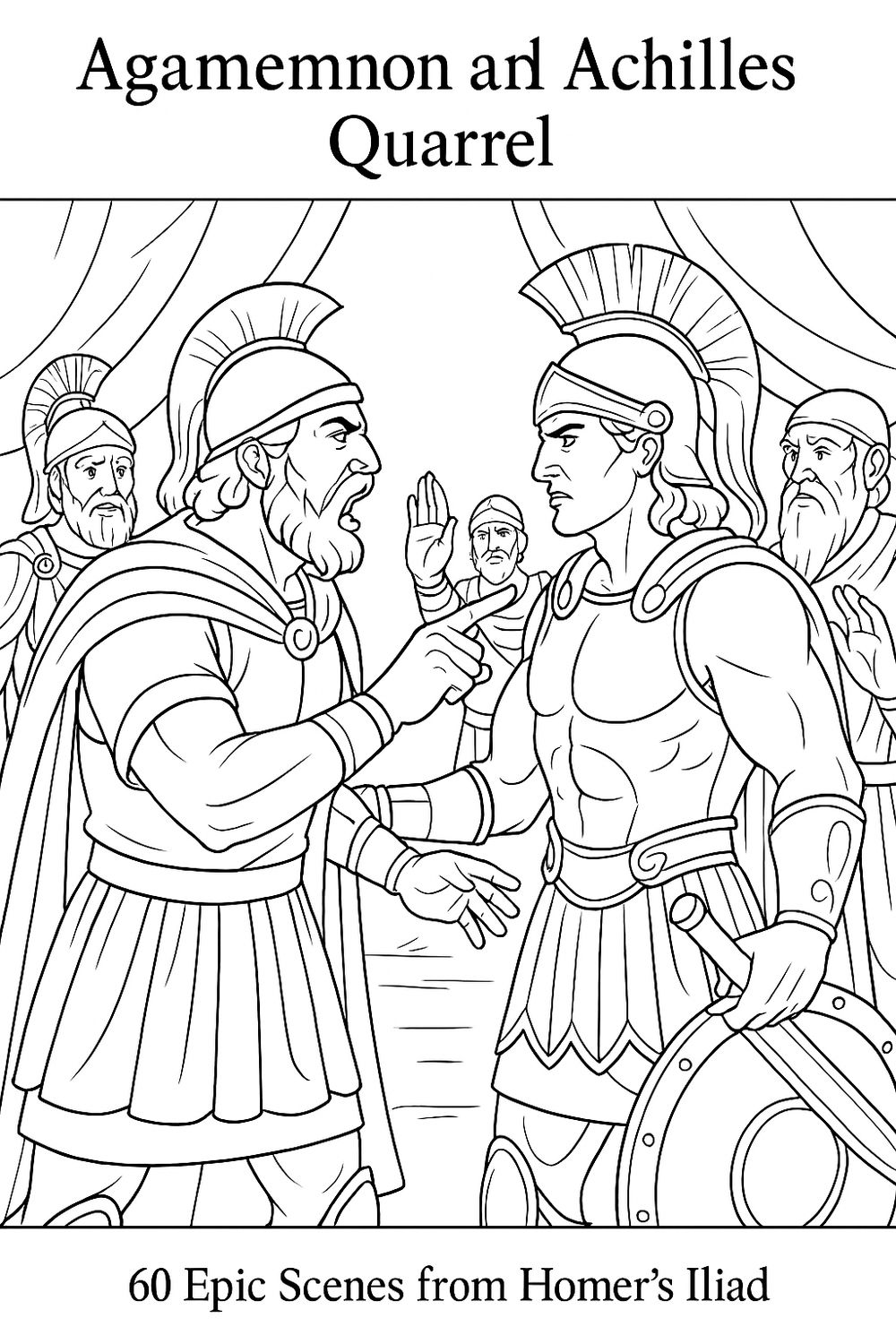
Agamemnon and Achilles clash over Briseis
Achilles refuses to fight, threatening the Greek army
The Trojans, led by Hector, push the Greeks back
Patroclus enters battle wearing Achilles’ armor
Hector kills Patroclus
Achilles returns in fury and slays Hector
Priam, Hector’s aged father, begs Achilles for the body
Achilles, moved by Priam’s grief, finally shows mercy
The poem ends with the funeral of Hector—not the fall of Troy.
3. Major Characters
3.1 Achilles
The poem’s central figure
Half-divine, vulnerable only at the heel in later myths
Furious, proud, self-destructive yet capable of great compassion
His conflict is internal: glory vs. humanity
3.2 Hector
The noble defender of Troy. Unlike Achilles, he fights for:
Family
Home
Duty
Hector is often viewed as the most human and sympathetic character.
3.3 Agamemnon
Leader of the Greek forces. His arrogance and political pride spark the conflict with Achilles.
3.4 Priam
The aged king of Troy, tragic and wise. His emotional plea to Achilles is one of the most beautiful scenes in all literature.
3.5 The Gods
Zeus, Athena, Apollo, Hera, Ares, and others frequently intervene.
They:
Manipulate events
Support favorite heroes
Reflect human emotions on a divine scale
The gods reveal a world where fate is powerful, and humans are caught between divine rivalries.
4. Key Themes
4.1 The Nature of Anger
The Iliad begins with anger and ends through the overcoming of anger.
Achilles’ wrath is:
Destructive
Irrational
A force that consumes both enemies and loved ones
Yet, the epic also shows how anger can be transformed through empathy and understanding.
4.2 Mortality and the Human Condition
Homer constantly contrasts:
Divine immortality
Human fragility
Every victory is temporary; every life is precious precisely because it is short.
4.3 Honor and Glory (Kleos)
Greek warriors pursued kleos—eternal fame.
Achilles must choose:
Long peaceful life
Short life with everlasting glory
He chooses glory, preserving his name forever—at the cost of his humanity.
4.4 War: Brutal and Beautiful
The Iliad glorifies heroism but never hides the horrors of battle:
Detailed killing scenes
Emotional laments
The suffering of families
It is both a celebration and a condemnation of war.
4.5 Fate vs. Free Will
Characters often know their destinies but still act with freedom.
Achilles is fated to die if he fights—yet he returns anyway.
5. Structure and Style
5.1 24 Books
The Iliad is divided into 24 sections, each called a "book."
This structure was created later by scholars in Alexandria.
5.2 Dactylic Hexameter
The rhythm of Greek epic poetry, giving the poem a musical quality and aiding memory.
5.3 Similes and Imagery
Homer is famous for extended similes:
Warriors compared to lions
Armies to waves
Moments of grief to storms
These comparisons bring the ancient world to life with vivid detail.
6. Historical and Cultural Significance
6.1 The Foundation of Western Literature
Every major classical author—from Aeschylus to Plato—knew the Iliad.
Its influence extends into:
Drama
Philosophy
Art
Modern literature
Film (e.g., Troy)
6.2 A Window Into Ancient Greek Values
The poem reflects:
Heroic ideals
Social hierarchy
Religious beliefs
Warfare practices
It also preserves ancient Greek identity during the transition between the Bronze Age and the Iron Age.
6.3 Education and the Human Spirit
For centuries, the Iliad was the core text for teaching:
Ethics
Leadership
Honor
Rhetoric
Even today, many find the dialogue between Achilles and Priam deeply relevant to modern discussions of empathy and conflict resolution.
7. Interpretations Through Time
7.1 Ancient Greece
Seen as divinely inspired and historically accurate.
7.2 The Middle Ages
Viewed through Christian morality—Achilles became a symbol of pride.
7.3 The Renaissance
Rediscovered as a masterpiece of human emotion and artistic form.
7.4 Modern Times
Interpreted as:
A psychological study
A philosophical work on mortality
An anti-war text
A political commentary
The Iliad adapts to every age because its themes are universal.
8. Why the Iliad Still Matters
The reason the epic survives is simple:
It tells the truth about human nature.
We seek glory.
We fall into anger.
We love deeply.
We grieve painfully.
We must face death.
The Iliad speaks to the eternal struggles of the human heart.
Conclusion
Homer’s Iliad is more than an ancient poem—it's a timeless mirror reflecting the best and worst of humanity. It captures the beauty and brutality of life, the complexity of heroes, the fragility of pride, and the power of mercy.
From the opening invocation to the quiet dignity of Hector’s funeral, the Iliad remains one of the greatest achievements of world literature—a story that will continue to inspire minds and hearts for generations.