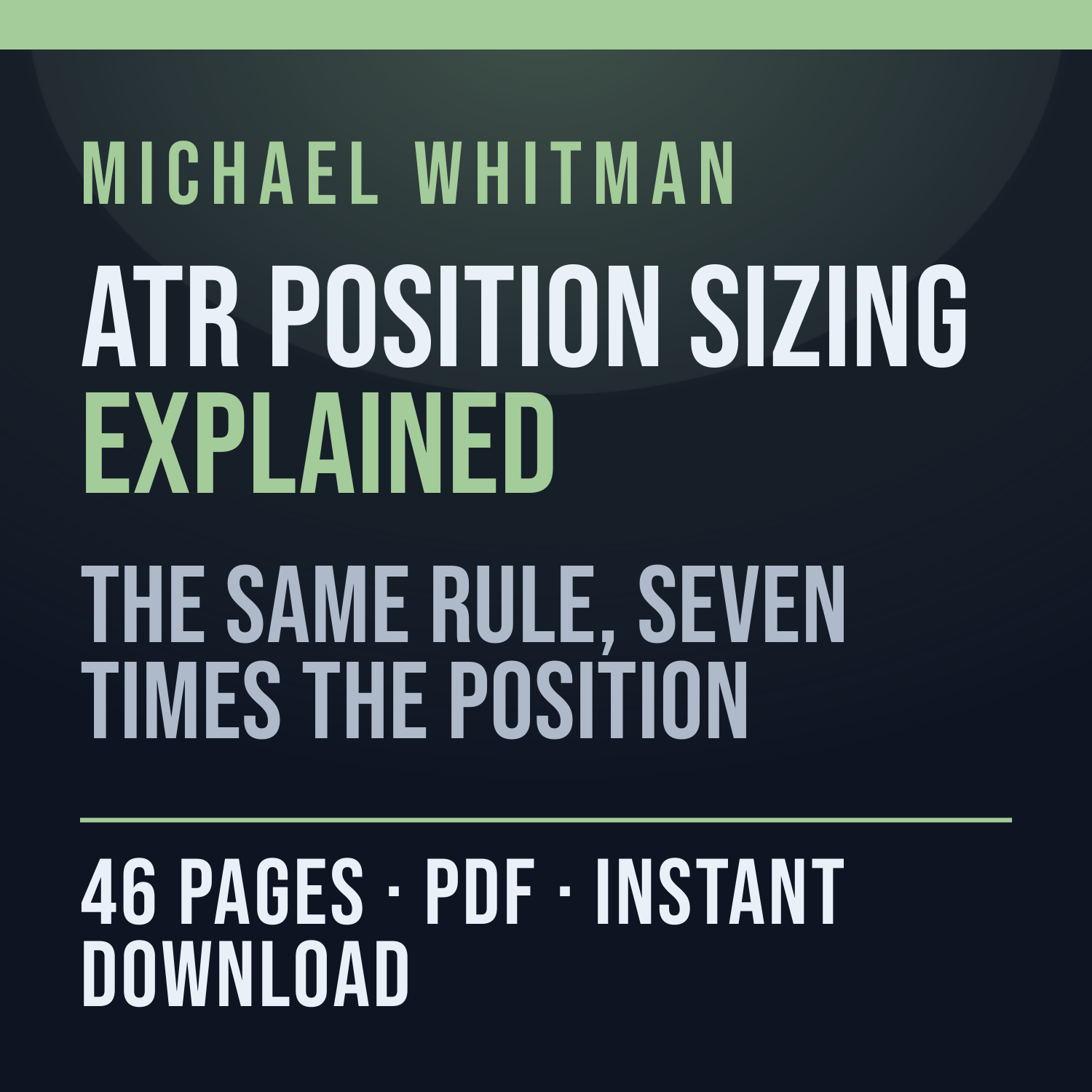



ATR Position Sizing Explained — Measured (PDF Guide)
"Risk one per cent per trade" is the most repeated sentence in trading education, and almost nobody who repeats it has worked out what it implies on the chart they are actually looking at. The answer depends entirely on the timeframe, and on fast bars it is not a number most people would accept if they saw it written down.
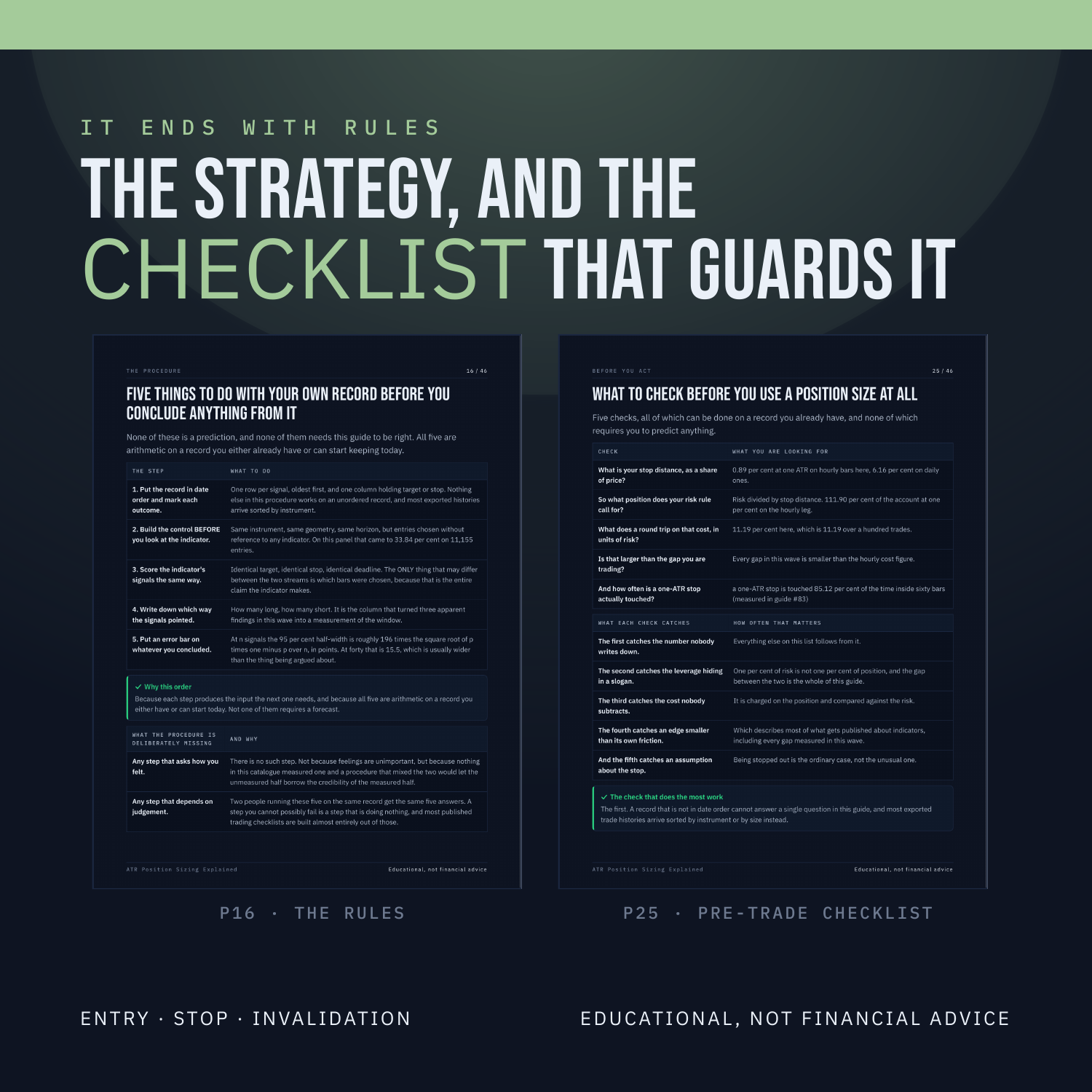
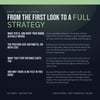
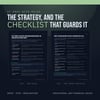
This guide does the arithmetic on both legs of the study panel. Same rule, same account, two timeframes -- and the position it calls for differs by a factor of about 7. Then it does the second calculation nobody does, which is what the costs come to. This is a 46-page PDF that teaches ATR Position Sizing from the first thing you see on the screen through to a written strategy with an entry, a stop and an explicit rule for when the trade is wrong.
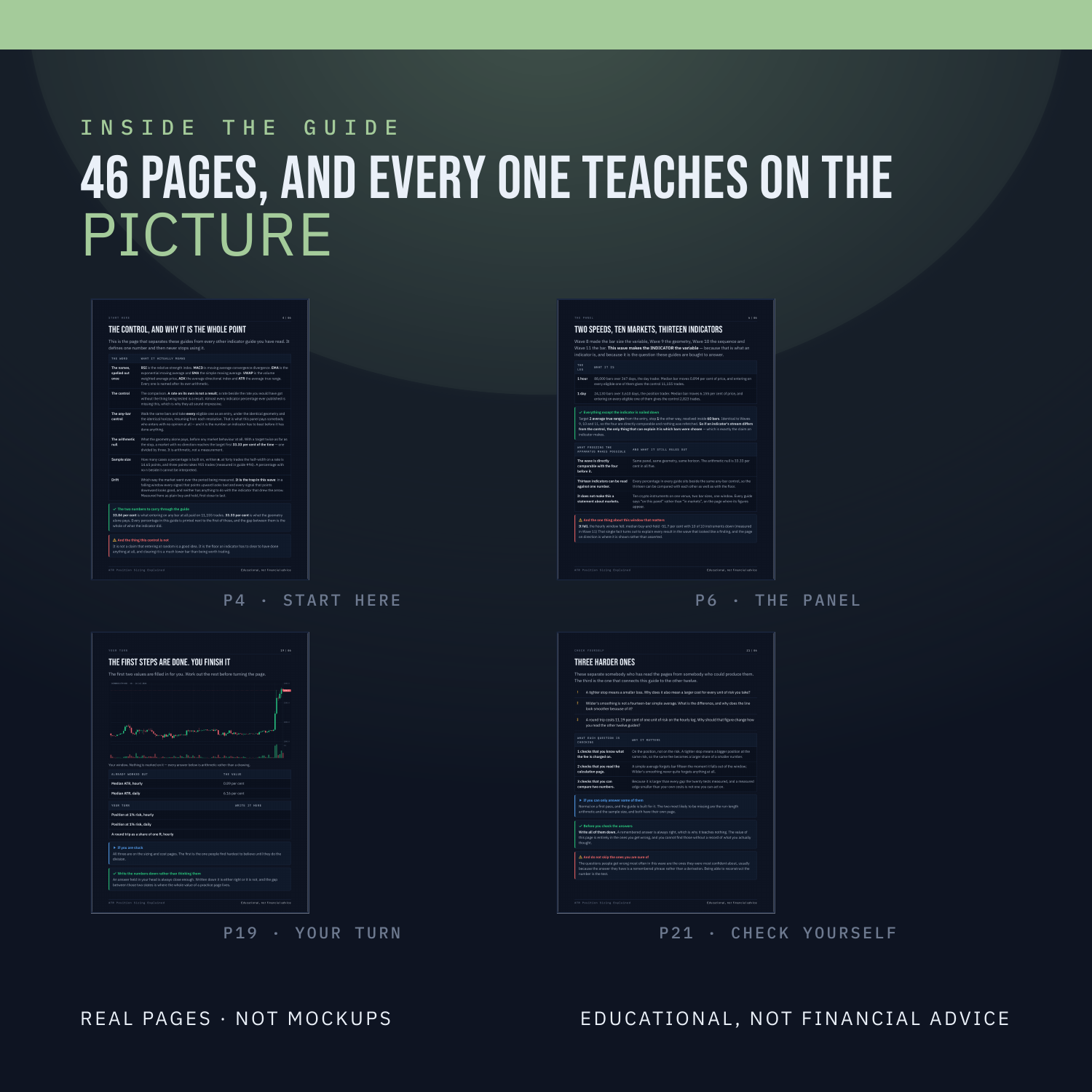
Nothing is taught underneath a chart. Every label sits on the candle, the line or the level it is describing, on real BTC, ETH, SOL and LINK charts. There are three quizzes on real charts, each followed by the same chart re-shown annotated with the reasoning, plus faded practice pages where the first steps are filled in and you finish the rest.
WHAT'S INSIDE
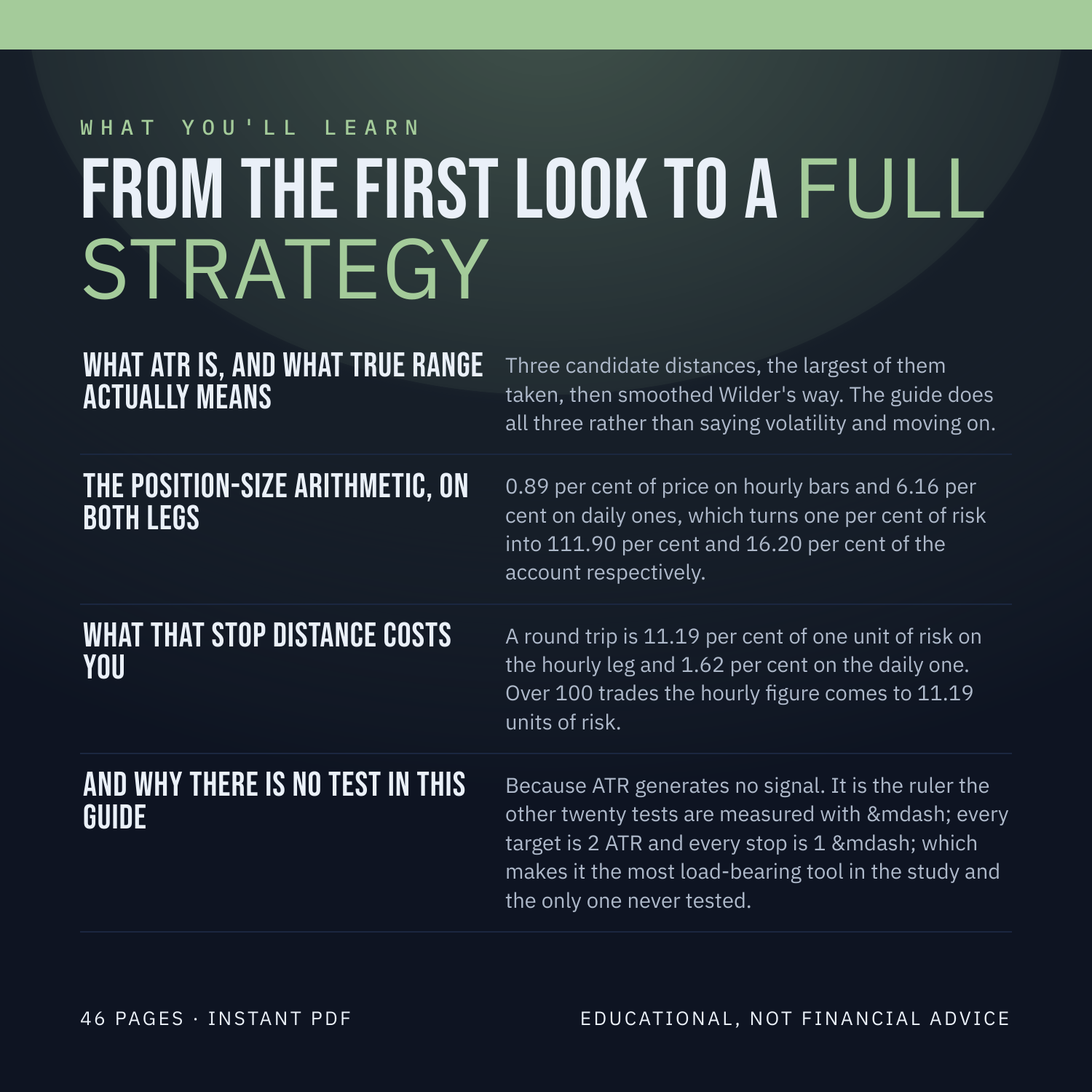
What ATR is, and what true range actually means -- Three candidate distances, the largest of them taken, then smoothed Wilder's way. The guide does all three rather than saying volatility and moving on.
The position-size arithmetic, on both legs -- 0.89 per cent of price on hourly bars and 6.16 per cent on daily ones, which turns one per cent of risk into 111.90 per cent and 16.20 per cent of the account respectively.
What that stop distance costs you -- A round trip is 11.19 per cent of one unit of risk on the hourly leg and 1.62 per cent on the daily one. Over 100 trades the hourly figure comes to 11.19 units of risk.
And why there is no test in this guide -- Because ATR generates no signal. It is the ruler the other twenty tests are measured with -- every target is 2 ATR and every stop is 1 -- which makes it the most load-bearing tool in the study and the only one never tested.
WHAT YOU'LL BE ABLE TO DO
Compute a true range and an ATR from a price series by hand.
Turn a risk percentage and a stop distance into a position size.
Say why the same rule gives different answers on two timeframes.
Work out what a round trip costs as a share of your own risk.
Explain why a unit is not a signal, and why it was not tested.
AN HONEST NOTE
ATR Position Sizing is a clue, not a crystal ball. It describes what price has already done. This guide contains no win-rates, no backtest results and no promises about what you will make, because nobody can verify those and you should not trust anyone who prints them. What it hands you instead is a set of rules you can test yourself on TradingView in an afternoon. Educational, not financial advice.
Instant download. 46 pages, PDF.