
Autonomous Language Learning Series. Books 9-12 (ebooks)
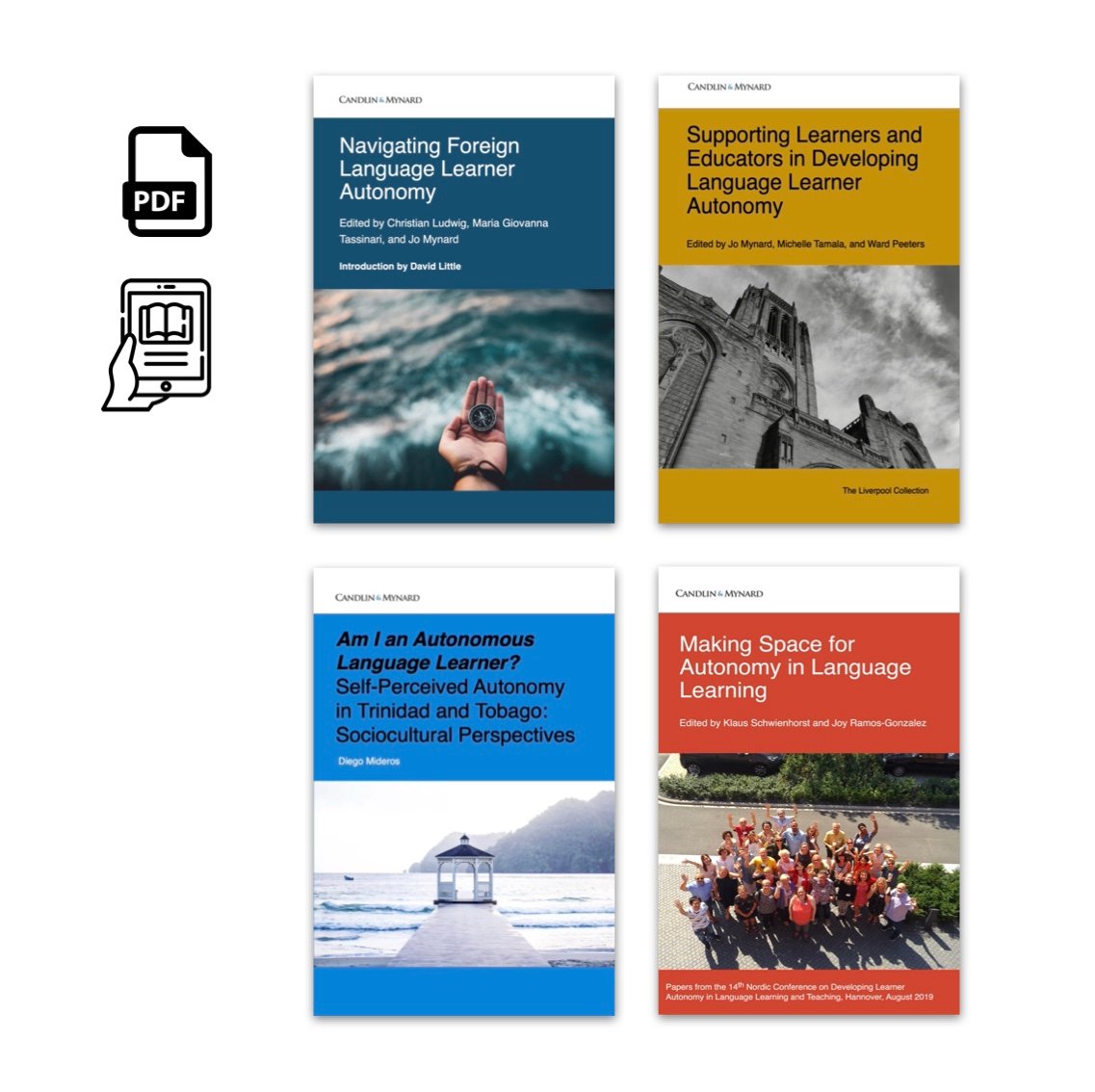
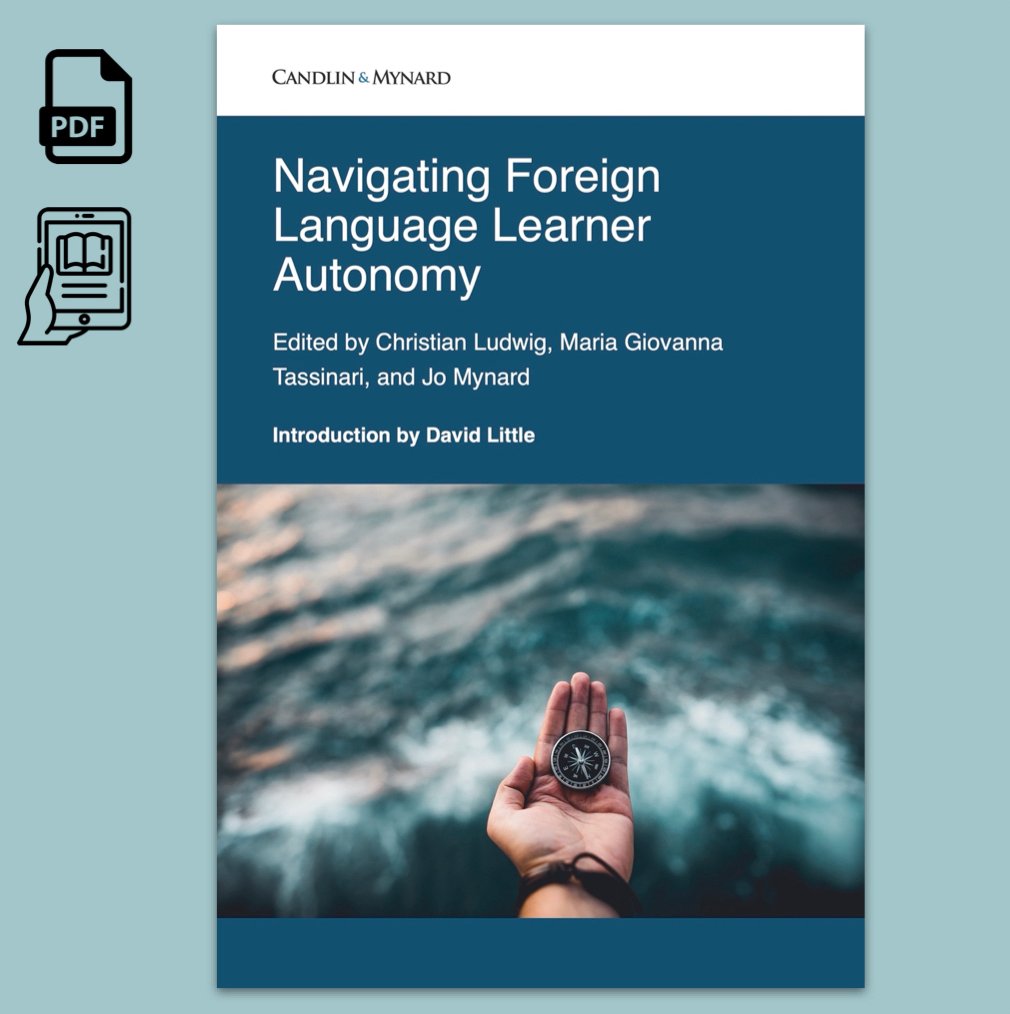
Book 9: Navigating Foreign Language Learner Autonomy. Edited by Christian Ludwig, Maria Giovanna Tassinari, and Jo Mynard
Navigating Foreign Language Learner Autonomy provides novel insights into both the theory and practice of learner autonomy in the context of foreign language education, and does so in multiple languages and through multiple voices. The contributing authors showcase effective practices and new directions in research, but also report on the status quo of learner autonomy at institutions around the world. Most of the authors write about their experiences with implementing foreign language learner autonomy in their home or dominant language(s). The volume contains full chapters or extracts in 15 languages: Czech, Danish, English, Finnish, German, Hungarian, Italian, Japanese, Korean, Mandarin Chinese, Māori, Portuguese, Spanish, Thai, and Turkish. Each chapter is accompanied by a chapter or summary in English, along with a glossary and some reflective questions. As a starting point, a theoretical introduction is provided by David Little, and to conclude, the editors analyse the narratives of the contributors and comment on the process of navigating autonomy through different languages.
More details: https://www.candlinandmynard.com/navigating.html
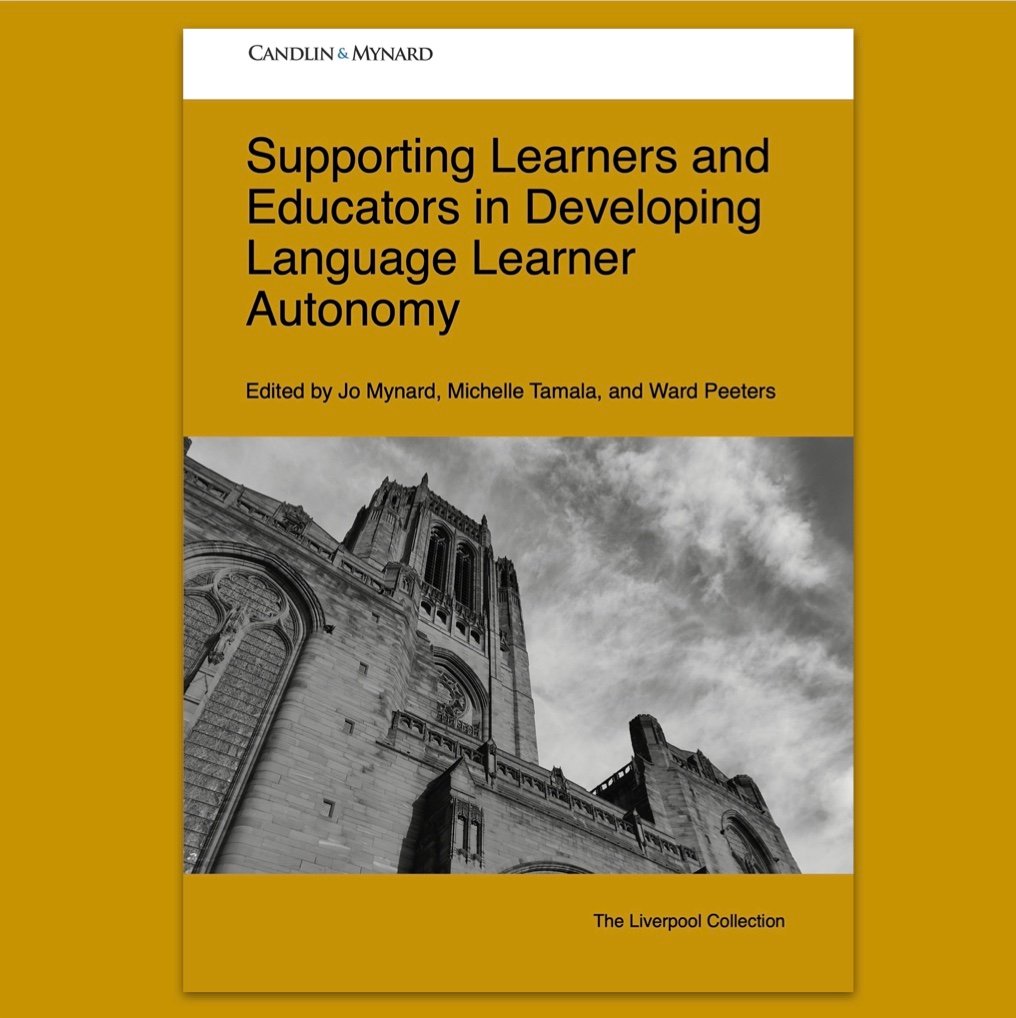
Book 10: Supporting Learners and Educators in Developing Language Learner Autonomy. Edited by Jo Mynard, Michelle Tamala and Ward Peeters
This volume explores some of the theoretical, empirical, and practical considerations when supporting educators and learners in promoting language learner autonomy.
Through six detailed chapters, we look at different aspects of learner autonomy that support both students and educators as they become more autonomous in their practise. The authors pay special attention to the ‘social turn’ in researching language learner autonomy development and second language acquisition, and focus on the social, interactive, and co-dependent nature of the concept. The breadth of research presented provides a more holistic view of learner autonomy and how many aspects of teaching and learning are connected to this.
The volume concludes with a research agenda that draws on the social factors and agency that are likely to be the subject of further work in the coming years. This research agenda aims to inform and inspire the research field, and revisit certain methods, metaphors ,and terms we have used within the field for decades.
More details: https://www.candlinandmynard.com/liverpool.html
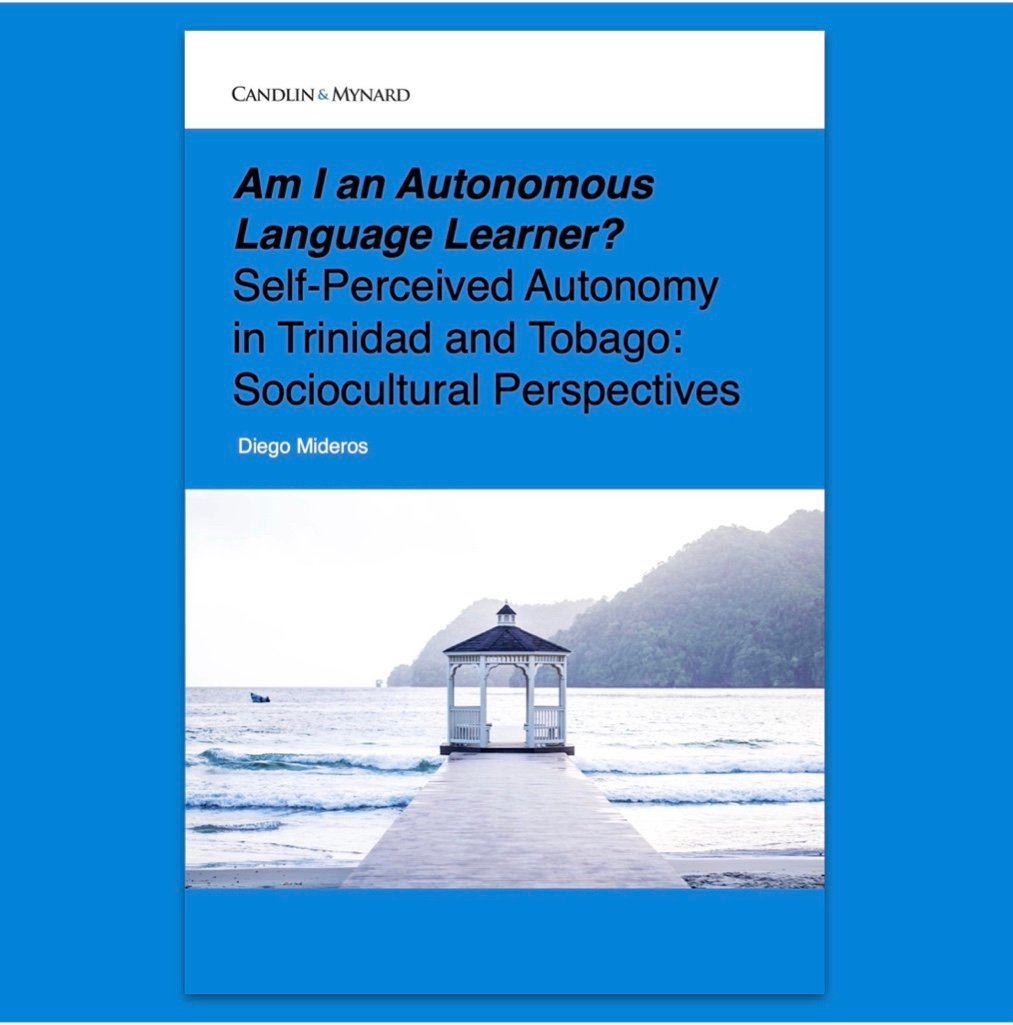
Book 11: Am I an Autonomous Language Learner? Self-Perceived Autonomy in Trinidad and Tobago: Sociocultural Perspectives by Diego Mideros (
This book explores sociocultural elements and conditions that enable individuals to see themselves as autonomous learners in formal educational settings. This engaging and original book is set in a university context in Trinidad and Tobago. Using an in-depth Interpretative Phenomenological Analysis, the author brings to life the stories of students majoring in Spanish at university. In order to understand the learners’ autonomy and agency, the author focuses on social dimensions of language learner autonomy. The book aims to understand the contextual and sociocultural teaching and learning practices which are conducive to students constructing the identity of autonomous language learners.
The exploration of autonomy in Trinidad and Tobago took place at a university with thirty Spanish majors. The author answers the following questions in the book:
How do students describe their approaches to studying Spanish in a specialist university degree programme? And what do those approaches suggest about their autonomy?
What can students’ previous lived experiences tell us about their sociocultural context for L2 learning and the development and exercise of autonomy?
This book is highly recommended for language educators and students of applied linguistics who want to understand learner autonomy and agency from a sociocultural perspective.
This book will be particularly useful to language educators interested in voices and perspectives that come from a developing region that has been underrepresented in the literature. In addition, the book might also be useful for teachers and researchers interested in Interpretative Phenomenological Analysis, a relatively new qualitative methodology in the study of autonomy in language learning. The book provides tools and ideas for investigating students’ past school experiences that could explain their agency, identity and readiness for autonomy.
More details: https://www.candlinandmynard.com/mideros.html
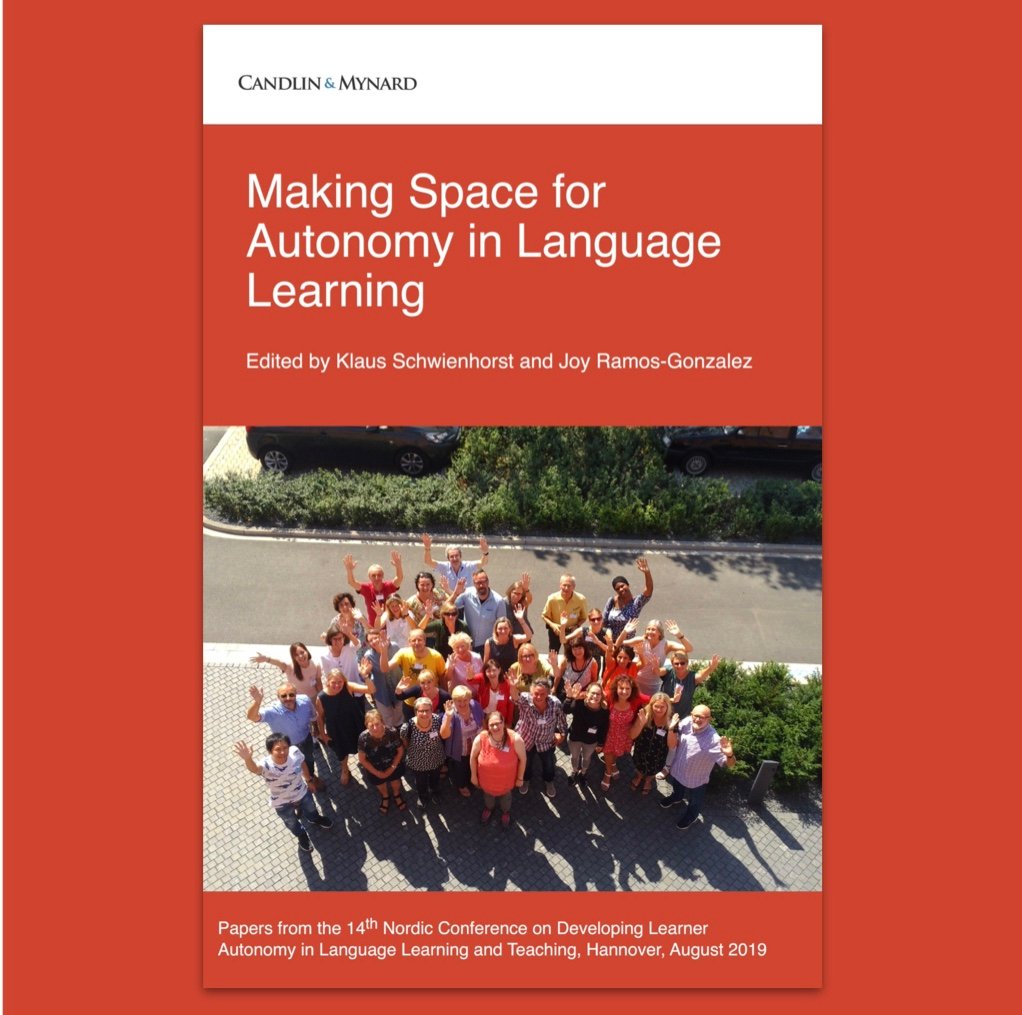
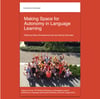
Book 12: Making Space for Autonomy in Language Learning. Edited by Klaus Schwienhorst and Joy Ramos-Gonzalez
This book is the result of the 14th Nordic Conference on Developing Learner Autonomy in Language Learning and Teaching. The event took place at Leibniz Universität Hannover in August 2019. As in the previous Nordic workshops, the aim was to bring together practitioners involved in developing learner autonomy, who took an active role in the procedures. The book showcases theoretical and practical applications to the development of learner autonomy in international contexts.
The book contains
- Details of the event and its participants
- Chapters based on two of the plenary talks, one by Leni Dam (Denmark) and the other by Jo Mynard (Japan)
- Summaries of other talks and posters
- A conference report written by first-time attendee Masako Wakisaka
- Photos from the event
- Personal action plans from several participants
- An overview of previous and upcoming Nordic workshops
More details: https://www.candlinandmynard.com/nordic14.html