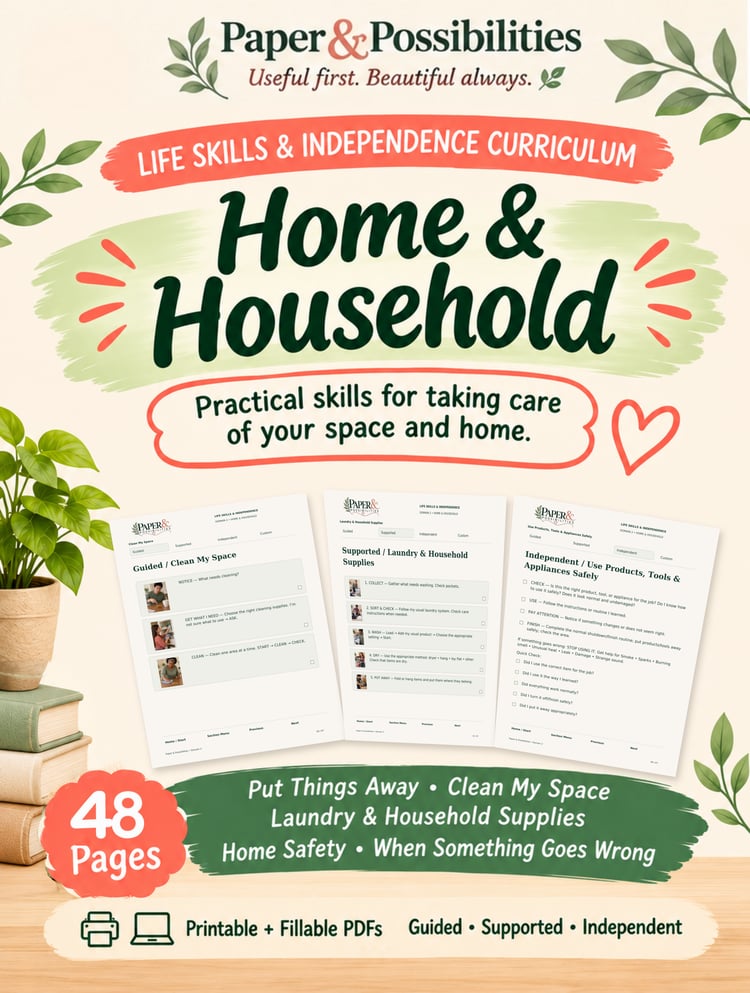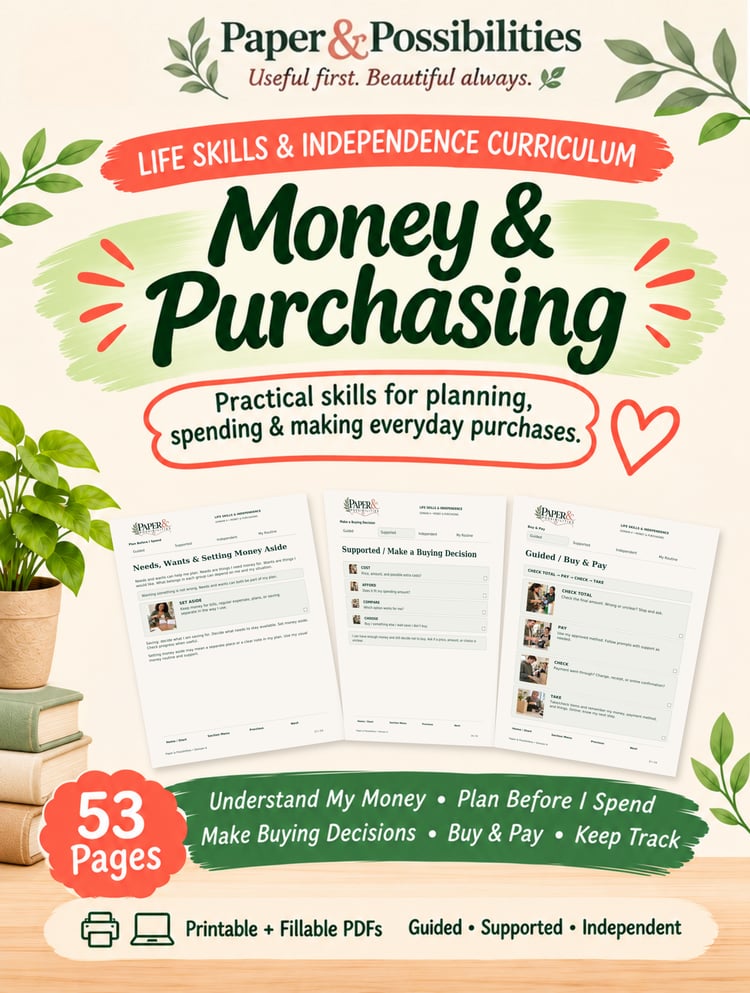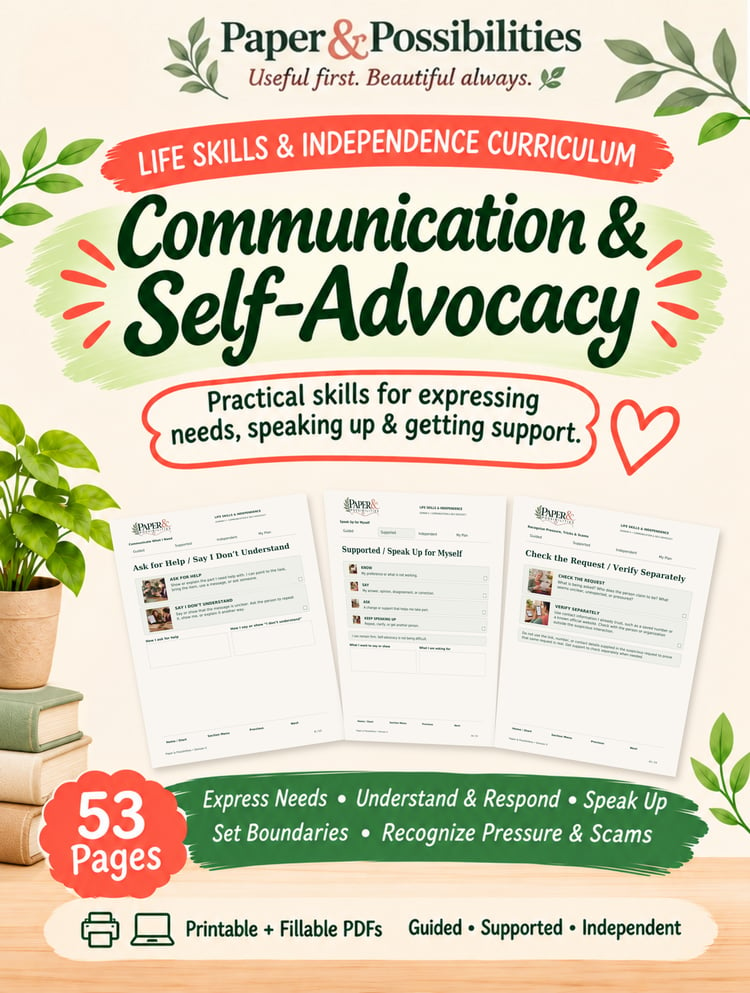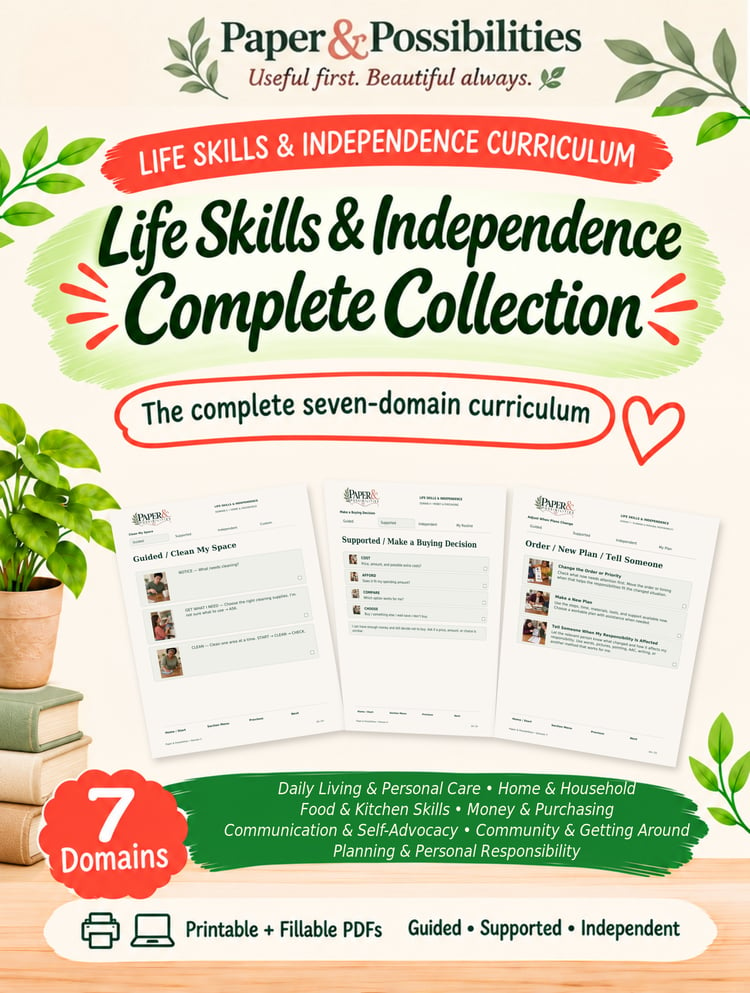

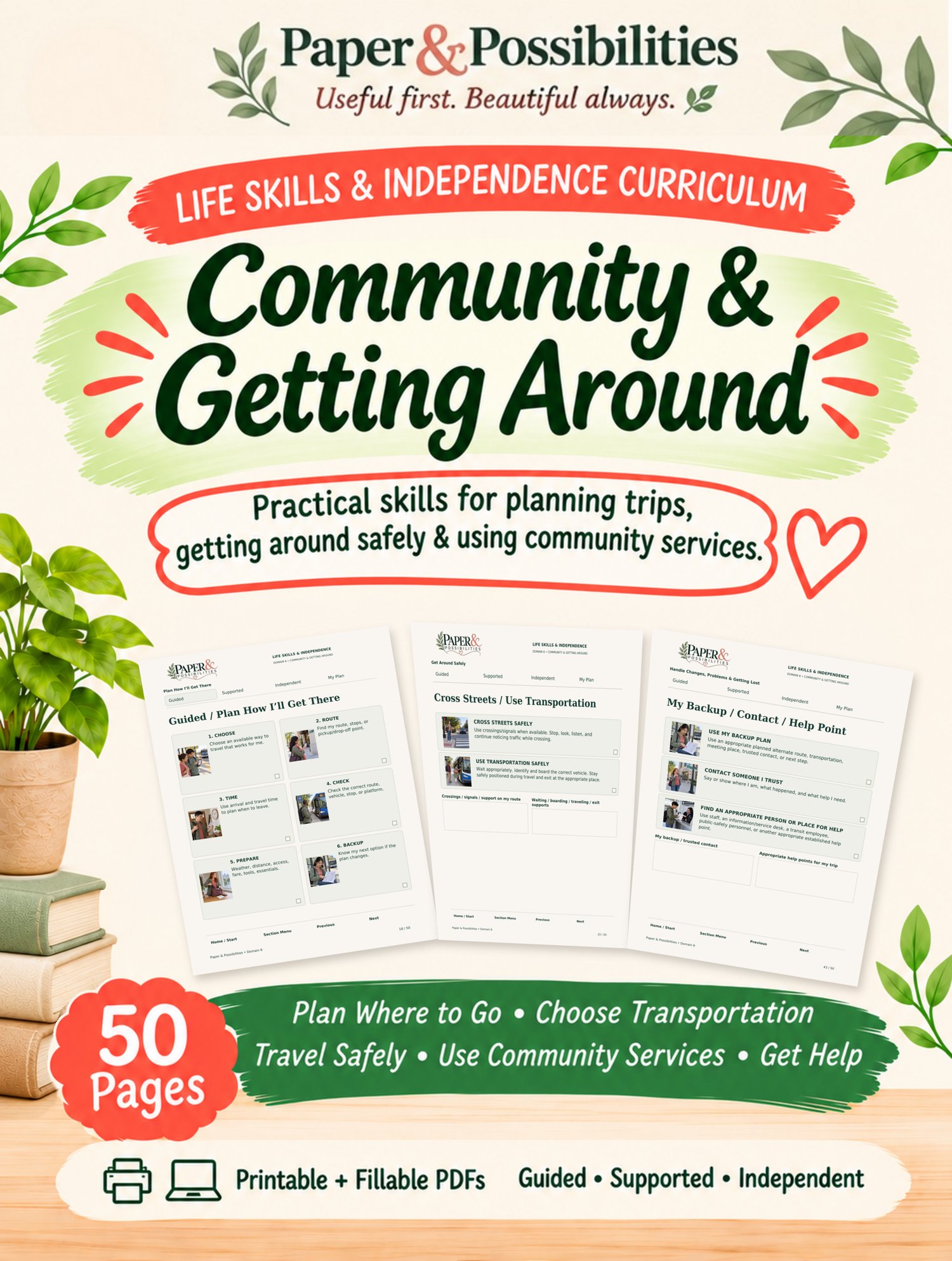




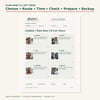
Community & Getting Around: Life Skills & Independence— Curriculum
Community & Getting Around
Life Skills & Independence — Domain 6
Knowing where you want to go is one thing. Knowing how to get there, what to expect, and what to do when something changes is another.
A trip to the store, an appointment, a community activity, or an unfamiliar place can involve more steps than we sometimes realize.
Planning transportation, checking important details, navigating surroundings, asking for help, and handling unexpected situations are all practical skills that may need to be learned, practiced, and supported.
The Community & Getting Around curriculum provides clear, age-respectful instruction and flexible visual supports to help children, teens, and adults develop and use everyday community-navigation skills.
From preparing for an outing to recognizing when something isn’t going according to plan, this resource focuses on practical strategies for participating in community life with the support that works for each individual.
Because getting around independently doesn’t have to mean getting around without help.
50 pages • Printable + interactive fillable PDFs • Visual supports • Customizable tools
What’s Included:
The curriculum is organized into five practical skill areas.
1. Know Where I’m Going
Identify the destination, understand the purpose of the visit, check location and timing information, know who is involved, decide what to bring, and review important details before leaving.
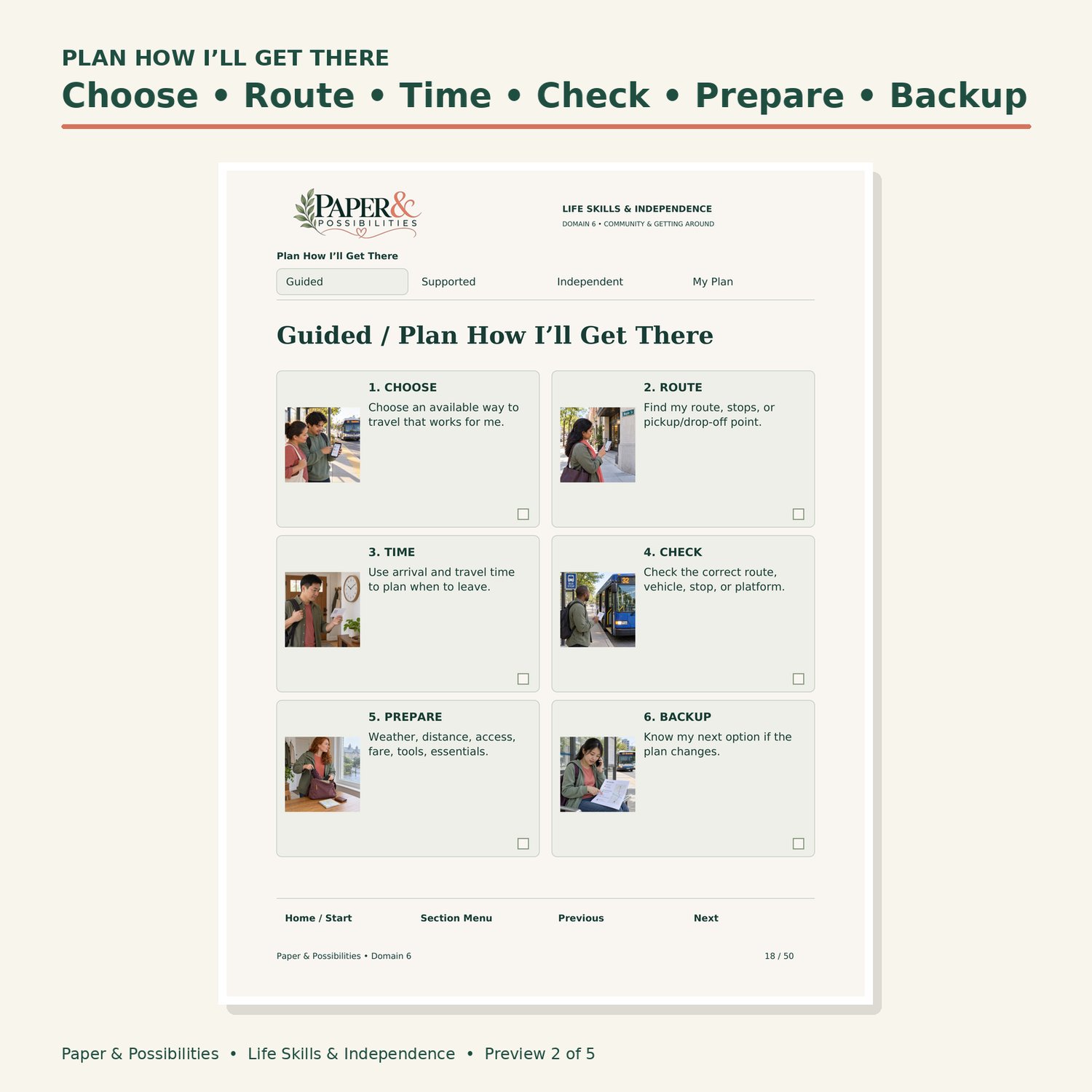
2. Plan How I’ll Get There
Explore transportation options, choose how to travel, check routes and timing, prepare for the trip, and create a backup plan when needed.
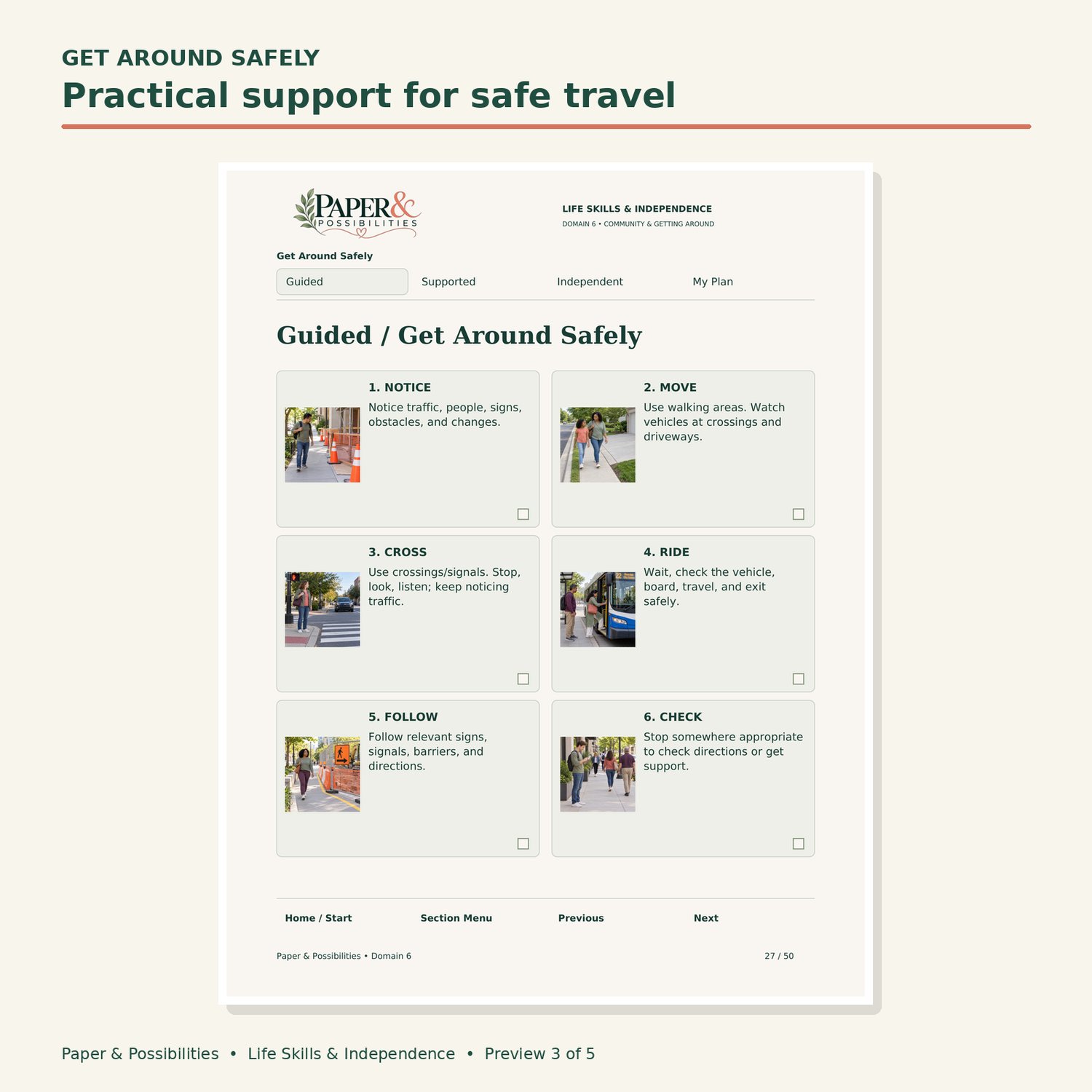
3. Get Around Safely
Practice noticing surroundings, walking and crossing streets more safely, navigating parking lots and driveways, using transportation, following signs and safety information, using phones or navigation tools appropriately, and getting support when needed.
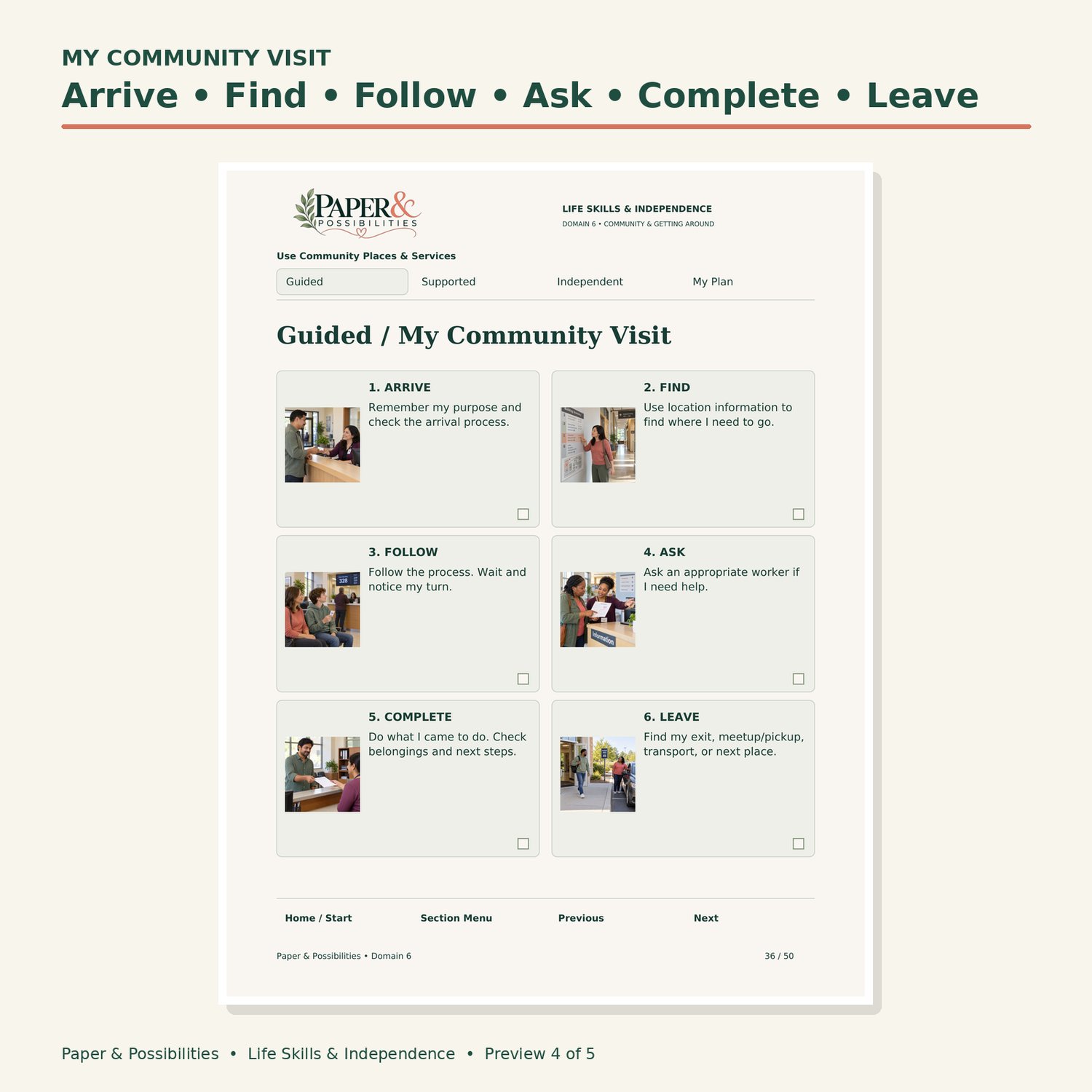
4. Use Community Places & Services
Practice arriving, finding the right place, following the process, waiting or taking turns, asking staff for help, completing the purpose of the visit, checking before leaving, and moving on to the next step.
5. Handle Changes, Problems & Getting Lost
Learn practical steps for responding to unexpected changes, figuring out where you are, using backup plans, contacting someone you trust, finding an appropriate person or place for help, and responding if you become lost or separated.
A Practical Approach to Community Skills
Throughout the curriculum, skills follow a clear, real-world sequence:
KNOW → PLAN → GO → USE → ADJUST
- Know: Understand where you’re going and what to expect.
- Plan: Prepare for the trip and choose how to get there.
- Go: Practice getting around with appropriate safety supports.
- Use: Navigate community places and services.
- Adjust: Respond when plans change or something unexpected happens.
This structure helps connect individual skills to the larger process of participating in everyday community activities.
Support That Fits the Individual
Not everyone navigates the community in the same way.
The curriculum includes three flexible support formats:
- Guided: Highly visual, step-by-step support.
- Supported: Visual support with shorter prompts.
- Independent: Streamlined real-world references and checklists.
These are support options—not ability levels, labels, or a required progression.
An individual may use different supports depending on the activity, environment, situation, or day.
Independence does not mean no support.
Make It Personal
Every community outing is different, and so are individual support needs.
Customizable personal planning pages and blank visual cards allow families, educators, support professionals, and individuals to personalize resources using:
- Familiar destinations and community places.
- Personal transportation plans.
- Important reminders and visual cues.
- Individual communication methods.
- Planning and navigation tools.
- Backup plans and support strategies.
The goal is to make community participation more understandable, manageable, and useful in real-life situations.
Printable + Interactive Fillable PDFs
Choose the format that works best for the individual or setting.
- Printable PDF: Print pages for handwriting, hands-on activities, and everyday reference.
- Interactive fillable PDF: Type directly into supported fields using a compatible PDF application.
Who Is This For?
Community & Getting Around is designed for children, teens, and adults learning, practicing, or strengthening everyday community-navigation skills.
It may be useful for:
- Homeschool families.
- Parents and caregivers.
- Teachers and educators.
- Special education settings.
- Life-skills and transition programs.
- Support professionals.
- Individuals building greater independence in community settings.
- Anyone who benefits from visual reminders, clear sequences, planning tools, or additional support when navigating everyday activities.
No specific diagnosis or ability level is required.
The curriculum is designed for flexible use at home, school, or in community-based learning environments.
What You Need to Know
- Length: 50 pages
- Formats: Printable and interactive fillable PDFs
- Sections: Five practical community-navigation skill areas
- Support options: Guided, Supported, and Independent
- Customization: Personal planning pages and blank visual cards
- Approach: Practical, age-respectful instruction for children, teens, and adults
- Flexibility: Different types and amounts of assistance can be used as needed
- Delivery: Digital download
- Physical product: None
Interactive PDF Note:
For best results with the interactive fillable PDF, use a PDF reader that supports interactive form fields, such as
Adobe Acrobat Reader.
Other compatible PDF applications may also work, but available features can vary depending on the device and program.
Educational Use
This resource supports learning and practicing everyday life skills. It is not intended to diagnose, treat, or provide medical, nutritional, therapeutic, or other professional advice.
Individual health, dietary, developmental, and safety needs should be addressed with the appropriate qualified professional.
A Little Reminder From the Inspiration Behind It All
“Don’t worry. I got it. I don’t need any help!”
Sometimes that’s exactly right.
And sometimes independence sounds like:
“I got most of it. I need help with this part.”
Both count.
Paper & Possibilities
Useful first. Beautiful always. 🌿