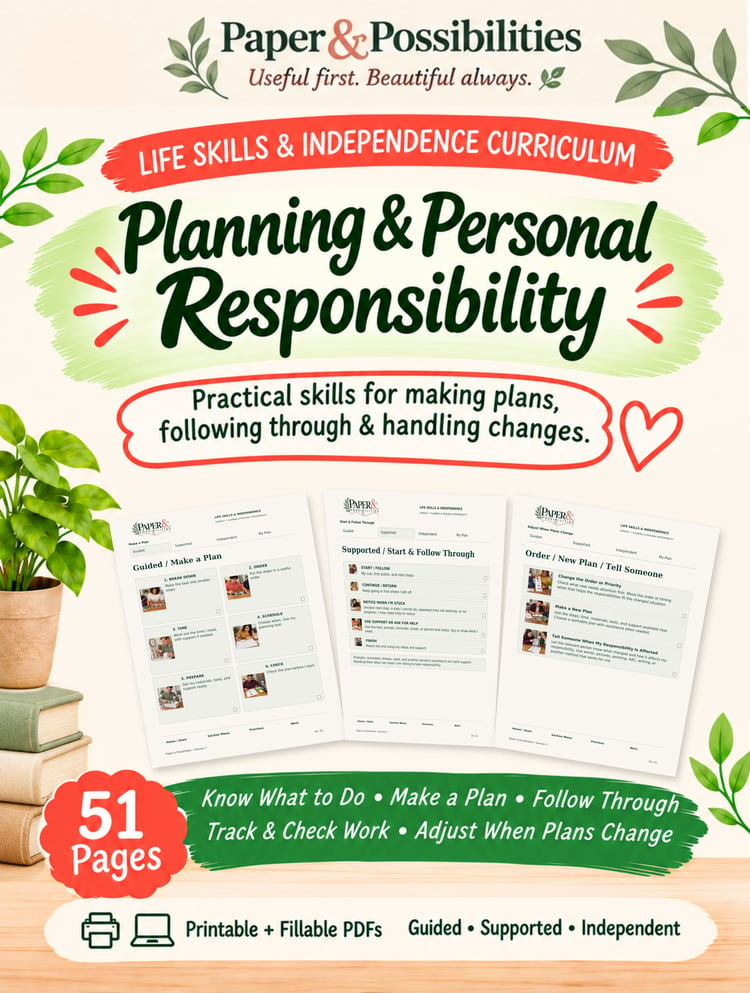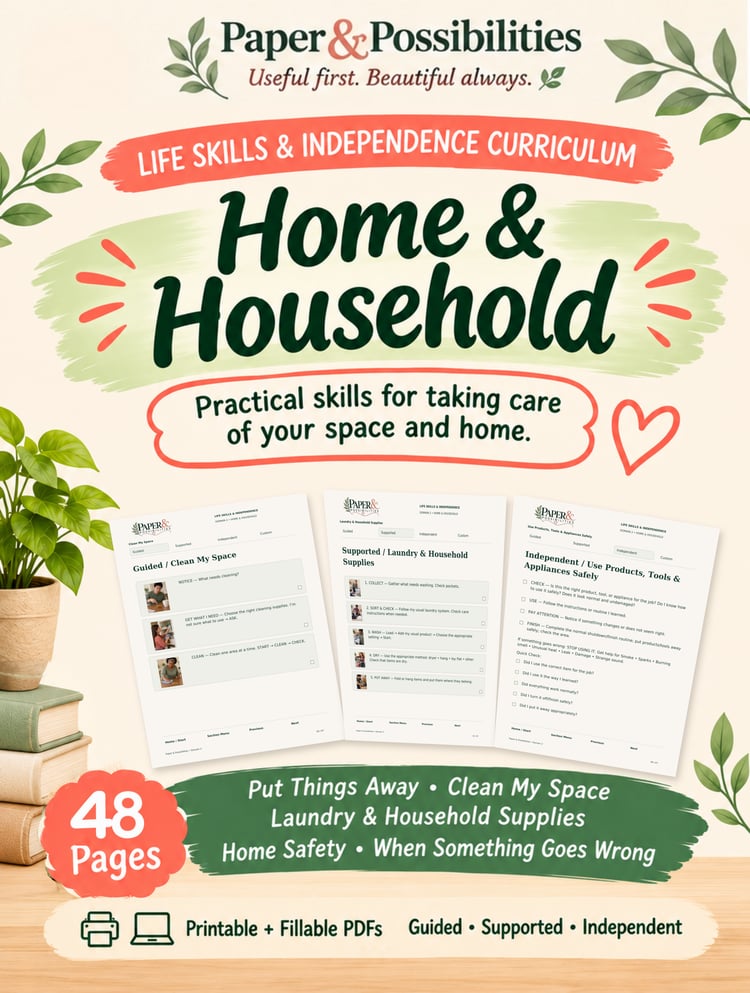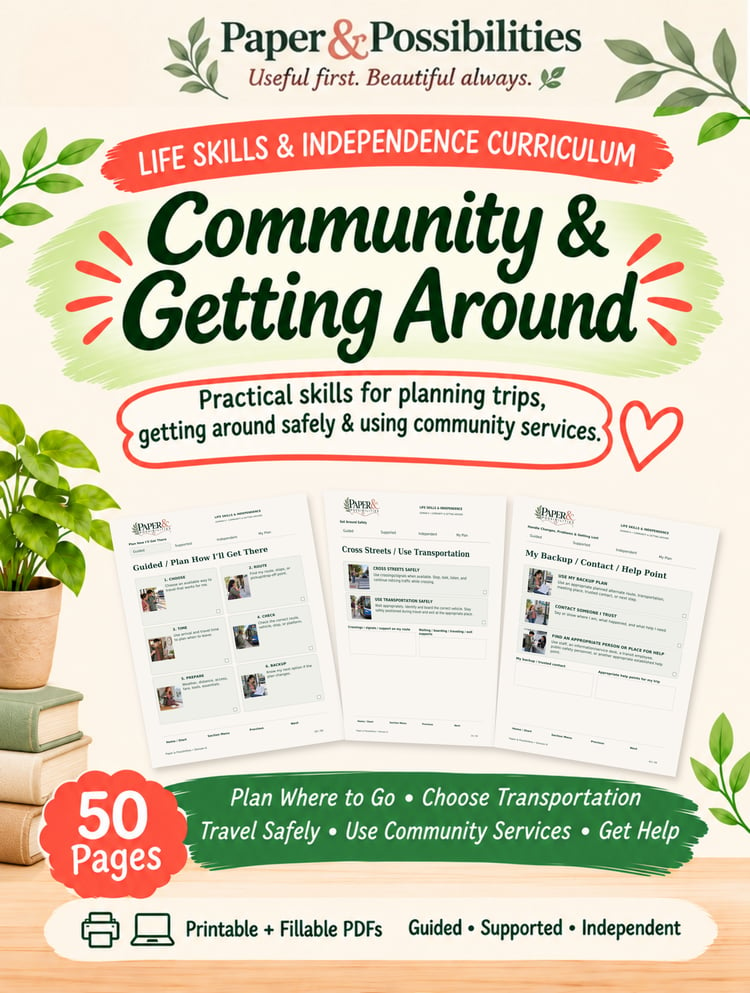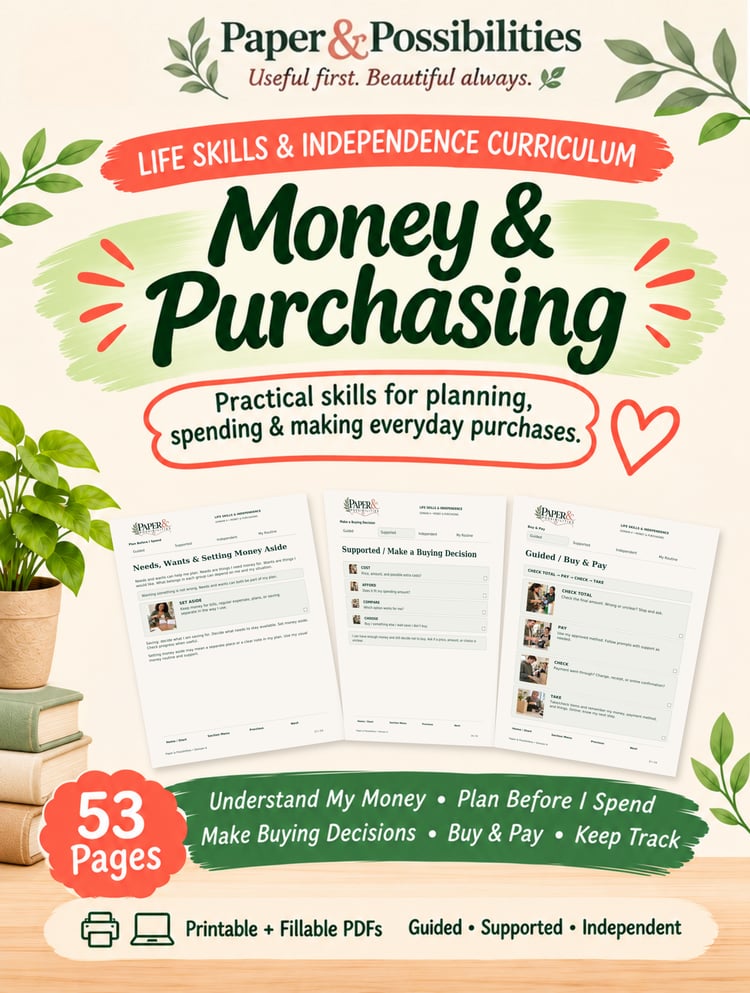



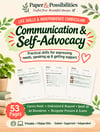
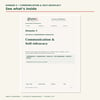


Communication & Self-Advocacy: Life Skills & Independence— Curriculum
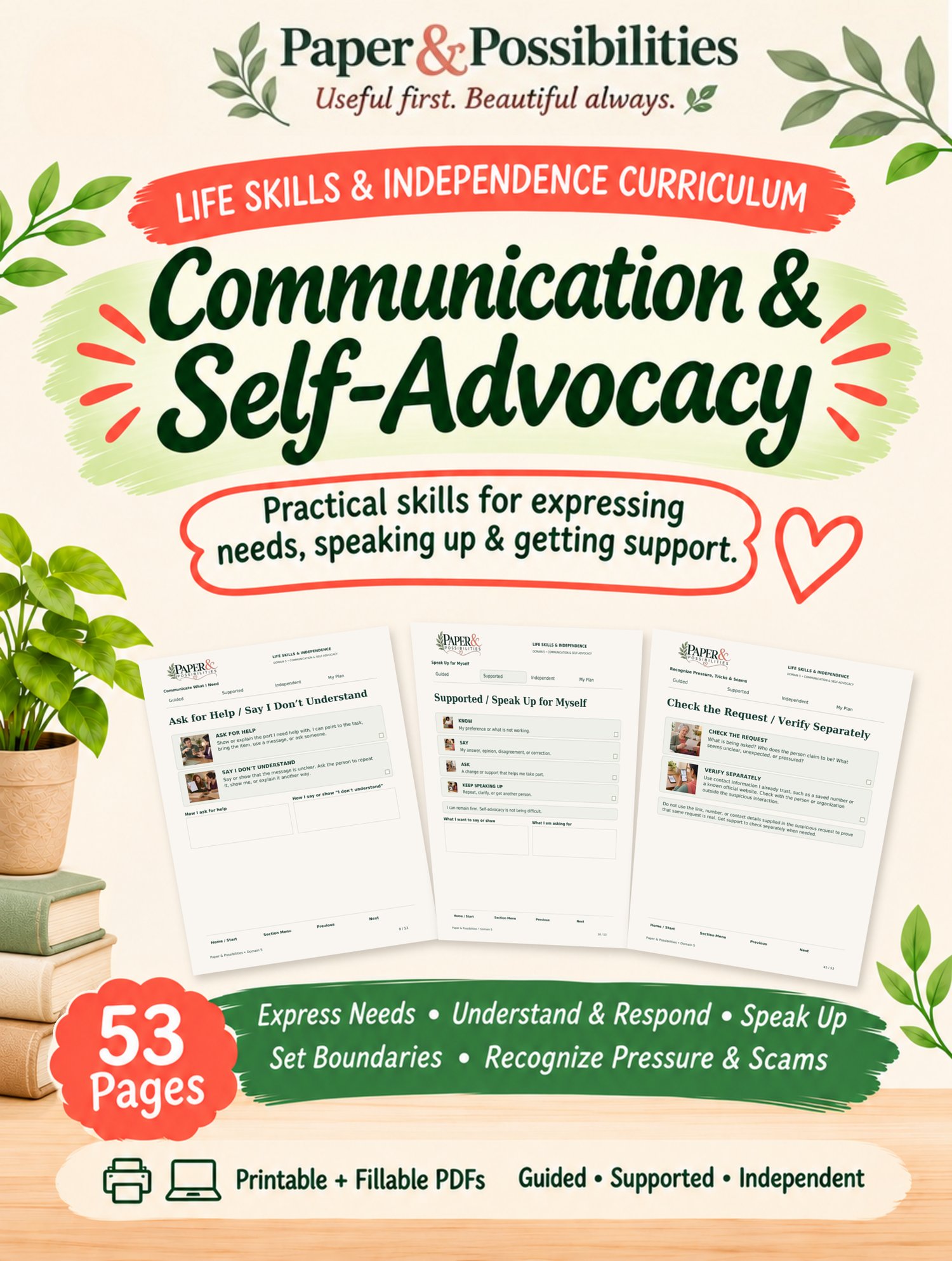
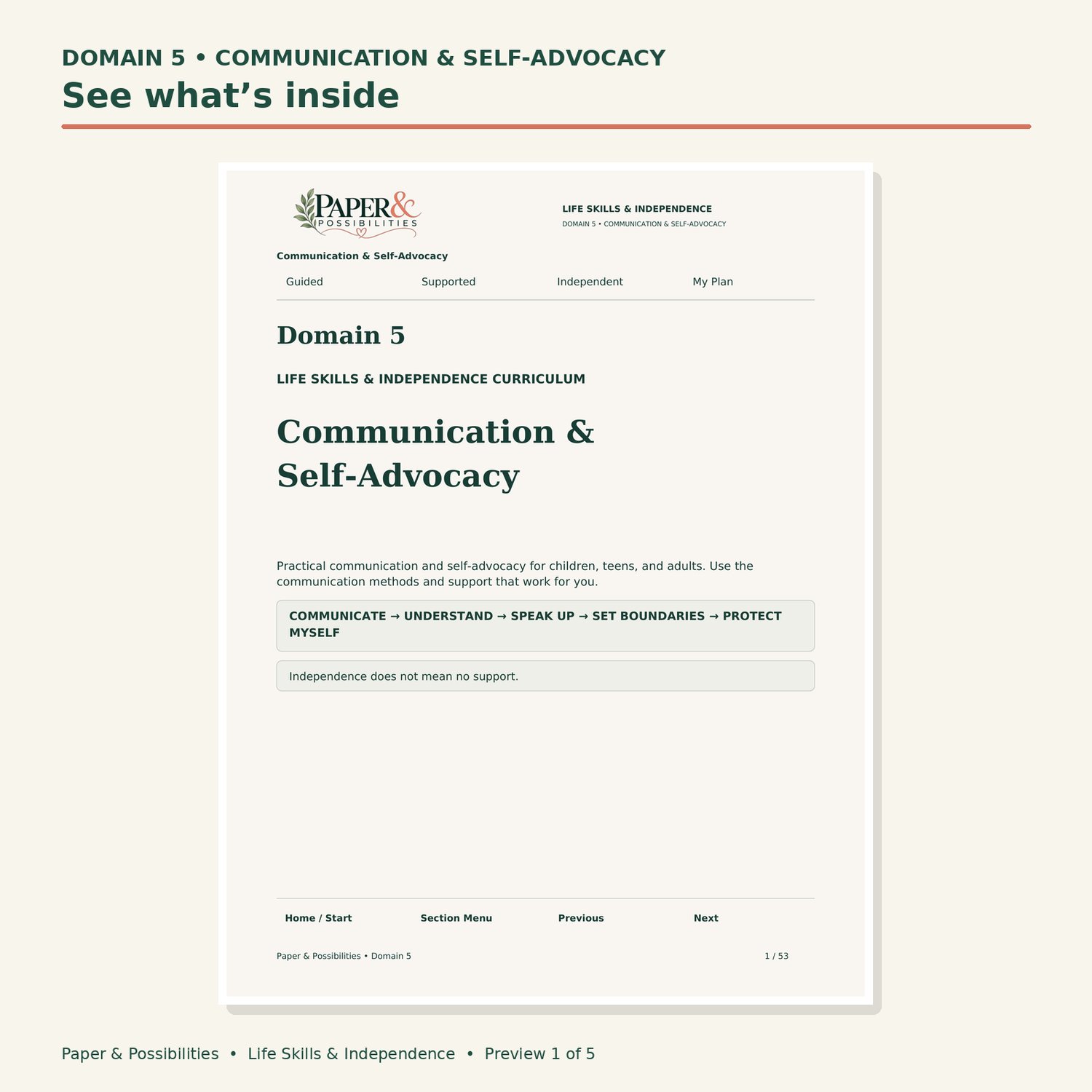
Communication & Self-Advocacy
Life Skills & Independence — Domain 5
Communication isn’t just about talking. It’s about being heard, understood, and knowing how to speak up for yourself.
Asking for help, expressing a preference, saying no, explaining when something isn’t working, or recognizing when someone is pressuring you are all practical communication and self-advocacy skills.
And not everyone communicates in the same way.
The Communication & Self-Advocacy curriculum provides practical, age-respectful instruction and flexible visual supports for children, teens, and adults learning, practicing, or strengthening everyday communication skills.
From expressing needs and understanding others to setting boundaries and recognizing suspicious interactions, this resource focuses on helping individuals communicate, make choices, advocate for themselves, and use support in ways that work for them.
Because everyone deserves a way to communicate their needs, preferences, concerns, and boundaries.
53 pages • Printable + interactive fillable PDFs • Visual supports • Customizable tools
What’s Included
The curriculum is organized into five practical skill areas.
1. Communicate What I Need
Practice how to:
- Say or show a need.
- Make a choice or share a preference.
- Ask for help.
- Communicate when something isn’t understood.
- Express discomfort or identify a problem.
- Ask for what would help.
2. Understand & Respond to Other People
Practice how to:
- Notice when someone is communicating.
- Receive a message in a way that works for the individual.
- Check what was heard or understood.
- Ask for clarification.
- Respond to a message.
- Address misunderstandings without blame.
3. Speak Up for Myself
Practice how to:
- Say yes, no, or not yet.
- Share a preference or opinion.
- Explain when something isn’t working.
- Ask for a change.
- Request support or an accommodation.
- Disagree or correct something.
- Continue advocating or involve another trusted person when needed.
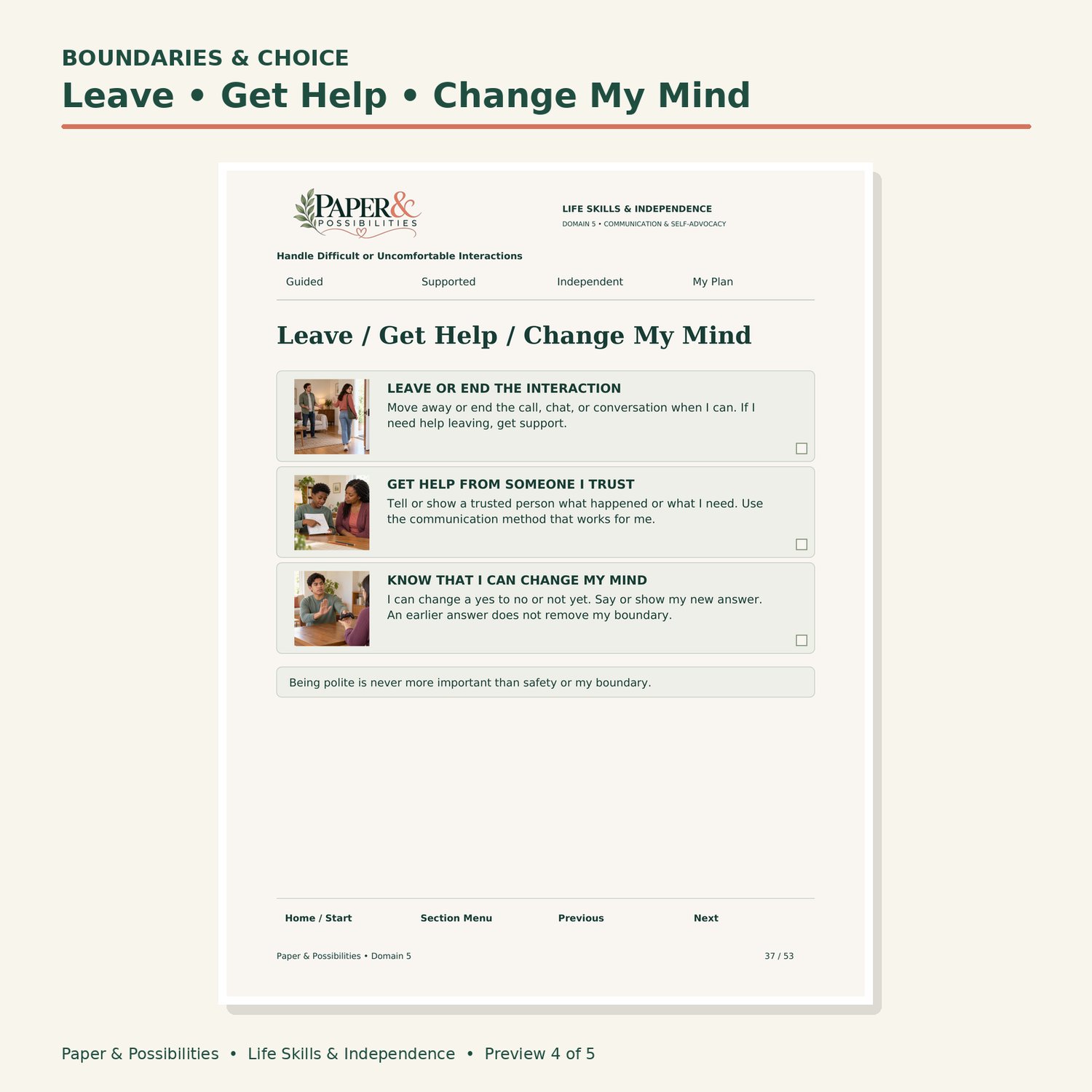
4. Handle Difficult or Uncomfortable Interactions
Practice how to:
- Recognize when something feels wrong or uncomfortable.
- Say no, stop, or “I don’t want to.”
- Set and communicate boundaries.
- Respond when someone continues asking or applying pressure.
- Leave or end an interaction.
- Seek help from someone trusted.
- Understand that it’s okay to change your mind.
5. Recognize Pressure, Tricks & Scams
Learn a practical, reusable process:
STOP → CHECK → VERIFY → ASK → ACT
Practice recognizing and responding to suspicious or pressured interactions involving:
- Phone calls.
- Text messages.
- Email.
- Social media.
- Online communication.
- In-person situations.
The focus isn’t memorizing every possible scam.
It’s learning when to pause, what warning signs to notice, how to verify information through a separate trusted source, how to protect private information, and when to ask for help.
Support That Fits the Individual
Not everyone communicates, learns, or practices skills in the same way.
The curriculum includes three flexible support formats:
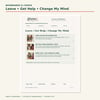
- Guided: Highly visual, step-by-step support.
- Supported: Visual support with shorter prompts.
- Independent: Streamlined real-world references and checklists.
These are support options—not ability levels, labels, or a required progression.
An individual may use different supports depending on the skill, environment, situation, or day.
Independence does not mean no support.
Make It Personal
Communication is personal. The tools used to support it should be, too.
Customizable My Plan pages and eight blank visual cards in each section allow individuals, families, educators, and support professionals to personalize resources using:
- Familiar words and pictures.
- Individual communication methods.
- Trusted people and support contacts.
- Personal boundaries and preferences.
- Everyday communication situations.
- Individual tools, routines, and supports.
The curriculum recognizes many effective ways to communicate, including:
- Speech.
- Gestures and pointing.
- Pictures and visual supports.
- Augmentative and alternative communication (AAC).
- Writing and texting.
- Other communication methods that work for the individual.
The goal isn’t to make everyone communicate the same way.
It’s to support communication, understanding, self-advocacy, boundaries, and safer responses to pressure or suspicious interactions.
Printable + Interactive Fillable PDFs
Choose the format that works best for the individual or setting.
- Printable PDF: Print pages for handwriting, hands-on activities, and personalization.
- Interactive fillable PDF: Type directly into supported fields using a compatible PDF application.
Who Is This For?
Communication & Self-Advocacy is designed for children, teens, and adults learning, practicing, or strengthening everyday communication and self-advocacy skills.
It may be useful for:
- Homeschool families.
- Parents and caregivers.
- Teachers and educators.
- Special education settings.
- Life-skills and transition programs.
- Support professionals.
- Individuals who benefit from visual structure, concrete language, or step-by-step support.
- Individuals who use speech, AAC, gestures, visuals, writing, texting, or other communication methods.
- Anyone who could use additional support practicing communication, self-advocacy, boundaries, or responses to pressure and suspicious interactions.
No specific diagnosis, age-based ability assumption, or communication style is required.
What You Need to Know
- Length: 53 pages
- Formats: Printable and interactive fillable PDFs
- Sections: Five practical communication and self-advocacy skill areas
- Support options: Guided, Supported, and Independent
- Customization: My Plan pages and eight blank visual cards in each section
- Approach: Practical, age-respectful instruction for children, teens, and adults
- Communication: Supports speech, AAC, gestures, pictures, writing, texting, and other methods
- Delivery: Digital download
- Physical product: None
Interactive PDF Note:
For best results with the interactive fillable PDF, use a PDF reader that supports interactive form fields, such as Adobe Acrobat Reader.
Other compatible PDF applications may also work, but available features can vary depending on the device and program.
Educational Use
This resource supports learning and practicing everyday life skills. It is not intended to diagnose, treat, or provide medical, nutritional, therapeutic, or other professional advice.
Individual health, dietary, developmental, and safety needs should be addressed with the appropriate qualified professional.
A Little Reminder From the Inspiration Behind It All
“Don’t worry. I got it. I don’t need any help!”
Sometimes that’s exactly right.
And sometimes independence sounds like:
“I got most of it. I need help with this part.”
Both count.
Paper & Possibilities
Useful first. Beautiful always. 🌿