
Franklin D. Roosevelt: The Four Freedoms | Historical Speech Study & Activities | Grades 9–12
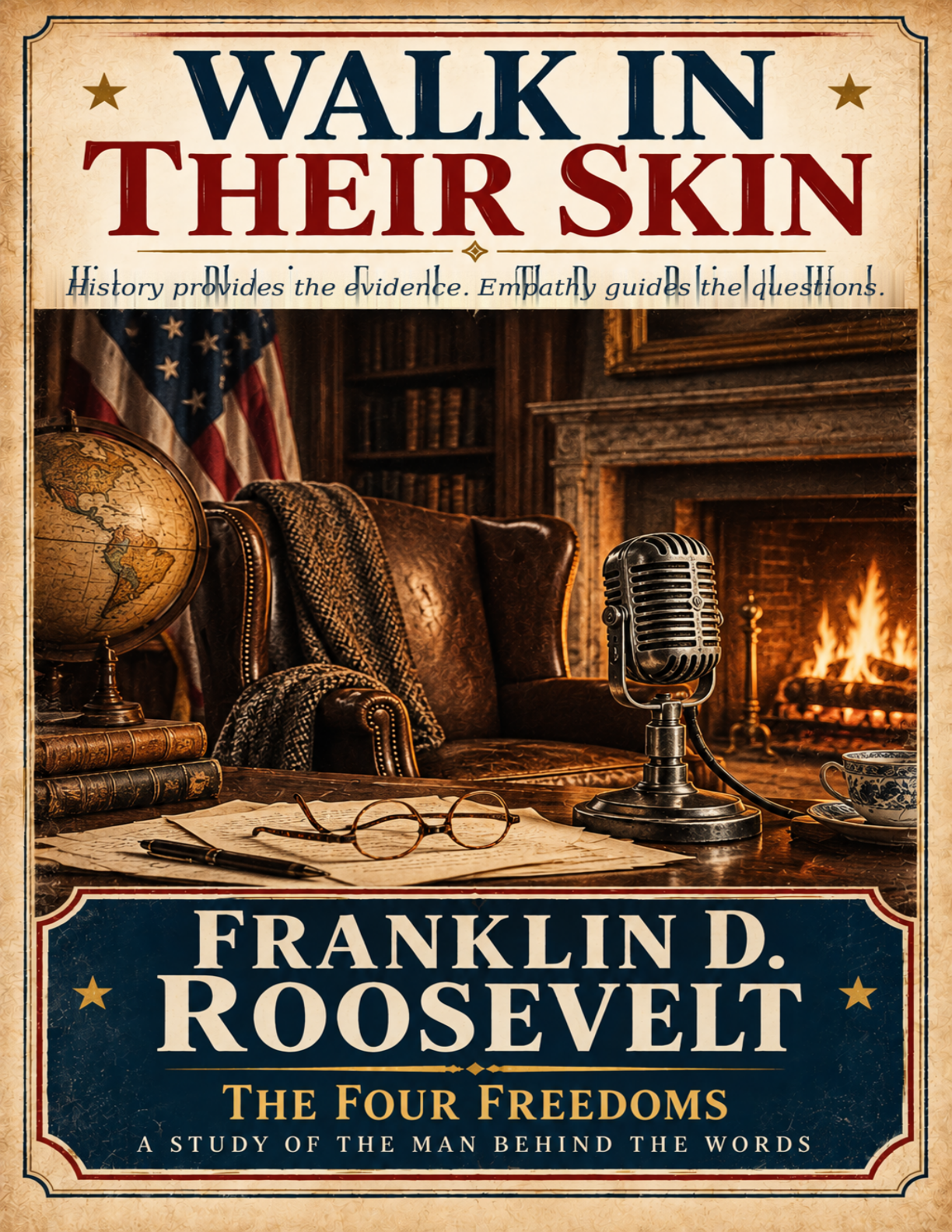
Franklin D. Roosevelt: The Four Freedoms
Walk in Their Skin — Historical Speech Study
History provides the evidence. Empathy guides the questions.
On January 6, 1941, President Franklin D. Roosevelt addressed Congress as much of the world faced war and uncertainty.
Americans were still living with the effects of the Great Depression. Across the Atlantic, Britain faced military attacks, while people throughout Europe experienced occupation, oppression, and the loss of fundamental freedoms.
Roosevelt asked Americans to consider responsibilities extending far beyond their own borders.
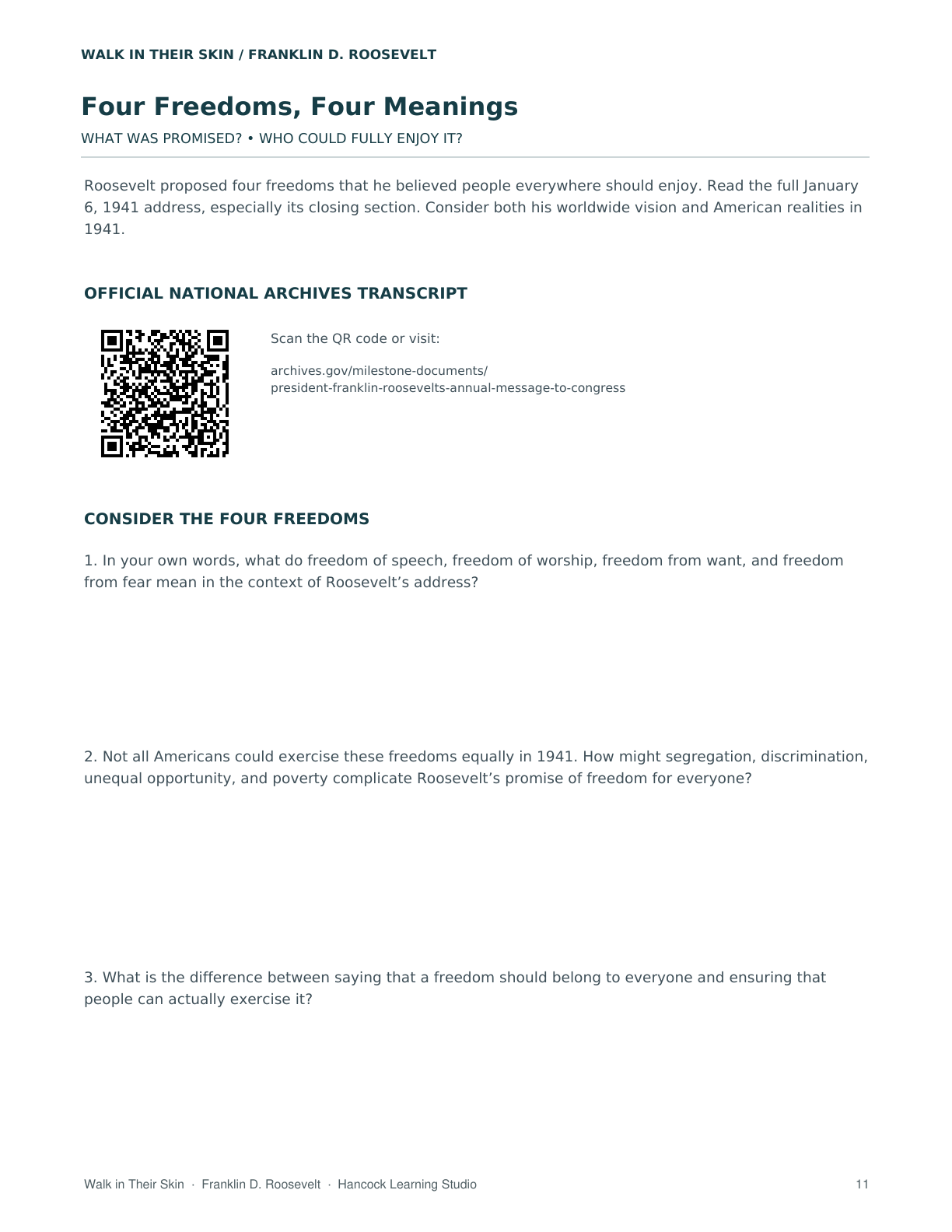
He described four essential human freedoms: freedom of speech, freedom of worship, freedom from want, and freedom from fear.
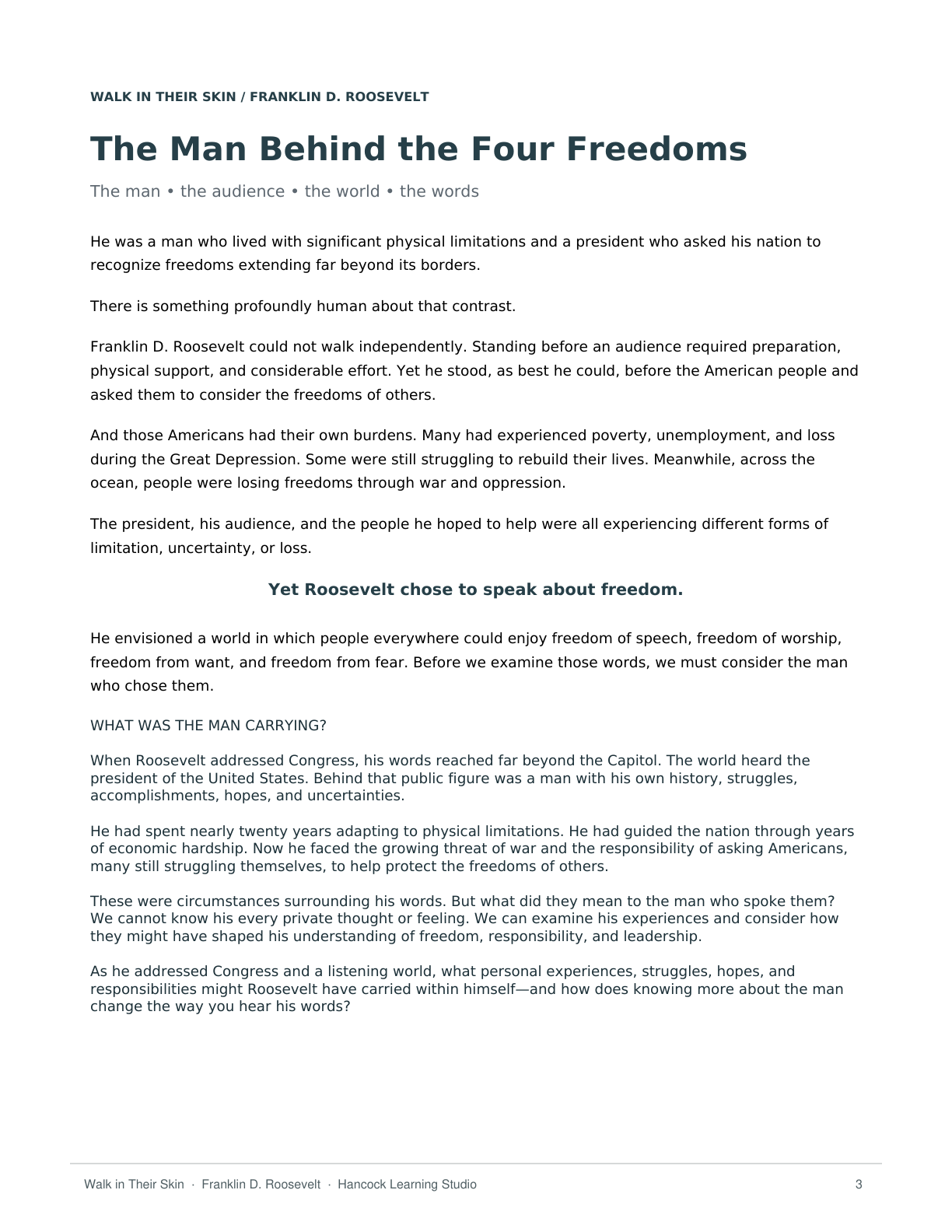
But behind the president's public image was a man whose life had also been shaped by significant physical challenges.
Roosevelt had lived with paralysis since 1921. His public appearances required preparation, assistance, and physical effort. Yet he continued to lead a nation confronting extraordinary economic and international challenges.
What happens when we examine the person behind the words, the people listening, and the world those words were intended to reach?
More Than a Historical Speech
This complete 30-page high school study explores Roosevelt's Four Freedoms address through history, rhetorical analysis, personal reflection, research, and empathy.
Students examine three connected perspectives:
The Man: Roosevelt's personal experiences, physical limitations, public responsibilities, and carefully managed public image.
The Audience: Americans with different experiences of the Great Depression, economic hardship, and the growing international conflict.
The World: People overseas whose lives and freedoms were threatened by war, occupation, and oppression.
Rather than simply memorizing the Four Freedoms, students investigate how personal experiences and historical circumstances can influence the meaning and reception of a speech.
The study emphasizes historical evidence, thoughtful interpretation, and the importance of recognizing what we cannot know about another person's private thoughts or feelings.
What's Included
Historical Background and Personal Perspective
Introduction exploring the power of words and historical empathy
From Washington to Roosevelt: Comparing two presidents and their historical circumstances
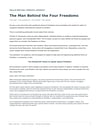
The Man Behind the Four Freedoms: Exploring Roosevelt's personal experiences and public responsibilities
The Weight Behind the Words: Examining the different meanings of freedom
The Whole Man: Researching Roosevelt beyond his public image
The Man the Nation Saw: Comparing historical photographs and public presentation
Historical Research and Critical Thinking
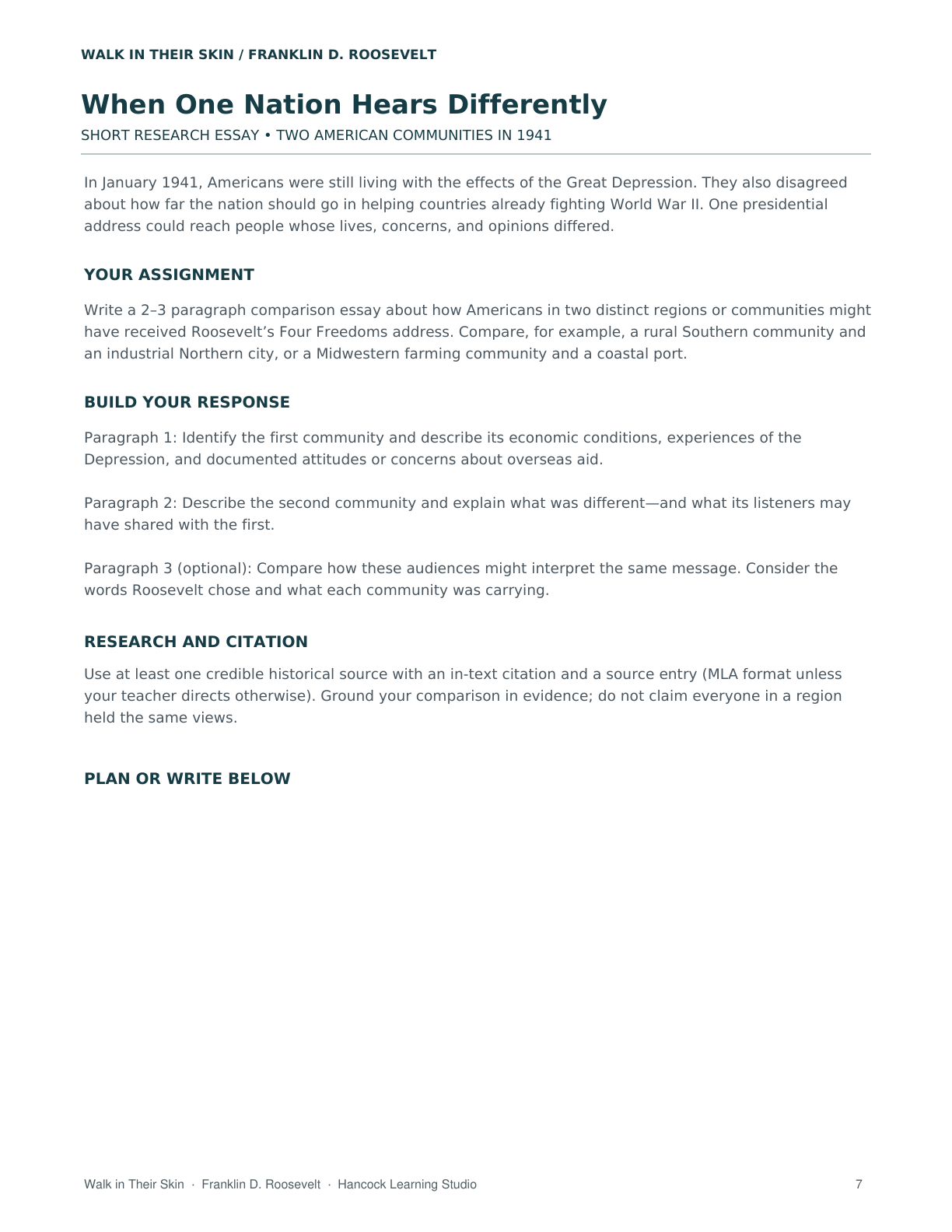
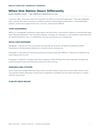
When One Nation Hears Differently: Researching how different American communities might have received Roosevelt's message
Two Places, Two Pictures of America: Historical photograph collage activity
Britain Under Pressure: 1939–1941: Research timeline exploring the events leading to Roosevelt's address
Research into the experiences of people overseas during World War II
Source evaluation and evidence-based historical interpretation
Speech Analysis and Rhetorical Activities
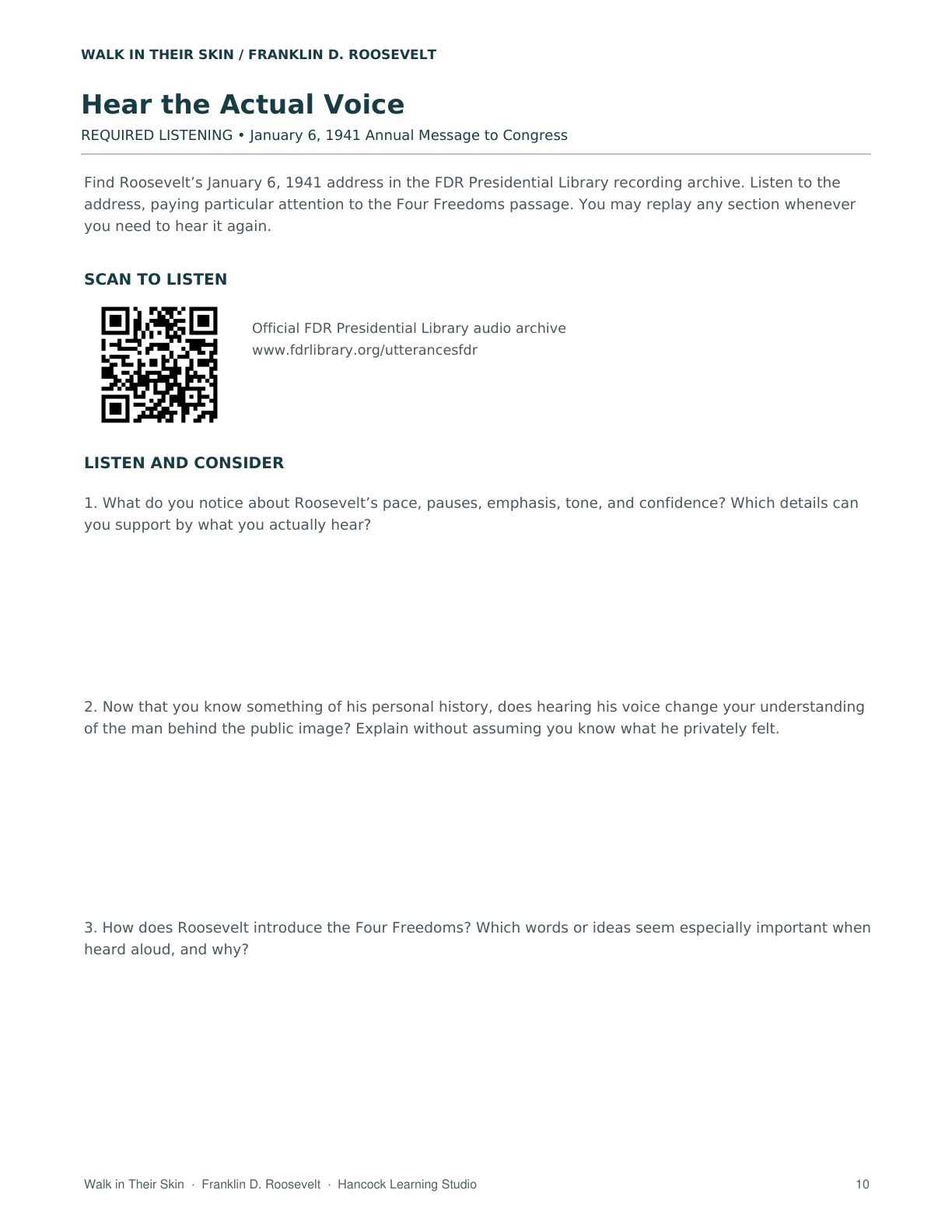
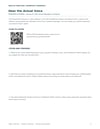
QR-linked access to Roosevelt's January 6, 1941 address
Hear the Actual Voice: Listening and speech analysis
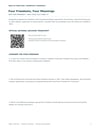
Four Freedoms, Four Meanings: Exploring the meaning and implications of Roosevelt's message
The Words Were Chosen: Examining diction, rhetorical choices, and audience
Comparison of Roosevelt's formal congressional address with his conversational Fireside Chats
Creative Speaking and Reflection
The President Comes Into Your Home: Understanding the influence of radio
Listen to a Fireside Chat: Comparing historical speaking styles
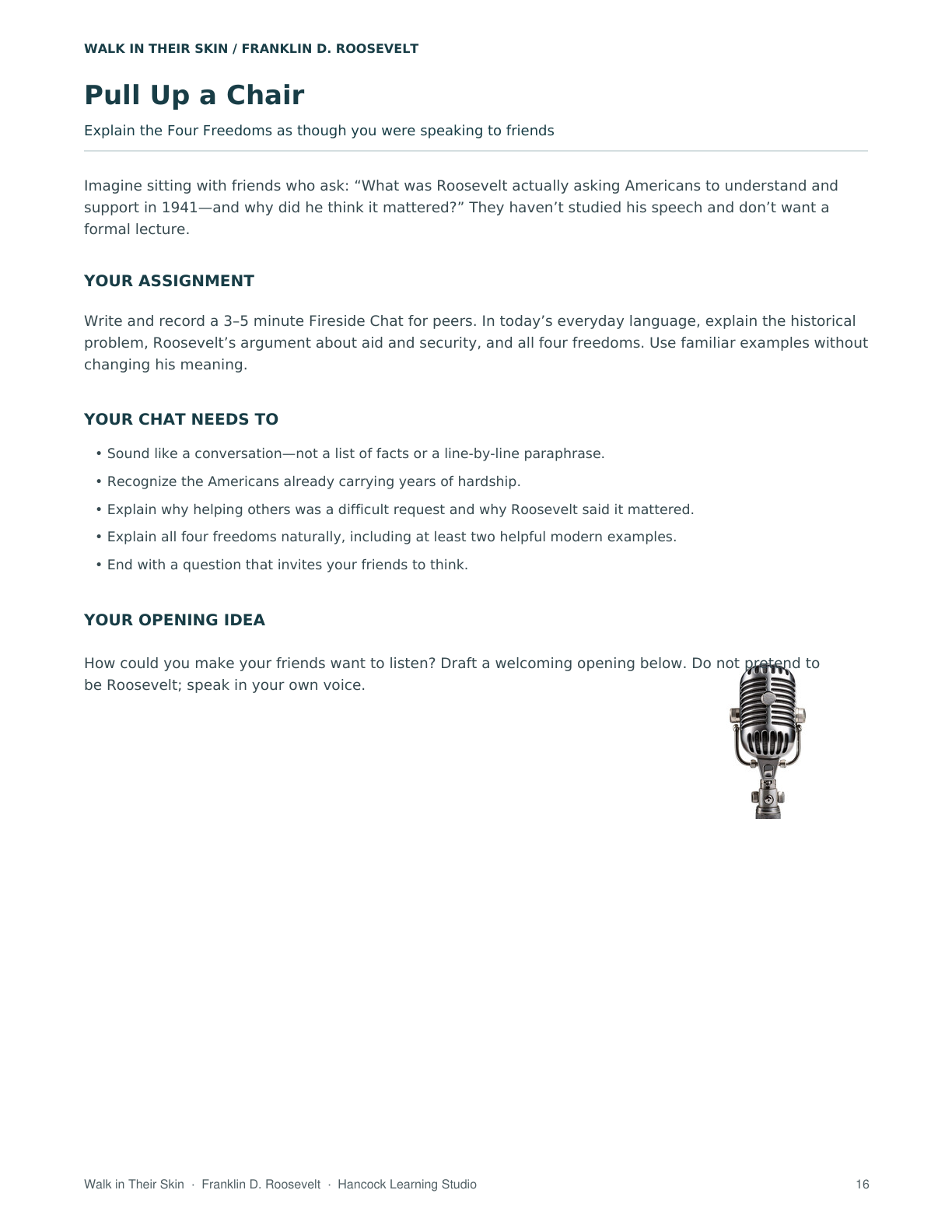
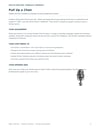
Pull Up a Chair: Writing and recording a 3–5 minute Fireside Chat for a modern audience
Planning, recording, listening, and revision activities
Reflections on communication, empathy, and responsibility toward an audience
Final Writing Assignment
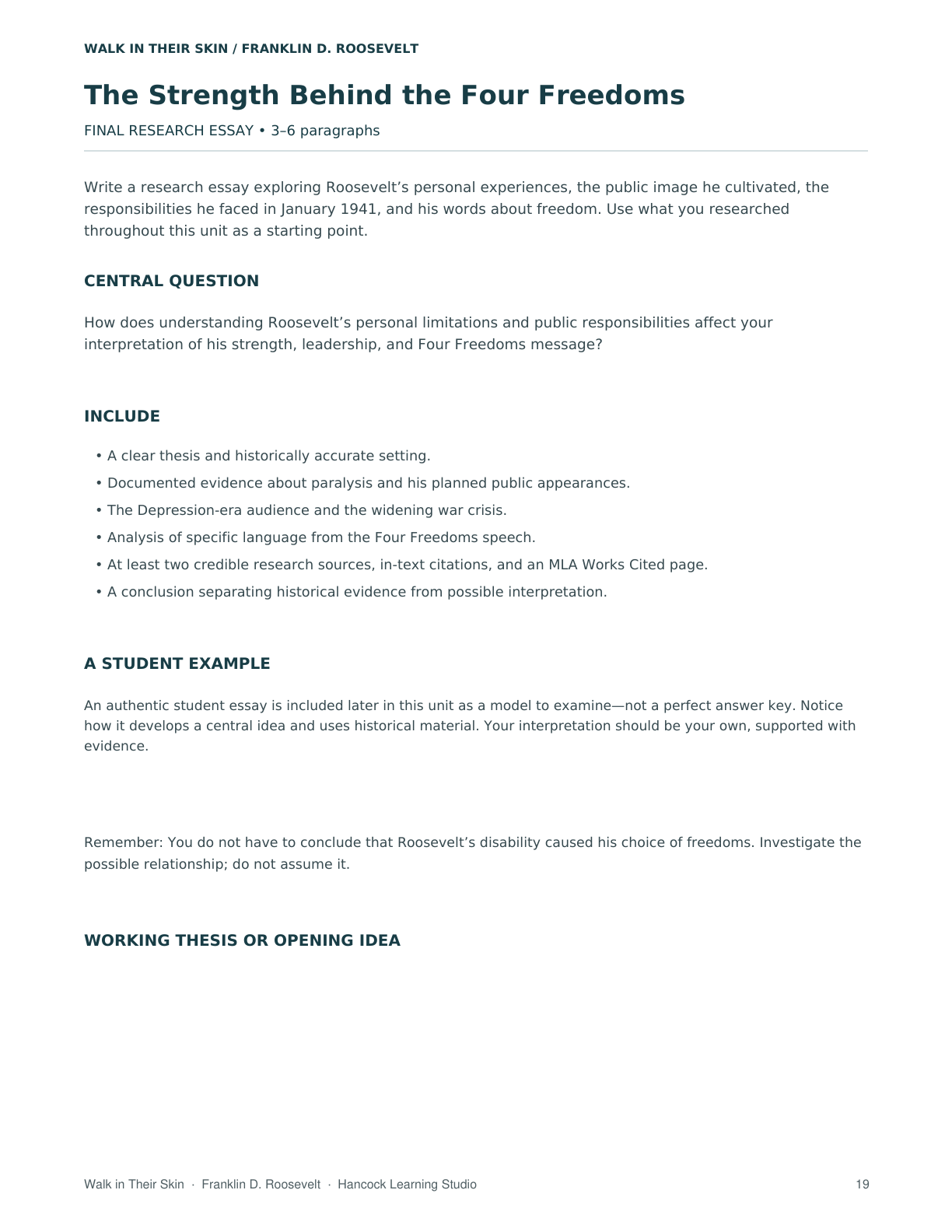
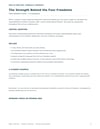
The Strength Behind the Four Freedoms
Students develop a research essay examining Roosevelt's personal experiences, leadership responsibilities, and the historical circumstances surrounding his speech.
The assignment encourages students to connect documented historical evidence with thoughtful analysis while avoiding unsupported assumptions about Roosevelt's private feelings.
Authentic Student Writing and Teacher Feedback
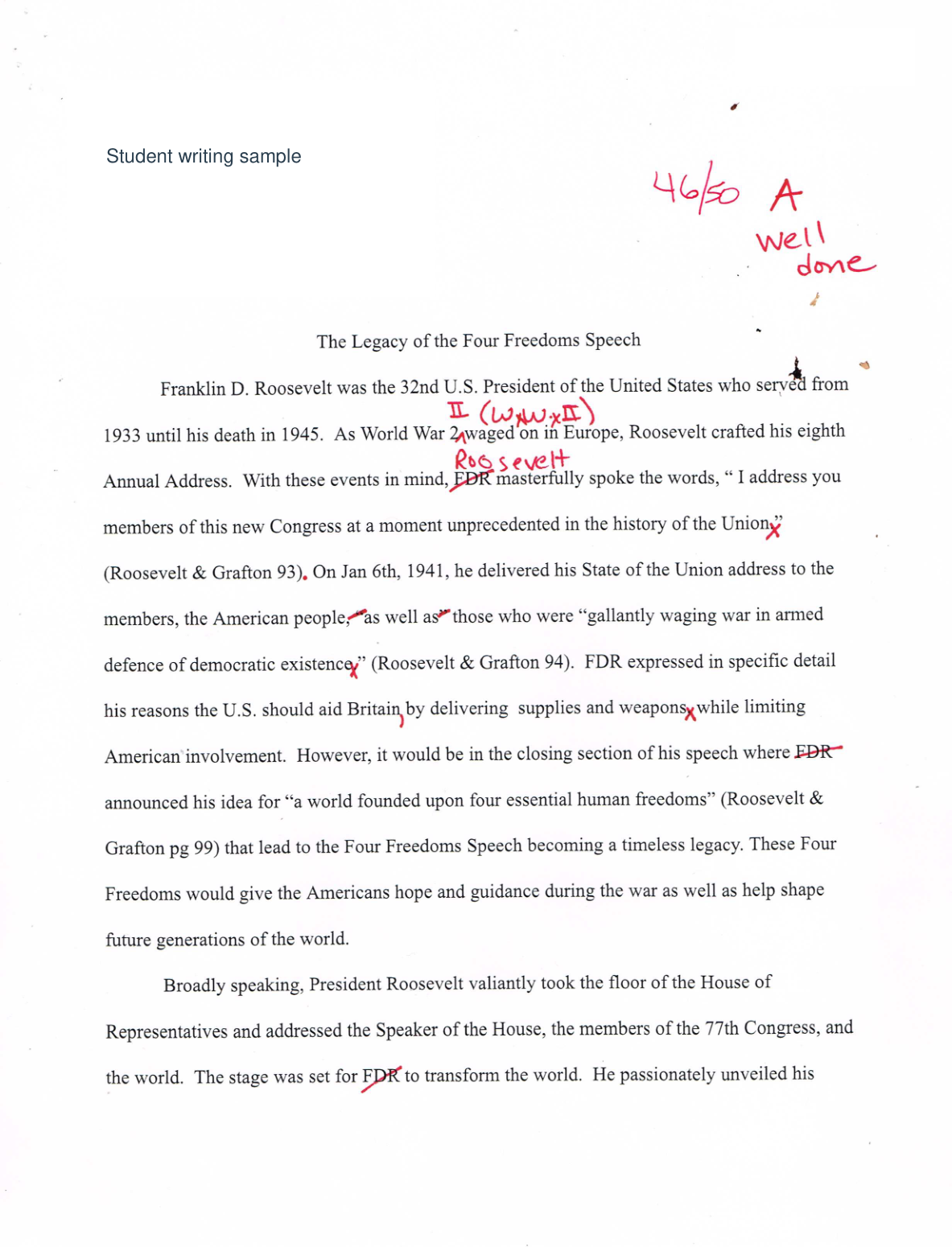
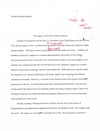
One distinctive feature of this unit is an actual high school essay with its original teacher's handwritten corrections.
The paper received a grade of 46/50 (A).
Students examine how strong writing can still contain opportunities for improvement, including corrections involving wording, citations, and clarity.
This section includes:
An introduction explaining the value of authentic feedback
Four pages of original teacher-graded student writing
Reflection questions about corrections and revision
A separate 16-point essay assessment rubric
The student's identifying information has been removed.
Skills Developed
Historical research and source evaluation
Speech analysis and listening comprehension
Rhetorical analysis and diction
Critical thinking and historical interpretation
Evidence-based research writing
Essay organization and citation skills
Public speaking and audio recording
Revision and responding to feedback
Historical empathy and perspective-taking
Understanding leadership, freedom, and responsibility
Recommended For
High school students in grades 9–12
Homeschool families
English Language Arts
American and World History
World War II studies
Speech and rhetorical analysis
Historical research and essay writing
Leadership and character education
Independent or supplemental classroom activities
Product Details
Format: Printable digital PDF
Length: 30 pages
Suggested Grade Levels: 9–12
Resource Type: Complete historical speech study
Price: $3.99
This is the complete Franklin D. Roosevelt study from Hancock Learning Studio's Walk in Their Skin collection.
Although the unit connects Roosevelt's speech to George Washington's Farewell Address, students do not need to complete any previous studies to use this resource.
History provides the evidence. Empathy guides the questions.
Digital download only. No physical product will be shipped.