
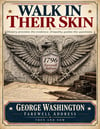
George Washington: Farewell Address — Then and Now | Historical Speech Study | Grades 9–12
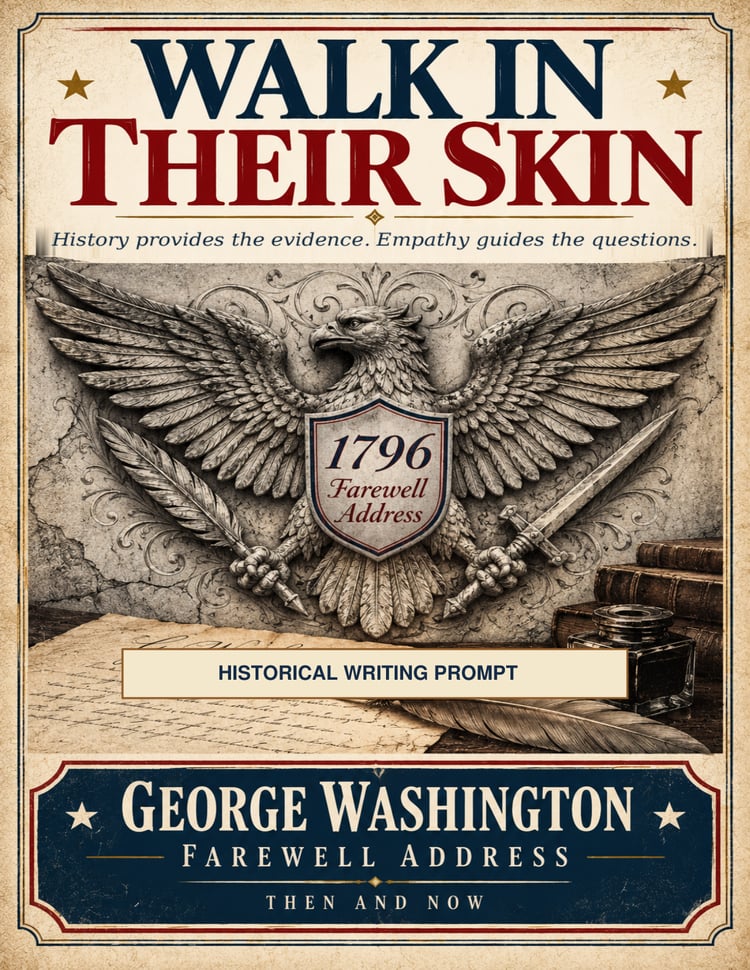
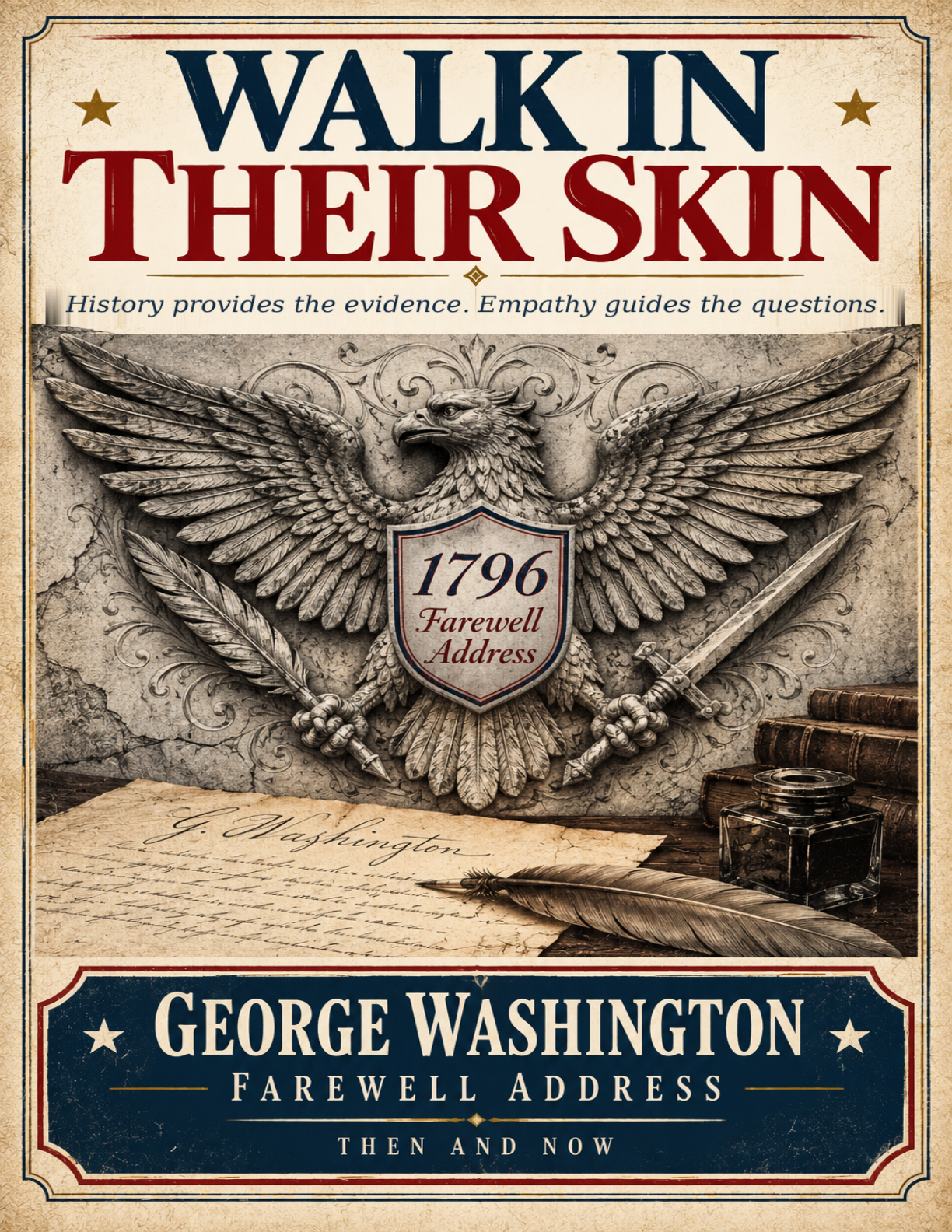
George Washington: Farewell Address — Then and Now
Walk in Their Skin — Historical Speech Study
History provides the evidence. Empathy guides the questions.
In September 1796, George Washington prepared to leave the presidency of the United States.
He had led the Continental Army through the Revolutionary War, served as the nation's first president, and helped guide a young republic through its earliest challenges.
Now, after eight years in office, he was preparing to return to private life.
But what did he want Americans to understand before he left?
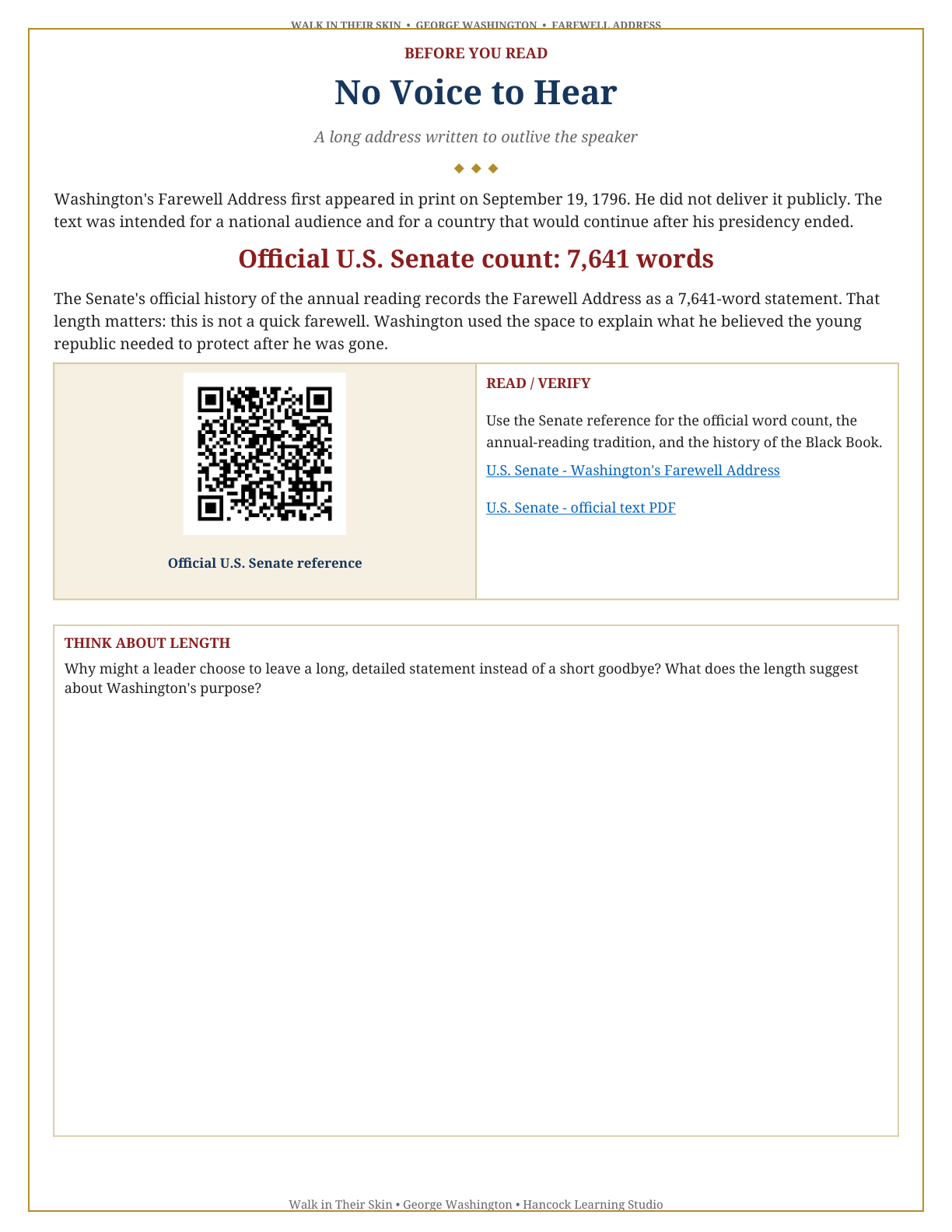
Washington's Farewell Address was not delivered as a public speech. Published in newspapers on September 19, 1796, it was a lengthy written message to a nation that would continue long after his presidency ended.
Unlike later historical figures whose recorded voices allow us to hear their words, Washington left no recording. Students must look for the person behind the message through his writing.
When we cannot hear the speaker's voice, how do we find the person behind the words?
More Than a Historical Document
This complete 36-page high school study encourages students to approach Washington's Farewell Address as more than a collection of political warnings.
Before examining his concerns about national unity, public responsibility, and the future of the republic, students investigate the man preparing to leave public office.
Through close reading, vocabulary study, historical research, reflection, and creative writing, students explore Washington's gratitude, humility, leadership, and hopes for the country he was leaving behind.
The study emphasizes historical evidence and careful interpretation rather than assuming we can know a historical figure's private thoughts.
What's Included
Historical Background and Personal Reflection
Introduction to George Washington and his 1796 Farewell Address
143 Years Earlier: Connecting Washington's written words to later recorded historical speeches
No Voice to Hear: Understanding the challenges of studying an address that was never publicly delivered
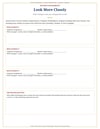
The Words in His Hand: Examining Washington's handwritten document
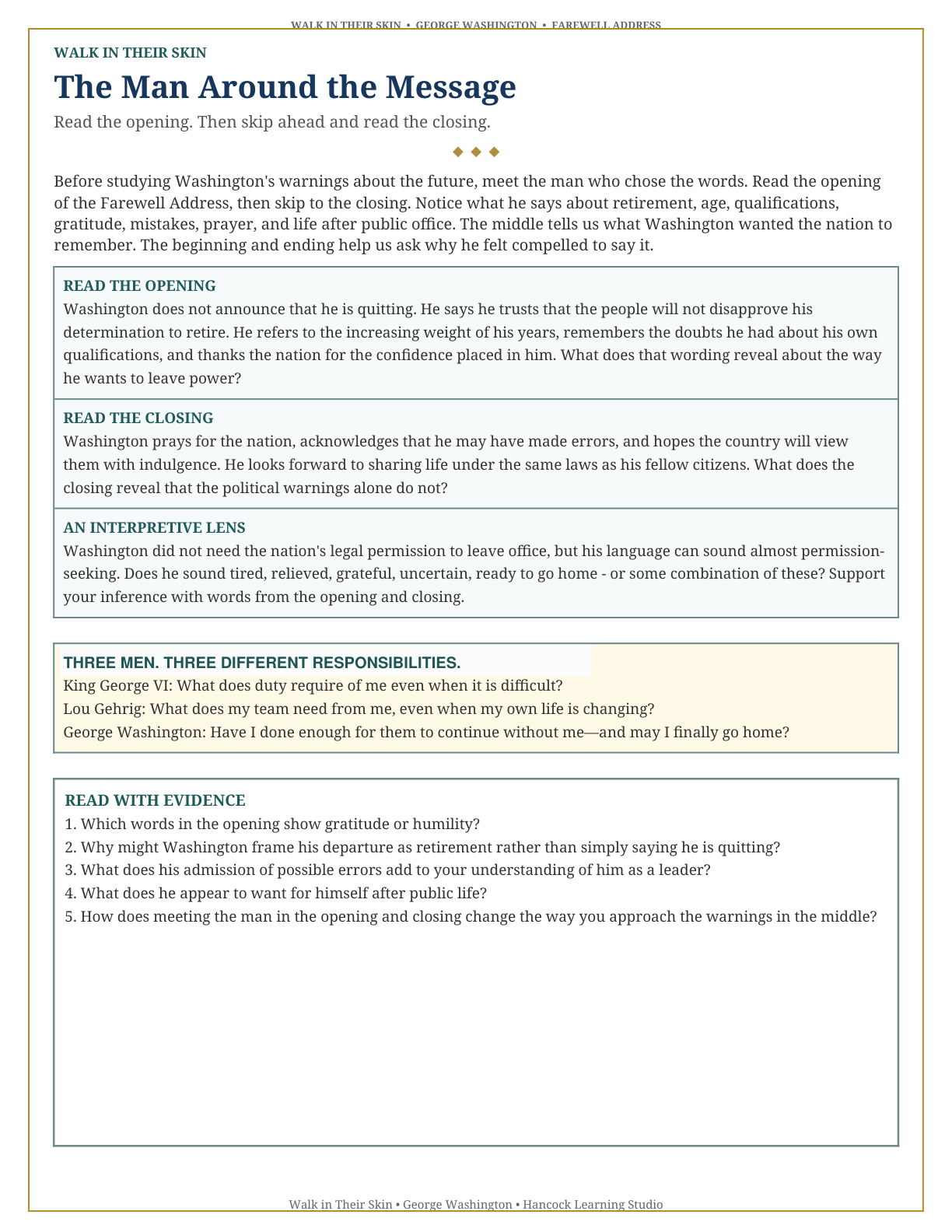
The Man Around the Message: Exploring his opening and closing words to better understand the person behind them
Reading, Vocabulary, and Rhetorical Analysis
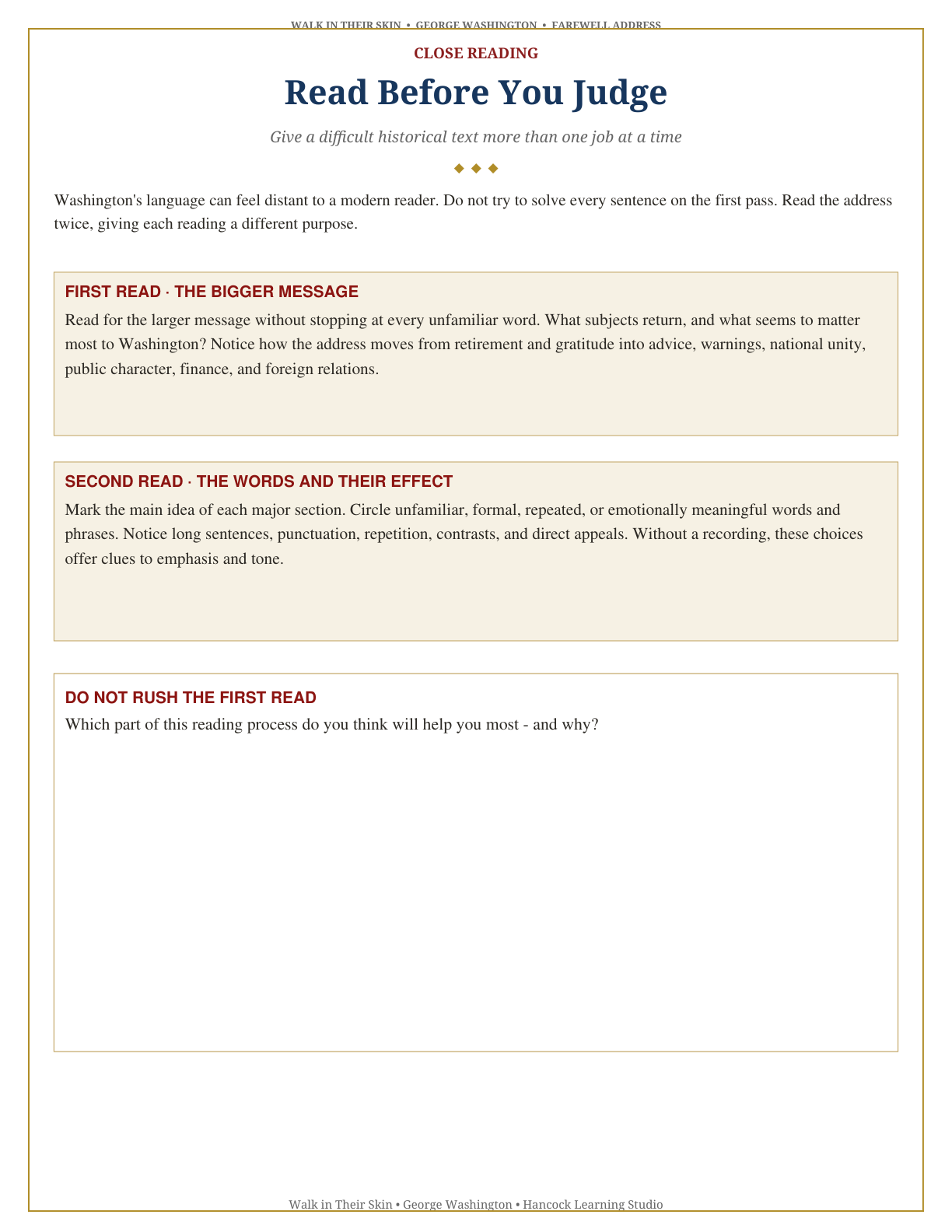
Read Before You Judge: A manageable two-reading approach to Washington's lengthy address
Translate Washington for Today: Identifying and interpreting 24–30 historical words and phrases
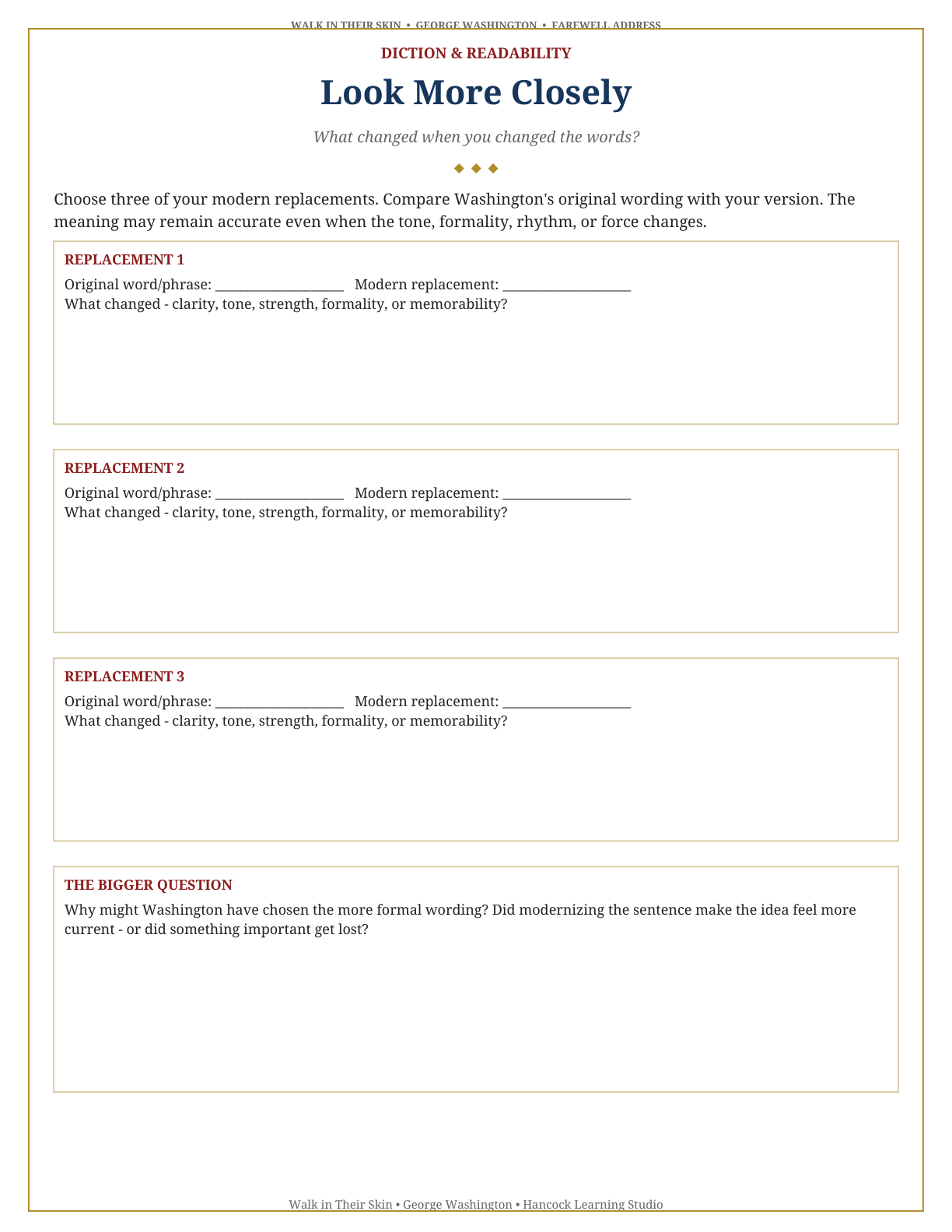
Look More Closely: Examining how modernizing language can change tone, emphasis, and meaning
Analysis of sentence structure, repetition, punctuation, diction, and rhetorical purpose
Leadership and Historical Connections
Foresight Beyond His Sight: Exploring Washington's concerns about future generations
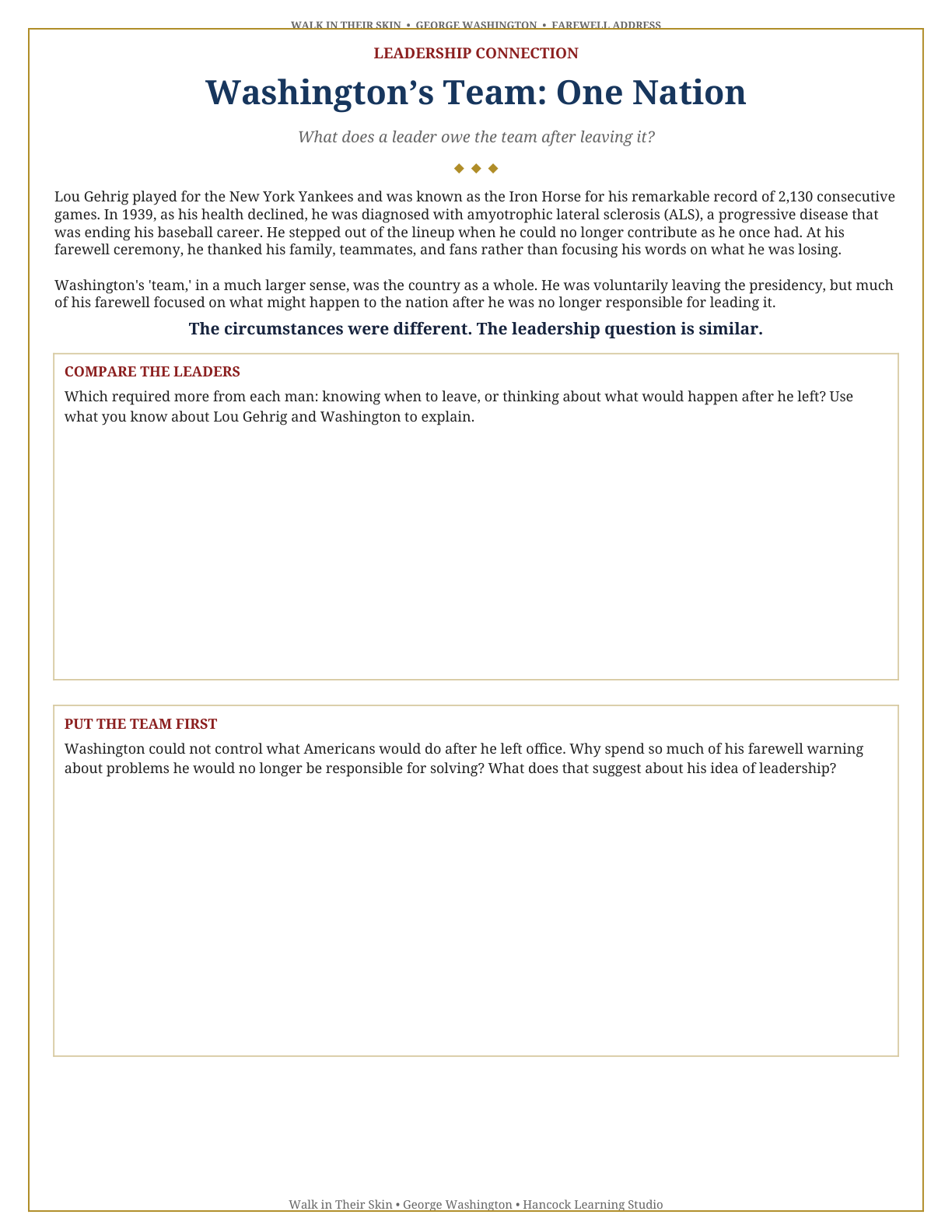
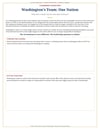
Washington's Team: One Nation: Examining leadership and responsibility through a connection to Lou Gehrig
The Whole Before the Part: Considering national unity, regional interests, and political divisions
Exploration of Washington's views on religion, morality, public character, and fiscal responsibility
Historical reflection activities connecting ideas from 1796 to later generations
Primary Sources and Creative Activities
Historical images and handwritten documents
Source links and QR-coded research references
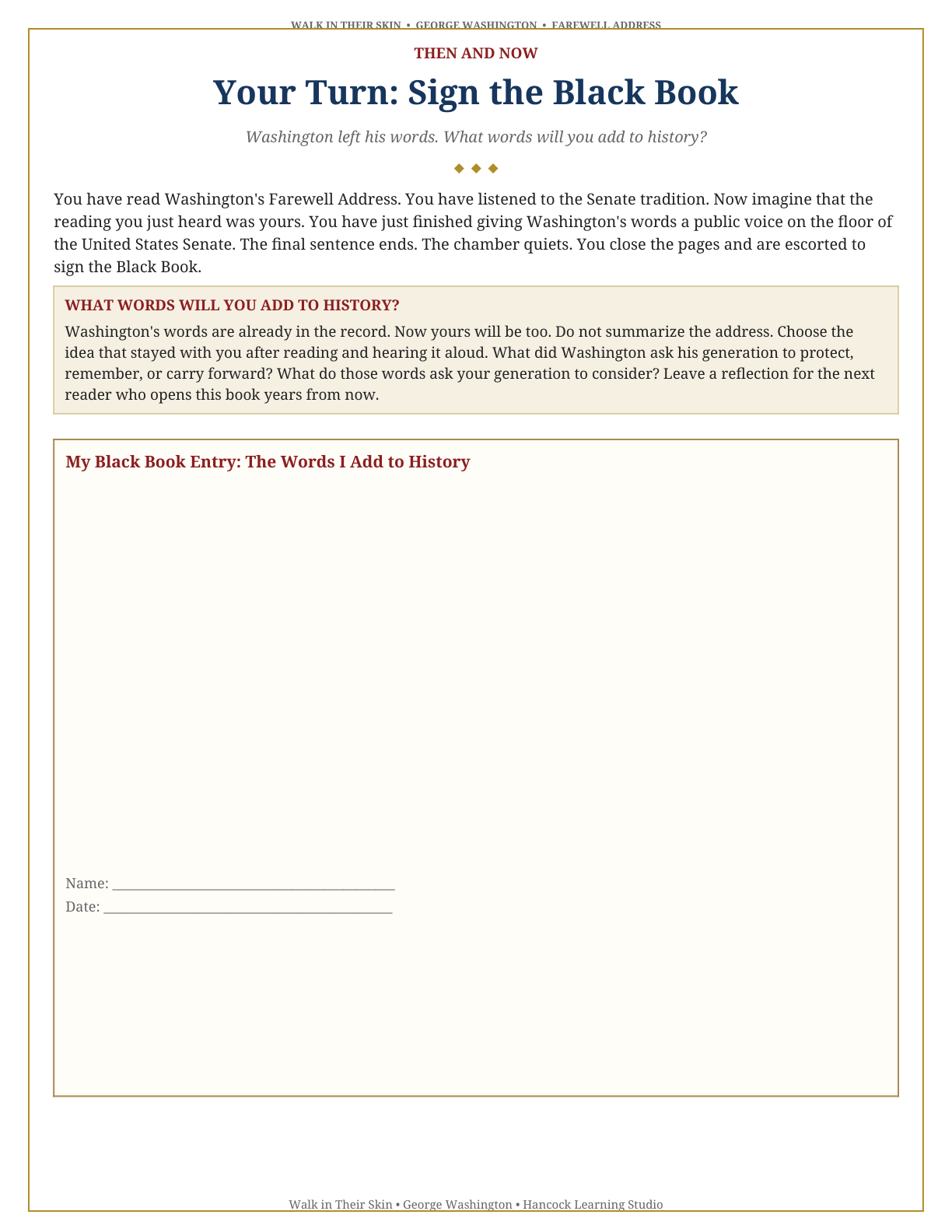
The Address Finds a Voice: Exploring the tradition of reading Washington's address aloud
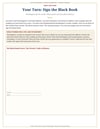
Your Turn: Sign the Black Book: A reflection on leadership, civic responsibility, and historical continuity
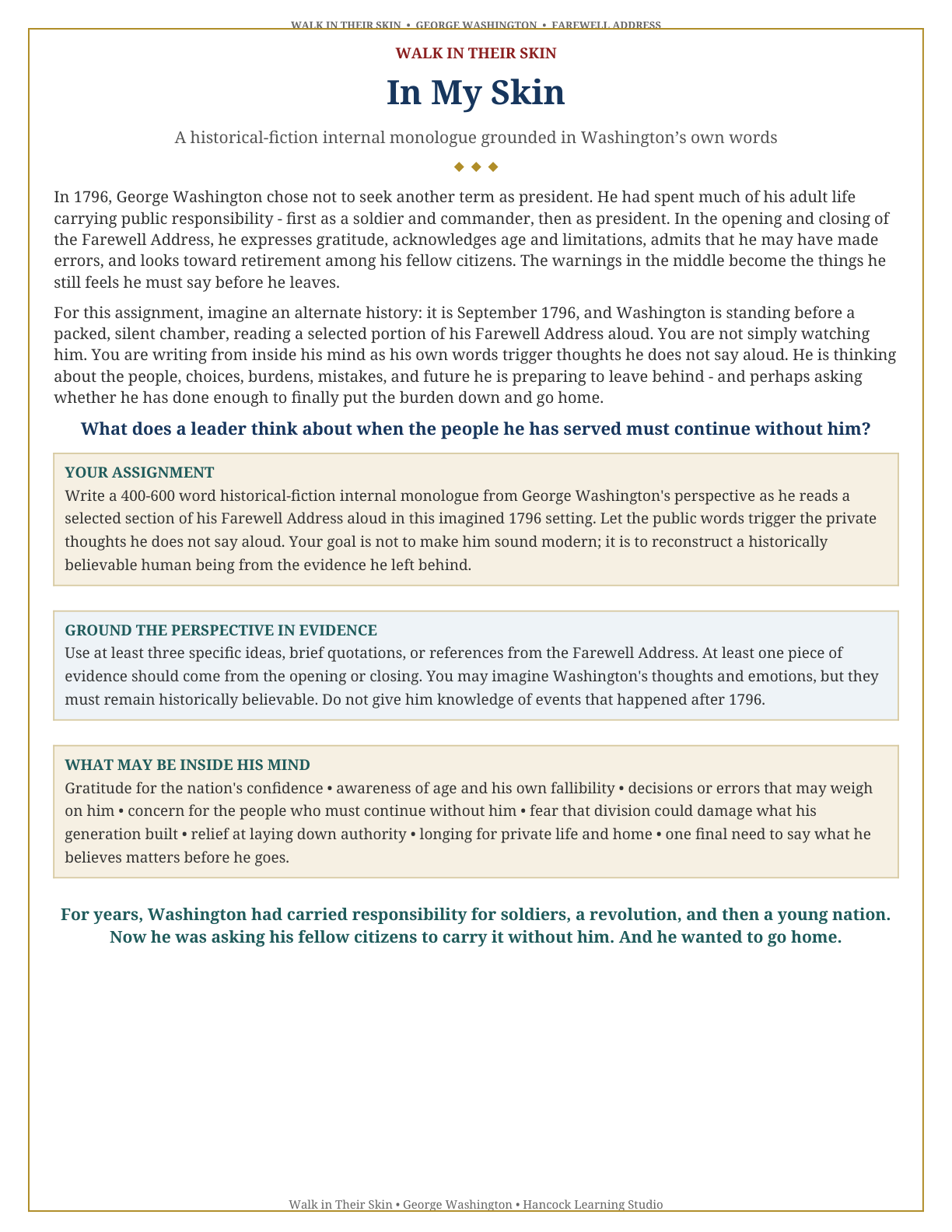
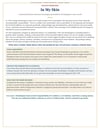
Final Writing Assignment — In My Skin
A 400–600-word historical-fiction writing assignment
Evidence-based reconstruction of Washington's perspective
Clear distinction between documented history and imagined thoughts
A 16-point essay grading rubric
An optional upper-level Then and Now extension
The complete Farewell Address for reference
The Final Writing Assignment: In My Skin
Students imagine Washington delivering his Farewell Address aloud, even though the historical document was published rather than publicly spoken.
This alternate-history writing assignment challenges students to create a historically grounded monologue using evidence from Washington's life and words.
Students must draw upon at least three specific pieces of historical evidence, including material from the opening or closing of the address.
They must also recognize the limits of historical imagination: Washington cannot be given knowledge of events that occurred after his lifetime.
The assignment encourages students to consider the human being behind the document while remaining faithful to the historical record.
Skills Developed
Historical research and primary-source evaluation
Close reading of challenging historical language
Vocabulary development and contextual interpretation
Diction and rhetorical analysis
Critical thinking and evidence-based reasoning
Historical empathy and perspective-taking
Leadership and civic responsibility
Creative historical writing
Essay planning and organization
Recommended For
High school students in grades 9–12
Homeschool families
English Language Arts
American History and early American government
Historical document and primary-source studies
Speech and rhetorical analysis
Leadership and character education
Independent or supplemental classroom activities
Product Details
Format: Printable digital PDF
Length: 36 pages
Suggested Grade Levels: 9–12
Resource Type: Complete historical speech and document study
Price: $3.99
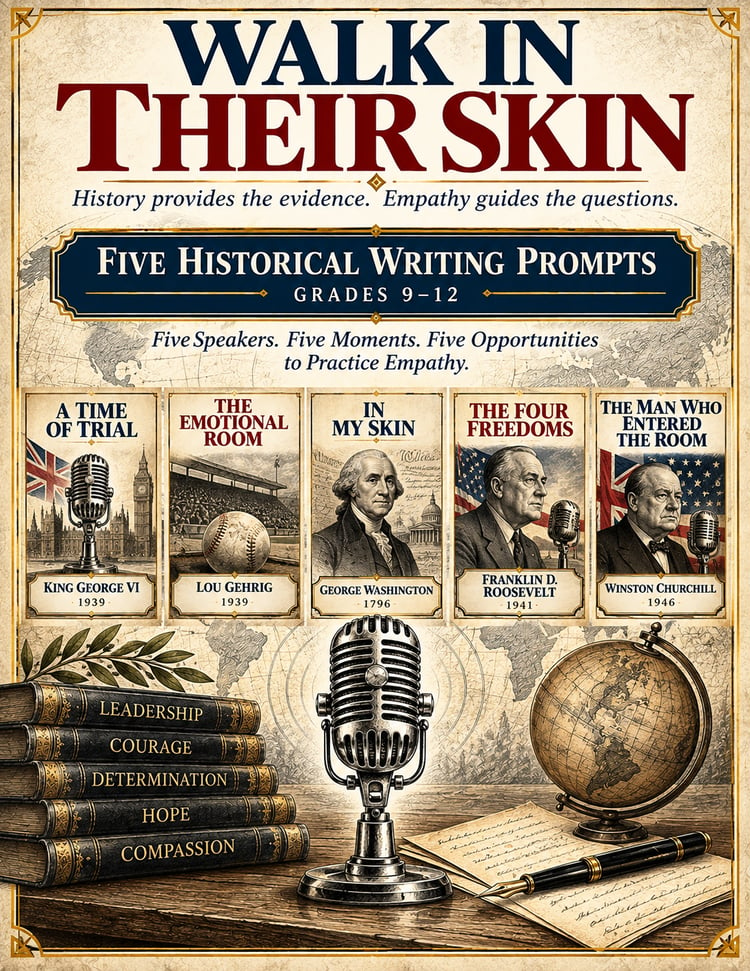
This is the complete George Washington study from Hancock Learning Studio's Walk in Their Skin collection.
Although the collection also explores King George VI and Lou Gehrig, students do not need to complete those studies first. This resource can be used independently.
History provides the evidence. Empathy guides the questions.
Digital download only. No physical product will be shipped.