

When Low Feels Like Who You Are: Living with Dysthymia
A gentle guide to persistent depressive disorder, with DBT-informed skills for the gray days.
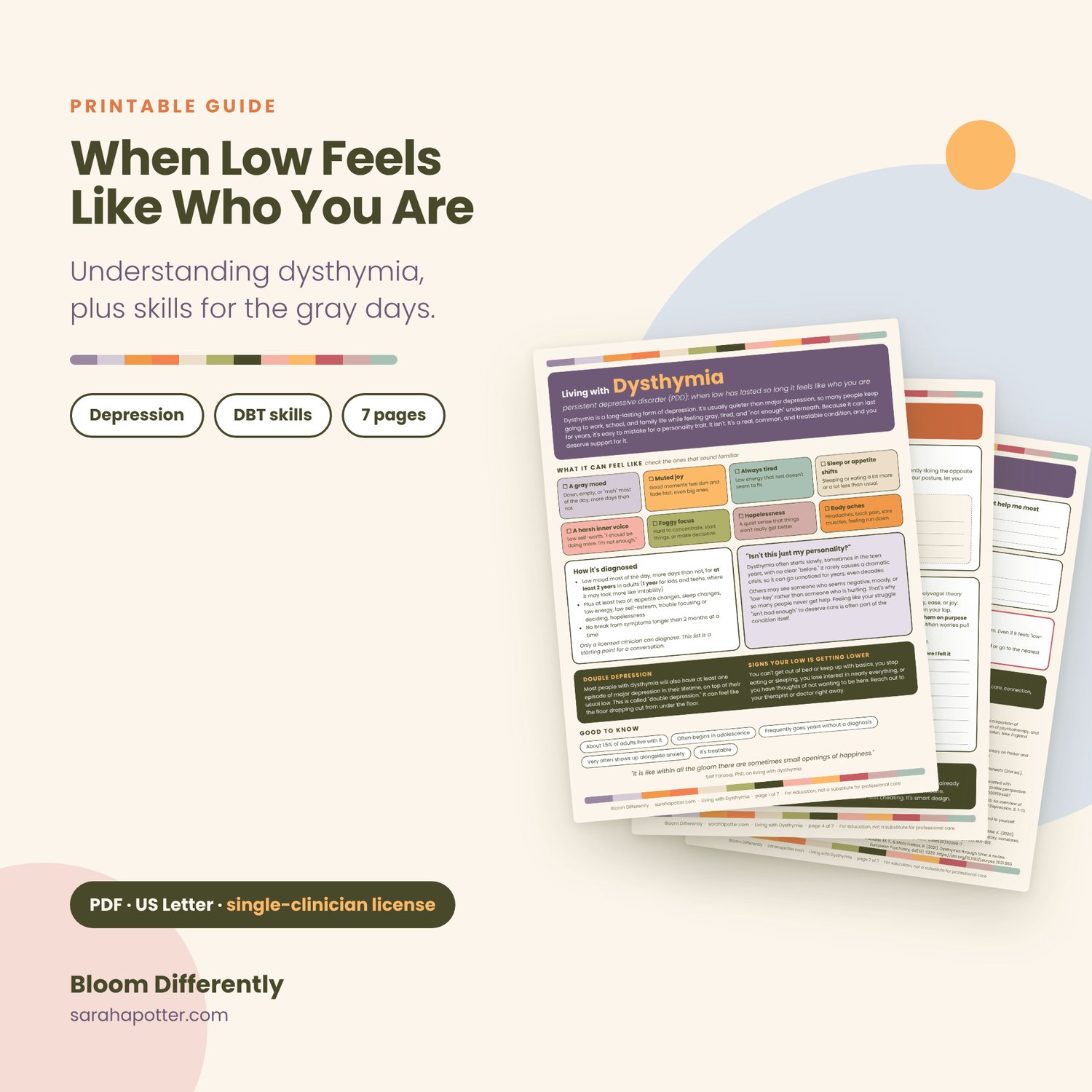
Dysthymia is a long-lasting form of depression. It’s quieter than major depression, so many people keep showing up for work, school and family while feeling gray, tired and “not enough” underneath. Because it can last for years, it’s easy to mistake for a personality trait. It isn’t. It’s real, common and treatable. This 7-page guide helps clients name what they’ve been living with, understand where it comes from, and practice small skills that start to turn the gray cycle around.
What’s inside
- What it can feel like: a check-off list covering gray mood, muted joy, fatigue, a harsh inner voice, foggy focus, hopelessness, body aches, and changes in sleep or appetite.
- How it’s diagnosed: plain-language criteria, framed as a starting point for a conversation.
- “Isn’t this just my personality?”: why dysthymia so often goes unnoticed for years.
- Double depression and warning signs: what to watch for when the low gets lower.
- Where it comes from: the roots (family and genes, early experiences, brain and body, ongoing stress) and two common patterns.
- The Gray Cycle: how dysthymia keeps itself going, and how to step in at any point.
- For neurodivergent folks: how masking, autistic burnout and ADHD discouragement can look like dysthymia, and why they may need different support.
- What helps: therapy approaches, daily foundations, coping that keeps us stuck vs. coping that helps us grow, and questions to bring to a care team.
- Skills for the gray days, 8 skills across three parts:
- Opposite Action
- Build Mastery
- Catch the Glimmers
- My Values Compass
- Name the Gray Voice
- The Self-Compassion Break
- Evidence of My Strength
- Self-Encouragement Statements
- My Plan for the Gray Days: a personal plan to fill in on a steadier day, including crisis resources.
- References: a full research list.
Who it’s for
- Teens and adults living with long-term low mood, diagnosed or wondering.
- Clients who feel their struggle “isn’t bad enough” to deserve care.
- Neurodivergent clients sorting out burnout, masking fatigue and depression.
- Therapists who want a psychoeducation handout and skills workbook in one.
Ways to use it
- As psychoeducation in an early session, to help name the pattern.
- As skill-of-the-week homework, one skill at a time.
- Complete the Gray Days plan together as a relapse-prevention tool.
- In a depression or DBT skills group.
Why it’s different
This guide meets the slow, quiet kind of depression on its own terms. It doesn’t promise happiness. It aims for a life that feels worth living, with more moments of connection, meaning and ease, and a kinder relationship with yourself. It also includes a neurodivergent lens that most depression handouts leave out.
What you get
- 1 printable PDF, 7 pages, US Letter.
- Psychoeducation pages, 8 fillable skill practices, a personal safety and coping plan, and references.
- Single-clinician license included.
Pairs well with
- Radical Acceptance
- What’s in Your Control?
- Feelings and Needs Inventory
- My Regulation Toolkit